
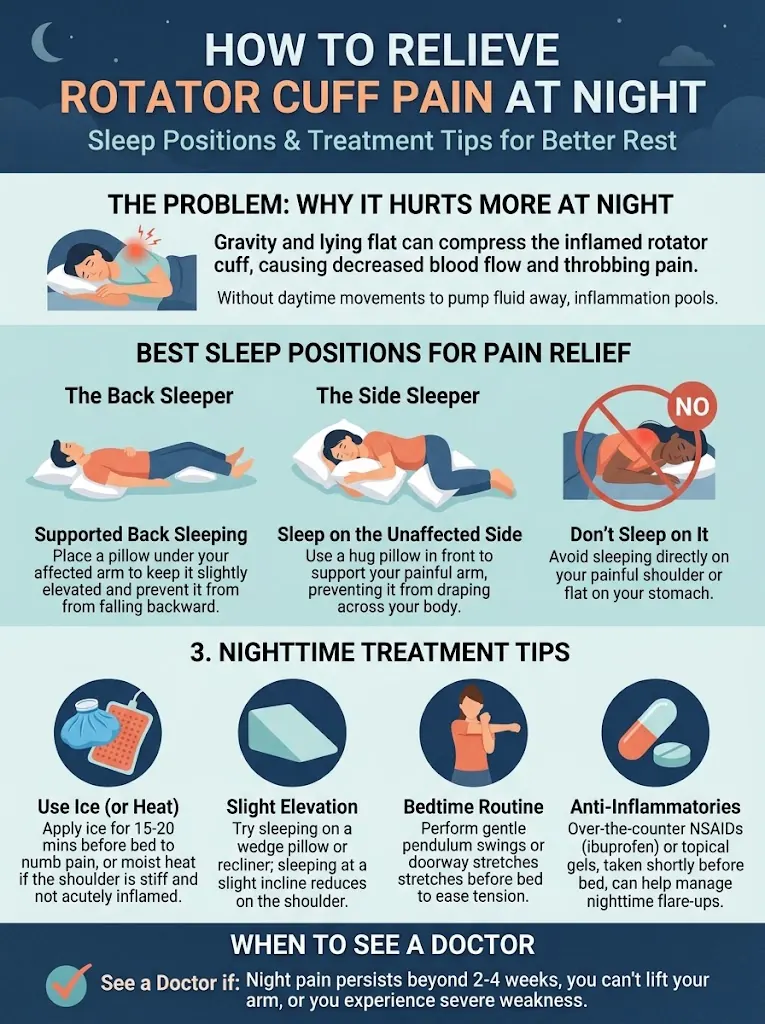
Rotator cuff pain at night can make it difficult to fall asleep, stay comfortable, or find a position that does not cause shoulder aching. The pain may feel worse when you lie on the affected side, reach overhead, or move your arm while turning in bed. Poor sleep can also leave you feeling tired and less able to manage discomfort the next day.
Nighttime shoulder pain does not automatically mean you have a torn rotator cuff. Tendon irritation, bursitis, shoulder impingement, and other conditions can cause similar symptoms. However, persistent pain, new weakness, or pain following an injury deserves medical attention rather than being dismissed as ordinary soreness.
Knowing how to relieve rotator cuff pain at night starts with choosing a comfortable sleeping position, reducing pressure on the shoulder, and adjusting activities that aggravate symptoms. This guide explains practical ways to sleep more comfortably, treatment options, mistakes to avoid, and signs that you should seek medical care.
Why Does Rotator Cuff Pain Get Worse at Night?
Rotator cuff pain may become more noticeable at night because lying on the shoulder places pressure on sensitive tissues. Certain positions can also compress irritated tendons or the bursa, a small fluid-filled sac that helps the shoulder move smoothly.
Common causes include rotator cuff tendinopathy, a partial or complete tendon tear, bursitis, and shoulder impingement. Symptoms can overlap, so nighttime pain alone cannot identify the cause. Learn about rotator cuff tear symptoms and treatment options to understand other signs that may accompany a tear.
| Possible cause | Symptoms you may notice | What may aggravate it |
|---|---|---|
| Rotator cuff irritation | Aching and pain with arm movement | Lifting or reaching overhead |
| Rotator cuff tear | Pain, weakness, difficulty raising the arm | Lifting, reaching, or lying on that side |
| Shoulder bursitis | Tenderness and pain with movement | Direct pressure and repeated activity |
| Shoulder impingement | Pain during certain arm movements | Reaching overhead or behind the body |
These patterns are clues, not a diagnosis. Shoulder tendonitis symptoms and treatment, shoulder bursitis causes and relief, and shoulder impingement syndrome can help explain other possible sources of discomfort.
What Is the Best Sleeping Position for Rotator Cuff Pain?
The best position is usually one that keeps your shoulder supported without placing your body weight on the painful area. Try these options and adjust them according to your comfort.
1. Sleep on your back with your arm supported
Lie on your back and place a pillow under the affected forearm and elbow. Keeping the arm slightly away from your body may reduce strain and prevent the shoulder from dropping backward.
2. Sleep on the unaffected side
If you prefer side sleeping, lie on the nonpainful shoulder. Hug a pillow and rest the affected arm on it so your upper arm and elbow remain supported in front of your body.
3. Try a slightly elevated position
Some people feel more comfortable sleeping in a recliner or using a wedge pillow to raise the upper body. This may help if lying flat aggravates symptoms, although it does not treat the underlying cause.
| Sleeping position | Potential benefit | Tip |
|---|---|---|
| On your back | Avoids direct pressure on the shoulder | Support the elbow and forearm |
| On the unaffected side | Keeps body weight off the painful shoulder | Hug a pillow to support the arm |
| Upper body elevated | May improve comfort for some people | Use a stable wedge or recliner |
Avoid sleeping directly on the painful shoulder if it increases symptoms. If you recently had surgery, follow your surgeon’s specific positioning instructions; advice for routine shoulder pain may not apply after repair.
How Can You Relieve Rotator Cuff Pain Before Bed?
A few simple adjustments may make nighttime discomfort easier to manage.
- Apply a cold pack: Wrap it in a towel and apply for 15–20 minutes. Do not place ice directly on your skin.
- Modify daytime activity: Temporarily reduce repeated overhead reaching, heavy lifting, and movements that trigger pain.
- Support your arm: Use pillows to prevent the shoulder from hanging unsupported when sitting or lying down.
- Consider medication carefully: Acetaminophen or anti-inflammatory medicines may help some people, but suitability depends on your health, other medications, and potential risks. Ask a pharmacist or clinician if you are unsure.
- Keep movement gentle: Avoid forcing painful stretches or strengthening exercises, particularly if symptoms began after an injury.
For more practical measures, see these shoulder pain home remedies. If shoulder pain occurs when lifting something or when raising your arm, reducing the triggering movement may help prevent repeated irritation.
What Should You Avoid With Nighttime Shoulder Pain?
Do not repeatedly test the shoulder with heavy lifting or painful movements to see whether it has improved. Avoid aggressive stretching, unsupervised strengthening through sharp pain, and sleeping positions that consistently worsen symptoms.
Pain with reaching behind your head can occur with several shoulder conditions, so do not assume one particular exercise will fix it. A clinician or physical therapist can recommend suitable movements after assessing your shoulder. You can also review exercises for shoulder pain relief and strength, but stop any exercise that causes sharp or worsening pain.
When Should You Seek Medical Care?
| Situation | Recommended action |
|---|---|
| Mild pain after activity that improves with rest | Monitor symptoms and modify aggravating activities |
| Night pain that persists, repeatedly disrupts sleep, or limits movement | Arrange a clinical evaluation |
| Sudden pain and weakness after a fall or lifting injury | Seek prompt medical assessment |
| Shoulder deformity, major swelling, inability to move the arm, or a cold, pale, or numb hand | Seek urgent medical care |
| Shoulder pain with chest pressure, shortness of breath, sweating, or faintness | Call 911 immediately |
Seek assessment if pain is worsening, weakness is new, or daily activities become difficult. A normal X-ray does not rule out every tendon problem; learn why shoulder pain can persist despite a normal X-ray. Shoulder pain accompanied by chest symptoms may require emergency evaluation for a heart problem, as explained in this guide to shoulder pain and possible heart problems.
What Treatments Help Rotator Cuff Pain?
Treatment depends on the cause and severity. A clinician may recommend activity modification, physical therapy, pain-relieving medication when appropriate, or further imaging if an injury is suspected. Some rotator cuff tears can be managed without surgery, while others may need specialist assessment.
Explore whether a rotator cuff tear can heal without surgery and living with a torn rotator cuff without surgery for more information about nonsurgical care. Persistent symptoms or increasing weakness warrant reassessment; learn when a rotator cuff tear may need surgery.
If surgery has already been recommended, recovery instructions matter. Guidance on sleeping after rotator cuff surgery, how long a sling may be needed after surgery, and rotator cuff surgery recovery time can help you prepare. Do not resume exercise after surgery until your surgical team clears you; see when exercise can restart after rotator cuff surgery.
Frequently Asked Questions
1. Why does my rotator cuff hurt more when I lie down?
Lying on the shoulder can increase pressure on irritated tendons and nearby tissues. Other positions may also strain the shoulder, making symptoms more noticeable.
2. Should I sleep on the painful shoulder?
Avoid that position if it increases pain. Sleeping on your back or the opposite side with the affected arm supported may be more comfortable.
3. Is heat or ice better before bed?
A wrapped cold pack may help after activity or when the shoulder feels irritated. Heat may feel soothing for stiffness, but avoid anything that worsens symptoms or risks burning your skin.
4. Can I exercise with nighttime shoulder pain?
Gentle movement may be appropriate, but painful strengthening or overhead exercises can aggravate some injuries. Get professional guidance if pain persists or weakness develops.
5. Does nighttime pain mean I have a rotator cuff tear?
No. Tendon irritation, bursitis, and other shoulder conditions can also cause nighttime pain. An examination is needed to help identify the cause.
6. How long does rotator cuff pain last?
Duration depends on the cause, severity, and activities that affect the shoulder. Seek evaluation if symptoms persist, worsen, or repeatedly disturb your sleep.
7. Can I take pain medicine every night?
Not without considering safety. Some medicines can cause stomach, kidney, liver, or cardiovascular problems or interact with other drugs, so check with a healthcare professional.
8. When should I get an MRI?
MRI is not necessary for every painful shoulder. A clinician may consider it when examination findings suggest a significant tendon injury or when symptoms do not improve as expected.
9. Can I prevent nighttime shoulder pain from returning?
Supporting your arm during sleep and modifying painful activities may help. Gradual, appropriate rehabilitation can also improve shoulder function when recommended.
10. When is shoulder pain an emergency?
Seek emergency help for shoulder pain with chest pressure, breathing difficulty, faintness, or sweating. A cold or pale hand, major deformity, or sudden severe injury also needs urgent assessment.
Conclusion
To relieve rotator cuff pain at night, avoid pressure on the painful shoulder, support your arm with pillows, and modify activities that trigger symptoms. Persistent pain, new weakness, or pain after an injury deserves medical evaluation. Seek emergency help when shoulder pain occurs with possible heart symptoms or serious circulation changes.
Disclaimer: This article is provided for educational and informational purposes only.
This article is for education purpose only and is not a diagnosis or a substitute for medical advice.