
A rotator cuff tear may make it difficult to lift your arm, reach behind your back, carry groceries, or sleep comfortably on the affected side. Some tears develop gradually as tendons weaken with age, while others happen suddenly after a fall or lifting injury. Symptoms can range from mild discomfort to substantial weakness.
This guide explains when a rotator cuff tear may improve without surgery, what treatments can help, how long recovery may take, and which symptoms warrant medical evaluation. Understanding the difference between symptom relief and tendon healing can help you make informed decisions about your shoulder.
Can a Rotator Cuff Tear Heal Without Surgery?
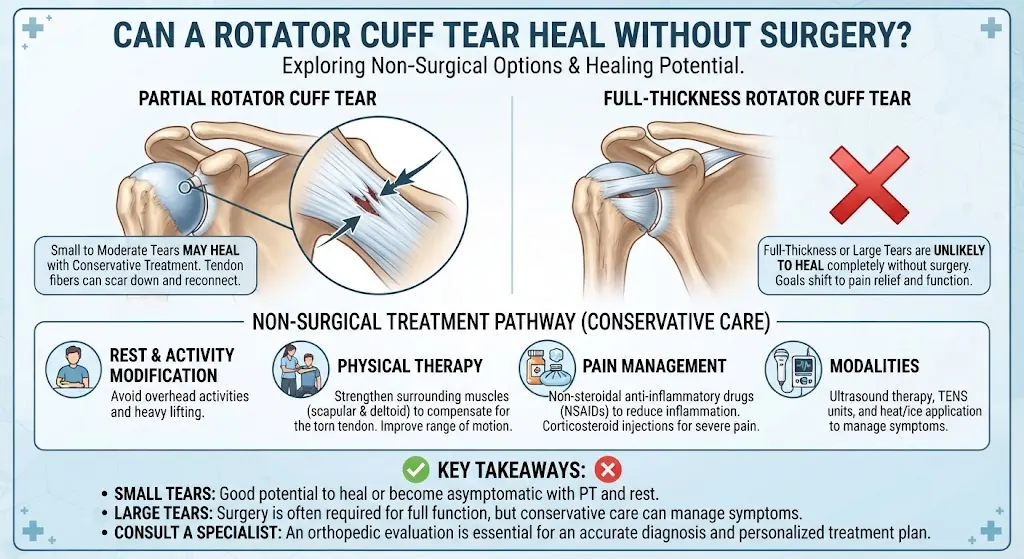
Yes, symptoms from some rotator cuff tears can improve without surgery, but a completely torn tendon may not reattach to the bone on its own. Small partial tears may become less painful and function may improve with rehabilitation. Full-thickness tears, especially larger or traumatic ones, are less likely to heal structurally without treatment.
The rotator cuff is made up of four muscles and their tendons, which help stabilize the shoulder and control arm movement. A partial-thickness tear damages some tendon fibers, while a full-thickness tear extends through the tendon. Both can cause pain and weakness, but they do not have the same healing potential.
Treatment decisions depend on symptoms and function as well as imaging findings. For an overview of rotator cuff tear symptoms, treatment, and recovery, consider how different tear patterns may affect daily activities.
What Affects Healing Without Surgery?
Several factors influence whether non-surgical treatment is likely to help.
-
Tear size and depth: Smaller partial tears may respond better to rehabilitation than large, full-thickness tears.
-
Cause of injury: Gradual, age-related tears may behave differently from sudden tears after trauma.
-
Muscle and tendon quality: Tendon retraction and muscle degeneration can affect repair options.
-
Shoulder strength and function: Persistent weakness or inability to raise the arm may require more urgent assessment.
-
Daily demands: Repetitive overhead work or heavy lifting can aggravate symptoms and complicate recovery.
A tear seen on an MRI does not automatically mean surgery is necessary. Likewise, reduced pain does not prove the tendon has healed. A clinician considers your symptoms, physical examination, activity needs, and imaging together.
What Treatments Can Help a Rotator Cuff Tear Without Surgery?
Non-surgical treatment aims to reduce pain, restore movement, and strengthen the muscles that support the shoulder. The best plan depends on the type of tear and your symptoms.
| Treatment | How it may help | Important limitation |
|---|---|---|
| Physical therapy | Improves mobility, strength, and shoulder control | Cannot guarantee tendon healing |
| Activity modification | Reduces repeated stress on the injured tendon | Avoiding all movement for too long can cause stiffness |
| Ice or heat | May ease pain or muscle tension | Provides symptom relief, not tendon repair |
| Medication | May help manage pain and inflammation | Suitability depends on medical history and side effects |
| Corticosteroid injection | May provide short-term pain relief in selected cases | Repeated injections may affect tendon quality |
A physical therapist may prescribe gentle range-of-motion exercises followed by gradual strengthening. Avoid exercises that cause sharp pain or significantly worsen symptoms, and do not start aggressive strengthening without guidance if the tear followed a recent injury. Learn about safe exercises for shoulder pain relief and ways to relieve shoulder pain at home.
For night discomfort, adjusting your sleeping position and supporting the affected arm with a pillow may help. More tips are available in this guide to relieving rotator cuff pain at night.
How Long Does a Rotator Cuff Tear Take to Heal?
Recovery varies with tear severity, treatment, and individual health. Symptoms may begin improving over several weeks, but rebuilding strength can take months. A tendon that is completely torn may remain structurally torn even when pain improves.
| Situation | What recovery may involve |
|---|---|
| Mild or partial tear | Gradual improvement over weeks or months with appropriate care |
| Persistent symptoms or weakness | Reassessment and possible imaging or treatment changes |
| Large or traumatic tear | Early specialist evaluation to discuss treatment options |
There is no single timeline that applies to every tear. If symptoms persist, ask your clinician whether your plan needs adjustment. You can also review how long tendonitis may last, although tendonitis and a tendon tear are different conditions.
When Should You Consider Surgery?
Surgery may be discussed when pain or weakness continues despite appropriate non-surgical treatment, when a tear is large, or when a sudden injury causes substantial loss of function. Some traumatic tears benefit from early specialist assessment because delay can allow the tendon to retract or the muscle to deteriorate.
A clinician can explain when rotator cuff surgery may be needed and compare the benefits and risks of repair with continued rehabilitation. If surgery is recommended, ask about the rotator cuff surgery recovery timeline, how long you may need a sling, and when you can return to work.
Warning Signs: When to Seek Medical Care
-
Arrange an evaluation: Shoulder pain or weakness that persists, disrupts sleep, or limits everyday tasks.
-
Seek prompt assessment: A sudden injury followed by marked weakness or difficulty raising your arm.
-
Seek urgent care: Severe pain after a fall, visible deformity, a suddenly cold or pale arm, or new numbness or major loss of movement.
Do not assume that significant weakness is simply part of aging. An examination can help identify the cause and determine whether imaging is needed.
Frequently Asked Questions
1. Can a torn rotator cuff heal naturally?
Some tears improve symptomatically without surgery, but a full-thickness tear may not reconnect to the bone naturally. Treatment can still improve function.
2. Can you live with a torn rotator cuff without surgery?
Yes, some people manage symptoms with rehabilitation and activity changes. Ongoing weakness or worsening function deserves reassessment.
3. Can exercises make a rotator cuff tear worse?
They can if they overload the injured tendon or cause significant pain. Use a tailored program and avoid forcing painful movements.
4. Does a rotator cuff tear always cause pain?
No. Some tears cause few symptoms, while others lead to pain, weakness, or night discomfort. Symptoms alone cannot establish tear severity.
5. Can a full-thickness tear heal without surgery?
A full-thickness tear generally does not heal by reattaching itself to the bone, although pain and function may improve with non-surgical care.
6. Should you keep moving your shoulder?
Gentle, appropriate movement can help limit stiffness, but painful or strenuous activity may aggravate symptoms. Follow advice from a clinician or physical therapist.
7. Will a rotator cuff tear get worse if untreated?
Some tears enlarge over time, while others remain relatively stable. Persistent symptoms or declining strength should be evaluated.
8. Can medication heal a torn rotator cuff?
Medication may reduce pain and inflammation, making movement easier, but it does not reconnect torn tendon fibers.
9. When should you get an MRI?
An MRI may be considered when examination findings suggest a significant tear or when results would affect treatment decisions. Not everyone with shoulder pain needs one.
10. Is surgery always better than physical therapy?
No. The preferred approach depends on tear characteristics, symptoms, activity needs, and overall health. A clinician can help weigh the likely benefits and risks.
Conclusion
A rotator cuff tear can improve without surgery, particularly when symptoms respond to appropriate rehabilitation. However, pain relief does not necessarily mean the tendon has healed, and sudden weakness or persistent symptoms should not be ignored. Get an individualized assessment to choose a safe treatment plan and determine whether further evaluation is needed.
Disclaimer: This article is provided for educational and informational purposes only.
This article is for education purpose only and is not a diagnosis or a substitute for medical advice.