
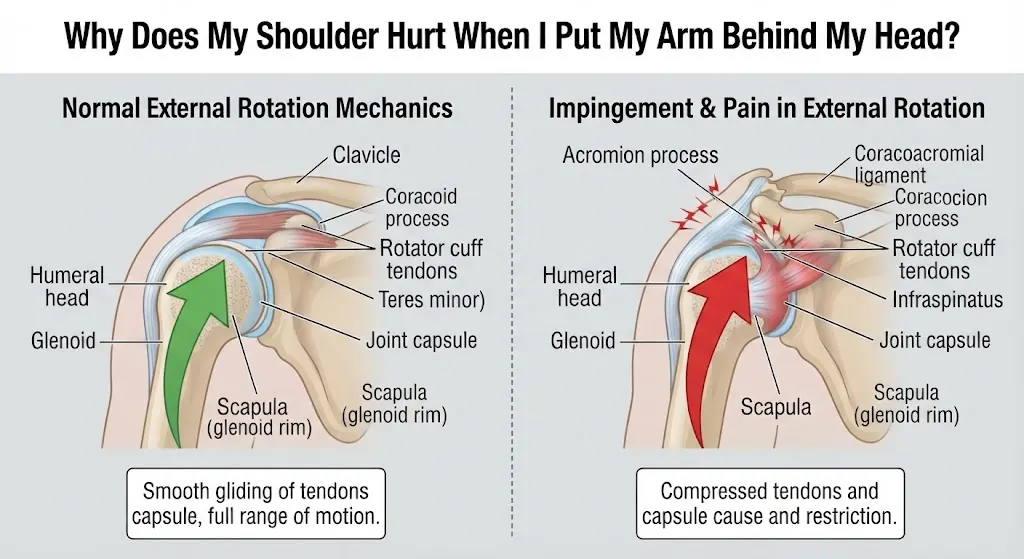
This pain does not automatically mean you have a serious injury or a torn tendon. However, repeated pain, stiffness, weakness, or a feeling that your shoulder may slip out of place deserves attention, especially if symptoms are getting worse.
The cause may involve the rotator cuff tendons, shoulder bursa, joint capsule, or labrum—the ring of cartilage that helps stabilize the shoulder joint. Understanding when the pain occurs, what other symptoms accompany it, and how to respond safely can help you decide what to do next.
What Causes Shoulder Pain When You Put Your Arm Behind Your Head?
The position combines shoulder elevation with outward rotation. If the tendons, muscles, or joint structures are irritated or stiff, this movement may reproduce pain. The movement alone cannot identify the exact cause.
| Possible cause | Symptoms that may occur | Clues to notice |
|---|---|---|
| Rotator cuff irritation or tear | Pain when lifting or rotating the arm; sometimes weakness | Pain with reaching overhead or lifting objects |
| Shoulder impingement | Pinching or aching during certain arm positions | Pain may increase when raising the arm |
| Shoulder tendonitis | Tenderness and pain with repeated movement | Symptoms may follow repetitive work or exercise |
| Frozen shoulder | Increasing stiffness and restricted movement | Reaching behind the head and back becomes difficult |
| Labral injury or shoulder instability | Deep pain, catching, clicking, or a slipping sensation | Symptoms may follow trauma, dislocation, or repetitive overhead activity |
| Shoulder bursitis | Aching and tenderness with movement | Pain may worsen when lying on the affected side |
These conditions can overlap, and similar symptoms can have different causes. For a broader overview, see different types of shoulder pain and what may cause them.
1. Rotator cuff irritation
The rotator cuff is a group of muscles and tendons that help move and stabilize your shoulder. Irritation can develop after repetitive overhead activity, heavy lifting, or a sudden increase in exercise. A more substantial tear may cause noticeable weakness, although pain and weakness do not always indicate a tear.
Read about rotator cuff tear symptoms and recovery if you have persistent pain or difficulty lifting your arm.
2. Shoulder impingement or tendonitis
Some shoulder positions can compress or load irritated tissues, causing a pinching sensation. Repetitive reaching, throwing, swimming, or overhead lifting may aggravate symptoms. Shoulder impingement is a clinical description of painful movement, not proof that a particular structure is damaged.
Learn more about shoulder impingement symptoms and treatment and shoulder tendonitis symptoms and causes.
3. Frozen shoulder or a labral injury
Frozen shoulder can gradually limit both active and passive movement, often making it difficult to reach behind your head or fasten clothing. A labral injury may cause deeper joint pain, catching, or instability, particularly after trauma or repeated overhead activity.
The early signs of frozen shoulder can help you recognize a pattern of progressive stiffness. If you have clicking, instability, or pain after an injury, learn about early signs of a shoulder labral tear.
Why Does This Position Trigger Pain?
The position may be uncomfortable because it requires more than simply lifting your arm. Your shoulder must rotate and move while several muscles and tendons control the joint. If movement is restricted or tissues are sensitive, the combined motion can hurt even when other activities feel comfortable.
| What you notice | What it may suggest |
|---|---|
| Pain mainly when raising the arm | Rotator cuff irritation or impingement |
| Stiffness in several directions | Frozen shoulder or joint stiffness |
| Clicking, catching, or instability | Possible labral injury or another joint problem |
| Pain with neck movement or tingling | A possible neck-related nerve problem |
| Pain and weakness after an injury | A rotator cuff injury or another acute shoulder injury |
These are clues, not a diagnosis. For example, shoulder pain when raising your arm can occur with several different conditions. Pain near the outer shoulder may also involve shoulder bursitis, while neck pain that spreads into the shoulder may have a different source.
How Can You Relieve Shoulder Pain at Home?
If the pain is mild and there was no major injury, try these steps:
-
Modify painful movements. Temporarily avoid forcing your arm behind your head or repeatedly testing the painful position.
-
Keep the shoulder moving gently. Use comfortable movements within your current range rather than holding the arm completely still.
-
Try a cold or warm pack. Apply a wrapped cold pack after an activity that aggravates symptoms, or gentle warmth if stiffness is more noticeable. Protect your skin and stop if either worsens the pain.
-
Review your activities. Reduce heavy overhead lifting and movements that repeatedly trigger symptoms.
-
Use medicines cautiously. Over-the-counter pain relievers may help some people, but they are not suitable for everyone. Follow the label and ask a pharmacist or clinician if you have medical conditions, take other medicines, or are unsure what is safe.
These ways to relieve shoulder pain at home may help manage symptoms, but persistent pain may need an examination. Avoid aggressive stretching or strengthening through sharp pain. A clinician or physical therapist can recommend appropriate exercises for shoulder pain relief. Improving movement habits and using posture exercises for shoulder and neck pain may also be useful when relevant to your symptoms.
When Should You Seek Medical Care?
Arrange a medical assessment if pain persists, repeatedly returns, limits dressing or grooming, disrupts sleep, or comes with weakness or worsening stiffness. A clinician may check your range of motion, strength, neck movement, and injury history. Depending on the findings, imaging may be considered; X-ray versus MRI for shoulder pain explains how these tests differ.
Seek urgent care after a significant injury if the shoulder looks deformed, you cannot move your arm, or you develop sudden severe pain or marked weakness. These can be signs of a serious injury, including a shoulder dislocation.
| Level of concern | What to do |
|---|---|
| Mild pain that improves with rest | Monitor symptoms and modify activities |
| Persistent pain, reduced movement, or weakness | Arrange a clinical assessment |
| Severe pain after injury, deformity, or inability to move the arm | Seek urgent medical care |
| Shoulder pain with chest pressure, shortness of breath, sweating, or faintness | Call 911 in the United States |
Shoulder pain can sometimes accompany a heart problem, particularly when it occurs with other possible heart-related symptoms. Do not assume these symptoms are caused by a muscle strain.
Frequently Asked Questions
1. Why does my shoulder hurt only when I put my arm behind my head?
This position combines lifting and rotating the shoulder. Irritated tendons, stiffness, or other joint problems may hurt only during that movement.
2. Can sleeping with my arm overhead cause shoulder pain?
It can aggravate an already sensitive shoulder, especially if you remain in that position for a long time. Try a more comfortable position and support the arm with a pillow.
3. Does this pain mean I have a rotator cuff tear?
No. Tendon irritation, bursitis, impingement, and stiffness can cause similar symptoms. An examination helps determine whether further testing is needed.
4. Should I stretch through the pain?
No. Avoid forcing the movement or pushing through sharp pain. Gentle, comfortable movement is generally preferable until the cause is clearer.
5. How long does shoulder pain take to improve?
It depends on the cause and severity. Mild irritation may settle with activity changes, while persistent stiffness or a significant injury can take longer and may need treatment.
6. Can I continue working out?
Modify exercises that trigger pain, particularly overhead movements. Return to more demanding activity gradually as comfort and function improve.
7. Why does my shoulder feel stiff as well as painful?
Stiffness may occur with joint irritation or a condition such as frozen shoulder. Progressive loss of movement in several directions warrants assessment.
8. Do I need an MRI?
Not always. Many shoulder problems can initially be assessed through your symptoms and physical examination; imaging depends on the suspected cause and clinical findings.
9. When should I see a doctor?
Seek an appointment for persistent or worsening pain, limited movement, recurring symptoms, or weakness. Get urgent care for severe pain after injury or a visibly deformed shoulder.
10. Can shoulder pain come from the neck?
Yes. Problems involving the neck can refer pain to the shoulder and may also cause tingling, numbness, or pain extending down the arm.
Conclusion
Shoulder pain when putting your arm behind your head can result from tendon irritation, bursitis, stiffness, or other shoulder conditions. Avoid forcing painful movement, keep activity within a comfortable range, and seek assessment if symptoms persist or function declines. Severe injury symptoms or signs of a possible heart problem require urgent attention.
Disclaimer: This article is provided for educational and informational purposes only.
This article is for education purpose only and is not a diagnosis or a substitute for medical advice.