
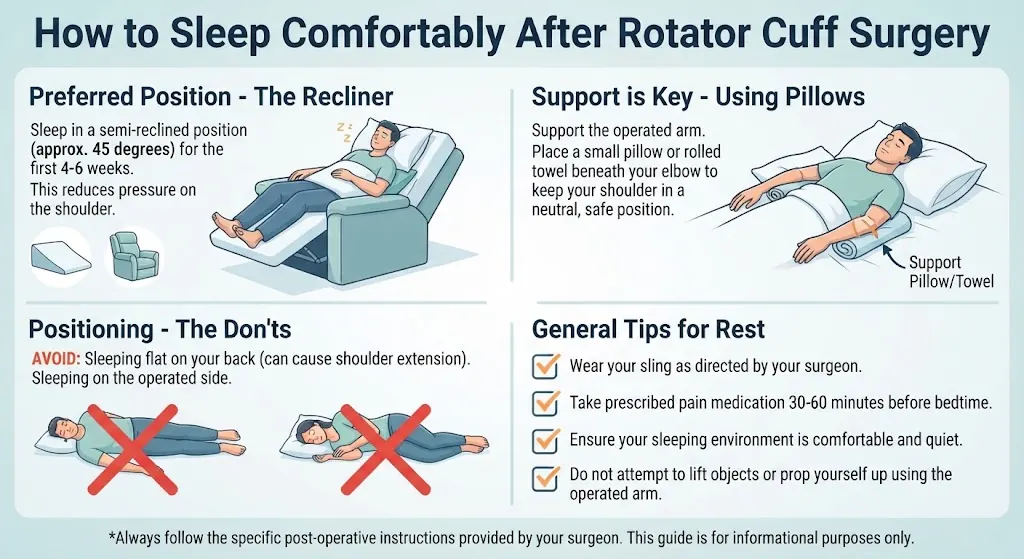
Nighttime discomfort is common during recovery, but severe or worsening pain should not automatically be dismissed as normal. The goal is to support your arm, avoid putting pressure on the repair, and follow your surgeon’s instructions about sling use and movement.
The best sleeping position after rotator cuff surgery is often on your back with your upper body slightly elevated and your operated arm supported. This guide explains how to arrange your pillows, sleep safely in a bed or recliner, manage nighttime discomfort, and recognize symptoms that need medical attention.
What Is the Best Sleeping Position After Rotator Cuff Surgery?
Sleeping on your back with your upper body elevated is often the most comfortable option during the early recovery period. Elevation can make it easier to support your shoulder and get in and out of bed without sudden movements.
Try these adjustments:
-
Elevate your upper body: Use a wedge pillow or adjustable bed to create a gentle incline rather than bending sharply at the waist.
-
Support your operated arm: Place a pillow under your elbow and forearm so your arm does not fall backward or pull away from your body.
-
Keep your sling on if prescribed: Many surgeons recommend wearing it during sleep for several weeks.
-
Avoid rolling onto the operated shoulder: Position pillows around your body to make unintentional rolling less likely.
The right setup should feel stable rather than force your shoulder into an uncomfortable position. For more ideas on how to relieve rotator cuff pain at night, focus on support and positioning instead of trying to stretch or reposition the healing shoulder.
Can You Sleep in a Recliner After Rotator Cuff Surgery?
Yes. A recliner can be helpful during the first days or weeks after surgery, especially if getting into bed or lying flat increases discomfort. Its backrest can support your upper body while reducing the effort needed to change positions.
If you use a recliner, make sure your operated arm remains supported and your sling stays in the position recommended by your surgeon. Avoid reclining so far that your arm slips backward or your shoulder becomes unsupported.
A recliner is not essential, however. A bed with a wedge pillow and strategically placed cushions may work just as well. Choose the setup that allows you to rest comfortably and get up safely.
How Long Should You Sleep in an Elevated Position?
There is no single timeline for everyone. Some people prefer sleeping with their upper body elevated for the first few weeks, while others can gradually return to a flatter position as discomfort improves and their surgeon permits it.
| Recovery period | Practical sleeping approach |
|---|---|
| First 1–2 weeks | Use pillows or a recliner to support the upper body and arm; follow sling instructions |
| Weeks 2–6 | Continue the setup that minimizes discomfort and protects the repair |
| After about 6 weeks | Consider gradually changing positions if your surgeon approves and your shoulder tolerates it |
| Later recovery | Return toward normal sleep positions as comfort and movement improve |
This is a general guide, not a rule for removing the sling or changing your rehabilitation plan. Many patients wear a sling for approximately 4–6 weeks, although some repairs require a different schedule. Follow this guide to how long you wear a sling after rotator cuff surgery for more information.
Can You Sleep on Your Side After Rotator Cuff Surgery?
Avoid sleeping on the operated shoulder until your surgeon says it is safe. Direct pressure can increase discomfort and may put unwanted stress on the healing area.
Sleeping on the opposite side may eventually be possible, but it can still allow the operated arm to move forward or drop across your body. If your surgical team approves side sleeping, use pillows to support the operated arm in the prescribed position.
Do not switch positions simply because the pain has decreased. Tendon healing takes longer than the initial improvement in symptoms. For an overview of rotator cuff surgery recovery time, remember that comfortable sleep and full tendon healing are separate milestones.
How Can You Reduce Shoulder Pain at Night?
Nighttime pain may come from inflammation, muscle tension, pressure on the shoulder, or difficulty keeping the arm supported. The following measures may help, depending on your surgeon’s instructions.
Use cold therapy if approved
A cold pack wrapped in a thin towel may help reduce discomfort. Follow your discharge instructions about timing, protect your skin, and never fall asleep with an ice pack attached.
Take medication as directed
If your clinician prescribed pain medicine, follow the schedule and dosage provided. Do not take extra doses or combine medications without checking whether doing so is safe.
Prepare before bedtime
Keep water, your phone, and other essentials within reach of your unoperated arm. Arrange pillows before lying down, and ask for assistance if moving into bed causes sudden shoulder movement.
Avoid unapproved shoulder exercises
Do not stretch, lift, or actively raise the operated arm to relieve nighttime stiffness unless those movements are part of your approved rehabilitation plan. Learn about when you can exercise after rotator cuff surgery before adding movements to your routine.
What Can Make Sleeping After Surgery More Difficult?
| Common difficulty | What may help |
|---|---|
| Pain when lying flat | Try gentle upper-body elevation |
| Arm feels unsupported | Add a pillow under the elbow and forearm |
| Sling causes discomfort | Ask your surgical team to check its fit |
| Difficulty getting into bed | Use a stable setup and ask for assistance |
| Waking when rolling over | Place pillows around your body to limit rolling |
If sleep remains difficult, discuss it with your surgeon rather than changing your sling or medication schedule independently. Recovery also depends on the underlying injury and procedure; rotator cuff tear symptoms and treatment options can help explain why different repairs have different restrictions.
Warning Signs: When Should You Contact Your Surgeon?
Some soreness and sleep disruption can occur during recovery, but certain symptoms need prompt assessment.
Contact your surgical team promptly if you notice:
-
Pain that is becoming more severe instead of gradually improving.
-
Increasing redness, warmth, swelling, or drainage around the incision.
-
Fever or chills.
-
New or persistent numbness, tingling, or weakness in the hand or arm.
-
A sling that causes significant pressure, skin injury, or changes in hand color.
Seek emergency care for chest pain, difficulty breathing, fainting, or sudden severe symptoms. Do not assume these are ordinary postoperative discomfort.
Frequently Asked Questions
1. How many pillows should I use after rotator cuff surgery?
There is no required number. Use enough pillows to elevate your upper body comfortably and support your elbow and forearm without pushing the shoulder into an awkward position.
2. Should I wear my sling while sleeping?
Many patients are instructed to wear the sling overnight during early healing. Follow your surgeon’s specific directions, even if the sling feels unnecessary when pain improves.
3. Is it normal to sleep poorly after rotator cuff surgery?
Sleep disruption is common because of discomfort, limited movement, and changes to your usual routine. If pain repeatedly prevents sleep or gets worse, contact your surgical team.
4. Can I sleep flat on my back?
Some patients can, but elevation may be more comfortable during the early weeks. Choose the position that supports your arm and follows your postoperative restrictions.
5. When can I sleep on my operated shoulder?
Wait until your surgeon confirms that side sleeping on the repaired shoulder is safe. The timeline depends on the repair and your progress.
6. Can I sleep on my unoperated side?
Possibly, once your surgical team approves it. Support the operated arm with pillows so it does not hang forward or move into a restricted position.
7. Is a recliner better than a bed?
Not necessarily. A recliner may make positioning easier at first, but a properly arranged bed can also provide comfortable support.
8. Can I remove my sling at night if it feels uncomfortable?
Do not remove it overnight unless your surgeon has approved that change. Ask the care team to assess the fit if it causes pressure or persistent discomfort.
9. What should I do if I wake up lying on my operated shoulder?
Carefully return to a supported position without forcing the arm through a painful movement. Contact your surgical team if you develop new severe pain or other concerning symptoms.
10. When will I sleep normally again?
Sleep often improves gradually over several weeks, but some people need longer. The timeline depends on pain, the extent of the repair, and how quickly normal positions become comfortable and permitted.
Conclusion
Sleeping after rotator cuff surgery is often easier when you keep your upper body slightly elevated, support your operated arm, and follow your sling instructions. Avoid putting pressure on the repaired shoulder or adding unapproved exercises. If pain worsens or you develop signs of a complication, contact your surgical team rather than assuming it is part of routine recovery.
Disclaimer: This article is provided for educational and informational purposes only.
This article is for education purpose only and is not a diagnosis or a substitute for medical advice.