
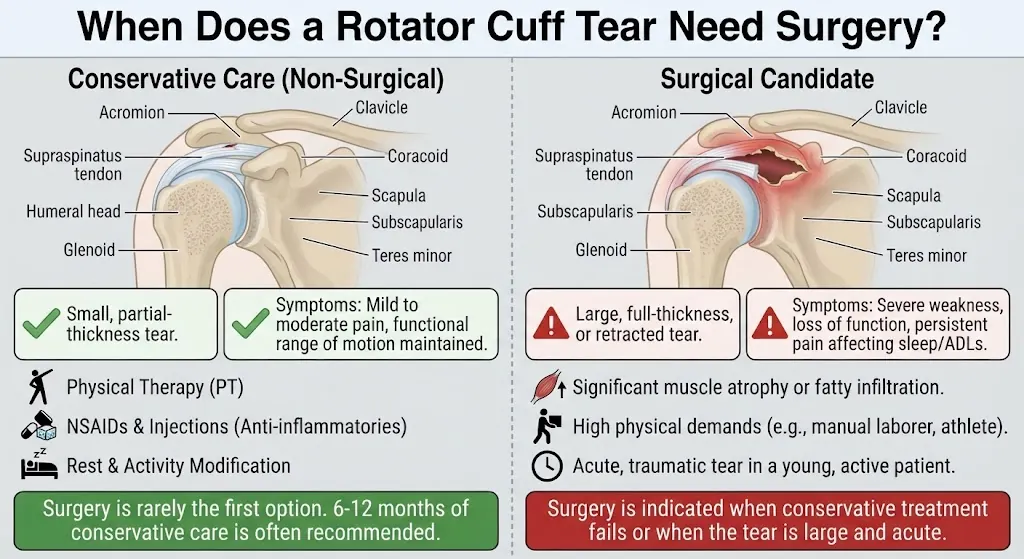
A rotator cuff tear does not automatically mean you need surgery. Many people improve with activity modification, pain management, and physical therapy. However, certain tears—especially those caused by a significant injury or associated with substantial weakness—may benefit from earlier surgical evaluation.
Understanding when a rotator cuff tear needs surgery involves more than looking at an MRI. Your symptoms, tear size and location, age, activity goals, overall health, and response to nonsurgical treatment all help guide the decision.
When Does a Rotator Cuff Tear Need Surgery?
Surgery is generally considered when a tear causes significant functional problems, is unlikely to respond adequately to conservative care, or has features that make timely repair important. The decision should be individualized rather than based on a single symptom or scan result.
1. A sudden injury causes weakness
A traumatic tear may occur after a fall, lifting something heavy, or a sudden force on the arm. If you develop new, substantial weakness or cannot raise your arm after an injury, seek prompt medical assessment.
A complete tear following trauma may be more likely to warrant early surgical consultation than a small, gradual tear associated with aging. Early assessment helps determine the extent of injury and whether delaying treatment could affect repair options.
2. Pain and weakness persist despite physical therapy
For many people, initial treatment includes modifying painful activities, appropriate pain relief, and a structured rehabilitation program. Surgery may be discussed when symptoms continue to interfere with work, sleep, sports, or everyday tasks despite a reasonable trial of nonsurgical treatment.
There is no universal waiting period. The appropriate duration depends on the tear, symptom severity, functional limitations, and whether the shoulder is improving.
3. The tear is large or progressing
Larger tears, tears involving multiple tendons, and tears associated with muscle deterioration may be more difficult to repair over time. A clinician may recommend surgical consultation if examination and imaging suggest a substantial tear that matches the person’s symptoms.
However, tear size alone does not determine the need for surgery. Some people have tears visible on imaging but relatively few symptoms, while others have significant pain and disability from smaller injuries.
4. Shoulder function remains seriously limited
Surgery may be considered when weakness prevents you from performing essential activities or returning to important work or sports. The potential benefit must be weighed against surgical risks, rehabilitation demands, and the likelihood that the tendon can be repaired successfully.
For a broader overview, see rotator cuff tear signs, treatment, and recovery.
Surgery vs. Nonsurgical Treatment: What Is the Difference?
| Factor | Nonsurgical treatment | Surgical treatment |
|---|---|---|
| Main approach | Activity changes, pain management, physical therapy | Repairing the tendon when appropriate, followed by rehabilitation |
| Often considered for | Many degenerative tears, manageable symptoms, people improving with therapy | Selected traumatic tears, persistent disability, substantial weakness, or tears with concerning features |
| Main advantage | Avoids surgical risks and postoperative restrictions | May restore tendon attachment and improve strength when repair succeeds |
| Main limitation | The tendon may remain torn, and symptoms may persist | Healing takes time, and the tendon may fail to heal or tear again |
| Recovery demands | Progressive exercises over weeks or months | Often several months of protection and rehabilitation |
Nonsurgical care can improve pain and function even when the tendon does not fully heal. Conversely, surgery does not guarantee complete pain relief or restoration of strength.
Can a Rotator Cuff Tear Heal Without Surgery?
Some partial tears and many degenerative tears can be managed successfully without an operation. Treatment may include physical therapy, avoiding aggravating movements, and medication when appropriate. A full-thickness tear generally does not reattach itself to the bone without repair, although symptoms and function can still improve.
Read more about whether a rotator cuff tear can heal without surgery and living with a torn rotator cuff without surgery.
Physical therapy should be tailored to the injury. Avoid heavy overhead lifting or exercises that produce sharp pain until you have appropriate guidance. For persistent symptoms, a clinician may discuss nonsurgical versus surgical shoulder treatment options.
What Tests Help Determine Whether Surgery Is Needed?
A clinician will review how the injury occurred, assess shoulder movement and strength, and check for other possible causes of pain. Imaging helps confirm the suspected injury and assess its severity.
-
X-rays can identify certain bone changes, arthritis, or other structural problems, but they do not directly show most rotator cuff tears.
-
Ultrasound can evaluate the rotator cuff tendons and may help identify a tear.
-
MRI can show tear size, location, tendon retraction, and muscle changes that may affect treatment planning.
An imaging result should be interpreted alongside symptoms and the physical examination. For persistent pain despite a normal X-ray, additional imaging may sometimes be appropriate.
What Happens If You Delay Surgery?
The consequences depend on the type and severity of the tear. Some people remain comfortable with nonsurgical treatment, while others experience persistent weakness or worsening function. Certain tears can enlarge or develop muscle changes that make later repair more difficult, but progression is not inevitable.
Seek prompt assessment after a significant injury, especially if you suddenly cannot lift your arm. For gradual symptoms, arrange an appointment if pain, weakness, or limited movement persists or worsens. You can also review what may happen when a rotator cuff tear is left untreated.
Frequently Asked Questions
1. What percentage of rotator cuff tears need surgery?
There is no single percentage that applies to everyone. The need for surgery depends on tear type, symptoms, functional limitations, health, and personal goals—not simply whether a tear appears on imaging.
2. How long should I try physical therapy before considering surgery?
The timeframe varies by injury and severity. Your clinician may recommend a period of structured rehabilitation for a degenerative tear, while a significant traumatic tear may require earlier specialist evaluation.
3. Does a full-thickness rotator cuff tear always need surgery?
No. Some people with full-thickness tears manage their symptoms and function without surgery. However, traumatic tears, marked weakness, or ongoing disability may make surgical consultation more important.
4. Is surgery necessary if an MRI shows a tear?
No. Imaging findings must be matched with symptoms and examination results. Some tears are present without causing substantial problems, particularly as people get older.
5. Can a rotator cuff tear get worse without surgery?
Yes, some tears can enlarge or develop muscle changes over time, although this does not happen in every case. Follow-up is important if weakness or pain persists or progresses.
6. Is rotator cuff surgery worth it?
It may be worthwhile when the expected improvement in pain and function outweighs the risks and rehabilitation demands. The likely benefit depends on the tear, repairability, overall health, and activity goals.
7. How long does recovery from rotator cuff surgery take?
Recovery commonly takes several months, and strengthening may begin only after an initial period of protection. The timeline varies with the repair, tendon quality, and rehabilitation plan.
8. Can I exercise with a rotator cuff tear?
Often, yes, but exercises should match the injury and your current abilities. Avoid movements that sharply increase pain or weakness, and get professional guidance before heavy lifting or overhead training.
9. What symptoms suggest I should see a specialist quickly?
Sudden weakness after an injury, inability to raise the arm, or severe pain after a fall warrants prompt evaluation. Increasing weakness or persistent loss of function also deserves medical attention.
10. What questions should I ask before deciding on surgery?
Ask about the tear’s size and repairability, the expected benefits of surgery versus therapy, the risks of waiting, and your likely rehabilitation timeline. Discuss how each option could affect work, sleep, driving, and the activities that matter most to you.
Conclusion
A rotator cuff tear may need surgery when a significant injury causes weakness, symptoms remain disabling despite appropriate nonsurgical care, or the tear’s features raise concerns about future function or repairability. Many tears can be managed without surgery, so the best next step is an individualized assessment that considers both imaging and how well your shoulder works.
Disclaimer: This article is provided for educational and informational purposes only.
This article is for education purpose only and is not a diagnosis or a substitute for medical advice.