
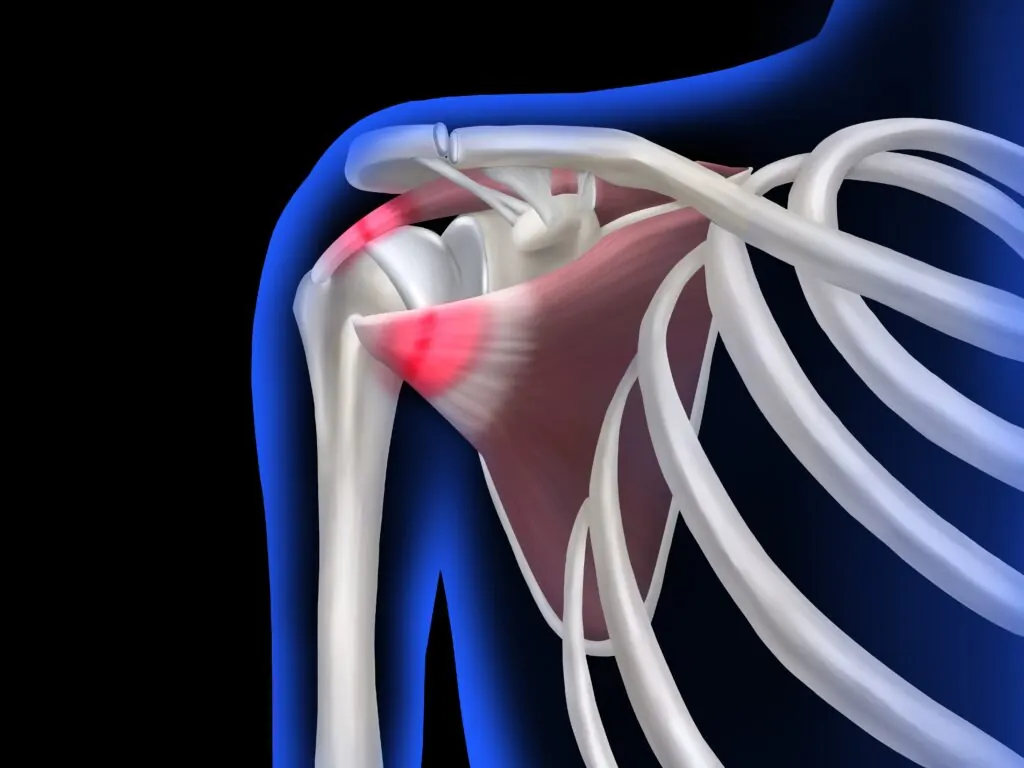
The shoulder is one of the most mobile and frequently used joints in the human body, and the rotator cuff is the group of muscles and tendons that makes that remarkable range of motion possible. When something goes wrong with the rotator cuff — whether through a sudden injury or gradual wear — the impact on daily life can be significant. Simple activities like reaching overhead to grab something from a shelf, brushing your hair, fastening a seatbelt, or even sleeping comfortably on your side can become genuinely painful and frustrating. For many people, the pain starts subtly and worsens over weeks or months before they realize something is seriously wrong.
If you have been told you have a rotator cuff tear or suspect you might, it is important not to panic. While the words “torn tendon” can sound alarming, the reality is that rotator cuff tears are extremely common — particularly in adults over 40 — and the majority of people recover successfully with the right treatment approach. Many partial tears heal without surgery, and even full tears can be managed effectively depending on your age, activity level, and overall health. The key is understanding your injury clearly so you can make informed decisions about your recovery.
A rotator cuff tear occurs when one or more of the four tendons connecting the rotator cuff muscles to the upper arm bone (humerus) become partially or completely torn. These tears can result from a single traumatic event like a fall or heavy lift, or develop gradually through repetitive overhead movements and age-related degeneration. Understanding the type, severity, and location of your tear — along with your treatment options — is the foundation of a successful recovery plan that gets you back to full function.
What Is the Rotator Cuff?
The rotator cuff consists of four muscles and their associated tendons that surround the shoulder joint — the supraspinatus, infraspinatus, teres minor, and subscapularis. Together they stabilize the ball of the upper arm within the shoulder socket, control rotation, and power lifting and reaching movements. The supraspinatus tendon, which runs across the top of the shoulder, is by far the most commonly torn because of its position between the humerus and the acromion bone, where it is vulnerable to impingement and mechanical wear over time.
Types of Rotator Cuff Tears
Partial Thickness Tear
A partial tear means the tendon is damaged but not completely severed. The tendon fibers are frayed or split but remain partially intact, maintaining some continuity between the muscle and bone. Partial tears are graded by depth — low-grade partial tears involve less than 50% of the tendon thickness, while high-grade partial tears involve more than 50% and carry a higher risk of progressing to a full tear if left untreated or if the shoulder continues to be overloaded.
Partial tears are more common than full tears and frequently occur in people who perform repetitive overhead activities such as painters, carpenters, swimmers, tennis players, and baseball pitchers. They can also result from a single traumatic event but more often develop gradually over time. Many partial tears respond excellently to conservative treatment, making early diagnosis and management particularly important.
Full Thickness Tear
A full thickness tear — also called a complete tear — means the tendon has been completely severed, creating a hole through the full depth of the tendon. When this occurs, the muscle is no longer connected to the bone at that point, which can significantly impair shoulder strength and function. Full thickness tears are classified further by size — small tears are under 1 cm, medium tears range from 1–3 cm, large tears from 3–5 cm, and massive tears exceed 5 cm or involve multiple tendons simultaneously.
Full tears can occur suddenly from a traumatic event such as falling on an outstretched arm or lifting a very heavy object, but they more commonly develop from a long-standing partial tear that eventually propagates through the remaining tendon tissue. Massive rotator cuff tears involving multiple tendons represent the most severe end of the spectrum and typically cause profound weakness and functional limitation.
Causes and Risk Factors
Age-Related Degeneration
The most significant risk factor for rotator cuff tears is age. As tendons age they lose elasticity, blood supply decreases, and collagen fibers weaken — making them increasingly vulnerable to tearing even under normal daily loads. Rotator cuff tears are rare before age 40 but become progressively more common thereafter, affecting an estimated 30% of people over 60 and more than 60% of people over 80, though many of these tears cause no symptoms at all.
Repetitive Overhead Activities
- Occupational exposure: Jobs requiring repeated overhead reaching, lifting, or pulling — such as construction, painting, or plumbing — place chronic stress on rotator cuff tendons and accelerate degenerative changes over time.
- Sports involving overhead motion: Swimming, tennis, baseball pitching, volleyball, and weightlifting all place significant repetitive load on the rotator cuff, particularly the supraspinatus and infraspinatus tendons.
Traumatic Injury
Sudden tears can result from a single high-force event such as falling onto an outstretched arm, lifting an unexpectedly heavy object, or a direct blow to the shoulder. Traumatic tears tend to occur in younger, more active individuals and are more likely to require surgical repair than degenerative tears.
Other Contributing Factors
Bone spurs on the underside of the acromion can mechanically impinge and gradually abrade the supraspinatus tendon with every shoulder movement — a process that significantly accelerates tendon degeneration. Smokers have a higher incidence of rotator cuff tears due to reduced blood supply to tendons. Previous shoulder injuries, including shoulder impingement and bursitis, also increase long-term tear risk.
Signs and Symptoms
Pain Patterns
Rotator cuff tear pain is typically felt deep in the shoulder and upper arm, often described as a dull ache that intensifies with specific movements. Reaching overhead, lifting objects away from the body, reaching behind the back, or lying on the affected shoulder are classic pain triggers. Night pain — particularly pain that wakes you from sleep when rolling onto the shoulder — is one of the most characteristic and diagnostically significant symptoms of a significant rotator cuff tear.
Weakness
Loss of shoulder strength is a hallmark of rotator cuff tears, particularly full thickness tears. Patients often notice difficulty raising the arm above shoulder height, weakness when rotating the arm outward, and an inability to maintain the arm in an elevated position. In massive tears, the arm may actually drop when attempting to hold it elevated — a finding called the drop arm sign that strongly indicates a full thickness supraspinatus tear.
Limited Range of Motion
Both pain and mechanical disruption from tendon tearing restrict shoulder movement. Patients commonly report difficulty reaching behind the back, inability to raise the arm fully overhead, and stiffness that worsens after periods of inactivity. If left untreated, progressive stiffness can eventually develop into a secondary frozen shoulder — a complication that significantly complicates and prolongs recovery, as outlined in our guide on frozen shoulder early signs, stages and recovery.
Additional Symptoms
- Clicking or crackling sensations: Crepitus — grinding, popping, or crackling during shoulder movement — is common with rotator cuff pathology and results from irregular tendon surfaces moving over the shoulder joint structures.
- Muscle atrophy: In long-standing complete tears, the disconnected muscle gradually atrophies and wastes away, visible as a hollow appearance above or behind the shoulder blade — a sign that surgical repair may become less feasible over time.
Diagnosis
Clinical Examination
An orthopedic specialist will perform a series of specific physical tests to identify which tendon is affected and estimate tear severity. The empty can test assesses supraspinatus integrity by having the patient resist downward pressure with the arm elevated and internally rotated. The external rotation lag sign evaluates infraspinatus function. The lift-off test assesses the subscapularis. Together these tests provide a detailed functional picture of rotator cuff integrity before imaging is obtained.
Imaging
MRI is the most accurate imaging tool for diagnosing rotator cuff tears, providing precise information about tear location, size, depth, and the quality of remaining tendon and muscle tissue — all critical factors in determining whether surgical or conservative management is most appropriate. Ultrasound is a cost-effective, dynamic alternative that can accurately identify full and partial thickness tears in experienced hands. X-rays cannot visualize soft tissue tears but help identify associated bone spurs, acromion shape, and glenohumeral arthritis.
Treatment Options
Conservative (Non-Surgical) Treatment
Conservative management is the appropriate first-line treatment for most partial tears and for many full thickness tears in older, less active patients whose functional demands are modest. Research consistently shows that a significant proportion of full thickness rotator cuff tears — particularly in patients over 60 — can be managed successfully without surgery when combined with a structured rehabilitation program.
Medications including NSAIDs reduce pain and shoulder inflammation during the acute phase, allowing earlier engagement in physical therapy. Corticosteroid injections into the subacromial space provide targeted, rapid anti-inflammatory relief and are particularly useful when pain is limiting participation in rehabilitation.
Physical therapy is the cornerstone of conservative rotator cuff management and represents the most important non-surgical intervention available. A well-designed rehabilitation program addresses multiple components simultaneously. In the initial phase, the focus is on pain reduction, restoring passive range of motion, and activating the periscapular muscles that provide the stable platform the rotator cuff muscles need to function effectively. Progressive strengthening of the rotator cuff itself follows, targeting the external rotators and scapular stabilizers before advancing to more demanding functional movements. Incorporating shoulder strengthening exercises designed for athletes alongside a formal PT program can meaningfully accelerate functional recovery for active individuals.
Activity modification during conservative treatment is equally important. Avoiding overhead reaching, heavy lifting, and any activity that reproduces sharp shoulder pain allows the remaining tendon tissue to heal and prevents the tear from propagating further. Ergonomic adjustments at work and during sleep — such as using a supportive pillow to offload the shoulder — reduce cumulative stress on healing tissue.
Surgical Treatment Options
Surgery is recommended for acute full thickness tears in active younger patients, high-grade partial tears that have failed conservative management, and any patient with progressive weakness or functional limitation despite adequate conservative treatment.
Arthroscopic rotator cuff repair is the standard surgical approach for most repairable tears. Using small cameras and instruments inserted through keyhole incisions, the surgeon reattaches the torn tendon back to the humerus using suture anchors. This minimally invasive technique offers excellent visualization, less postoperative pain, and faster recovery compared to open surgery. Most small to medium tears are repaired arthroscopically as a day procedure.
Mini-open repair combines arthroscopic visualization with a small open incision for tendon repair, used for larger tears requiring more complex reconstruction. It offers good outcomes with slightly more tissue disruption than purely arthroscopic techniques.
Tendon transfer is considered for massive, irreparable tears where the tendon tissue has retracted too far or the muscle has atrophied too significantly for direct repair. Tendons from adjacent muscles — most commonly the latissimus dorsi or lower trapezius — are transferred to partially restore rotator cuff function. This is a more complex procedure reserved for specific patient profiles.
Reverse total shoulder replacement is an option for elderly patients with massive irreparable tears combined with significant shoulder arthritis, providing reliable pain relief and functional improvement when repair is no longer feasible.
Recovery Timeline
Recovery from a rotator cuff tear varies considerably depending on tear size, treatment approach, and patient factors including age, health status, and commitment to rehabilitation.
Conservative Recovery
- Weeks 1–4: Pain management with NSAIDs and ice, activity modification, and gentle pendulum exercises to maintain passive range of motion without loading the healing tendon.
- Weeks 4–8: Begin active-assisted range of motion exercises. Start periscapular strengthening and gentle rotator cuff activation exercises as pain allows.
- Weeks 8–16: Progressive rotator cuff strengthening, scapular stabilization, and functional movement training. Most patients with partial tears experience significant improvement during this phase.
- 4–6 months: Return to full activity for most conservative cases. Ongoing maintenance exercises are essential to prevent recurrence.
Post-Surgical Recovery
- Weeks 0–6: Arm in a sling. Passive range of motion exercises only — the repair must be protected while the tendon heals back to bone. No active shoulder use.
- Weeks 6–12: Sling discontinued. Begin active range of motion and gentle strengthening. Physical therapy intensifies progressively.
- Months 3–6: Progressive strengthening targeting the repaired tendon and surrounding stabilizers. Gradual return to functional activities.
- 6–12 months: Full recovery for most surgical patients. Return to overhead sports or heavy manual labor typically requires the full 9–12 months to allow the repaired tendon to achieve adequate strength and integration.
Lifestyle and Dietary Support
Nutrition plays an important and often overlooked role in tendon healing. Adequate protein intake supports collagen synthesis in healing tendons, while vitamin C is essential for collagen formation and tissue repair. Omega-3 fatty acids reduce systemic inflammation that can delay healing. Vitamin D and calcium support overall musculoskeletal health during recovery. Understanding how changing your diet can help reduce pain naturally provides practical nutritional strategies that directly complement your rotator cuff recovery program.
Prevention Strategies
- Strengthen rotator cuff muscles proactively: Regular external rotation and scapular strengthening exercises maintain tendon resilience and reduce impingement risk, particularly for overhead athletes and manual workers.
- Warm up thoroughly before overhead activity: Cold, stiff tendons are significantly more vulnerable to tearing. A proper dynamic warm-up increases tendon elasticity and blood flow before demanding shoulder use.
- Avoid training through sharp shoulder pain: Pain during overhead activity is a warning signal. Continuing to load a symptomatic shoulder accelerates tendon damage and increases tear risk significantly.
- Address impingement early: Shoulder impingement — where the supraspinatus tendon is pinched under the acromion — is a major precursor to tearing. Early physiotherapy intervention prevents progression to a full tear.
- Maintain good posture: Rounded shoulders and forward head posture narrow the subacromial space and increase impingement risk during daily activities and exercise.
Conclusion
A rotator cuff tear is a serious but very manageable shoulder injury that responds well to the right treatment approach. Whether you have a partial tear being managed conservatively or a full tear requiring surgical repair, the principles of recovery are the same — protect the healing tissue, restore mobility gradually, build strength progressively, and commit to long-term maintenance. Most people return to full shoulder function with patience and consistent rehabilitation. Early diagnosis, appropriate treatment selection, and adherence to a structured recovery program are the three factors that most reliably determine outcomes. Always consult a qualified orthopedic specialist to confirm your diagnosis and guide your individual recovery plan.
Frequently Asked Questions
1. How do I know if I have a rotator cuff tear? Key signs include deep shoulder pain, weakness when lifting the arm, night pain that disturbs sleep, and difficulty reaching overhead or behind your back. An MRI or ultrasound confirms the diagnosis.
2. Can a rotator cuff tear heal without surgery? Partial tears and many full tears in older patients respond well to conservative treatment. Surgery is typically reserved for acute tears in younger patients or cases where conservative treatment has failed after 3–6 months.
3. How long does recovery take after rotator cuff surgery? Full recovery typically takes 9–12 months. The repaired tendon requires 6 weeks of protection in a sling, followed by progressive physical therapy through the remaining recovery period.
4. What is the best exercise for a rotator cuff tear? Pendulum exercises, external rotation strengthening, and scapular stabilization exercises are the foundation of rotator cuff rehabilitation. Always perform these under physiotherapy guidance to avoid overloading healing tissue.
5. Is it safe to exercise with a rotator cuff tear? Gentle, pain-free exercises under professional guidance are beneficial and important for recovery. Avoid overhead lifting, heavy pushing, and any movement that reproduces sharp pain.
6. What happens if a rotator cuff tear is left untreated? Untreated tears can progress in size, lead to significant muscle atrophy, cause secondary frozen shoulder, and eventually result in rotator cuff arthropathy — a form of severe shoulder arthritis.
7. What is a massive rotator cuff tear? A massive tear involves two or more rotator cuff tendons or a single tear exceeding 5 cm. It causes profound weakness and may require tendon transfer or shoulder replacement rather than direct repair.
8. Does a cortisone injection help a rotator cuff tear? Corticosteroid injections reduce inflammation and pain effectively, providing a valuable window for engaging in physical therapy. They do not repair the tear but significantly improve comfort during conservative rehabilitation.
9. How do I sleep comfortably with a rotator cuff tear? Sleep on your unaffected side with a pillow supporting the injured arm, or on your back with a pillow under the affected arm. Avoid sleeping directly on the injured shoulder.
10. What foods help rotator cuff healing? Foods rich in protein, vitamin C, omega-3 fatty acids, and vitamin D support tendon collagen synthesis and reduce inflammation during recovery. Lean meats, fish, citrus fruits, leafy greens, and nuts are particularly beneficial.
Disclaimer
The information provided in this article is for educational and informational purposes only and does not constitute professional medical advice, diagnosis, or treatment.
This article is for education purpose only and is not a diagnosis or a substitute for medical advice.