
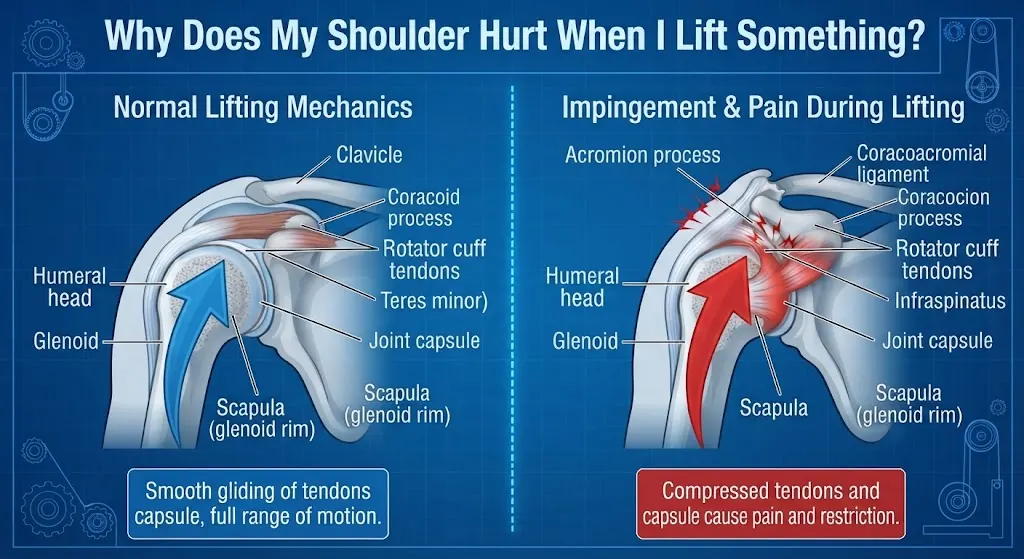
Pain during lifting does not automatically mean you have a torn tendon. Muscle strain, irritated tendons, bursitis, and other shoulder conditions can cause similar symptoms. However, sudden pain with significant weakness, particularly after an injury, should not be ignored.
The shoulder relies on muscles, tendons, ligaments, and cartilage to move and stabilize the arm. When one of these structures becomes irritated or injured, lifting can increase the load on the affected area. Understanding the possible causes, what you can safely do at home, and when to seek care can help you choose your next step.
What Causes Shoulder Pain When Lifting Something?
The cause often depends on where the pain occurs, whether it started suddenly, and whether you also notice weakness, stiffness, or clicking. The following conditions are common possibilities, but symptoms alone cannot confirm a diagnosis.
| Possible cause | Typical symptoms | Common triggers |
|---|---|---|
| Rotator cuff irritation or tear | Pain with lifting, sometimes weakness | Reaching overhead, carrying or lifting objects |
| Shoulder tendonitis | Aching and tenderness during movement | Repetitive lifting or increased exercise |
| Shoulder impingement | Pinching pain at certain angles | Raising the arm or lifting overhead |
| Shoulder bursitis | Pain and tenderness, sometimes worse when lying on the affected side | Repeated movement or shoulder irritation |
| Labral injury | Deep joint pain, catching, clicking, or instability | Trauma, dislocation, or repeated overhead activity |
| Muscle strain | Localized soreness and pain with contraction | Sudden effort, heavy lifting, or unfamiliar activity |
1. Rotator cuff problems
The rotator cuff is a group of muscles and tendons that help raise and rotate your arm while keeping the shoulder joint stable. Repetitive overhead movements, sudden strain, and age-related tendon changes can contribute to pain.
A rotator cuff problem may cause pain when lifting an object away from your body or raising it above shoulder height. More substantial injuries can cause weakness, but weakness can also result from pain itself. Learn about rotator cuff tear symptoms and recovery.
2. Tendonitis and shoulder impingement
Tendonitis involves irritation of a tendon. Shoulder impingement describes pain associated with certain shoulder movements, often involving the rotator cuff or nearby tissues. Both may become noticeable after repetitive lifting, overhead work, or a sudden increase in workout intensity.
Pain may be worse when you lift your elbow away from your body or reach above your head. Explore shoulder tendonitis symptoms and treatment and shoulder impingement symptoms and treatment options.
3. Bursitis or a labral injury
The bursa is a small fluid-filled sac that helps reduce friction around the shoulder. Irritation can cause pain with lifting and sometimes tenderness when lying on that side. A labral injury affects cartilage that helps deepen and stabilize the shoulder socket; it may cause deeper pain, catching, or a feeling of instability.
A labral injury is more concerning when symptoms begin after a fall, dislocation, or forceful movement. Read about early signs of a shoulder labral tear if these symptoms sound familiar.
Why Does Lifting Certain Objects Hurt More?
The weight matters, but so does how you hold it. An object held far from your body creates more leverage on the shoulder than the same object held close. Reaching overhead, twisting while carrying, or lifting repeatedly without adequate rest may also increase discomfort.
| Lifting situation | Why it may hurt |
|---|---|
| Lifting overhead | Places greater demands on shoulder muscles and tendons |
| Carrying a heavy bag at arm’s length | Increases the load on shoulder-supporting muscles |
| Lifting with a sudden jerk | Can strain muscles or aggravate an existing injury |
| Repeating the same lift | May irritate tissues without enough recovery time |
Pain may also occur without an obvious injury. If your shoulder feels weak when raising your arm, or the pain spreads down your arm, mention those symptoms during a medical assessment. Shoulder symptoms can sometimes overlap with pain originating in the neck.
How Can You Relieve Shoulder Pain at Home?
For mild pain without a major injury, try modifying activity rather than pushing through it.
-
Temporarily reduce painful lifting. Avoid heavy loads and overhead movements that reproduce the pain.
-
Keep objects close to your body. Use both hands when practical and avoid sudden twisting while carrying.
-
Maintain gentle movement. Move the shoulder within a comfortable range instead of keeping it completely still.
-
Use cold or warmth. A wrapped cold pack may help after an aggravating activity; gentle warmth may ease stiffness. Avoid direct contact with skin.
-
Consider medication carefully. Over-the-counter pain relievers may help some people, but they can have risks and interactions. Follow the label and consult a pharmacist or clinician if you are unsure whether they are appropriate.
These home remedies for shoulder pain relief may help with symptom management, but they do not replace an assessment when pain persists. Avoid forceful stretching or strengthening exercises that cause sharp pain. A clinician or physical therapist can guide a suitable shoulder pain exercise routine.
To reduce future flare-ups, increase lifting loads gradually, take breaks during repetitive work, and warm up before strenuous exercise. These ways to prevent shoulder injuries during workouts can help you manage training demands.
When Should You See a Doctor?
Arrange a medical appointment if the pain persists, keeps returning, affects sleep, limits daily activities, or comes with ongoing weakness or stiffness. A clinician may assess your strength, range of motion, neck, and injury history. Imaging may be appropriate in some cases, depending on the examination and suspected injury.
Seek urgent medical care if you develop sudden severe pain after an injury, visible shoulder deformity, major swelling, or an inability to move your arm. These symptoms can indicate a significant injury, including a shoulder dislocation.
Call 911 in the United States if shoulder pain occurs with chest pressure, shortness of breath, sweating, faintness, or pain spreading to the jaw. These may be signs of a heart attack rather than a muscle or joint problem.
Frequently Asked Questions
1. Why does my shoulder hurt when I lift something light?
Even a light object can trigger pain when a tendon, bursa, or other shoulder structure is irritated. Persistent pain with light lifting, particularly with weakness, deserves medical assessment.
2. Does shoulder pain when lifting mean I have a rotator cuff tear?
No. Tendon irritation, bursitis, muscle strain, and other conditions can cause similar symptoms. A physical examination helps determine whether imaging or further testing is needed.
3. Should I keep lifting weights if my shoulder hurts?
Avoid exercises and loads that trigger pain until symptoms improve or the cause is assessed. Return gradually rather than testing your maximum strength while the shoulder is painful.
4. Why does my shoulder hurt when I lift my arm above my head?
Overhead movement places particular demands on the rotator cuff and other shoulder tissues. Tendon irritation, impingement-related pain, stiffness, and injuries can all contribute.
5. Can poor lifting technique cause shoulder pain?
Yes. Lifting with a sudden jerk, holding heavy objects far from your body, or repeating the same movement may increase shoulder strain. Technique changes can reduce unnecessary loading, but they will not treat every underlying condition.
6. How long does shoulder pain from lifting last?
Recovery depends on the cause and severity. Mild irritation may improve after activity modification, while a significant tendon injury or persistent joint problem may require a longer recovery and professional treatment.
7. Should I use ice or heat for shoulder pain?
Either may help, depending on your symptoms and preference. Cold may be useful after an activity that aggravates pain, while gentle warmth may help stiffness; protect your skin and stop if symptoms worsen.
8. Can shoulder pain when lifting come from the neck?
Yes. Neck-related nerve irritation can cause shoulder or arm pain, sometimes with tingling, numbness, or weakness. Tell your clinician if symptoms extend below the shoulder or change when you move your neck.
9. When might I need an MRI?
An MRI is not necessary for every case of shoulder pain. A clinician may recommend imaging when the examination suggests a significant injury or symptoms persist despite appropriate initial care.
10. When is shoulder pain an emergency?
Seek urgent care for severe pain after an injury, a visibly deformed shoulder, or an inability to move the arm. Call 911 for shoulder pain accompanied by chest pressure, breathing difficulty, sweating, or faintness.
Conclusion
Shoulder pain when lifting something can result from tendon irritation, muscle strain, bursitis, or other shoulder conditions. Reduce painful lifting, keep objects close to your body, and maintain comfortable movement. If pain persists, worsens, or comes with weakness, seek medical assessment; sudden severe symptoms or possible heart attack signs require urgent care.
Disclaimer: This article is provided for educational and informational purposes only.
This article is for education purpose only and is not a diagnosis or a substitute for medical advice.