
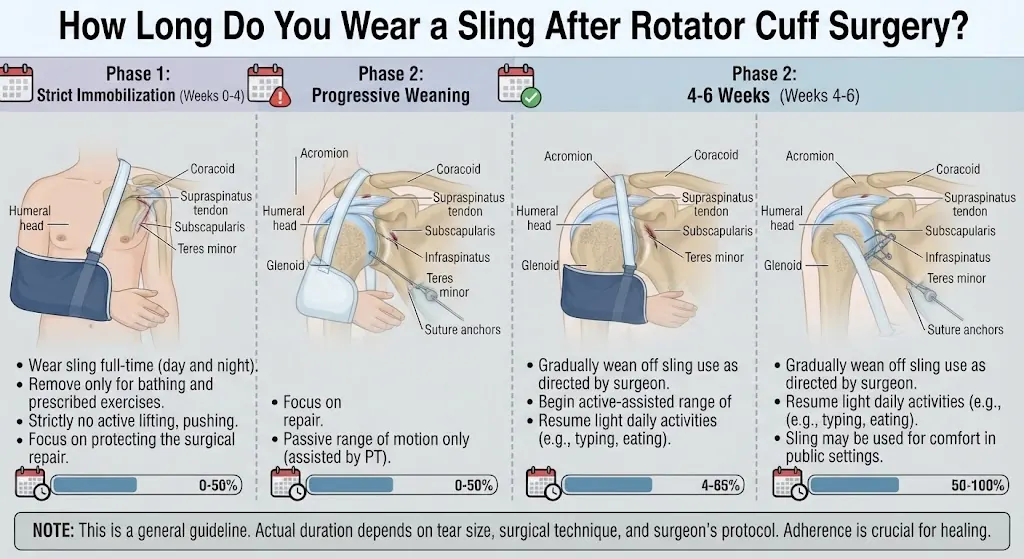
Most people wear a sling for about 4–6 weeks after rotator cuff repair, although some need a shorter or longer period. The timeline depends on the size of the tear, the repair technique, tissue quality, and your surgeon’s rehabilitation plan.
Understanding when to wear your sling, when it may be removed, and how to protect your shoulder during recovery can help you avoid unnecessary strain. This guide explains typical timelines, safe daily activities, recovery milestones, and warning signs that need medical attention.
How Long Do You Wear a Sling After Rotator Cuff Surgery?
Most patients wear a sling for approximately 4–6 weeks after rotator cuff repair. Larger or more complex tears may require longer protection, while some smaller repairs may follow a different schedule.
The sling supports your arm while the repaired tendon begins attaching to the bone. Even if your pain improves quickly, the tendon still needs time to heal. Feeling better does not necessarily mean your shoulder is ready for unsupported movement.
Your surgeon’s instructions take priority over general timelines. Do not stop using the sling early unless your surgical team approves it.
Rotator Cuff Surgery Sling Timeline
| Recovery stage | Typical sling guidance | Main goal |
|---|---|---|
| First 1–2 weeks | Usually worn most of the day and during sleep | Protect the repair and control arm movement |
| Weeks 2–4 | Often continued except for approved activities and exercises | Maintain protection while beginning prescribed rehabilitation |
| Weeks 4–6 | Some patients gradually reduce sling use with approval | Transition toward controlled shoulder movement |
| After 6 weeks | Many patients begin progressing without the sling, if cleared | Restore movement and gradually rebuild function |
These are general estimates, not a personalized schedule. The type of repair and your surgeon’s instructions may change each stage.
For a broader overview of how long rotator cuff surgery recovery takes, remember that sling removal is only one milestone; strength and comfortable movement often take several additional months to improve.
Can You Take Your Sling Off After Rotator Cuff Surgery?
Yes, but only for activities your surgical team has approved. You may be allowed to remove the sling briefly for bathing, dressing, skin care, or prescribed exercises, depending on your procedure and instructions.
When the sling is off, keep your arm supported and avoid actively lifting or reaching with the operated shoulder unless specifically permitted. Do not use the arm to push yourself out of bed or a chair.
Follow the instructions for sleeping after rotator cuff surgery, because nighttime movement can place unexpected strain on the shoulder. If you are unsure whether an activity is permitted, contact your surgical team before attempting it.
What Happens If You Stop Wearing the Sling Too Soon?
Stopping sling use too early may expose the repair to unwanted movement or strain. This is particularly important during the early healing period, when the tendon-bone attachment has not yet regained full strength.
Possible consequences include increased pain, irritation, and stress on the repair. These symptoms do not automatically mean the tendon has torn again, but new or worsening symptoms deserve attention.
Avoid lifting groceries, reaching overhead, pulling heavy doors, or using the operated arm to support your body weight until cleared. Learn more about when a rotator cuff tear needs surgery and why protecting a repair matters during recovery.
How Do You Manage Everyday Activities While Wearing a Sling?
A sling changes how you perform ordinary tasks, so planning ahead can make recovery easier.
-
Getting dressed: Choose loose, front-opening shirts. Follow your care team’s instructions for putting clothing on and taking it off without twisting the shoulder.
-
Bathing: Keep the incision dry for as long as instructed. Ask whether you may remove the sling for showering, and arrange help if balance or arm movement is limited.
-
Sleeping: Use pillows to support your arm and follow your prescribed sleeping position.
-
Walking: Gentle walking is often encouraged when safe, but avoid activities that risk falling or jostling the arm.
-
Work: Desk work may be possible earlier than manual work, depending on pain, medication, and your ability to protect the shoulder. See guidance on returning to work after rotator cuff surgery.
-
Driving: Do not drive while wearing a restrictive sling, taking sedating medication, or lacking the control needed to react safely. Ask your surgeon when driving is appropriate; this guide to driving after rotator cuff surgery explains the key considerations.
For preparation tips, review what to know before shoulder surgery.
Sling Use Compared With Other Shoulder Conditions
Not every shoulder injury requires the same support period. A rotator cuff repair involves protecting a surgically repaired tendon, while other shoulder problems may be managed with movement, therapy, or different restrictions.
| Shoulder condition | Is a sling always required? | What affects the plan? |
|---|---|---|
| Repaired rotator cuff tear | Commonly required for several weeks | Tear size, repair stability, and healing |
| Shoulder tendonitis | Usually not for a prolonged period | Pain severity and response to treatment |
| Shoulder bursitis | Usually not for a prolonged period | Symptoms and underlying cause |
| Shoulder dislocation | Often used temporarily after reduction | Stability, injury severity, and clinician guidance |
Read about rotator cuff tear symptoms and treatment, shoulder tendonitis symptoms and treatment, shoulder bursitis symptoms and relief, and shoulder dislocation recovery for condition-specific information.
What Exercises Can You Do While Wearing a Sling?
Your rehabilitation plan may include hand, wrist, and elbow movements to limit stiffness, along with specific passive shoulder exercises when approved. The exact exercises and start dates depend on the repair.
Do not begin shoulder-strengthening exercises, lift weights, or actively raise the operated arm simply because pain is improving. Premature loading can interfere with healing.
Ask your physical therapist which movements are allowed at your current stage. These resources explain exercises for shoulder pain and how to prevent shoulder injuries during workouts, but post-surgery restrictions must come first.
Warning Signs While Wearing a Sling
Usually manageable: Mild soreness, temporary stiffness, and discomfort when adjusting the sling may occur during recovery. Tell your care team if symptoms persist or interfere with your prescribed plan.
Contact your surgical team promptly: Increasing pain, worsening swelling, new numbness or tingling, persistent hand swelling, or a sling that causes pressure or skin irritation may require assessment. Fever, spreading redness, or drainage from the incision can indicate a complication.
Seek emergency care: Chest pain, difficulty breathing, fainting, or sudden severe symptoms require immediate medical attention.
Do not loosen or reposition a sling in a way that conflicts with your postoperative instructions. If it feels too tight or does not support your arm properly, ask your care team to check the fit.
Frequently Asked Questions
1. Can I sleep without a sling after rotator cuff surgery?
Many patients are instructed to wear the sling while sleeping during the early recovery period. Remove it at night only when your surgeon says it is safe.
2. Can I remove my sling to shower?
Sometimes, but this depends on your repair and wound-care instructions. Arrange support and keep the operated arm protected while bathing.
3. Is four weeks in a sling enough?
Four weeks may be sufficient for some patients, but others need six weeks or longer. Your surgeon should determine when it is safe to stop.
4. What if my shoulder does not hurt anymore?
Less pain does not mean the tendon has fully healed. Continue following sling and activity restrictions even when you feel better.
5. Should I move my elbow and wrist while wearing a sling?
These joints can often be moved to reduce stiffness, if your care team permits it. Keep the shoulder protected and follow your prescribed instructions.
6. Can I drive while wearing a sling?
Driving is generally unsafe if the sling limits steering or emergency reactions. Medication effects and your surgeon’s restrictions also matter.
7. When can I start physical therapy?
Rehabilitation timing varies with the repair and surgeon’s protocol. Some plans begin with passive movement early, while others require longer protection.
8. Can wearing a sling too long cause stiffness?
Prolonged immobilization can contribute to stiffness, but stopping too soon may jeopardize the repair. Your care team balances protection with safe movement.
9. When can I return to exercise?
Gentle activity may be allowed early, but shoulder exercises and lifting usually progress in stages. Follow your physical therapist’s guidance rather than a fixed calendar.
10. What if my sling causes hand swelling or numbness?
Check for obvious pressure or an uncomfortable fit without changing prescribed positioning. Contact your surgical team promptly, especially if symptoms are new, persistent, worsening, or accompanied by changes in hand color or temperature.
Conclusion
Most people wear a sling for around 4–6 weeks after rotator cuff surgery, but the correct duration depends on the repair and your surgeon’s instructions. Protect the shoulder, follow rehabilitation restrictions, and do not use pain relief as a signal that the tendon is fully healed. Ask your surgical team before stopping sling use or advancing activities.
Disclaimer: This article is provided for educational and informational purposes only.
This article is for education purpose only and is not a diagnosis or a substitute for medical advice.