
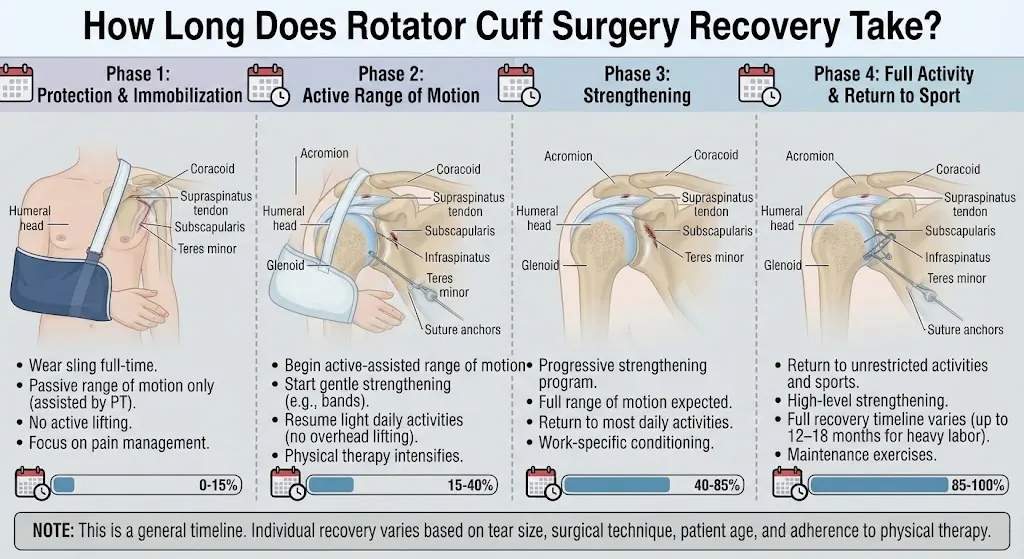
The recovery timeline depends on the size of the tear, the type of repair, your general health, and how well the tendon heals. It is normal for pain, stiffness, and sleep difficulties to affect the early weeks, but worsening symptoms should not automatically be dismissed as part of healing.
Understanding each recovery stage can help you plan work, driving, sleep, and exercise without putting unnecessary stress on the repair. This guide explains typical timelines, safe activity progression, and when to contact your surgical team.
How Long Does Rotator Cuff Surgery Recovery Take?
Full recovery often takes around 4–6 months, and some people need 6–12 months or longer to regain their best strength and function. These are broad estimates, not deadlines; larger or more complex repairs may require additional protection and rehabilitation.
| Recovery stage | Common expectations |
|---|---|
| First 1–2 weeks | Pain control, wound care, sling use |
| Weeks 2–6 | Protecting the repair; guided passive movement may continue |
| Weeks 6–12 | Gradual active movement when approved |
| Months 3–6 | Progressive strengthening, depending on healing |
| Months 6–12+ | Continued strength and functional improvement for some people |
The phases can overlap, and your surgeon may adjust them based on the repair. For context, read about what happens during rotator cuff surgery.
What Affects Your Recovery Timeline?
Recovery varies because not all rotator cuff tears are alike. Small repairs may progress faster than large tears involving multiple tendons. Chronic tears, tendon retraction, muscle changes, smoking, diabetes, and other health factors can also influence healing.
Your rehabilitation plan matters, too. Doing too much too early can strain the repair, while avoiding all movement longer than instructed can contribute to stiffness. Follow the schedule set by your surgeon and physical therapist rather than comparing your progress with someone else’s.
For more information about the injury itself, see rotator cuff tear symptoms, treatment, and recovery.
What Can You Do During Each Stage of Recovery?
First few weeks: Protect the repair
You will usually wear a sling for several weeks, depending on the procedure. Keep the incision clean and follow instructions for bathing, medication, and permitted movement. Do not lift, push, pull, or actively raise the operated arm unless your care team specifically allows it.
Ask your clinician about safe pain relief, particularly if you take blood thinners or have kidney, liver, stomach, or heart conditions. Ice may help discomfort when used as directed and protected from direct skin contact.
Weeks 6–12: Restore movement gradually
Your team may progress you from passive motion—where the arm is moved with assistance—to active movement using your own muscles. Not everyone starts these stages at the same time. Avoid adding online exercises or resistance bands without approval.
If nighttime discomfort interferes with sleep, follow guidance on how to sleep after rotator cuff surgery. Sling instructions are also important; see how long you may need a sling after surgery.
Months 3–6 and beyond: Rebuild strength
Strengthening usually begins only when the repair and your movement are ready. Progress may include light resistance and task-specific exercises, followed by heavier activity when cleared. Returning to heavy lifting, swimming, throwing, or overhead work often takes longer than returning to light daily tasks.
| Activity | What to consider |
|---|---|
| Driving | Wait until cleared, out of a restrictive sling if required, and able to control the vehicle safely |
| Desk work | May be possible earlier if pain and logistics allow |
| Heavy or overhead work | Often requires a longer recovery and specific clearance |
| Sports and weight training | Resume gradually under your rehabilitation plan |
See guidance on when you can drive after rotator cuff surgery, returning to work after surgery, and when you can exercise again.
What Is Normal, and When Should You Call Your Surgeon?
Some soreness, bruising, swelling, stiffness, and interrupted sleep can occur during early recovery. Symptoms should generally be manageable with your prescribed plan, even if improvement is uneven.
Contact your surgical team promptly if pain becomes significantly worse, the incision develops increasing redness or drainage, you develop a fever, or you notice new numbness or weakness. Seek emergency care for chest pain, difficulty breathing, or sudden severe symptoms.
Frequently Asked Questions
1. How long does it take for a rotator cuff tendon to heal?
Tendon healing takes several months, even if pain improves sooner. Your surgeon will guide when it is safe to increase activity.
2. When is pain usually worst after surgery?
Pain is often most noticeable during the first few days, particularly as a nerve block wears off. Pain levels vary, and uncontrolled or worsening pain warrants medical advice.
3. Can I sleep in my bed after surgery?
Usually, yes, but some people find a recliner or a supported, slightly upright position more comfortable initially. Follow your sling and positioning instructions.
4. When can I shower after rotator cuff surgery?
This depends on your incision closure and dressing. Follow your surgical team’s instructions and do not soak the incision until you are told it is safe.
5. When can I drive again?
You must be off impairing pain medication and able to control the vehicle safely. Your surgeon should confirm when driving is appropriate for your repair.
6. Can I return to work after two weeks?
Some people with desk-based jobs may return relatively early if pain and daily needs allow. Jobs involving lifting, reaching, or manual labor often require more time.
7. When can I lift weights again?
Do not resume weight training until your surgeon or physical therapist approves it. Heavy or overhead lifting generally comes later than gentle movement.
8. Will I regain full shoulder strength?
Many people improve substantially, but complete recovery is not guaranteed. The outcome depends on tendon condition, healing, rehabilitation, and other health factors.
9. What happens if I move my arm too soon?
Unapproved lifting or active movement can place stress on the repair and may interfere with healing. Follow your prescribed restrictions and ask your therapist which movements are allowed.
10. Can a rotator cuff tear heal without surgery?
Some tears can be managed without surgery, often using physical therapy and activity modification, but the tendon may not structurally reattach. Read about nonsurgical treatment for rotator cuff tears.
Conclusion
Rotator cuff surgery recovery commonly takes several months, with strength and function sometimes improving for a year or longer. Protect the repair, follow your rehabilitation plan, and increase activity only when cleared. If recovery symptoms worsen or seem unusual, contact your surgical team rather than assuming they are normal.
Disclaimer: This article is provided for educational and informational purposes only.
This article is for education purpose only and is not a diagnosis or a substitute for medical advice.