
It is understandable to want to drive again as soon as possible, especially for work, errands, or medical appointments. However, feeling better or being able to move your arm a little does not automatically mean you can safely control a vehicle. Pain medication and restricted movement can also affect driving ability.
This guide explains the usual recovery timeline, the signs that you may be ready, what can delay your return, and how to discuss driving safely with your surgical team. Your individual recovery plan should take priority over any general timeline.
How Long After Shoulder Replacement Can You Drive?
Many people need around 4–6 weeks or longer before considering driving after shoulder replacement, but this is a general guide, not medical clearance. Some people need more time because of pain, weakness, limited movement, complications, or restrictions related to the specific procedure.
| Recovery factor | Why it matters for driving |
|---|---|
| Sling use | A sling limits arm movement and can interfere with steering and emergency responses. |
| Pain and stiffness | You must be able to turn the steering wheel and react without being distracted or restricted by pain. |
| Medication | Opioids and other sedating medicines can impair alertness, judgment, and reaction time. |
| Type of replacement | Anatomic and reverse shoulder replacements can involve different precautions depending on the surgical repair and rehabilitation plan. |
| Arm function | You need reliable control of the vehicle, including during sudden stops or unexpected hazards. |
The most important question is not simply how many weeks have passed, but whether you can safely and legally operate your vehicle.
What Needs to Be True Before You Drive?
Before returning to the driver’s seat, confirm that your surgeon considers driving appropriate. You should also be able to:
-
Control the steering wheel with sufficient strength and range of motion.
-
Turn and maneuver without severe pain or hesitation.
-
Respond quickly to hazards and perform an emergency stop safely.
-
Remain alert without impairment from opioid pain medicine, sedatives, or other medications.
-
Follow any restrictions related to your sling, surgical repair, or rehabilitation.
Do not test your readiness by driving on a public road. Ask your surgical team whether you meet the necessary functional requirements and whether a professional driving assessment is appropriate.
Does Reverse Shoulder Replacement Change the Driving Timeline?
It can. A reverse shoulder replacement changes the mechanics of the shoulder and may involve different movement restrictions from an anatomic replacement. However, the procedure name alone does not determine when you can drive; your surgeon’s restrictions, healing, pain, and arm control matter more.
If you had reverse surgery, review the guidance on when you can drive after reverse shoulder replacement. Your shoulder replacement recovery timeline can help you understand other milestones, but it cannot replace individualized clearance.
What Can Delay Driving After Surgery?
Several factors can make it unsafe to drive even when your incision is healing well. For example, ongoing pain may make it difficult to turn the wheel quickly, while weakness or restricted movement may limit your response to an unexpected hazard.
Your care team may also adjust precautions based on the procedure performed. If you had a complex repair or a shoulder replacement because of a rotator cuff problem, ask how those details affect your restrictions. These guides explain shoulder replacement with a torn rotator cuff and why reverse shoulder replacement may be recommended.
| Situation | Safer next step |
|---|---|
| You are still wearing a sling | Ask your surgeon before driving; do not assume you can drive with it removed temporarily. |
| You take opioid pain medicine or feel drowsy | Do not drive while impaired. Ask your clinician or pharmacist about medication restrictions. |
| Turning the wheel causes pain or hesitation | Wait and discuss your symptoms with your care team. |
| You have new or worsening symptoms | Contact your surgical team before resuming driving. |
Your surgeon may explain how long to use a sling after surgery and which movements to avoid. Follow your specific sling instructions after shoulder replacement and review activities to avoid after shoulder replacement. Do not begin lifting or strengthening exercises simply to speed up your return to driving; ask when it is appropriate to lift weights after shoulder replacement.
How to Prepare for Driving Again
Plan for transportation before surgery and during early recovery. Arrange rides for follow-up appointments, pharmacy visits, and essential errands. Before your first drive, confirm clearance with your surgeon and check whether your insurance policy or local rules impose additional requirements.
Your team may discuss how pain and rehabilitation progress affect daily activities. For background, see what shoulder replacement surgery involves and what shoulder replacement pain may feel like. If you are comparing different treatment paths before surgery, shoulder pain treatment options may help you understand the broader decision.
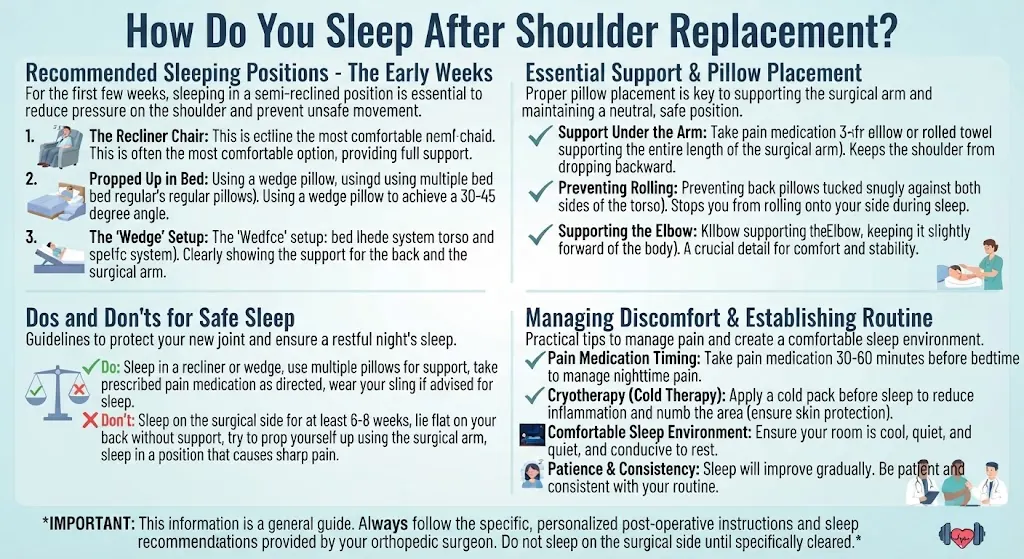
Recovery guidance for other shoulder procedures is not interchangeable with shoulder replacement instructions. For example, driving after rotator cuff surgery and recovery after rotator cuff repair involve different restrictions. Likewise, sleeping after shoulder replacement and sleeping after rotator cuff surgery are separate recovery concerns.
Other shoulder conditions can cause pain or weakness, but they should not be used to judge postoperative readiness. If you have questions about symptoms before surgery, read about rotator cuff tear signs and treatment, shoulder tendonitis symptoms, shoulder bursitis symptoms, and shoulder impingement syndrome. You can also review preparing for shoulder surgery and how long a shoulder replacement may last.
Frequently Asked Questions
1. Can I drive two weeks after shoulder replacement?
Two weeks is earlier than many people are ready to drive. Do not drive unless your surgeon has cleared you and you can safely control the vehicle without medication-related impairment.
2. Can I drive with my arm in a sling?
Usually, a sling restricts movement needed for safe steering and emergency responses. Follow your surgeon’s instructions and do not remove the sling just to drive unless specifically advised.
3. Can I drive an automatic car after shoulder replacement?
An automatic transmission may reduce the need to change gears, but you still need adequate steering control and the ability to react quickly. The type of transmission does not by itself make driving safe.
4. Can I drive with my non-operated arm?
Not necessarily. You must be able to control the vehicle safely in realistic traffic situations, and your surgical restrictions may still affect driving.
5. Do I need my surgeon’s permission to drive?
You should ask your surgeon when driving is appropriate for your recovery. You must also comply with applicable licensing, insurance, and local legal requirements.
6. Can pain medicine prevent me from driving?
Yes. Opioids and other medicines that cause drowsiness, dizziness, or slower reactions can make driving unsafe. Never drive while impaired, and ask your clinician or pharmacist about your medication.
7. Does reverse shoulder replacement take longer before I can drive?
Not always. Timing depends on your function, healing, pain, and the specific restrictions given by your surgeon.
8. Should I test my driving ability in a quiet parking lot?
Do not use a self-directed driving test as a substitute for medical clearance. Ask your surgeon whether a supervised or professional driving assessment is suitable.
9. What if I feel ready but still have shoulder stiffness?
Feeling ready is not enough if stiffness limits steering or quick movement. Wait until you meet your surgeon’s guidance and can control the vehicle safely.
10. What should I do if pain gets worse when I start driving again?
Stop driving as soon as it is safe to do so, and contact your surgical team for advice. Sudden severe pain, new weakness or numbness, or a cold or pale hand needs prompt medical assessment; chest pain or shortness of breath requires emergency care.
Conclusion
Many people need several weeks or longer before driving after shoulder replacement, and the right timeline depends on safe arm function, medication effects, and surgical restrictions. Arrange alternative transportation, follow your rehabilitation plan, and get guidance from your surgeon before returning to the road.
Disclaimer: This article is provided for educational and informational purposes only.
This article is for education purpose only and is not a diagnosis or a substitute for medical advice.