
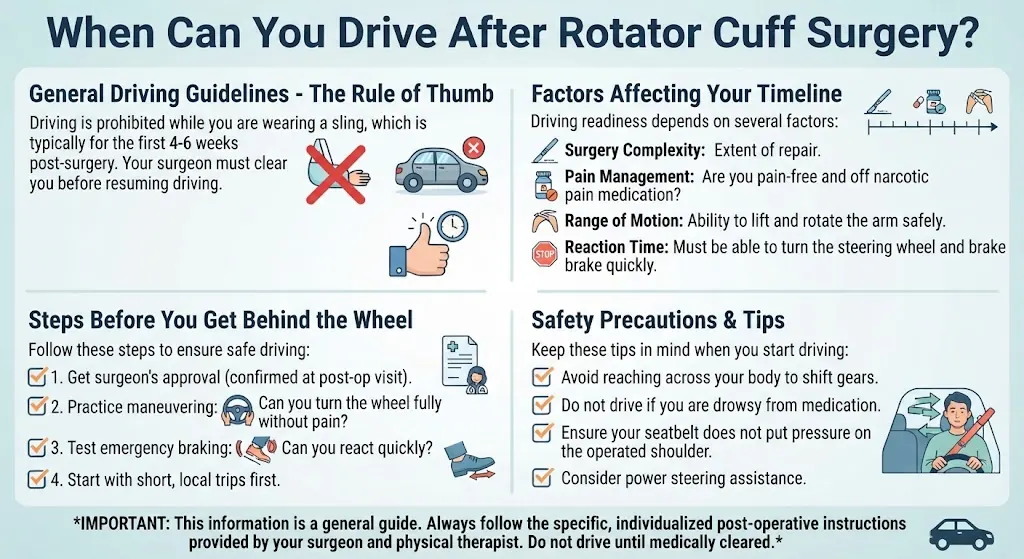
Many patients wonder whether they can drive as soon as the pain improves or whether they must wait until the sling comes off. Pain relief alone does not mean your shoulder is ready, and removing a sling does not automatically make driving safe.
The right time to drive after rotator cuff surgery depends on your surgical repair, arm function, medication use, and surgeon’s instructions. This guide explains what affects driving readiness, how recovery changes your ability to drive, and when to ask your care team for clearance.
How Long After Rotator Cuff Surgery Can You Drive?
Many people need to avoid driving for several weeks after rotator cuff repair. The exact timeline varies, and your surgeon should determine when it is safe based on your healing and functional ability.
| Recovery factor | Why it matters for driving |
|---|---|
| Sling use | Restricts arm movement and may interfere with steering or emergency maneuvers. |
| Pain and mobility | Pain or limited movement can slow reactions and make turning difficult. |
| Medication | Opioids and other sedating medicines can impair judgment and coordination. |
| Surgical repair | Larger or more complex repairs may require longer protection. |
Do not drive while wearing a sling unless your surgeon specifically clears you and confirms that you can operate the vehicle safely. Many postoperative protocols restrict driving throughout sling use.
For a broader recovery overview, see how long rotator cuff surgery recovery usually takes.
What Needs to Happen Before You Drive Again?
You should be able to control your vehicle safely without compromising the healing shoulder. Before returning to driving, discuss these conditions with your surgeon:
-
You are no longer taking medication that causes drowsiness or impairs coordination.
-
Your surgeon has cleared you to drive.
-
You can comfortably control the steering wheel and perform necessary maneuvers.
-
You can check mirrors and blind spots without unsafe restrictions.
-
You can react quickly in an emergency.
-
You can enter and exit the vehicle without risking a fall or sudden shoulder movement.
Your ability to drive depends on the operated side, vehicle type, and whether you drive an automatic or manual transmission. A manual vehicle may require additional arm movement, while an automatic vehicle may still demand substantial steering control.
If you are unsure how long you must keep your arm immobilized, review how long you wear a sling after rotator cuff surgery.
Does It Matter Which Shoulder Was Operated On?
Yes. Surgery on your dominant shoulder may make everyday tasks and vehicle control more difficult. However, surgery on your nondominant shoulder does not automatically make driving safe, because steering and emergency maneuvers can require both arms.
| Situation | Driving consideration |
|---|---|
| Right shoulder surgery | May affect steering and operating controls, especially in some vehicles. |
| Left shoulder surgery | May affect steering and gear changes, depending on the vehicle. |
| Manual transmission | May require more coordinated arm movement. |
| Automatic transmission | May reduce gear-shifting demands but still requires reliable steering and control. |
Do not assume the unaffected arm can compensate for the operated shoulder. You must be able to manage unexpected traffic situations safely.
Can You Drive While Taking Pain Medication?
No. Do not drive if pain medicine makes you sleepy, dizzy, slowed down, or less alert. Opioids and some other medications can impair reaction time even when you feel that your pain is manageable.
Follow the medication label and your surgeon’s instructions. Do not combine sedating medication with alcohol, and ask your clinician or pharmacist when a prescribed medicine may make driving unsafe.
Pain control is still important during recovery. If discomfort interferes with rest, ask your care team about safe options rather than changing medication doses yourself. You can also explore how to relieve rotator cuff pain at night.
How Can You Prepare to Return to Driving?
Once your surgeon clears you, ease back into driving cautiously rather than starting with a long trip.
-
Adjust the seat and mirrors before moving.
-
Confirm that you can grip and turn the steering wheel comfortably.
-
Practice necessary movements while parked, without forcing the shoulder.
-
Begin with a short, familiar route in light traffic.
-
Stop driving if pain, fatigue, or restricted movement affects your control.
Never test your shoulder by forcing a movement that your postoperative instructions prohibit. Early recovery often includes strict limits on lifting, reaching, and active shoulder movement.
Follow your prescribed rehabilitation plan. Read when you can exercise after rotator cuff surgery before resuming workouts or other demanding activities.
When Should You Contact Your Surgeon?
Contact your surgical team if pain or stiffness is preventing safe movement, you are uncertain about medication effects, or you need guidance about returning to driving.
Seek prompt medical advice for new or worsening numbness, unusual weakness, increasing redness, wound drainage, or fever after surgery. Sudden severe pain or a new loss of function also warrants urgent assessment. Call emergency services for chest pain, difficulty breathing, fainting, or other potentially life-threatening symptoms.
If you are still learning what recovery involves, what to know before shoulder surgery may help you prepare for restrictions and practical support needs.
Frequently Asked Questions
1. Can I drive one week after rotator cuff surgery?
Usually, one week is too early for many patients. Sling use, pain, medication effects, and restricted movement commonly make driving unsafe at this stage.
2. Can I drive with my arm in a sling?
Generally, you should not drive while wearing a postoperative sling unless your surgeon explicitly clears you. The sling may prevent you from steering or reacting safely.
3. Can I drive after rotator cuff surgery if I take no pain medicine?
Not necessarily. Being off sedating medication is only one requirement; your shoulder function, sling restrictions, and surgeon’s clearance also matter.
4. Is driving easier after left shoulder surgery?
It can be easier for some people, depending on the vehicle and which arm is operated on. You must still be able to steer and respond safely in unexpected situations.
5. Can I drive an automatic car sooner than a manual car?
An automatic car may reduce the need for gear changes, but steering and emergency control remain essential. Your surgeon should assess your individual restrictions rather than relying on transmission type alone.
6. Do I need to wait until physical therapy is finished?
No, not always. Some people may be cleared before rehabilitation is complete, but clearance depends on healing, shoulder function, and the surgeon’s protocol.
7. Can I drive myself to physical therapy?
Arrange transportation until you are cleared to drive. Ask your therapist or surgical team whether your current restrictions permit you to travel independently.
8. What if I feel fine but still have limited shoulder movement?
Do not use pain level alone to judge readiness. Limited movement may interfere with steering, checking blind spots, or reacting quickly.
9. Does the size of the rotator cuff tear affect driving recovery?
It can. The repair performed, the extent of the injury, and the surgeon’s rehabilitation protocol can influence how long driving must be restricted.
10. Who should clear me to drive after surgery?
Your surgeon or designated healthcare professional should advise you based on your recovery and restrictions. Also check your insurance policy and applicable local driving requirements.
Conclusion
You can return to driving after rotator cuff surgery only when your surgeon clears you, sedating medication is no longer impairing you, and you can control the vehicle safely. Avoid driving in a sling unless specifically authorized, and do not rush the process because pain has improved. If you are uncertain, arrange alternative transportation until your care team confirms you are ready.
Disclaimer: This article is provided for educational and informational purposes only.
This article is for education purpose only and is not a diagnosis or a substitute for medical advice.