
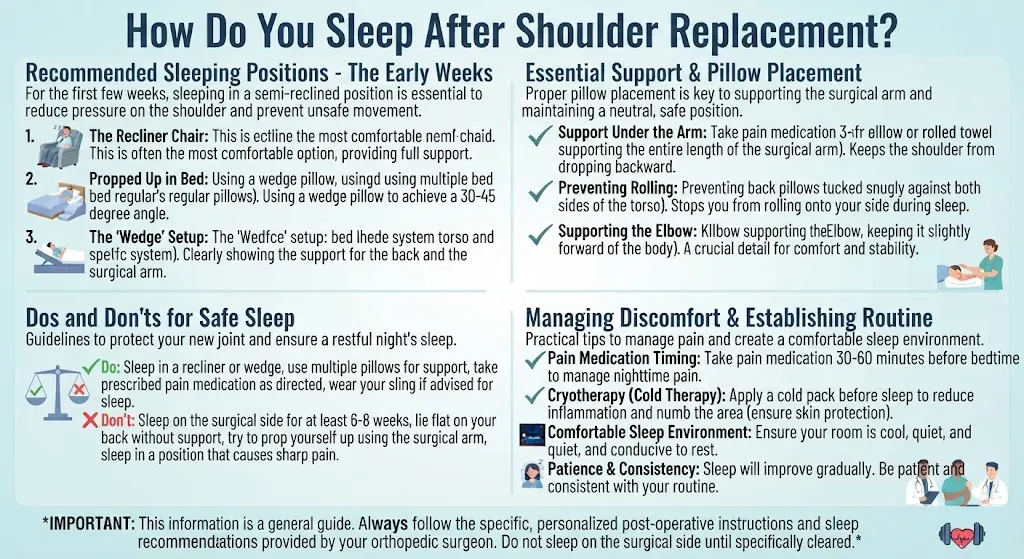
It is common to sleep less comfortably after surgery, but severe or worsening pain should not automatically be treated as a normal part of recovery. Your position, sling instructions, medication schedule, and the type of shoulder replacement you had can all affect your comfort and safety.
For many patients, sleeping on their back in a reclined position is the most practical option early in recovery. This guide explains how to position your arm, use pillows, manage nighttime discomfort, and recognize symptoms that need medical attention.
What Is the Best Sleeping Position After Shoulder Replacement?
Sleeping on your back with your upper body elevated is often the easiest position after shoulder replacement. A recliner or adjustable bed can make it easier to get comfortable without rolling onto the operated shoulder.
| Sleeping position | Potential benefit | Important precaution |
|---|---|---|
| Reclined on your back | Supports the upper body and limits rolling | Support the operated arm with pillows |
| Flat on your back | May become comfortable as recovery progresses | Elevate your upper body if lying flat increases discomfort |
| On the non-operated side | May be possible later in recovery | Avoid unless your surgical team approves it |
| On the operated side | Usually uncomfortable and places pressure on the healing shoulder | Avoid until your surgeon says it is safe |
There is no single position that suits everyone. Your surgeon’s instructions take priority, especially if you had a reverse shoulder replacement or additional soft-tissue repair.
For a broader overview of healing milestones, see how long shoulder replacement recovery takes.
How to Support Your Shoulder With Pillows
Good support helps keep your arm stable and may reduce pulling around the shoulder.
-
Place pillows behind your upper back to create a comfortable incline.
-
Support the operated arm with a pillow beneath the elbow and forearm.
-
Keep your shoulder relaxed rather than allowing the arm to hang backward or fall away from your body.
-
Use a pillow beside your body if it helps prevent you from rolling onto the operated side.
-
Keep essential items, such as water and your phone, within easy reach of your unoperated arm.
Avoid placing a thick pillow only beneath your head if it pushes your neck forward. Aim for a position that supports your upper body while keeping your neck comfortable.
Should You Wear Your Sling While Sleeping?
Wear your sling at night if your surgical team has instructed you to do so. Many patients need it during early recovery to protect healing tissues and limit unintended movements while asleep.
The length of time varies depending on the procedure and your surgeon’s protocol. Follow your instructions about whether the sling can be removed for hygiene or prescribed exercises. If it causes persistent pressure, skin irritation, numbness, or tingling, contact your care team rather than changing the fit or stopping its use on your own.
Read more about how long you may need a sling after shoulder replacement.
How to Reduce Shoulder Pain at Night
Nighttime discomfort can come from inflammation, positioning, or moving the arm unintentionally. A few practical steps may help:
-
Follow your medication instructions. If you have been prescribed pain relief, ask your clinician or pharmacist how to time doses safely around bedtime. Do not exceed the recommended dose.
-
Use cold therapy only as directed. If approved by your surgical team, apply a cold pack with a cloth barrier and follow their time limits. Never place ice directly on your skin.
-
Prepare your sleeping area. Keep pillows, medications, and other approved supplies nearby so you do not need to reach or twist.
-
Move slowly when getting up. Use your unoperated arm and follow any restrictions on pushing or pulling with the operated side.
Do not begin shoulder stretches or strengthening exercises simply because the shoulder feels stiff. Your physical therapist should guide the timing and type of movement.
How Does Sleep Change During Recovery?
| Recovery stage | What may happen | Helpful approach |
|---|---|---|
| First few weeks | Pain, swelling, and difficulty changing position may disrupt sleep | Use supported, reclined positioning and follow sling instructions |
| Following weeks | Comfort may improve as movement restrictions change | Adjust positioning only within your surgical plan |
| Later recovery | Sleep may become more natural, although soreness can persist | Gradually return to preferred positions when cleared |
Recovery differs from person to person. The type of replacement, other repairs, general health, and response to rehabilitation all affect how quickly sleep improves.
If you are also wondering about pain during the early healing period, read what shoulder replacement surgery pain can feel like.
When Should You Contact Your Surgeon?
Some soreness is expected, but certain symptoms need medical attention.
| Symptoms | What to do |
|---|---|
| Mild discomfort that improves with prescribed care | Continue following your recovery plan |
| Increasing pain, spreading redness, wound drainage, or fever | Contact your surgical team promptly |
| New or worsening numbness, a cold or pale hand, or sudden severe shoulder pain | Seek urgent medical assessment |
| Chest pain, sudden shortness of breath, or fainting | Call emergency services |
Do not assume that severe pain is caused only by sleeping position. If discomfort suddenly worsens or you cannot find a tolerable position despite following your care plan, contact your surgical team.
Frequently Asked Questions
1. How long should I sleep in a recliner after shoulder replacement?
Some people use a recliner for the first few weeks because it makes positioning easier. You can return to bed when you can get in and out safely and remain comfortable, following your surgeon’s restrictions.
2. Can I sleep flat on my back after shoulder replacement?
You may be able to as recovery progresses, but lying flat can initially increase discomfort for some patients. Use pillows or a recliner if recommended and avoid forcing a position that increases pain.
3. When can I sleep on my non-operated side?
The timing depends on healing and your surgical protocol. Ask your surgeon before side-sleeping, and use pillows to support the operated arm if you are cleared to try it.
4. When can I sleep on the operated shoulder?
Usually not during early recovery. Wait until your surgeon confirms that direct pressure on the operated shoulder is safe.
5. Why does my shoulder hurt more at night?
Nighttime pain can reflect normal postoperative inflammation, pressure from positioning, or unintended arm movement. Worsening or severe pain should be discussed with your surgical team.
6. Should I keep my arm elevated while sleeping?
Support your arm with pillows so the shoulder remains relaxed and stable. Do not force the arm into an elevated position or use a support that causes numbness or increased pain.
7. Can I remove my sling to sleep more comfortably?
Only if your surgeon has approved sleeping without it. Removing the sling too early may expose healing tissues to unwanted movement.
8. Is it normal to wake up when I move in my sleep?
It can happen, particularly early in recovery when movement is restricted and the shoulder is tender. If you experience sudden severe pain or a new change in shoulder shape or function, seek medical advice promptly.
9. Can I take a sleep aid after shoulder replacement?
Check with your clinician or pharmacist before taking sleep medication, especially if you use prescription pain medicine. Combining sedating medicines can cause dangerous drowsiness or breathing problems.
10. What if I cannot sleep because of shoulder pain?
Review your positioning and prescribed pain-management plan, and contact your surgical team if pain continues to prevent sleep. Seek urgent care for severe sudden pain or symptoms such as chest pain or shortness of breath.
Conclusion
Sleeping on your back in a reclined position, supporting your arm with pillows, and following your sling instructions can make early recovery more manageable. Change positions gradually, avoid pressure on the operated shoulder until cleared, and contact your surgical team if pain worsens or warning signs appear.
Disclaimer: This article is provided for educational and informational purposes only.
This article is for education purpose only and is not a diagnosis or a substitute for medical advice.