
It is also common to wonder whether pain, stiffness, and limited movement mean recovery is taking too long. These symptoms often improve gradually, but progress is not always steady, and rehabilitation must follow the surgeon’s precautions.
This guide explains the shoulder replacement recovery timeline, what to expect at each stage, when you may resume everyday activities, and which warning signs need medical attention.
How Long Does Shoulder Replacement Recovery Take?
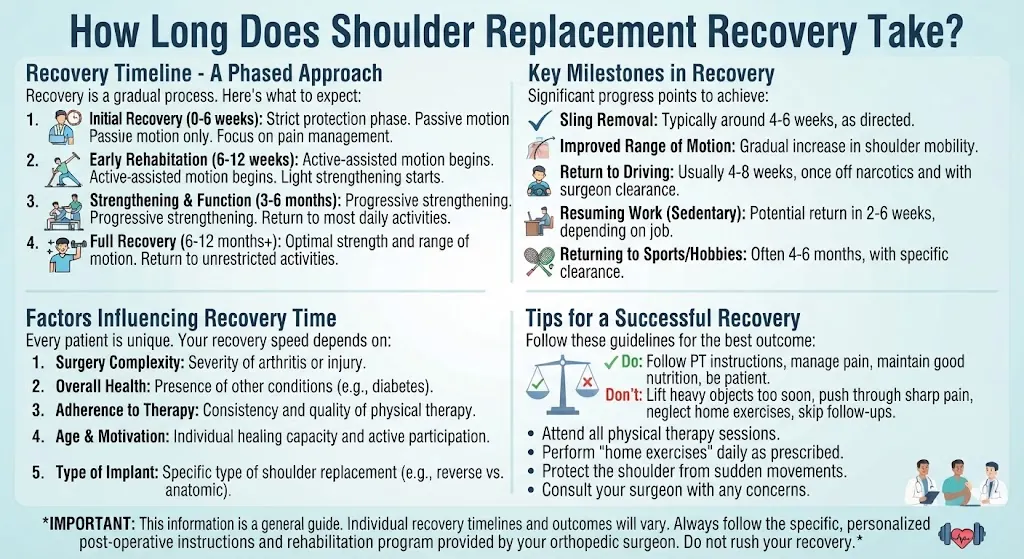
Most people need around 3–6 months for substantial functional recovery, while strength, mobility, and comfort may continue improving for 6–12 months or longer. This is a general estimate, not a guarantee; recovery can be slower after complex surgery or when other health conditions affect healing.
Recovery involves more than pain relief. Your shoulder must heal, regain safe movement, and gradually build strength without placing too much stress on the new joint.
Shoulder Replacement Recovery Timeline
| Recovery stage | What you may experience | Main focus |
|---|---|---|
| First 1–2 weeks | Pain, swelling, fatigue, and difficulty with personal care | Protect the shoulder, manage pain, and care for the incision |
| Weeks 2–6 | Gradual improvement, but continued stiffness and movement restrictions | Follow the prescribed rehabilitation plan |
| Weeks 6–12 | Increasing movement and ability to perform some daily tasks | Progress exercises only when cleared |
| Months 3–6 | Better function and gradual improvement in strength | Build confidence with approved activities |
| Months 6–12+ | Continued gains in comfort, endurance, and movement for some people | Maintain safe activity and follow-up care |
Your surgeon may adjust these stages based on the procedure and how the shoulder is healing. For more detail, see the shoulder replacement recovery timeline.
What Affects Shoulder Replacement Recovery Time?
Several factors can change how quickly you recover:
-
Type of replacement: Traditional total shoulder replacement and reverse shoulder replacement use different mechanics and may have different rehabilitation precautions.
-
Condition before surgery: Severe stiffness, longstanding pain, or previous operations can make recovery more complex.
-
Overall health: Other medical conditions, smoking, and wound-healing problems may affect recovery.
-
Rehabilitation: Consistent, appropriately paced therapy helps restore movement while protecting healing tissues.
-
Surgical precautions: Some procedures require longer restrictions before certain movements or strengthening exercises are allowed.
Shoulder replacement may also be considered when arthritis occurs alongside a damaged rotator cuff. If this applies to you, ask your surgeon about shoulder replacement with a torn rotator cuff.
How to Manage Pain and Sleep During Recovery
Pain is often most noticeable during the first few days, particularly as anesthesia or a nerve block wears off. Your care team may recommend prescribed medication, cold therapy, and arm support. Take medication only as directed, and ask before adding over-the-counter pain relievers because some may be unsuitable with your medical history or other medicines.
Sleeping can also be difficult early on. Some people find a recliner or a supported, slightly upright position more comfortable. Follow your surgeon’s instructions about how long to wear a sling after shoulder replacement and how to sleep after shoulder replacement.
For preparation and pain expectations, read what to know before shoulder surgery and how painful shoulder replacement surgery can be.
When Can You Return to Daily Activities?
There is no single date when everyone can safely resume normal activities. Your readiness depends on pain, arm control, the type of procedure, and your surgeon’s restrictions.
| Activity | What to consider |
|---|---|
| Dressing and bathing | You may need help initially; follow incision-care instructions |
| Driving | Wait until your clinician clears you, you can control the vehicle safely, and you are not taking sedating medication |
| Work | Desk duties may resume sooner than work involving lifting or overhead movements |
| Exercise and lifting | Resume gradually only when your surgeon or physical therapist approves |
Read the specific guidance on when you can drive after shoulder replacement, returning to work after surgery, and lifting weights after shoulder replacement. Follow the restrictions described in activities to avoid after shoulder replacement.
How Does Physical Therapy Help?
Physical therapy helps restore movement and function in stages. Early rehabilitation may focus on protected movement, while strengthening is introduced later when the surgeon confirms it is appropriate. Doing too much too soon can interfere with healing, but avoiding prescribed movement may contribute to stiffness.
Follow your individualized plan rather than copying exercises from someone with a different procedure. Your therapist can adjust activity if pain increases or movement is not progressing as expected.
Warning Signs During Recovery
Some soreness and swelling are expected, but certain symptoms need prompt attention.
-
Contact your surgical team promptly for increasing redness, wound drainage, fever, worsening pain, or symptoms that improve and then suddenly deteriorate.
-
Seek urgent medical assessment for new severe arm weakness, unusual numbness, or a hand that becomes cold or pale.
-
Seek emergency care immediately for chest pain, sudden shortness of breath, fainting, or severe breathing difficulty.
Do not wait for your next scheduled appointment if symptoms are severe or rapidly worsening.
Frequently Asked Questions
1. How long does it take to feel normal after shoulder replacement?
Many people notice meaningful improvement over the first few months, but full recovery can take 6–12 months or longer. Strength and movement may continue improving after pain has eased.
2. How long does shoulder replacement pain last?
Pain is often strongest during the first several days and gradually improves over the following weeks. Some discomfort during movement or at night may continue for months.
3. How long do you wear a sling after shoulder replacement?
Sling use varies by procedure, healing, and the surgeon’s protocol. Wear it for the prescribed period and do not stop using it independently.
4. Can you sleep in a bed after shoulder replacement?
Often, yes, if you can maintain a comfortable, protected position. A recliner or pillows for support may help during early recovery.
5. When can you drive after shoulder replacement?
You should wait until your surgeon clears you, you can safely control the vehicle, and you are no longer affected by sedating medication. The timing varies between patients.
6. When can you return to work?
Some people return to modified desk duties within several weeks, while physically demanding work may require several months. Your job tasks and recovery progress determine the timing.
7. Can you exercise during shoulder replacement recovery?
Yes, but only with activities approved for your stage of healing. Follow your rehabilitation plan and avoid lifting or strengthening exercises until cleared.
8. Is reverse shoulder replacement recovery different?
It can be. Reverse replacement changes how the shoulder moves and may involve different precautions depending on the condition being treated.
9. What if my shoulder is still stiff after three months?
Some stiffness may persist at three months, and improvement can continue for several more months. Tell your surgeon or therapist if progress has stalled or movement is worsening.
10. How long does a shoulder replacement last?
Many shoulder replacements function for years, but lifespan depends on the implant, activity demands, and individual factors. Your surgeon can discuss expected durability and signs that need assessment.
Conclusion
Shoulder replacement recovery often takes 3–6 months for substantial functional improvement, with continued gains possible for a year or longer. Protect the shoulder, follow your rehabilitation plan, and return to driving, work, and exercise only when cleared. Contact your care team about worsening symptoms or concerns that recovery is not progressing.
Disclaimer: This article is provided for educational and informational purposes only.
This article is for education purpose only and is not a diagnosis or a substitute for medical advice.