
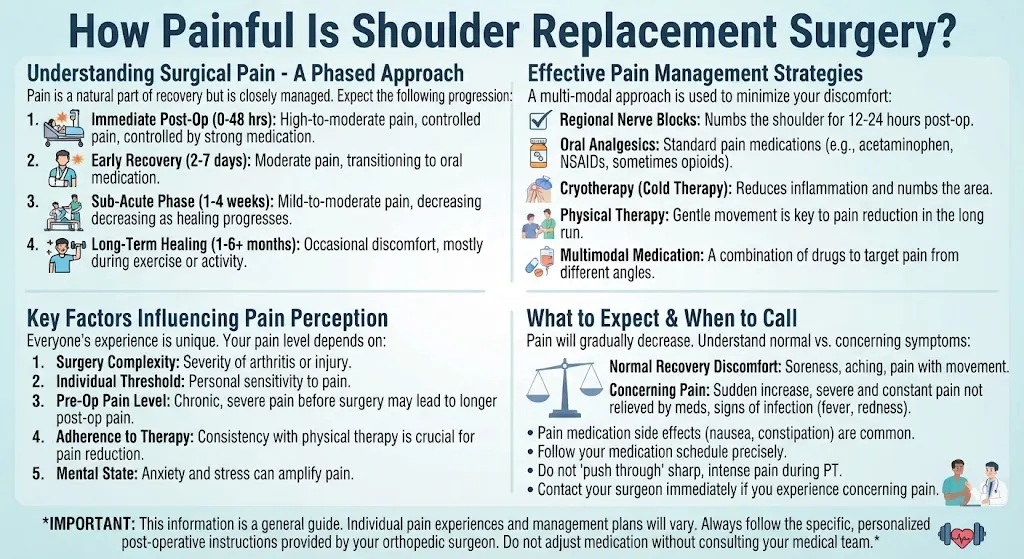
The good news is that pain is usually managed with a combination of prescribed medication, cold therapy, proper arm support, and a gradual rehabilitation plan. However, recovery varies depending on the type of replacement, the condition of the shoulder before surgery, overall health, and individual pain sensitivity.
Understanding how painful shoulder replacement surgery can be, when discomfort typically improves, and which symptoms need medical attention can help you prepare and recover more safely.
How Painful Is Shoulder Replacement Surgery?
Shoulder replacement surgery is generally most uncomfortable during the early recovery period, but pain usually becomes more manageable over time. You should not feel the operation itself while under general anesthesia, often combined with a regional nerve block that temporarily numbs the shoulder and arm.
After the anesthetic wears off, you may notice aching, throbbing, swelling, or pain when changing position. The first few days can be particularly challenging, and discomfort may increase temporarily as the nerve block wears off. Your surgical team will provide instructions for managing this transition.
The amount of pain depends partly on whether you have a traditional total shoulder replacement or a reverse shoulder replacement. Neither type guarantees an easier recovery for every patient.
Shoulder Replacement Pain: What to Expect During Recovery
Recovery is gradual. Pain often improves before strength and movement fully return, so feeling better does not necessarily mean the shoulder is ready for unrestricted activity.
| Recovery stage | What you may experience | What may help |
|---|---|---|
| First 1–3 days | Soreness, swelling, pain as the nerve block wears off | Follow medication instructions, use approved cold therapy, and support the arm |
| First 2 weeks | Pain with movement, difficulty sleeping, and discomfort during personal care | Wear the sling as directed and follow wound-care instructions |
| Weeks 2–6 | Gradually improving resting pain, with stiffness and movement-related soreness | Attend follow-up visits and follow the prescribed rehabilitation plan |
| Following months | Ongoing stiffness or weakness, with gradual functional improvement | Progress exercises only as cleared by your surgical team |
These are general patterns, not a guaranteed timeline. Some people improve faster, while others need more time because of the procedure performed, other health conditions, or complications.
For a more detailed overview, see the shoulder replacement recovery timeline.
What Makes Shoulder Replacement Surgery More Painful?
Several factors can influence how much pain you experience:
-
The condition being treated: Severe arthritis, long-standing stiffness, and previous shoulder operations may affect recovery.
-
The type of surgery: Traditional total shoulder replacement and reverse shoulder replacement work differently and may involve different rehabilitation precautions.
-
Pain sensitivity and general health: Sleep quality, other medical conditions, and previous experiences with pain can influence recovery.
-
Rehabilitation: Moving too quickly can irritate healing tissues, while avoiding prescribed movement can contribute to stiffness.
A shoulder replacement may also be considered when arthritis occurs alongside a damaged rotator cuff. In these cases, a surgeon may discuss shoulder replacement when a rotator cuff is torn.
How Can You Manage Pain After Shoulder Replacement?
Pain management usually combines several approaches rather than relying on one treatment. Your surgeon and anesthesia team will choose options based on your procedure, medical history, and medication risks.
| Pain management method | Potential benefit | Important precaution |
|---|---|---|
| Prescribed medication | Reduces pain enough to support rest and rehabilitation | Follow the prescribed dose; opioids can cause sedation, constipation, and dependence |
| Cold therapy | May reduce pain and swelling | Wrap cold packs in a cloth and protect the skin and incision |
| Sling or shoulder immobilizer | Supports and protects the healing shoulder | Wear it for the duration and in the manner prescribed |
| Guided physical therapy | Helps restore movement and function | Do not add exercises or increase activity without clearance |
Before surgery, ask your team what to take, when to take it, and what to do if pain breaks through your medication plan. These questions are especially important if you take blood thinners, have kidney or stomach problems, or use medicines that cause drowsiness.
For preparation advice, review things to know before shoulder surgery and the shoulder replacement procedure and what happens during surgery.
What Should You Avoid During Early Recovery?
Do not lift, push, pull, or reach with the operated arm beyond the limits set by your surgeon. Follow instructions for how long to wear a sling after shoulder replacement and how to sleep after shoulder replacement.
You should also wait for medical clearance before driving. The timing depends on pain, arm control, medication effects, and the type of surgery; specific guidance may differ after reverse shoulder replacement. Ask when you can drive after shoulder replacement, return to lifting weights, and resume other restricted activities outlined in what not to do after shoulder replacement.
What Does Research Say About Pain Relief?
Pain-control strategies have improved, and teams may combine regional nerve blocks with non-opioid medication and other methods to reduce discomfort. A 2026 systematic review covering 29 studies and 141,042 patients found that multimodal and opioid-sparing approaches generally reduced pain or opioid use, although results varied by technique and study. These findings support individualized pain plans rather than assuming every patient needs the same medication regimen.
The aim is not to eliminate every sensation immediately. It is to make pain manageable while protecting the joint and enabling safe recovery. If you are still weighing surgery against other options, discuss non-surgical and surgical shoulder pain treatments with your clinician.
When Is Pain After Shoulder Replacement a Warning Sign?
Some soreness, bruising, and swelling are expected, but worsening symptoms should not automatically be treated as normal healing.
| Symptom | Recommended action |
|---|---|
| Mild or moderate soreness that gradually improves | Follow your recovery plan and monitor symptoms |
| Pain that is not improving or is interfering with sleep and prescribed exercises | Contact your surgical team for advice |
| Increasing redness, wound drainage, fever, or rapidly worsening pain | Seek prompt medical assessment |
| Chest pain, sudden shortness of breath, fainting, or severe breathing difficulty | Seek emergency care immediately |
Contact your surgeon promptly if pain suddenly increases after a period of improvement, the hand becomes unusually cold or pale, or you develop new numbness or weakness. Do not wait for a routine appointment if symptoms are severe or rapidly progressing.
Frequently Asked Questions
1. Is shoulder replacement surgery more painful than rotator cuff surgery?
Pain varies with the individual, the procedure, and the condition being treated. There is no reliable rule that one operation is always more painful than the other.
2. How long does severe pain last after shoulder replacement?
Pain is often most challenging during the first few days, then gradually improves over the following weeks. Some discomfort with movement or at night may continue for several months.
3. Does a nerve block prevent all pain after surgery?
No. A nerve block can reduce pain for a limited time, but soreness may increase as the anesthetic wears off. Follow the medication plan provided before the block wears off.
4. Is reverse shoulder replacement more painful?
Not necessarily. Pain depends on the underlying shoulder problem, the procedure, and the individual recovery process rather than the name of the replacement alone.
5. How should I sleep after shoulder replacement?
Many people find sleeping in a recliner or a supported, slightly upright position more comfortable early on. Follow your surgeon’s instructions about sling use and safe positioning.
6. Will I need opioids after shoulder replacement?
Some patients receive a short course, while others can manage pain with opioid-sparing plans. If opioids are prescribed, use them exactly as directed and discuss side effects or concerns with your care team.
7. Can physical therapy make the pain worse?
Exercises may cause temporary soreness, especially as movement increases. Sharp, escalating, or persistent pain should be discussed with your therapist or surgeon rather than pushed through.
8. When can I return to work after shoulder replacement?
It depends on the job, the operated shoulder, and your recovery progress. Desk work may be possible sooner than work involving lifting, reaching, or physical labor.
9. Will shoulder replacement permanently remove my pain?
The goal is to reduce pain and improve function, but results vary. Some people continue to experience discomfort or stiffness, and no procedure guarantees complete pain relief.
10. How long does a shoulder replacement last?
Many replacements function for years, but lifespan varies with the implant, activity demands, and other factors. Your surgeon can explain the expected durability and the risks relevant to your situation.
Conclusion
Shoulder replacement surgery can be painful during early recovery, but anesthesia, a personalized pain-management plan, and gradual rehabilitation can make discomfort more manageable. Follow your surgeon’s restrictions, attend follow-up appointments, and report pain that worsens or does not improve as expected. Preparing for the first few weeks can help you recover more safely and confidently.
Disclaimer: This article is provided for educational and informational purposes only.
This article is for education purpose only and is not a diagnosis or a substitute for medical advice.