
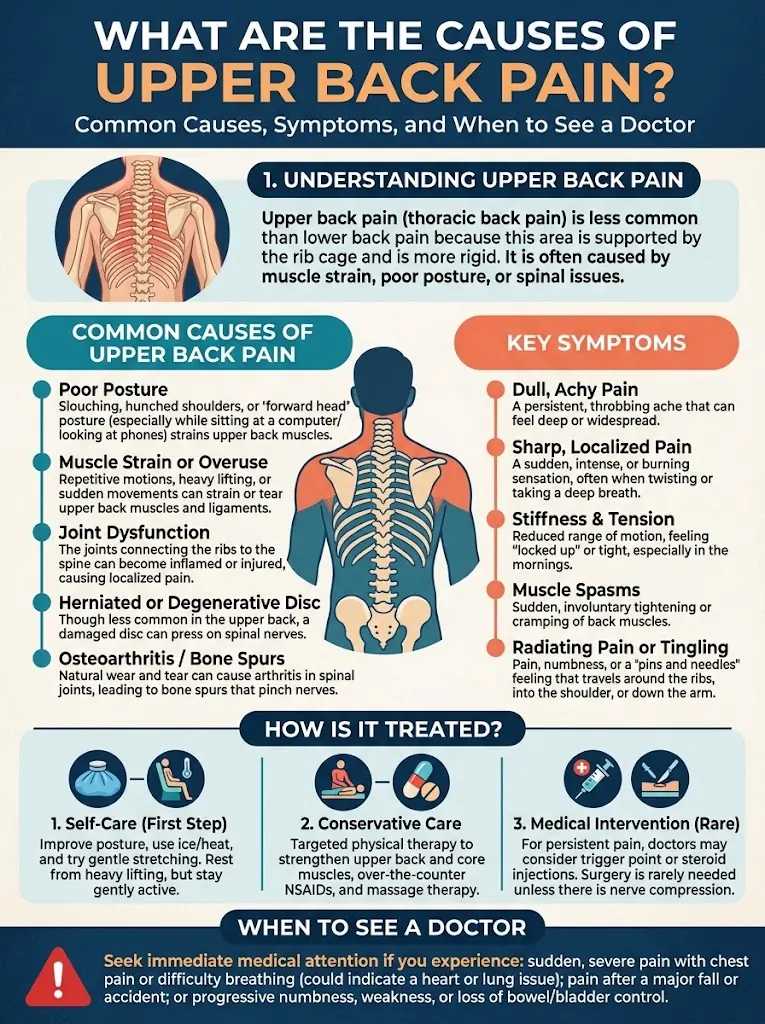
Upper back pain can feel like a dull ache between the shoulder blades, tightness across the upper spine, or a sharp sensation when you twist, reach overhead, or take a deep breath. It may develop after hours at a desk, an unfamiliar workout, lifting something heavy, or even sleeping in an awkward position. Depending on its severity, upper back pain can make driving, working, sleeping, and everyday movements uncomfortable.
Most upper back pain is related to muscles, joints, posture, or other musculoskeletal problems. However, pain in this area does not always originate in the spine, and symptoms such as chest pressure, difficulty breathing, or sudden severe pain should not be dismissed as muscle strain.
Understanding the causes of upper back pain can help you recognize common patterns, choose reasonable self-care measures, and know when medical evaluation is appropriate. This guide explains the possible causes, associated symptoms, treatment options, recovery expectations, and warning signs that deserve attention.
What Is Upper Back Pain?
Upper back pain affects the thoracic region of the spine, which extends from the base of the neck to the lower edge of the rib cage. This region contains 12 vertebrae and connects with the ribs, while surrounding muscles and joints help support posture and movement.
Pain may stay in one area or spread toward the neck, shoulders, ribs, or chest. Its location and character can offer clues about the cause, but symptoms alone cannot reliably establish a diagnosis.
What Are the Most Common Causes of Upper Back Pain?
Upper back pain usually develops when muscles, joints, ligaments, discs, or nerves become irritated. In some cases, the pain originates outside the musculoskeletal system, so the circumstances surrounding its onset matter.
1. Muscle strain and overuse
Muscle strain is a common cause of upper back discomfort. Lifting heavy objects, carrying a bag on one shoulder, repetitive reaching, and suddenly increasing workout intensity can overload the muscles that support the shoulder blades and spine.
Symptoms may include localized soreness, muscle tightness, spasms, and pain when twisting or reaching. Discomfort that changes with movement or pressure may suggest a musculoskeletal cause, although it cannot confirm one.
2. Poor posture and prolonged sitting
Slouching over a computer, looking down at a phone, or working with unsupported arms can increase the demands on the neck and upper back muscles. Remaining in one position for hours may also contribute to stiffness and discomfort.
Posture is not the only explanation for back pain, and there is no single perfect sitting position. Regular movement, comfortable workstation adjustments, and varying positions are generally more practical than trying to maintain a rigid posture all day.
If your discomfort seems related to your working position, see these ways poor posture can contribute to back pain and posture correction exercises for shoulder and neck pain.
3. Problems involving the spine and discs
The thoracic spine can develop age-related changes, joint irritation, disc degeneration, or a herniated disc. These conditions do not always cause symptoms, and imaging findings do not necessarily explain a person’s pain.
A herniated disc may irritate nearby nerves, sometimes causing burning pain, tingling, numbness, or symptoms that travel around the chest. Degenerative changes can contribute to stiffness, but a clinician must consider the examination and symptom pattern before determining their significance.
Related explanations include degenerative disc disease symptoms and treatment options and herniated disc symptoms, treatment, and recovery.
4. Neck problems and irritated nerves
Pain felt in the upper back may actually originate in the cervical spine, which supports the neck. Joint changes or nerve irritation in this region can cause discomfort around the shoulder blade, neck, or arm.
Nerve-related pain may feel burning, electric, shooting, or tingling rather than like ordinary muscle soreness. Weakness, altered sensation, or pain extending down the arm deserves medical assessment.
Explore what a pinched nerve in the neck can feel like and cervical radiculopathy symptoms and treatment.
5. Shoulder conditions that affect the upper back
Shoulder problems can cause pain around the shoulder blade or the junction between the shoulder and upper back. Tendon irritation, bursitis, rotator cuff injuries, and joint problems may become more noticeable when lifting the arm, reaching overhead, or lying on the affected side.
The shoulder and upper back work together during movement, so discomfort in one area can affect the other. However, shoulder pain and spinal pain are not interchangeable, and treatment depends on the structure involved.
Useful comparisons include shoulder tendonitis symptoms and causes and rotator cuff tear signs and treatment.
6. Stress and muscle tension
Stress can contribute to upper back discomfort by increasing muscle tension, disrupting sleep, and making pain more difficult to manage. It may aggravate an existing musculoskeletal condition without being its sole cause.
Persistent pain should not automatically be attributed to stress. If symptoms continue, worsen, or occur with other concerning signs, a medical evaluation can help identify possible physical causes.
For additional context, see how stress can contribute to muscle and joint pain.
7. Less common but important medical causes
Upper back pain can sometimes accompany vertebral fractures, spinal infections, inflammatory conditions, or cancer affecting the spine. Heart and lung conditions can also cause pain that is felt in the upper back.
These causes are less common than muscle and joint problems, but symptoms such as fever, unexplained weight loss, pain after significant trauma, or severe pain at rest warrant closer evaluation. Sudden upper back pain with chest pressure or breathing difficulty may be an emergency.
How Can You Tell Different Causes of Upper Back Pain Apart?
The pattern of discomfort can help guide the next step, but overlapping symptoms mean that self-assessment cannot reliably distinguish every cause.
| Possible cause | Symptoms or pattern that may occur | Appropriate next step |
|---|---|---|
| Muscle strain | Soreness after lifting, exercise, or repetitive movement | Gentle activity and symptom monitoring if mild |
| Posture-related discomfort | Stiffness after prolonged sitting or working | Change positions and adjust the workstation |
| Disc or joint condition | Persistent pain or stiffness, sometimes with movement-related symptoms | Clinical evaluation if symptoms persist |
| Nerve irritation | Burning, tingling, numbness, or pain spreading into an arm | Medical assessment, especially with weakness |
| Shoulder condition | Pain when raising the arm or reaching behind the back | Assessment if movement remains limited |
| Heart or lung problem | Back pain with chest discomfort, breathlessness, or other systemic symptoms | Emergency care when warning signs are present |
Research on thoracic back pain suggests that it is a meaningful source of discomfort in adults, although prevalence estimates vary according to the population studied and how pain is defined. One published estimate places annual prevalence at approximately 15%–35%. This broad range should not be interpreted as an individual’s likelihood of having a particular diagnosis.
The practical lesson is that symptom location alone is insufficient: duration, triggers, associated symptoms, medical history, and examination findings all matter.
Why Does Upper Back Pain Occur Between the Shoulder Blades?
Pain between the shoulder blades can develop from strained muscles, prolonged sitting, shoulder mechanics, or irritation involving the neck and thoracic spine. The discomfort may feel like a knot, burning sensation, deep ache, or sharp pain during twisting.
The pattern can provide useful clues:
-
Pain that follows lifting or repetitive activity may be associated with muscle overuse.
-
Pain that changes when turning the neck may involve the cervical spine.
-
Pain during arm movements may be associated with a shoulder condition.
-
Pain that worsens with breathing or coughing requires closer attention, particularly if accompanied by shortness of breath, fever, or chest pain.
For a more focused explanation, see common causes of pain between the shoulder blades.
Can Upper Back Pain Be Caused by Something Other Than the Spine?
Yes. Some medical conditions outside the spine can cause pain in the upper back, including problems involving the lungs, heart, or digestive system. The location of the pain alone cannot establish its origin.
For example, different types of shoulder pain and their causes may help explain discomfort near the upper back, while shoulder impingement syndrome can cause pain during arm movements.
Other possibilities include shoulder bursitis, cervical spondylosis, and lumbar spinal stenosis. The last condition typically affects the lower back, so it is less directly relevant to isolated thoracic pain.
A clinician may consider the following factors when evaluating symptoms:
-
Whether the pain changes with movement, posture, or pressure.
-
Whether breathing, coughing, or physical exertion affects it.
-
Whether numbness, weakness, fever, or other symptoms occur.
-
Whether the pain began after an injury or appeared without an obvious trigger.
How Can You Relieve Upper Back Pain at Home?
Mild upper back pain that appears related to muscle strain or prolonged positioning may improve with conservative care. The safest approach depends on the suspected cause, symptom severity, and your medical history.
Practical self-care measures
-
Keep moving gently. Short walks and comfortable daily activities can help prevent stiffness. Avoid movements that sharply increase the pain.
-
Try heat or cold. Apply a wrapped cold pack after a recent strain or use gentle heat for muscle tightness. Protect your skin and avoid prolonged direct contact.
-
Change your workstation. Keep frequently used items within reach, support your forearms, and alternate between sitting and standing when practical.
-
Adjust exercise temporarily. Reduce heavy lifting, forceful twisting, and painful overhead movements until symptoms settle.
-
Consider suitable pain relief. Over-the-counter medications may help some people, but anti-inflammatory medicines can cause stomach, kidney, or cardiovascular problems and interact with other medicines. Ask a pharmacist or clinician whether they are appropriate for you.
For more practical strategies, explore home remedies for shoulder pain relief.
Which exercises may help?
Gentle movement may help when pain is caused by muscular stiffness or reduced mobility. Options can include comfortable shoulder rolls, gentle thoracic rotations, and walking.
Stop if an exercise produces sharp pain, increasing tingling, weakness, or worsening symptoms. Do not begin forceful stretches or strengthening exercises after a significant injury without appropriate assessment.
If movement is comfortable, consider exercises for shoulder pain relief and strength.
When Should You See a Doctor for Upper Back Pain?
The timing depends on the symptoms and their severity. Mild discomfort that steadily improves can often be monitored, but persistent, unexplained, or worsening pain deserves evaluation.
| Symptom or situation | Recommended action |
|---|---|
| Mild soreness after activity that is improving | Try gentle self-care and monitor symptoms |
| Pain that persists, recurs, or limits daily activities | Arrange a medical appointment |
| Pain with fever, unexplained weight loss, or significant nighttime symptoms | Seek prompt medical evaluation |
| Pain after a significant fall or accident | Obtain urgent assessment |
| New or progressive arm or leg weakness, numbness, or difficulty walking | Seek urgent medical assessment |
| Sudden severe chest or upper back pain with breathlessness, sweating, faintness, or chest pressure | Call 911 in the United States |
Warning signs that require emergency care
Call 911 if upper back pain occurs with symptoms suggestive of a heart attack or another life-threatening condition, including chest pressure, difficulty breathing, fainting, or sudden severe pain. Sudden severe chest or back pain can also indicate an emergency involving a major blood vessel.
New neurological symptoms, particularly rapidly worsening weakness or difficulty walking, also require urgent attention. Do not assume these symptoms are caused by a pulled muscle.
How Is Upper Back Pain Diagnosed?
A clinician usually begins by asking when the pain started, what makes it worse, whether it spreads elsewhere, and whether other symptoms are present. A physical examination may assess spinal movement, shoulder function, strength, sensation, and other findings relevant to the suspected cause.
Imaging is not necessary for every case. An X-ray may be considered when a fracture or bone abnormality is suspected, while MRI may be appropriate when certain disc, nerve, spinal cord, or other serious conditions need investigation. Blood tests or other examinations may be indicated when infection or a non-spinal cause is suspected.
The choice of testing depends on the history and examination rather than pain location alone.
Frequently Asked Questions
1. What is the most common cause of upper back pain?
Muscle strain, overuse, and movement-related discomfort are common explanations. Prolonged sitting, repetitive reaching, and unfamiliar exercise may contribute, although other causes are possible.
2. Why does my upper back hurt when I wake up?
Sleeping position, muscle stiffness, or inadequate support may contribute to morning discomfort. Persistent pain, especially with fever, unexplained weight loss, or severe nighttime symptoms, should be evaluated.
3. Can poor posture cause upper back pain?
Yes, prolonged or uncomfortable positioning can increase the demands on upper back muscles. However, posture is only one possible contributor, and pain does not necessarily mean your posture is abnormal.
4. Why does my upper back hurt when I take a deep breath?
Pain during deep breathing can occur with rib or muscle irritation, but it can also accompany lung or chest conditions. Seek urgent care if it occurs with shortness of breath, chest pain, coughing up blood, or sudden severe symptoms.
5. Can stress cause upper back pain?
Stress can increase muscle tension and interfere with sleep, potentially aggravating discomfort. Persistent or worsening pain still warrants consideration of other causes.
6. How long does upper back pain last?
A mild muscular strain may improve over several days to a few weeks, depending on its severity and ongoing activities. Pain that persists, worsens, or repeatedly returns should be assessed.
7. Should I stretch when my upper back hurts?
Gentle stretching may help some types of muscular stiffness. Avoid forceful movements and stop if stretching increases pain, numbness, tingling, or weakness.
8. Can upper back pain be a sign of a heart problem?
Yes. Heart-related pain can sometimes spread to the upper back, shoulder, or arm. Call 911 if the pain occurs with chest pressure, breathlessness, sweating, nausea, or faintness.
9. Do I need an MRI for upper back pain?
Not necessarily. Many cases can initially be assessed through a medical history and physical examination, with imaging reserved for situations where the findings could change treatment or help investigate a concerning cause.
10. Can upper back pain go away on its own?
Mild pain caused by muscle overuse or temporary stiffness may improve with time and appropriate activity changes. Improvement is not guaranteed, and unexplained, persistent, or severe symptoms should not be ignored.
Conclusion
Upper back pain commonly results from muscle strain, prolonged positioning, or problems involving the spine and shoulders, but other medical conditions can produce similar symptoms. Gentle movement, sensible activity adjustments, and appropriate pain relief may help mild cases.
Pay attention to how symptoms develop and whether they improve. Arrange a medical assessment for persistent or worsening pain, and seek emergency care for sudden severe pain, chest symptoms, breathing difficulty, or serious neurological changes.
Disclaimer: This article is provided for educational and informational purposes only.
This article is for education purpose only and is not a diagnosis or a substitute for medical advice.