
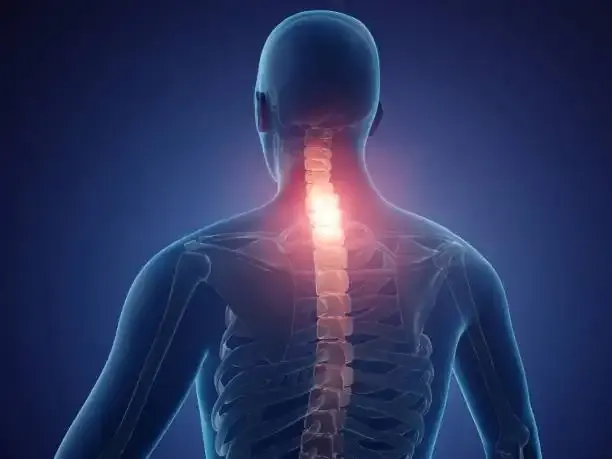
Cervical spondylosis has a way of announcing itself gradually — beginning as a stiff neck in the morning that loosens up after a hot shower, then progressing to a persistent ache that radiates into the shoulders, a dull headache that settles at the base of the skull, and eventually a deep, nagging discomfort that makes turning your head to check traffic, looking down at your phone, or sitting through a long meeting genuinely painful. For many people the condition develops so slowly that they dismiss the early symptoms as normal tiredness or sleeping awkwardly, not realizing that a progressive degenerative process has been quietly building in their cervical spine for years. When the symptoms become impossible to ignore — particularly when tingling or numbness begins radiating into the arms and hands — the impact on daily life, work productivity, and sleep quality can be significant and deeply frustrating.
If you have recently received a cervical spondylosis diagnosis or have been researching your neck symptoms, the most important thing to understand is that this condition is extremely common and highly manageable. Many people hear “degeneration” and immediately fear the worst — permanent disability, paralysis, or inevitable surgery. The reality is far more reassuring. Cervical spondylosis is present in the spines of the majority of adults over 60 and most people manage it effectively throughout their lives with conservative treatment, appropriate exercises, and lifestyle adjustments. The degree of degenerative change visible on an MRI or X-ray does not always correlate directly with symptom severity, and many people with significant imaging findings live completely pain-free lives.
Cervical spondylosis is an umbrella term describing the age-related degenerative changes that occur in the cervical spine — the seven vertebrae of the neck region. These changes include the drying and shrinking of intervertebral discs, the formation of bone spurs along vertebral edges, thickening of spinal ligaments, and facet joint arthritis. Together these processes can gradually narrow the spinal canal and the foramina through which nerve roots exit, compressing the spinal cord or nerve roots and producing the characteristic neck pain, stiffness, and neurological symptoms associated with this condition. Understanding what drives these changes, how they manifest, and what treatments work best is the foundation of effective long-term management.
The Cervical Spine — Structure and Function
The cervical spine consists of seven vertebrae labeled C1 through C7, separated by intervertebral discs that act as shock absorbers and allow the neck’s remarkable range of motion — flexion, extension, rotation, and lateral bending. The spinal cord passes through the central canal of these vertebrae, and paired nerve roots exit at each level through openings called neural foramina, supplying sensation and motor function to the arms, hands, and fingers. The neck also supports the full weight of the head — approximately 10–12 pounds — making it one of the most mechanically demanding regions of the spine. When degenerative changes accumulate in this complex structure, the consequences affect not just local neck function but the entire upper limb neurological supply.
Causes and Risk Factors
Age-Related Degeneration
The primary and most universal cause of cervical spondylosis is the natural aging process of spinal tissues. From approximately the third decade of life, cervical intervertebral discs begin losing water content and height — a process called disc desiccation. As discs shrink and lose their shock-absorbing capacity, the vertebrae above and below move closer together, transferring increased load to the facet joints at the back of each spinal level. These joints respond by developing osteoarthritis, producing cartilage loss, joint space narrowing, and bone spur formation. The degenerative disc and facet changes explored in our guide on slipped disc herniated disc symptoms treatment and recovery apply directly to the cervical spine in spondylosis.
Poor Posture and Modern Lifestyle
Forward head posture — where the head sits in front of rather than directly over the shoulders — is one of the most significant accelerating factors for cervical spondylosis in modern populations. For every inch the head moves forward from its neutral position, the effective weight the cervical spine must support increases by approximately 10 pounds. Prolonged smartphone use, desk work, and driving all promote this posture, dramatically accelerating the degenerative process in younger adults. The direct relationship between postural habits and spinal degeneration is explored in our article on how back pain starts and the role of poor posture — the same principles apply equally to the cervical spine.
Previous Neck Injury
A history of cervical trauma — including whiplash injuries from motor vehicle accidents, contact sports injuries, or significant falls — accelerates degenerative changes at the injured levels. Post-traumatic disc damage, ligament laxity, and altered cervical mechanics following injury create conditions that promote faster spondylotic change compared to uninjured spines.
Occupational and Lifestyle Factors
- Repetitive neck movements: Jobs or activities requiring repeated neck flexion, extension, or rotation — such as assembly line work, painting ceilings, or certain sports — create cumulative mechanical stress that accelerates cervical degeneration over years of exposure.
- Heavy overhead work: Occupations involving sustained overhead reaching and lifting place significant compressive and shear forces on cervical structures, contributing to accelerated disc degeneration and facet arthritis.
- Sedentary screen-based work: Prolonged desk work and device use without adequate postural breaks creates sustained forward head loading that progressively stresses cervical discs and facet joints throughout the working day.
- Smoking: Nicotine reduces blood supply to intervertebral discs — which have no direct blood supply and depend on diffusion for nutrition — significantly accelerating disc degeneration and increasing spondylosis risk.
Genetic Predisposition
Family history plays a meaningful role in cervical spondylosis susceptibility. Some individuals inherit a predisposition to weaker disc structures, narrower spinal canals, or more aggressive inflammatory responses to degeneration, leading to earlier symptom onset and more rapid progression than would be expected from mechanical factors alone.
Symptoms of Cervical Spondylosis
Neck Pain and Stiffness
The most common presenting symptom of cervical spondylosis is chronic neck pain and stiffness, typically felt as a deep, persistent ache across the back and sides of the neck that worsens with sustained postures, prolonged device use, or physical activity and improves with rest and gentle movement. Morning stiffness — particularly prominent after sleeping in a poor position — is characteristic and usually loosens gradually with movement. The pain frequently radiates into the upper trapezius muscles, producing the shoulder and upper back tightness that many spondylosis patients describe as their most bothersome symptom.
Headaches
Cervicogenic headaches originating from degenerative changes in the upper cervical levels — particularly C2-C3 — are extremely common in cervical spondylosis. These headaches typically begin at the base of the skull and radiate forward over the top of the head or behind the eyes. They are often described as a dull, pressure-like ache rather than the pulsating quality of migraine and are consistently reproduced by sustained neck postures or movements. Many spondylosis patients are initially treated for primary headache disorders before the cervical origin of their symptoms is recognized.
Cervical Radiculopathy — Arm and Hand Symptoms
When degenerative bone spurs or disc material compresses a cervical nerve root within the neural foramen, it produces cervical radiculopathy — radiating pain, numbness, tingling, or weakness following the specific pathway of the affected nerve into the arm, forearm, and hand. The level of compression determines the symptom distribution — C6 nerve root compression produces symptoms in the thumb and index finger, C7 compression affects the middle finger, and C8 compression produces little finger and ring finger symptoms. This nerve root pain pattern is directly analogous to the lumbar radiculopathy covered comprehensively in our sciatica causes symptoms and complete treatment guide.
Cervical Myelopathy — Spinal Cord Compression
Cervical myelopathy is the most serious manifestation of cervical spondylosis, occurring when the spinal canal narrows sufficiently to compress the spinal cord itself rather than individual nerve roots. Symptoms include progressive hand clumsiness — difficulty with fine motor tasks like buttoning shirts or typing — gait disturbance with wide-based unsteady walking, bilateral arm and leg heaviness or weakness, and in severe cases bladder and bowel dysfunction. Myelopathy is a progressive condition that does not reliably improve with conservative treatment and typically requires surgical decompression to prevent further neurological deterioration.
Additional Symptoms
- Grinding or clicking sensations: Crepitus — audible or palpable grinding during neck movement — results from degenerated facet joint surfaces moving against each other and is extremely common in cervical spondylosis, though it does not necessarily indicate significant pathology when occurring in isolation without pain.
- Balance and coordination problems: Advanced cervical myelopathy can impair proprioceptive pathways in the compressed spinal cord, producing subtle balance disturbance and coordination difficulties that patients often attribute to general aging rather than a treatable spinal condition.
Diagnosis
Clinical Examination
A spine specialist performs a thorough neurological examination assessing cervical range of motion, upper limb reflexes, sensation, and muscle strength. Spurling’s test — applying downward pressure to the head while tilting it toward the symptomatic side — reproduces radicular arm pain when a cervical nerve root is compressed, confirming cervical radiculopathy. The Lhermitte sign — an electric shock sensation radiating down the spine with neck flexion — suggests spinal cord involvement and indicates the need for urgent MRI assessment.
Imaging
X-rays provide the initial assessment of cervical spondylosis, revealing disc space narrowing, bone spur formation, facet joint arthritis, and spinal alignment. MRI is the definitive investigation when neurological symptoms are present, providing detailed visualization of disc herniations, spinal cord compression, nerve root compression, and the extent of canal narrowing at each level. CT myelography is used when MRI is contraindicated or when surgical planning requires precise bony detail. The imaging approach parallels that described for lumbar conditions in our lumbar spinal stenosis causes symptoms and non-surgical treatment guide.
Treatment Options
Physical Therapy — The Cornerstone of Conservative Management
Physical therapy is the most evidence-based and effective conservative treatment for cervical spondylosis, addressing the underlying mechanical contributors to symptoms rather than simply managing pain. A comprehensive cervical rehabilitation program works across several dimensions simultaneously.
Postural correction is the single most important component of cervical spondylosis rehabilitation. Chin tuck exercises — gently retracting the chin to restore neutral head position over the shoulders — directly counteract the forward head posture that drives symptom progression and are one of the most effective exercises for reducing cervicogenic headaches and neck pain. Deep cervical flexor strengthening using targeted exercises activates the longus colli and longus capitis muscles that provide the primary dynamic stability for the cervical spine, reducing the excessive loading on degenerating discs and facet joints during daily activities.
Cervical range of motion exercises maintain mobility in the segments adjacent to the most degenerated levels, preventing the secondary stiffness that compounds pain and functional limitation. Manual therapy — including joint mobilization and soft tissue techniques — reduces facet joint pain, improves segmental mobility, and provides meaningful short-term pain relief that facilitates engagement with active exercise rehabilitation. Incorporating the lifestyle habit changes discussed in our guide on how daily habits diet and remedies are effective for back pain alongside formal physical therapy significantly supports recovery from cervical spondylosis symptoms.
Medications
NSAIDs including ibuprofen and naproxen reduce the inflammatory pain component of cervical spondylosis, particularly during acute exacerbations involving flare-ups of facet joint inflammation or acute disc-related radicular pain. Neuropathic pain medications including gabapentin and pregabalin address the nerve root pain, numbness, and tingling that NSAIDs cannot adequately control. Muscle relaxants help manage the significant paraspinal muscle spasm that often accompanies acute cervical spondylosis flare-ups. Topical anti-inflammatory preparations applied over the posterior neck provide localized relief with fewer systemic effects for patients who cannot tolerate oral NSAIDs.
Cervical Collar
A soft cervical collar provides temporary pain relief during acute exacerbations by reducing neck movement and offloading the cervical spine. It is recommended only for short-term use — typically days to weeks — as prolonged collar use leads to cervical muscle deconditioning that worsens long-term symptoms. A collar is most appropriately used as a short-term adjunct during acute pain episodes rather than as a regular daily management strategy.
Injections
- Cervical epidural steroid injections: Deliver corticosteroids directly to the epidural space adjacent to compressed nerve roots, reducing inflammation and providing weeks to months of radicular pain relief that facilitates engagement in physical therapy rehabilitation.
- Cervical facet joint injections: Target the arthritic facet joints that are the primary pain generators in many cervical spondylosis patients, providing diagnostic confirmation of the pain source and meaningful therapeutic relief.
- Medial branch blocks and radiofrequency ablation: When facet joint injections confirm facet-mediated pain, radiofrequency ablation of the medial branch nerves supplying the painful joints can provide longer-lasting relief — typically 12–18 months — before nerve regeneration occurs.
Surgical Treatment
Surgery for cervical spondylosis is indicated when significant myelopathy is present, when progressive neurological deficits develop, or when severe radiculopathy has failed to respond to 6–12 weeks of comprehensive conservative management. Anterior cervical discectomy and fusion (ACDF) removes the offending disc and bone spurs from the front of the neck and fuses the adjacent vertebrae, directly decompressing the spinal cord or nerve root. Cervical disc replacement is an alternative to fusion for single or two-level disease that preserves motion at the treated levels. Posterior laminectomy and fusion addresses multilevel stenosis by expanding the spinal canal from behind.
Lifestyle Management and Prevention
Managing cervical spondylosis long-term requires consistent attention to the daily habits and lifestyle factors that influence symptom severity and progression rate. Ergonomic optimization is fundamental — positioning computer monitors at eye level, using a supportive chair with proper lumbar and head support, and placing phones and tablets at eye height rather than looking down eliminates the sustained forward head loading that is the primary driver of symptom progression.
- Regular movement breaks: Taking a 2–3 minute movement break every 30–45 minutes of desk work or device use dramatically reduces cumulative cervical loading throughout the day and is one of the most effective strategies for managing chronic spondylosis symptoms.
- Sleep position optimization: Using a supportive pillow that maintains the natural cervical curve during sleep — neither too high nor too flat — significantly reduces morning stiffness and overnight pain. A contoured memory foam or cervical roll pillow is often recommended.
- Anti-inflammatory nutrition: Dietary patterns that reduce systemic inflammation support symptom management and slow degenerative progression. Our comprehensive guide on how changing your diet can help reduce pain naturally provides directly applicable nutritional strategies.
- Stress management: Psychological stress significantly amplifies pain perception and drives the muscle tension that compounds cervical spondylosis symptoms. Mindfulness, relaxation techniques, and adequate sleep all contribute meaningfully to symptom management alongside physical treatments.
- Vitamin D and bone health: Maintaining optimal vitamin D levels supports the bone density and musculoskeletal health that underpin cervical spine resilience. Our detailed guide on vitamin D deficiency and bone pain symptoms and solutions covers this important nutritional foundation comprehensively.
Conclusion
Cervical spondylosis is an extremely common, age-related condition that the vast majority of people manage successfully throughout their lives with the right combination of physical therapy, postural correction, lifestyle modification, and appropriate medical treatment when needed. The degenerative changes visible on imaging do not define your future — many people with significant X-ray findings remain fully functional and largely pain-free with consistent self-management. Early diagnosis, understanding your specific symptom pattern, committing to postural correction and targeted exercise, and addressing the lifestyle factors that accelerate degeneration give you the strongest possible foundation for living well with cervical spondylosis for the long term. Always work closely with a qualified spine specialist or physiotherapist to develop a management plan tailored to your individual symptoms, imaging findings, and lifestyle needs.
Frequently Asked Questions
1. What is the main cause of cervical spondylosis? The primary cause is age-related degeneration of cervical discs and facet joints — a natural process accelerated by poor posture, previous neck injury, occupational strain, and smoking. It affects the majority of adults over 60 to varying degrees.
2. Can cervical spondylosis be cured? The structural degenerative changes cannot be reversed, but symptoms can be very effectively managed and functional capacity well maintained through physical therapy, postural correction, and lifestyle modification. Many patients achieve excellent long-term outcomes without surgery.
3. What are the warning signs of serious cervical spondylosis? Progressive hand clumsiness, difficulty walking, bilateral arm or leg weakness, and any loss of bladder or bowel control are red flag symptoms of cervical myelopathy requiring urgent medical evaluation.
4. Is cervical spondylosis the same as arthritis of the neck? Yes — cervical spondylosis includes facet joint osteoarthritis as a core component alongside disc degeneration and bone spur formation. It is the cervical spine equivalent of the degenerative joint disease seen in other weight-bearing joints.
5. What exercises help cervical spondylosis? Chin tucks, cervical range of motion exercises, deep neck flexor strengthening, and upper trapezius stretching are among the most effective and evidence-supported exercises for reducing cervical spondylosis symptoms.
6. Can poor posture cause cervical spondylosis? Poor posture — particularly forward head posture from prolonged device use and desk work — significantly accelerates cervical degenerative changes by dramatically increasing the mechanical load on cervical discs and facet joints over time.
7. Does cervical spondylosis cause headaches? Yes — cervicogenic headaches originating from the upper cervical levels are extremely common in cervical spondylosis, typically presenting as pain beginning at the base of the skull and radiating forward over the head.
8. How long does cervical spondylosis treatment take? Most patients notice meaningful improvement within 6–12 weeks of consistent physical therapy. Chronic cases may require 3–6 months of structured rehabilitation, and ongoing maintenance exercises are important for preventing recurrence.
9. When does cervical spondylosis require surgery? Surgery is indicated for cervical myelopathy with spinal cord compression, progressive neurological deficits, or severe radiculopathy that has failed to respond to comprehensive conservative management over 6–12 weeks.
10. Can cervical spondylosis cause dizziness? Yes — compression of the vertebral arteries or irritation of cervical proprioceptive nerves can produce cervicogenic dizziness, particularly during neck rotation. This symptom should always be evaluated by a healthcare professional to exclude other causes.
Disclaimer
The information provided in this article is for educational and informational purposes only and does not constitute professional medical advice, diagnosis, or treatment.
This article is for education purpose only and is not a diagnosis or a substitute for medical advice.