
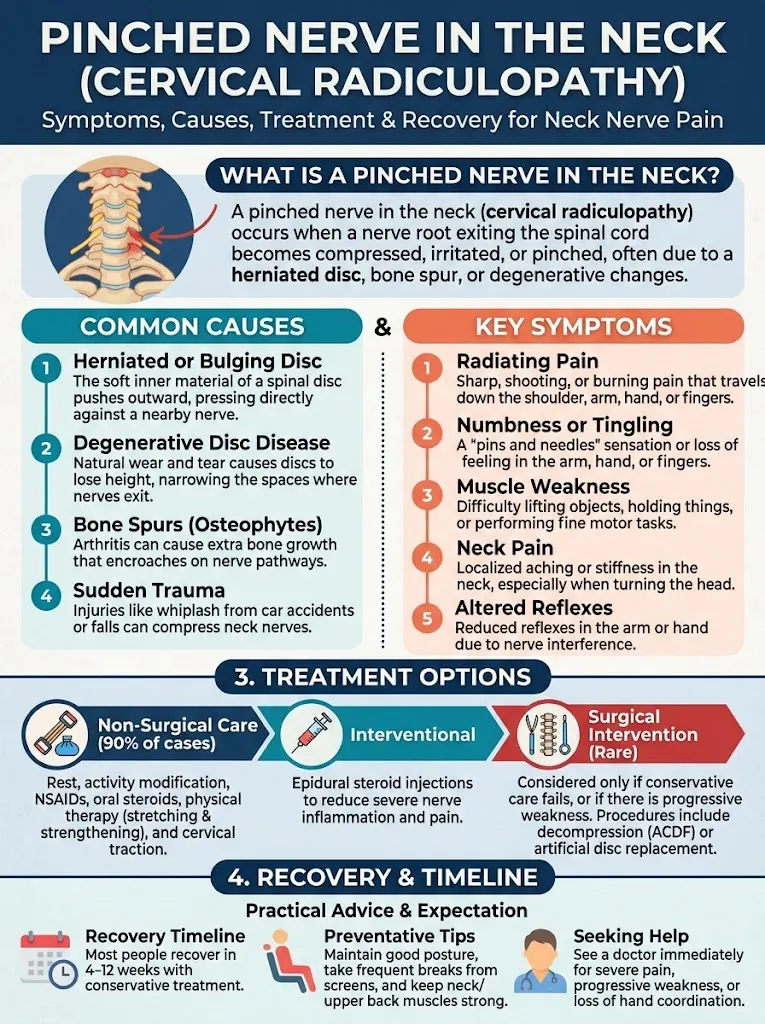
A pinched nerve in the neck can cause sharp or burning pain that travels from the neck into the shoulder, arm, or hand. You may also notice tingling, numbness, or weakness that makes everyday tasks, such as typing, driving, sleeping, or lifting objects, uncomfortable. Symptoms can worsen when you turn your head or maintain one position for too long.
Although neck pain often improves with conservative care, pain that radiates into an arm can sometimes indicate irritation or compression of a nerve in the cervical spine. The severity varies, and not every episode of neck and arm pain comes from a pinched nerve.
Understanding the symptoms, common causes, and treatment options can help you decide what to do at home, how recovery may progress, and when you should seek medical attention.
What Is a Pinched Nerve in the Neck?
A pinched nerve in the neck occurs when a cervical nerve root becomes irritated or compressed as it exits the spine. The medical term is cervical radiculopathy. Because these nerves carry signals to parts of the shoulder, arm, and hand, symptoms may occur away from the neck itself.
The location of pain, numbness, or weakness can provide clues about which nerve is affected, but symptoms alone cannot confirm the diagnosis. Learn more about cervical radiculopathy symptoms and treatment.
What Are the Symptoms of a Pinched Nerve in the Neck?
Symptoms can affect one or both sides, depending on the underlying cause. Common signs include:
- Neck pain that spreads into the shoulder, arm, or fingers.
- Burning, electric, or shooting pain.
- Tingling or a pins-and-needles sensation.
- Numbness or reduced sensation in part of the arm or hand.
- Muscle weakness, reduced grip strength, or difficulty lifting objects.
- Pain that changes with neck position, coughing, or certain movements.
Some people have little neck pain but noticeable arm symptoms. If you experience neck pain that radiates to the shoulder, the cause could involve a nerve, muscle, joint, or another structure.
What Causes a Pinched Nerve in the Neck?
Several conditions can narrow the space around a cervical nerve or irritate it.
Herniated or bulging disc
The soft disc between two vertebrae can bulge or herniate and press against a nearby nerve. This may happen after an injury or through age-related changes. A herniated disc and its symptoms, treatment, and recovery can help explain one possible source of nerve irritation.
Age-related spinal changes
As the spine changes with age, bone spurs or thickened tissues may narrow the openings through which nerves pass. This narrowing can contribute to nerve compression.
Repetitive strain or prolonged positioning
Long periods looking down at a phone, working at a computer, or maintaining an awkward neck position can aggravate symptoms. These habits do not necessarily cause structural nerve compression, but they may increase discomfort.
Injury
A sudden impact, fall, or other neck injury can affect discs, joints, or surrounding tissues. New neurological symptoms after an injury deserve prompt medical assessment.
How Is a Pinched Nerve Diagnosed?
A clinician typically asks about symptom location, onset, aggravating movements, and any weakness or numbness. The examination may include neck movement, muscle strength, sensation, and reflexes.
Imaging is not always necessary at the first visit. An MRI may be recommended for persistent symptoms, significant weakness, or suspected structural problems. X-rays can show some bone changes but do not directly show nerves or discs in detail. Test results need to be interpreted alongside the symptoms and examination.
How Do You Treat a Pinched Nerve in the Neck?
Treatment depends on the cause, severity, and presence of neurological symptoms. Many cases are initially managed without surgery.
Home care and activity changes
- Keep moving gently: Short walks and comfortable daily movement may help prevent stiffness. Avoid movements that clearly worsen arm pain, numbness, or weakness.
- Adjust your workstation: Keep the screen near eye level and take regular movement breaks.
- Try a wrapped cold or warm pack: Apply it for short periods, protecting your skin and stopping if irritation occurs.
- Support your neck during sleep: Use a comfortable pillow that keeps your neck in a neutral position rather than forcing it forward or sideways.
- Avoid forceful neck manipulation: High-velocity twisting or manipulation may be unsafe, particularly when the cause of symptoms is unknown.
For more guidance, see ways to relieve a pinched nerve in the shoulder blade area and posture correction exercises for shoulder and neck pain.
Medication and physical therapy
Depending on your medical history, a clinician may recommend an appropriate pain reliever or anti-inflammatory medication. These medicines can have side effects and may not be safe for everyone, particularly people with certain kidney, stomach, cardiovascular, or bleeding conditions.
Physical therapy may include gentle mobility work, strengthening, and exercises tailored to your symptoms. Stop any exercise that causes increasing pain, new tingling, or weakness. Avoid copying an exercise routine without confirming that it is appropriate for your condition.
When is surgery considered?
Surgery may be considered when significant nerve compression causes persistent symptoms despite nonsurgical treatment, or when neurological deficits are severe or worsening. The recommended procedure depends on the structure causing compression. Surgery is not necessary for every pinched nerve.
How Long Does a Pinched Nerve in the Neck Take to Heal?
Recovery varies with the cause and severity. Some people improve over several days or weeks, while symptoms related to substantial disc or bone changes may last longer. Pain may settle before numbness or weakness fully resolves.
| Symptom pattern | What it may mean | Sensible next step |
|---|---|---|
| Mild pain that gradually improves | Irritation may be settling | Continue comfortable activity and monitor |
| Persistent tingling or arm pain | Nerve irritation may be ongoing | Arrange a clinical assessment |
| New or worsening weakness | Possible significant nerve involvement | Seek prompt medical evaluation |
| Trouble walking or loss of bladder or bowel control | Possible serious spinal or neurological problem | Seek emergency care |
When Should You Seek Medical Attention?
Arrange a medical appointment if pain travels down your arm, numbness persists, symptoms keep returning, or daily activities become difficult.
Seek urgent evaluation for new or worsening arm or hand weakness, spreading numbness, or severe pain after an injury.
Seek emergency care for neck symptoms accompanied by difficulty walking, loss of coordination, sudden major weakness, or new loss of bladder or bowel control. These may indicate serious spinal cord or neurological involvement. Neck pain with chest pressure, shortness of breath, sweating, or faintness also requires emergency assessment because the cause may not be a nerve problem.
Frequently Asked Questions
1. Can a pinched nerve in the neck heal on its own?
Some cases improve with time and conservative care, depending on the cause. Persistent symptoms or weakness should be evaluated rather than assumed to be harmless.
2. What does a pinched nerve in the neck feel like?
It may cause shooting, burning, or electric pain that travels into the shoulder or arm. Tingling, numbness, and weakness can also occur.
3. Can a pinched nerve cause shoulder blade pain?
Yes. Cervical nerve irritation can cause pain around the shoulder blade, although muscle and joint conditions can cause similar symptoms.
4. Is heat or ice better for a pinched nerve?
Either may provide temporary comfort. Use a wrapped pack for short periods and choose the option that feels better without irritating the skin.
5. Should I stretch a pinched nerve in my neck?
Gentle movement may help some people, but aggressive stretching can worsen symptoms. Stop if pain radiates farther down the arm or numbness or weakness increases.
6. Can sleeping position make a pinched nerve worse?
It can. A position that twists or bends the neck for a prolonged period may aggravate discomfort; aim for a comfortable, neutral position.
7. Can stress cause a pinched nerve?
Stress can increase muscle tension and pain sensitivity, but it does not necessarily cause physical nerve compression. Persistent radiating pain or numbness deserves assessment.
8. Does an MRI always show a pinched nerve?
No. MRI can identify disc and other structural changes that may affect nerves, but findings must match the clinical symptoms. Imaging is not required in every case.
9. When does a pinched nerve need surgery?
Surgery may be considered for severe or progressive neurological problems or symptoms that do not improve with appropriate nonsurgical care. The decision depends on the cause and examination findings.
10. Can I exercise with a pinched nerve in my neck?
Gentle activity may be appropriate if it does not worsen symptoms. Avoid heavy lifting or movements that increase radiating pain, tingling, or weakness until you receive individualized guidance.
Conclusion
A pinched nerve in the neck can cause pain, tingling, numbness, or weakness that extends into the shoulder and arm. Gentle activity, ergonomic changes, and appropriate clinical care may help, but worsening weakness or signs of spinal cord involvement require urgent attention. If symptoms persist or interfere with daily life, arrange an evaluation to identify the cause and choose the right treatment.
Disclaimer: This article is provided for educational and informational purposes only.
This article is for education purpose only and is not a diagnosis or a substitute for medical advice.