
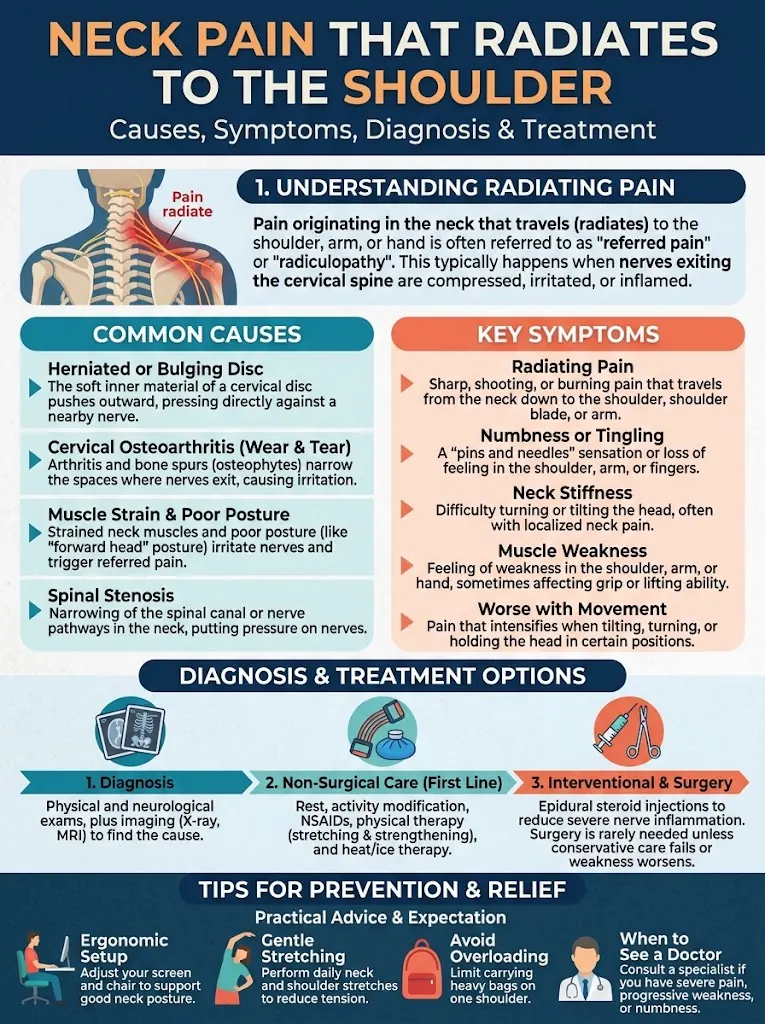
Neck pain that radiates to the shoulder can feel like a dull ache near the base of the neck, a sharp pain across the top of the shoulder, or burning discomfort that travels into the upper arm. It may become more noticeable when turning your head, working at a computer, sleeping in an awkward position, or lifting objects.
This type of pain is common with muscle tension and joint irritation, but it can sometimes occur when a nerve in the neck becomes compressed. The location and intensity of pain alone cannot confirm its cause, and symptoms that extend into the arm or involve weakness deserve particular attention.
Understanding why neck pain spreads to the shoulder can help you choose appropriate self-care, recognize when an examination is necessary, and understand what recovery may involve. The right treatment depends on whether the pain comes from muscles, spinal joints, discs, or irritated nerves.
What Causes Neck Pain That Radiates to the Shoulder?
Neck and shoulder pain often overlap because muscles, joints, discs, and nerves in the cervical spine can produce discomfort in nearby areas.
| Possible cause | Common symptoms | Helpful clue |
|---|---|---|
| Muscle strain or tension | Aching, tightness, tenderness | Often follows prolonged posture or unfamiliar activity |
| Cervical nerve irritation | Burning, shooting pain, tingling, or numbness | Symptoms may travel down the arm |
| Cervical disc changes | Neck pain with possible arm symptoms | May worsen with certain neck movements |
| Arthritis in the neck | Stiffness and restricted movement | Often develops gradually |
| Shoulder tendon or joint problem | Pain with reaching or lifting | Shoulder movement may reproduce symptoms |
1. Muscle strain and poor posture
Long periods looking down at a phone, working at a computer, or holding the head in one position can fatigue the neck and upper shoulder muscles. Stress and repetitive activity may contribute to muscle tension. Gentle movement and adjustments to work habits may help when symptoms are muscular.
2. A pinched nerve in the neck
A cervical nerve can become irritated or compressed by a disc problem, narrowing around the nerve, or age-related spinal changes. This may cause pain that travels from the neck into the shoulder, arm, or hand, sometimes with tingling, numbness, or weakness. See the guide to symptoms of a pinched nerve in the neck for more detail.
3. Cervical disc problems and arthritis
Changes in the discs or joints of the neck can cause stiffness and referred pain. A herniated disc may also irritate a nerve, while cervical arthritis can narrow spaces through which nerves travel. Learn more about cervical spondylosis symptoms and treatment and cervical radiculopathy symptoms.
4. A shoulder condition
Not every ache near the shoulder originates in the neck. Tendon irritation, bursitis, or a rotator cuff injury can cause pain during lifting or reaching. Information about shoulder tendonitis symptoms and treatment and rotator cuff tear signs and recovery may help explain other possible sources.
How Can You Tell Whether the Pain Comes From Your Neck or Shoulder?
Neck-related pain is more likely when turning or tilting the head changes the symptoms, particularly if discomfort travels down the arm. Shoulder-related pain may be more noticeable when lifting the arm, reaching behind your back, or lying on the affected side. However, these patterns overlap, so they cannot establish a diagnosis on their own.
| Symptom pattern | What it may suggest | What to consider |
|---|---|---|
| Pain changes with neck movement | Neck muscles, joints, or nerves | Arrange evaluation if persistent or worsening |
| Tingling or numbness into the arm | Possible nerve irritation | Seek assessment, especially with weakness |
| Pain mainly during overhead reaching | Shoulder tendon or joint condition | A shoulder examination may be appropriate |
| Pain with fever, severe headache, or neurological changes | Potentially serious cause | Urgent medical assessment may be needed |
Pain that extends below the elbow, particularly with tingling or numbness, can occur with cervical nerve irritation. For a closer comparison, see neck pain that spreads to the shoulder and causes of burning shoulder pain.
How to Relieve Neck Pain That Radiates to the Shoulder
For mild symptoms without warning signs, conservative care may help reduce discomfort while irritated tissues recover.
- Keep moving gently. Take short walking breaks and change positions regularly rather than remaining in bed for long periods.
- Try heat or cold. Apply a wrapped cold pack or comfortable heat for short periods, choosing whichever feels better. Avoid direct skin contact and excessive temperatures.
- Adjust your workstation. Keep the screen near eye level, support your arms, and avoid holding your head forward for extended periods.
- Sleep comfortably. Use a pillow that keeps your neck reasonably aligned with your spine. Avoid positions that consistently worsen symptoms.
- Consider medication carefully. Some people benefit from over-the-counter pain relievers, but these are not suitable for everyone. Ask a clinician or pharmacist if you have other medical conditions, take other medicines, or are unsure what is safe.
Gentle posture correction exercises for neck and shoulder pain may be useful when poor positioning contributes to symptoms. Stop any movement that causes shooting pain, increasing numbness, or weakness. Avoid forceful neck manipulation and aggressive stretching until the cause is clearer.
For additional practical strategies, review ways to relieve shoulder pain at home, tips for managing pain between the shoulder blades, and how poor posture contributes to back pain.
How Long Does Neck Pain That Spreads to the Shoulder Last?
Recovery depends on the cause, severity, and whether a nerve is involved. Mild muscular pain may improve over several days to a few weeks. Nerve-related symptoms can take longer and may need targeted treatment if they persist.
| Cause or situation | General recovery expectation | When to seek further care |
|---|---|---|
| Mild muscle strain | Often improves over days to weeks | If symptoms worsen or do not begin improving |
| Nerve irritation | May take several weeks or longer | If pain persists, numbness develops, or weakness appears |
| Arthritis or recurring disc-related pain | May fluctuate over time | If daily function is affected or symptoms progress |
There is no single timeline that applies to everyone. If pain is recurring, interfering with sleep, or limiting normal activities, a clinician can help identify the cause and recommend an appropriate plan.
When Should You See a Doctor?
Symptoms that may be monitored briefly
Mild soreness or stiffness that follows prolonged posture or activity and gradually improves may respond to self-care. Monitor changes and avoid activities that repeatedly trigger the pain.
Symptoms needing medical evaluation
Arrange an assessment if pain persists, repeatedly returns, spreads farther down the arm, or is accompanied by tingling or numbness. New weakness, dropping objects, or difficulty using the hand warrants prompt evaluation.
Symptoms requiring urgent or emergency care
Seek emergency help for neck or shoulder pain accompanied by chest pressure, shortness of breath, sweating, or fainting, as these can indicate a heart-related emergency. Sudden severe neck pain with a new severe headache, trouble walking, loss of coordination, or new major weakness also requires urgent assessment. Fever with severe neck stiffness or feeling seriously unwell should not be managed with home care alone.
What Happens During a Medical Evaluation?
A clinician may ask when the pain began, what movements aggravate it, and whether symptoms travel into the arm or hand. The examination may include neck and shoulder movement, muscle strength, sensation, and reflexes.
Imaging is not always needed immediately. An MRI or other test may be considered when symptoms, examination findings, injury history, or lack of improvement suggest that further investigation would change treatment. Treatment may include physical therapy, medication, activity adjustments, or specialist care depending on the findings.
Frequently Asked Questions
1. Can neck pain radiate to just one shoulder?
Yes. Neck muscles, joints, or nerves can cause pain on one side. One-sided pain alone does not identify the cause.
2. Why does my neck and shoulder hurt when I turn my head?
Turning your head can load irritated muscles, joints, or cervical nerves. Persistent or worsening pain should be assessed.
3. Can a pinched nerve cause shoulder blade pain?
Yes. Cervical nerve irritation may cause pain around the shoulder blade and sometimes into the arm. Numbness or weakness makes medical evaluation particularly important.
4. Can stress cause neck and shoulder pain?
Stress may contribute to muscle tension and make discomfort more noticeable. It should not automatically be assumed to explain persistent or neurological symptoms.
5. Is heat or ice better for neck and shoulder pain?
Either may help, depending on what feels more comfortable. Use a protective layer and avoid extreme temperatures.
6. Should I stretch when neck pain travels into my shoulder?
Gentle, comfortable movement may help some people, but avoid forcing stretches that reproduce shooting pain or tingling. Seek advice if symptoms extend into the arm or worsen.
7. Can sleeping position cause this pain?
An awkward or unsupported sleeping position can aggravate neck muscles and joints. Adjust your pillow and sleeping position if symptoms reliably worsen overnight.
8. When does neck pain radiating to the shoulder need an MRI?
An MRI may be considered when there are concerning neurological findings, persistent symptoms, significant injury, or suspicion of a condition requiring further investigation. A clinician determines whether imaging is appropriate.
9. Can neck-related shoulder pain go away on its own?
Mild muscular pain often improves with time and appropriate self-care. Nerve compression or other underlying conditions may require additional treatment.
10. Can neck and shoulder pain indicate something serious?
Sometimes. Chest symptoms, sudden neurological changes, severe headache, fever with marked neck stiffness, or major weakness require urgent assessment rather than routine home treatment.
Conclusion
Neck pain that radiates to the shoulder can result from muscle tension, cervical joint or disc changes, nerve irritation, or a shoulder condition. Gentle movement, comfortable heat or cold, and better workstation habits may help mild symptoms. Persistent pain, numbness, or weakness deserves medical evaluation, while chest symptoms or sudden neurological changes require urgent care.
Disclaimer: This article is provided for educational and informational purposes only.
This article is for education purpose only and is not a diagnosis or a substitute for medical advice.