
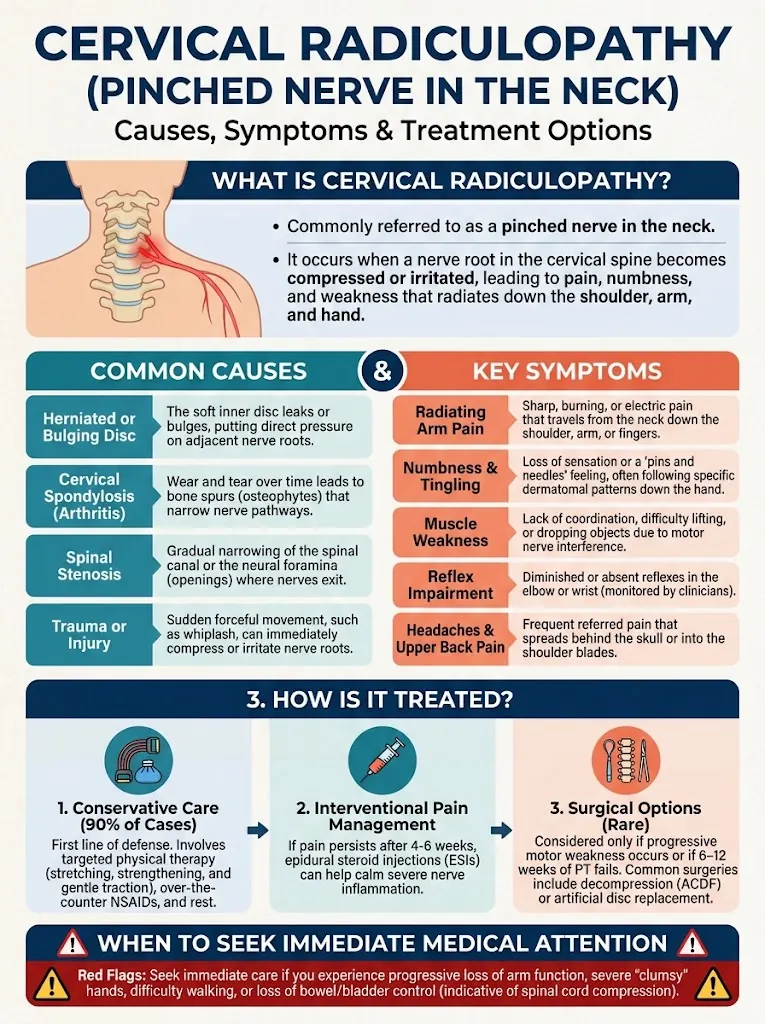
Cervical radiculopathy can cause neck pain that spreads into the shoulder, arm, or hand. Some people notice tingling in their fingers, numbness, or weakness when gripping objects. Symptoms may worsen when turning the head, looking down, or holding one position for too long, making driving, working, and sleeping uncomfortable.
These symptoms can be concerning, especially when arm pain occurs without an obvious injury. Cervical radiculopathy does not always indicate a serious condition, but persistent numbness or muscle weakness should not be ignored. Similar symptoms can arise from other neck, shoulder, or nerve problems, so the pattern alone cannot confirm the cause.
Understanding cervical radiculopathy symptoms can help you recognize possible nerve irritation, understand what may cause it, and know which treatments may help. This guide explains common warning signs, how clinicians evaluate the condition, practical self-care options, and when to seek medical attention.
What Are the Common Symptoms of Cervical Radiculopathy?
Cervical radiculopathy occurs when a nerve root in the neck becomes irritated or compressed. Because these nerves carry signals to the shoulder, arm, and hand, symptoms may extend beyond the neck itself.
Common symptoms include:
- Neck pain: Aching, stiffness, or sharp pain that may worsen with certain movements.
- Radiating arm pain: Burning, shooting, or electric-like pain traveling from the neck toward the shoulder, arm, or fingers.
- Tingling or pins and needles: Unusual sensations in parts of the arm or hand.
- Numbness: Reduced sensation in specific fingers or areas of the arm.
- Muscle weakness: Difficulty gripping, lifting, pushing, or performing fine hand movements.
- Reduced neck mobility: Discomfort when rotating, extending, or bending the neck.
Some people experience mainly arm pain, while others have neck discomfort alongside sensory changes. Symptoms depend partly on which nerve root is affected.
What Causes Cervical Radiculopathy?
Cervical radiculopathy usually develops when a nerve root becomes irritated by changes or structures around the cervical spine.
Common causes include:
- Herniated cervical disc: Disc material protrudes and may press against a nearby nerve. Learn about herniated disc symptoms and treatment options.
- Age-related spinal changes: Discs can lose height, and bone spurs may narrow the spaces where nerves exit the spine. These changes can occur with cervical spondylosis.
- Narrowed nerve openings: Reduced space around a nerve root may contribute to compression.
- Injury: Certain neck injuries can affect discs or surrounding structures.
Prolonged positions may aggravate symptoms, but posture alone does not necessarily cause nerve compression. Other conditions, including peripheral nerve problems and shoulder disorders, can produce similar symptoms.
How Do Cervical Radiculopathy Symptoms Differ From Other Conditions?
The location and type of symptoms can offer clues, but they cannot establish a diagnosis on their own.
| Feature | Cervical radiculopathy | Local shoulder problem | Peripheral nerve compression |
|---|---|---|---|
| Main discomfort | Neck pain that may travel down the arm | Pain centered around the shoulder | Tingling or numbness in a particular nerve distribution |
| Neck movement | May aggravate symptoms | Often has less direct influence | Usually less influential |
| Sensory changes | May affect the arm or fingers | Less typical unless another condition exists | Often affects specific fingers or hand areas |
| Weakness | May involve muscles supplied by the affected nerve | May affect shoulder movement | May affect muscles controlled by the compressed nerve |
For example, a pinched nerve in the neck may produce radiating symptoms, while neck pain that spreads into the shoulder can also have muscular or joint-related causes. Pain around the shoulder blade may have several explanations, including nerve-related shoulder blade pain.
How Is Cervical Radiculopathy Diagnosed?
A clinician usually reviews your symptoms, medical history, and neck or arm movements before deciding whether additional testing is needed.
Evaluation may include:
- Neurological examination: Checking muscle strength, sensation, and reflexes.
- Movement testing: Assessing whether neck positions reproduce symptoms.
- MRI: Sometimes used to examine discs, nerve roots, and other soft tissues, particularly when symptoms persist or neurological deficits are present.
- Other tests: Nerve conduction studies or electromyography may help distinguish cervical nerve-root problems from peripheral nerve conditions when the diagnosis remains uncertain.
Imaging findings must be interpreted alongside symptoms because age-related changes can appear even in people without pain.
What Treatments Help Cervical Radiculopathy?
Treatment depends on symptom severity, the underlying cause, and whether nerve function is affected. Many cases can initially be managed without surgery, but progressive weakness or other concerning findings require prompt assessment.
| Treatment option | Potential benefit | Important consideration |
|---|---|---|
| Activity modification | Reduces aggravating movements while maintaining gentle activity | Avoid prolonged bed rest and movements that intensify radiating symptoms |
| Physical therapy | Builds strength, mobility, and movement control | Exercises should be adapted to symptoms and clinical findings |
| Medication | May help manage pain or inflammation | Suitability depends on medical history, other medicines, and side effects |
| Selected injections | May provide temporary relief in some cases | Benefits vary, and injections have potential risks |
| Surgery | May relieve nerve compression in selected cases | Considered when symptoms, neurological findings, or treatment response warrant it |
A physical therapist may recommend gentle neck movement, strengthening, and posture adjustments. Guidance on posture correction exercises for neck and shoulder pain may be useful, but stop any movement that causes increasing arm pain, numbness, or weakness.
For general activity, low-impact exercises for people with joint pain can offer ideas for staying active, provided the activities are comfortable and appropriate for your condition.
What Can You Do at Home?
If symptoms are mild and stable, practical measures may help reduce irritation while you arrange appropriate care.
- Change positions regularly rather than holding your neck in one position for long periods.
- Keep screens near eye level and support your arms during desk work.
- Try a wrapped cold pack or gentle heat for short periods, depending on which feels better.
- Use a comfortable sleeping position that keeps your neck supported without forcing it forward or backward.
- Avoid heavy lifting, forceful neck manipulation, and unsupervised traction when these could worsen symptoms.
- Ask a clinician or pharmacist whether an over-the-counter pain reliever is appropriate for you.
If your discomfort occurs alongside upper-back tension, understanding common causes of pain between the shoulder blades may help you discuss the full symptom pattern with a clinician. However, do not assume that all shoulder blade pain comes from the neck.
When Should You Seek Medical Attention?
Symptoms that can usually be monitored briefly
Mild discomfort or intermittent tingling without weakness may sometimes improve with activity modification. Monitor whether symptoms become more frequent, spread, or interfere with daily activities.
Symptoms needing medical evaluation
Arrange a clinical assessment if you have persistent radiating pain, recurring numbness, symptoms that disrupt sleep, or difficulty using your arm or hand. New or worsening weakness deserves prompt evaluation rather than waiting for home treatment to work.
Symptoms requiring urgent or emergency care
Seek emergency care for sudden or rapidly worsening weakness, difficulty walking or maintaining balance, loss of coordination in both hands, or new loss of bladder or bowel control. Neck or arm pain accompanied by chest pressure, shortness of breath, sweating, or faintness may also signal a medical emergency.
Frequently Asked Questions
1. What does cervical radiculopathy feel like?
It may feel like sharp, burning, or electric pain traveling from the neck into the shoulder or arm. Tingling, numbness, or weakness can occur as well.
2. Can cervical radiculopathy cause finger numbness?
Yes. An affected nerve root can cause numbness or tingling in particular fingers, although the distribution varies. Other nerve conditions can cause similar sensations.
3. Can cervical radiculopathy occur without neck pain?
Yes. Some people experience more arm pain, tingling, or weakness than neck discomfort. The absence of neck pain does not rule it out.
4. Does cervical radiculopathy go away on its own?
Symptoms may improve over several weeks, depending on the cause and severity. Persistent or worsening symptoms should be evaluated rather than assumed to resolve without treatment.
5. What makes cervical radiculopathy worse?
Certain neck positions, prolonged desk work, heavy lifting, and movements that narrow or irritate the affected area may aggravate symptoms. Triggers vary from person to person.
6. Is walking safe with cervical radiculopathy?
Gentle walking is often reasonable if it does not worsen symptoms or affect balance. Stop and seek guidance if activity increases weakness, numbness, or radiating pain.
7. What is the best sleeping position for cervical radiculopathy?
A position that keeps the neck comfortably aligned may help. A supportive pillow and avoiding positions that reproduce arm symptoms can be useful, but there is no single best position for everyone.
8. Can cervical radiculopathy cause permanent nerve damage?
Severe or prolonged nerve compression can sometimes lead to lasting weakness or sensory changes. Prompt evaluation is important when neurological symptoms are worsening.
9. Do you need an MRI for cervical radiculopathy?
Not always. A clinician may first assess symptoms and perform a physical examination, with MRI considered when symptoms persist, significant deficits occur, or the findings suggest a need for further investigation.
10. When is surgery needed for cervical radiculopathy?
Surgery may be considered when nerve compression causes progressive neurological deficits or substantial symptoms that do not respond adequately to nonsurgical care. The decision depends on examination findings, imaging, and individual circumstances.
Conclusion
Cervical radiculopathy can cause neck pain, radiating arm discomfort, tingling, numbness, and weakness when a nerve root is irritated or compressed. Activity modification and appropriately guided treatment may help, but persistent symptoms deserve medical assessment. Seek urgent care for rapidly worsening weakness, coordination or walking problems, or new bladder or bowel dysfunction.
Disclaimer: This article is provided for educational and informational purposes only.
This article is for education purpose only and is not a diagnosis or a substitute for medical advice.