
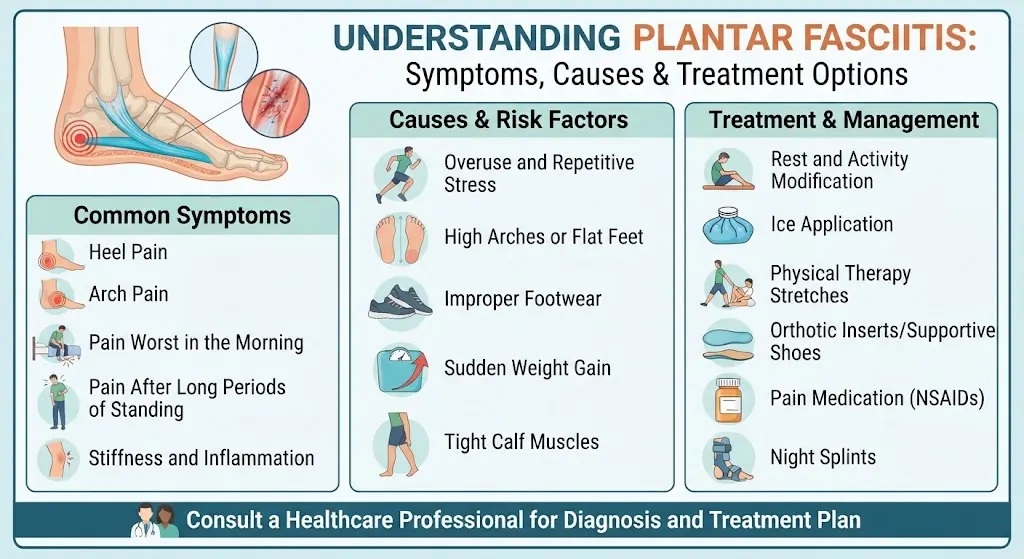
Plantar fasciitis is a common cause of heel pain that can make your first steps in the morning surprisingly uncomfortable. You may feel a sharp ache under your heel when getting out of bed, standing after sitting, or walking after a long day. The pain can interfere with exercise, work, and everyday activities.
Heel pain does not always mean plantar fasciitis. Other conditions, including Achilles tendon problems and other causes of heel pain when walking, can produce similar symptoms. Recognizing the pattern of pain can help you understand when home care may be reasonable and when medical evaluation is needed.
Plantar fasciitis occurs when the plantar fascia, a strong band of tissue supporting the arch of your foot, becomes irritated from repeated loading. This guide explains its symptoms, possible causes, treatment options, recovery expectations, and warning signs.
What Are the Symptoms of Plantar Fasciitis?
The most characteristic symptom is pain beneath the heel, particularly during the first steps after waking or resting. It may ease as you move around but return after prolonged standing, walking, or exercise.
| Symptom | What you may notice |
|---|---|
| First-step pain | Sharp or aching pain after sleeping or sitting |
| Heel tenderness | Discomfort when pressing the underside of the heel |
| Activity-related pain | Symptoms after long periods of standing or walking |
| Stiffness | Tightness around the heel or arch, especially in the morning |
Pain that is severe, persistent, associated with marked swelling, or accompanied by numbness may require assessment for another cause.
What Causes Plantar Fasciitis?
Plantar fasciitis can develop when repeated stress on the plantar fascia exceeds its ability to recover. Common contributing factors include suddenly increasing walking or running, spending long periods on hard surfaces, wearing poorly supportive footwear, and tight calf muscles.
Foot structure can also influence how pressure is distributed. For example, flat feet and changes in foot mechanics may contribute to symptoms in some people. Body weight can affect the load placed on the feet, but plantar fasciitis can occur in people of different body sizes.
Other heel conditions may feel similar. Achilles tendonitis symptoms usually involve the back of the heel or tendon, while ankle tendonitis symptoms may include pain around the ankle. These conditions are not interchangeable, so the location and pattern of pain matter.
How Is Plantar Fasciitis Diagnosed?
A healthcare professional usually evaluates symptoms, checks the location of tenderness, and assesses foot movement and walking. Imaging is not always necessary when the history and examination suggest plantar fasciitis. X-rays or other tests may be considered if symptoms are unusual, an injury is suspected, or another diagnosis needs to be ruled out.
What Is the Best Treatment for Plantar Fasciitis?
Treatment usually starts with reducing aggravating activities and gradually improving flexibility and strength. Recovery varies, so avoid pushing through sharp or worsening pain.
| Treatment | How it may help | Important consideration |
|---|---|---|
| Activity modification | Reduces repeated strain | Replace painful running with tolerable low-impact activity |
| Calf and plantar fascia stretching | May ease stiffness and improve flexibility | Stretch gently without forcing painful movements |
| Supportive footwear | Helps manage pressure during walking | Avoid walking barefoot on hard floors if it worsens pain |
| Heel cups or orthotics | May improve comfort for some people | Fit and benefit vary between individuals |
| Physical therapy | Provides tailored exercises and movement guidance | Progress should reflect symptoms and function |
For exercise choices, consider low-impact exercises for people with joint pain and learn the difference between warming up and stretching. A physical therapist can help adapt a program to your symptoms; this overview of physical therapy versus chiropractic care explains how approaches can differ.
Ice wrapped in a cloth may temporarily ease soreness. Avoid applying ice directly to skin. Over-the-counter pain medicines may not be suitable for everyone, particularly people with certain medical conditions or those taking other medicines, so ask a healthcare professional or pharmacist if you are unsure.
How Long Does Plantar Fasciitis Take to Heal?
Improvement often takes several weeks or months, and some cases last longer. Progress depends on the severity of symptoms, daily demands, consistency with treatment, and whether contributing factors are addressed. Recovery from other tendon conditions, such as those described in how long tendonitis lasts, varies too and should not be used as an exact prediction for plantar fasciitis.
| Time or stage | Practical approach |
|---|---|
| Early symptoms | Reduce activities that sharply increase pain and use supportive footwear |
| Ongoing symptoms | Follow a consistent stretching and strengthening plan |
| Persistent or worsening pain | Arrange a clinical assessment and review the diagnosis and treatment |
Do not use a fixed timeline as a reason to ignore worsening symptoms. Everyday habits that influence joint health and broader lifestyle approaches to orthopedic pain may support general musculoskeletal health, but they do not replace targeted treatment.
What Can You Do at Home?
- Wear supportive shoes indoors and outdoors if barefoot walking increases pain.
- Temporarily reduce running, jumping, and long walks that worsen symptoms.
- Try gentle calf and foot stretching, stopping if pain becomes sharp.
- Return to activity gradually as walking becomes more comfortable.
- Keep track of which activities trigger symptoms and how long the discomfort lasts.
A balanced diet supports general health, although no specific food is proven to cure plantar fasciitis. Advice about dietary approaches to managing pain, vitamins and minerals for joint health, vitamin D deficiency and bone pain, and hydration and joint health may help with broader health questions, but supplements or extra fluids should not be treated as a direct cure for plantar fascia pain.
When Should You Seek Medical Care?
Symptoms you can usually monitor: Mild heel discomfort that occurs with activity and improves with rest may be monitored briefly while you adjust activities and footwear, provided there are no warning signs.
Arrange a medical evaluation: Seek an appointment if pain persists despite self-care, keeps returning, interferes with normal walking, or is associated with tingling, numbness, or unexplained swelling. Ongoing pain may need reassessment; information about acute versus chronic pain can explain how pain duration is categorized, but it cannot identify the cause.
Seek urgent care: Get prompt medical attention for severe pain after an injury, inability to bear weight, significant swelling, redness or warmth with fever, or a foot that becomes pale, blue, or unusually cold. These symptoms may indicate a problem other than plantar fasciitis.
Persistent symptoms do not automatically mean permanent damage. Why pain can continue after an injury heals and the role of inflammation in joint pain provide broader context, but a clinician should assess ongoing heel pain rather than assuming its cause.
Frequently Asked Questions
1. Is plantar fasciitis worse in the morning?
It often is. The first steps after sleep or prolonged sitting can be painful, with symptoms sometimes easing after gentle movement.
2. Can walking make plantar fasciitis worse?
Yes. Long walks or prolonged standing may aggravate symptoms, especially when activity increases suddenly. Reduce painful loads without stopping all comfortable movement.
3. Should I stop running if I have plantar fasciitis?
Consider pausing or reducing running if it worsens heel pain. Low-impact activities may be more comfortable while symptoms settle.
4. Are supportive shoes helpful?
Supportive, comfortable shoes may reduce discomfort during daily activities. The best choice depends on your foot shape, activity, and individual response.
5. Do heel inserts cure plantar fasciitis?
Heel cups or orthotics may help some people manage symptoms, but they do not guarantee a cure. They work best as part of an individualized plan when appropriate.
6. Can plantar fasciitis go away on its own?
Symptoms may improve over time, particularly when aggravating activities are adjusted. Persistent or worsening pain deserves evaluation rather than indefinite waiting.
7. Is stretching safe when my heel hurts?
Gentle stretching may help, but forcing a stretch or continuing through sharp pain can aggravate symptoms. A clinician or physical therapist can recommend suitable techniques.
8. Does plantar fasciitis require an X-ray?
Not always. Diagnosis is often based on symptoms and examination; imaging may be recommended when another cause is suspected.
9. Can plantar fasciitis return?
Yes. Symptoms can recur when activity increases quickly or contributing factors remain. Gradual training changes and appropriate footwear may help manage repeated flare-ups.
10. When should I see a doctor for heel pain?
Arrange an evaluation for persistent, recurrent, or function-limiting pain. Seek urgent care after a significant injury, if you cannot bear weight, or if you develop fever with a red, hot, swollen foot.
Conclusion
Plantar fasciitis commonly causes pain beneath the heel, especially during the first steps after rest. Supportive footwear, activity modification, and gradual stretching and strengthening may help, but recovery takes time and varies. Seek medical advice if symptoms persist, worsen, or include warning signs.
Disclaimer: This article is provided for educational and informational purposes only.
This article is for education purpose only and is not a diagnosis or a substitute for medical advice.