
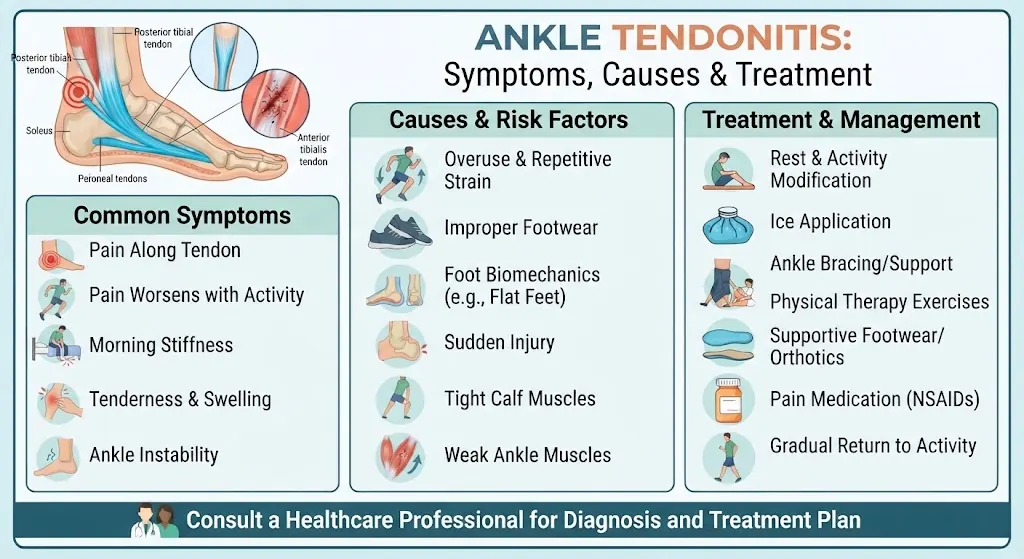
Ankle tendonitis can make everyday movements uncomfortable, from walking around the house to climbing stairs or exercising. You may notice pain near the ankle, stiffness when getting up after resting, swelling, or tenderness that becomes more noticeable after activity.
Ankle pain does not always mean tendonitis. Sprains, joint inflammation, fractures, and other conditions can cause similar symptoms, so persistent or severe pain should not automatically be treated as a minor overuse injury.
Understanding ankle tendonitis symptoms, causes, and treatment options can help you recognize common patterns, modify activities safely, and know when to seek medical care. The right approach depends on which tendon is affected and how severe the symptoms are.
What Is Ankle Tendonitis?
Ankle tendonitis is irritation or inflammation involving a tendon around the ankle. Tendons connect muscles to bones and help control movement and stability. Repetitive loading, sudden increases in exercise, or an injury can cause pain and reduced function.
The condition may involve tendons around the inside, outside, or back of the ankle. For comparison, Achilles tendonitis symptoms and treatment concern the tendon connecting the calf muscles to the heel.
What Are the Symptoms of Ankle Tendonitis?
Symptoms vary according to the affected tendon and the amount of irritation.
| Symptom | How it may feel |
|---|---|
| Pain | Aching or tenderness near the affected tendon, often worse with movement |
| Stiffness | Discomfort after sleeping or sitting for a while |
| Swelling | Localized puffiness around the ankle |
| Tenderness | Pain when pressing along the tendon |
| Weakness | Discomfort or difficulty pushing off, standing on tiptoe, or walking |
Pain that increases during walking may overlap with other conditions, including those discussed in this guide to heel pain when walking. Symptoms alone cannot confirm the diagnosis.
What Causes Ankle Tendonitis?
Ankle tendonitis often develops when repeated stress exceeds a tendon’s capacity to recover. Common contributing factors include:
- Increasing running, walking, or sports activity too quickly.
- Repeated jumping, hill training, or uneven-surface exercise.
- Unsupportive footwear or changes in footwear.
- Ankle alignment or foot mechanics that affect tendon loading.
- Returning to exercise before an earlier injury has recovered.
People with flat feet may experience altered foot mechanics; understanding flat feet symptoms and treatment options can help explain one possible contributor. Previous ankle injuries and abrupt changes in training can also increase strain.
How Is Ankle Tendonitis Treated?
Treatment usually starts with reducing aggravating activities while maintaining comfortable movement. A clinician may recommend temporary activity modification, supportive footwear, physical therapy, or medication depending on the cause and your medical history.
| Treatment | Potential role | Important consideration |
|---|---|---|
| Relative rest | Reduces repeated tendon stress | Avoid prolonged complete inactivity unless advised |
| Ice wrapped in a towel | May ease pain and swelling | Apply for short periods; never directly to skin |
| Supportive shoes or a brace | May improve comfort and stability | The best option depends on the affected tendon |
| Physical therapy | Builds strength, mobility, and load tolerance | Exercises should match the injury and stage of recovery |
| Pain medication | May provide short-term symptom relief | Check safety with a clinician or pharmacist, especially with other conditions or medicines |
A physical therapist may guide gradual rehabilitation. This overview of physical therapy versus chiropractic care explains how treatment approaches differ.
Which Exercises Are Safe?
Gentle ankle movement may be appropriate if it does not significantly increase pain. Depending on your symptoms, a clinician may later recommend calf flexibility work, controlled heel raises, balance exercises, and progressive strengthening.
Avoid pushing through sharp pain, worsening swelling, or limping. Learn how to prepare for movement with warm-ups versus stretching, and consider low-impact exercises for people with joint pain while higher-impact activity is uncomfortable. If weight-bearing is very painful, seek assessment before exercising.
How Long Does Ankle Tendonitis Take to Heal?
Recovery depends on the tendon involved, symptom severity, ongoing activity, and whether another injury is present. Mild cases may improve over several weeks, while persistent or more substantial tendon problems can take longer.
| Recovery pattern | Recommended approach |
|---|---|
| Early, mild symptoms | Reduce aggravating activity and monitor changes |
| Symptoms that persist or recur | Arrange a clinical assessment and discuss rehabilitation |
| Severe pain or difficulty bearing weight | Seek prompt medical evaluation rather than waiting for recovery |
The general tendonitis recovery timeline can provide context, but it cannot predict an individual ankle injury’s healing time.
When Should You Seek Medical Care?
Usually monitor: Mild discomfort that improves with reduced activity and does not affect normal walking may be monitored briefly.
Arrange an appointment: Seek assessment if pain or swelling persists, keeps returning, limits daily activities, or fails to improve with sensible activity modification.
Seek urgent care: Get prompt medical attention for sudden severe pain, inability to bear weight, major swelling after an injury, deformity, or a snap followed by loss of function. A red, hot ankle with fever also needs urgent evaluation because infection or another serious condition may be responsible.
A clinician may examine your ankle, assess tendon function, and recommend imaging when a fracture, tear, or another diagnosis is suspected.
Frequently Asked Questions
1. Can ankle tendonitis heal on its own?
Mild symptoms may improve with reduced aggravating activity and gradual return to movement. Persistent or worsening pain deserves assessment to confirm the cause.
2. Should I keep walking with ankle tendonitis?
Short, comfortable walks may be reasonable if they do not worsen symptoms or cause limping. Reduce walking distance if pain increases during activity or afterward.
3. Is heat or ice better for ankle tendonitis?
Ice wrapped in a towel may help ease pain after activity, particularly when swelling is present. Heat may feel soothing for stiffness, but neither treatment replaces appropriate activity modification.
4. Can ankle tendonitis cause swelling?
Yes, localized swelling can occur around an irritated tendon. Sudden or substantial swelling, particularly after an injury, should not automatically be attributed to tendonitis.
5. Is ankle tendonitis the same as an ankle sprain?
No. Tendonitis affects a tendon, while a sprain involves ligaments that support a joint. Both can cause pain and swelling, so examination may be needed to distinguish them.
6. Can I exercise with ankle tendonitis?
You may be able to continue modified, low-impact activity if it remains comfortable. Avoid movements that worsen pain and seek individualized guidance before strengthening an injured tendon.
7. What shoes should I wear?
Choose comfortable shoes that fit well and provide appropriate support for your activities. There is no single shoe that treats every type of ankle tendon problem.
8. Can ankle tendonitis return?
Yes. Symptoms can recur if activity increases faster than the tendon can tolerate. Gradual training changes and progressive strengthening may help reduce repeated overload.
9. Does ankle tendonitis require surgery?
Most cases are initially managed without surgery. A specialist may discuss additional options if a significant tendon tear or persistent symptoms do not respond to appropriate conservative care.
10. When should I see a doctor for ankle tendonitis?
Arrange an appointment for persistent, recurrent, or activity-limiting symptoms. Seek urgent care for severe pain, inability to bear weight, deformity, or a hot, red ankle accompanied by fever.
Conclusion
Ankle tendonitis can cause pain, stiffness, and swelling that interfere with everyday movement. Reducing aggravating activity, wearing comfortable supportive footwear, and returning to exercise gradually may help, but persistent or severe symptoms need medical assessment to rule out other injuries.
Disclaimer: This article is provided for educational and informational purposes only.
This article is for education purpose only and is not a diagnosis or a substitute for medical advice.