
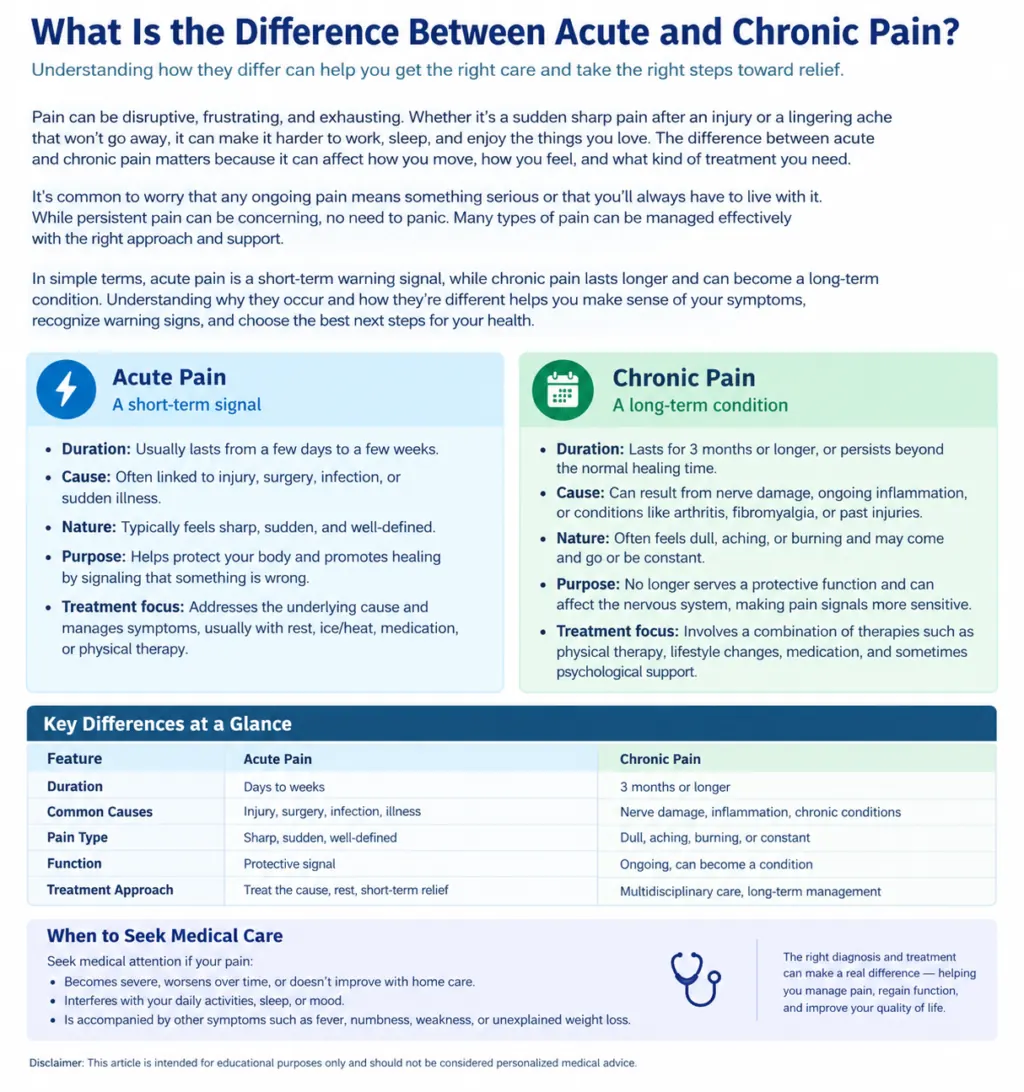
Pain can start suddenly after an injury, surgery, or illness, or it may continue for months and interfere with sleep, work, exercise, and everyday activities. Understanding the difference between acute and chronic pain can help you recognize what your body may be signaling and when medical evaluation is appropriate.
Acute pain does not always mean an injury is serious, and chronic pain does not automatically mean that tissue damage is continuing. Both types of pain are real, but they can differ in duration, underlying causes, and treatment approaches.
This guide explains acute versus chronic pain, how each type feels, why pain sometimes persists, what may help, and which warning signs should not be ignored.
What Is the Difference Between Acute and Chronic Pain?
Acute pain is short-term pain that usually begins suddenly and improves as the underlying injury or illness heals. Chronic pain generally lasts or recurs for longer than three months, although its pattern and cause can vary.
| Feature | Acute pain | Chronic pain |
|---|---|---|
| Typical duration | Hours to weeks, sometimes longer during recovery | Usually longer than three months |
| Common triggers | Injury, surgery, burns, infection | Persistent conditions or changes in pain processing |
| Main purpose or pattern | Often signals current injury or illness | May continue beyond expected healing or recur |
| Treatment focus | Addressing the cause and supporting recovery | Managing contributing causes, function, and quality of life |
The three-month threshold is a common clinical definition, not a rule that determines the cause or severity of pain. For more context, see how acute pain differs from chronic pain.
What Does Acute Pain Feel Like?
Acute pain often begins immediately or shortly after a specific event. It may feel sharp, aching, throbbing, burning, or tender, depending on the cause.
Examples include:
- Pain after twisting an ankle or pulling a muscle.
- Soreness following surgery or a dental procedure.
- Pain from a burn, cut, or sudden back strain.
- Pain associated with an infection or another short-term illness.
Acute pain usually decreases as healing progresses, but recovery time varies. Learn how long a pulled muscle may take to heal.
What Does Chronic Pain Feel Like?
Chronic pain persists or repeatedly returns for months. It may be constant or intermittent and can affect one area or several parts of the body.
Common examples include persistent back pain, arthritis-related pain, migraine, and pain associated with fibromyalgia. The experience may include aching, stiffness, burning, sensitivity to touch, or pain that interferes with sleep and concentration.
Possible contributors include ongoing inflammation, nerve injury, underlying health conditions, and changes in how the nervous system processes pain. Why pain can continue after an injury heals is an important part of understanding chronic pain.
| Possible contributor | How it may relate to pain |
|---|---|
| Ongoing tissue or joint problems | May continue generating pain signals |
| Nerve damage or irritation | Can cause burning, tingling, or shooting pain |
| Increased nervous-system sensitivity | May amplify pain responses |
| Poor sleep and stress | Can intensify symptoms or make coping harder |
Chronic pain is not necessarily imaginary or evidence of ongoing damage. In some cases, central sensitization and pain amplification may help explain why ordinary sensations become painful.
Why Does Pain Become Chronic?
Pain may become chronic when an underlying condition persists, healing is complicated, nerves remain irritated, or the nervous system becomes more sensitive to pain signals. Sometimes several factors contribute together.
For example, inflammation and joint pain may be associated with an ongoing joint condition, while stress-related muscle and joint pain may involve increased muscle tension and heightened pain sensitivity.
Chronic pain can also occur with conditions such as fibromyalgia and neuropathy. These conditions differ, so persistent pain deserves an assessment rather than assumptions about its cause.
How Are Acute and Chronic Pain Treated?
Treatment depends on the cause, severity, medical history, and how pain affects daily activities.
| Approach | Acute pain | Chronic pain |
|---|---|---|
| Medical assessment | Identify injury or illness | Evaluate persistent causes and contributing factors |
| Activity | Protect the affected area when appropriate | Gradually maintain or rebuild function |
| Medication | May provide short-term relief when appropriate | Requires individualized benefit-risk review |
| Rehabilitation | Support safe recovery | Improve movement, strength, and daily function |
For acute pain, follow injury-specific advice, avoid activities that worsen the injury, and use medication only as directed. Persistent or severe pain should not automatically be treated with rest alone.
For chronic pain, a clinician may recommend physical therapy, gradual activity, sleep improvements, psychological pain-management strategies, medication, or coordinated care. Low-impact exercises for people with joint pain may be appropriate for some people, depending on their condition.
Other options may include physical therapy versus chiropractic care, lifestyle changes that support orthopedic pain management, and dietary changes that may support pain management. These approaches are not substitutes for evaluating a potentially serious cause.
When Should You Seek Medical Care?
Seek medical advice if pain is persistent, worsening, unexplained, repeatedly disrupts sleep, or limits normal activities.
Get urgent medical care for severe pain after a major injury, new or progressive weakness, or new loss of bladder or bowel control with back pain. Sudden chest pain, difficulty breathing, or sudden neurological symptoms also require emergency assessment.
Pain location matters, too. For example, common causes and risk factors for back pain differ from causes of sciatica and its treatment. If symptoms involve the neck or arm, signs of a pinched nerve in the neck may also be relevant to discuss with a clinician.
For joint-specific symptoms, review when knee pain needs medical evaluation or shoulder tendonitis symptoms and treatment options. These resources can help you prepare questions, but they cannot establish a diagnosis.
Frequently Asked Questions
1. Is chronic pain more serious than acute pain?
Not necessarily. Acute pain can signal a medical emergency, while chronic pain can range from manageable to severely disabling.
2. Can acute pain turn into chronic pain?
Yes. Pain can persist beyond expected healing, although not everyone with an injury or surgery develops chronic pain.
3. Does chronic pain always mean tissue damage?
No. Pain can continue because of ongoing disease, nerve changes, or increased nervous-system sensitivity, even when the original injury has healed.
4. Can chronic pain go away?
Sometimes it improves substantially or resolves, depending on its cause and treatment. Other cases require long-term management.
5. How is chronic pain diagnosed?
Clinicians review symptoms, duration, medical history, and physical examination findings. Tests may be needed to investigate specific suspected causes.
6. Can stress make pain worse?
Yes. Stress can influence muscle tension, sleep, and pain processing, but this does not mean the pain is imaginary.
7. Should I rest when I have pain?
Short-term protection may help an acute injury, but prolonged inactivity can worsen stiffness and reduce function. Appropriate activity depends on the cause.
8. Are painkillers suitable for chronic pain?
Some medications may help, but benefits and risks vary. Discuss safe options with a healthcare professional, particularly if you take other medicines or have underlying conditions.
9. When should pain be checked by a doctor?
Arrange an assessment for persistent, worsening, unexplained, or activity-limiting pain. Seek urgent care for serious warning signs such as new weakness or loss of bladder or bowel control with back pain.
10. Can exercise help chronic pain?
Appropriately selected, gradual exercise may improve mobility and function for some people. A clinician or physical therapist can help adapt activity to your condition and limitations.
Conclusion
Acute pain usually accompanies a recent injury or illness, while chronic pain persists or recurs for longer than three months. Neither duration nor intensity alone reveals the cause. Track your symptoms, seek appropriate medical evaluation, and choose treatment based on the underlying problem and your functional needs.
Disclaimer: This article is provided for educational and informational purposes only.
This article is for education purpose only and is not a diagnosis or a substitute for medical advice.