
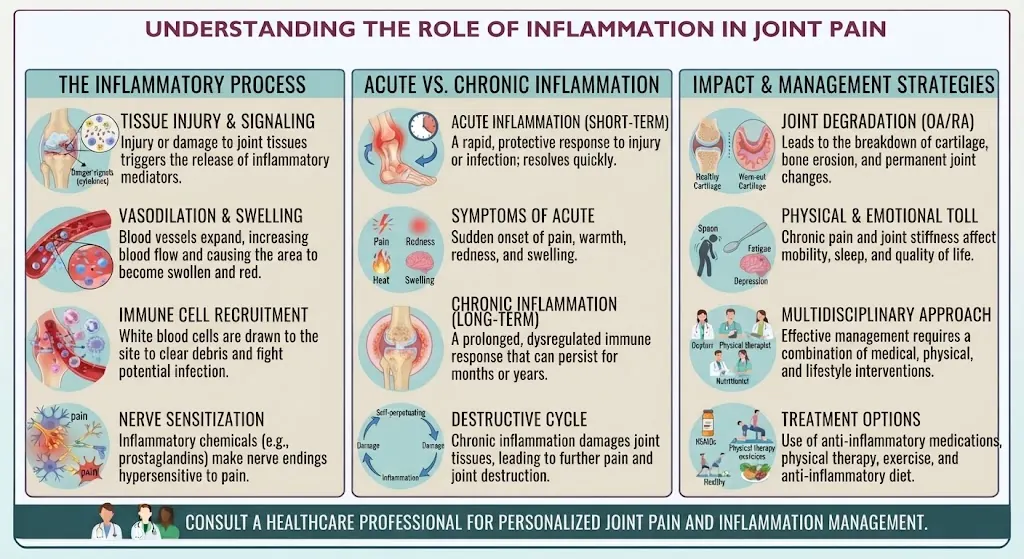
Joint pain can feel like aching, stiffness, tenderness, warmth, or swelling that makes everyday activities such as walking, climbing stairs, or gripping objects more difficult. Sometimes, the discomfort appears after an injury or strenuous activity; other times, it develops gradually without an obvious trigger.
Inflammation is one possible reason joints hurt, but not every painful joint is inflamed. Mechanical problems, cartilage changes, injuries, and nerve-related conditions can also cause discomfort. Understanding the difference can help you choose appropriate self-care and recognize when medical evaluation is needed.
This guide explains how inflammation contributes to joint pain, what commonly triggers it, how inflammatory pain differs from other types of joint discomfort, and which treatments may help. It also covers warning signs that should not be ignored.
How Does Inflammation Cause Joint Pain?
Inflammation is part of the body’s defense and repair response. When tissue is irritated, injured, or affected by disease, the immune system releases chemical messengers that increase blood flow and activate nearby nerve endings. These changes can produce pain, swelling, warmth, and stiffness.
Inside a joint, inflammation may affect the synovium, the thin tissue lining that produces lubricating fluid. Inflammatory activity can also involve surrounding tendons, bursae, ligaments, or other structures. The location and severity of inflammation help determine which symptoms develop.
The role of inflammation in joint pain varies depending on the underlying cause. In some conditions, inflammation is the main driver of symptoms; in others, it is only one part of a more complex problem.
What Causes Inflammatory Joint Pain?
Several conditions can trigger inflammation around or within a joint. Symptoms alone cannot reliably identify the cause.
| Possible cause | Common features | What to know |
|---|---|---|
| Injury or overuse | Pain after activity, tenderness, sometimes swelling | Symptoms may improve with appropriate rest and gradual recovery. |
| Osteoarthritis | Pain with movement, stiffness after inactivity | Inflammation may contribute alongside changes in joint tissues. |
| Rheumatoid arthritis | Often affects several joints, with prolonged morning stiffness | An autoimmune condition that needs medical assessment and treatment. |
| Gout | Sudden, intense pain, redness, warmth, and swelling | Caused by urate crystal buildup; a first attack needs evaluation. |
| Infection in a joint | Severe pain, warmth, swelling, sometimes fever | Requires urgent medical assessment and treatment. |
Other conditions can also cause joint inflammation. For example, shoulder tendonitis symptoms and treatment options may be relevant when pain comes from an irritated tendon rather than the joint itself.
What Does Inflammatory Joint Pain Feel Like?
Inflammatory joint pain may cause warmth, visible swelling, tenderness, or stiffness that is especially noticeable after waking or sitting still. Movement may feel difficult at first, although gentle activity sometimes eases stiffness.
However, these patterns are not definitive. Osteoarthritis and other non-autoimmune conditions can also cause stiffness and swelling. A clinician may need to examine the joint and consider the symptom history, blood tests, or imaging to determine the cause.
| Symptom pattern | Possible interpretation | Important limitation |
|---|---|---|
| Warmth and visible swelling | Active inflammation may be present | Infection and other urgent conditions must be considered. |
| Stiffness after rest | Inflammatory or degenerative joint conditions | Duration and associated symptoms matter. |
| Pain mainly during activity | Mechanical irritation or inflammation | Several conditions can produce this pattern. |
| Sudden severe pain in one joint | Gout, injury, or infection, among other causes | Do not assume it is gout without assessment. |
How Can You Reduce Joint Pain at Home?
Home care may help mild discomfort after overuse or a minor injury, but the safest approach depends on the cause.
- Adjust painful activities. Temporarily reduce movements that clearly aggravate symptoms without avoiding all movement unnecessarily.
- Try a cold pack for recent swelling. Wrap it in a towel and apply for about 15–20 minutes at a time. Stop if your skin becomes numb or irritated.
- Use gentle movement. If movement is comfortable and no serious injury is suspected, easy range-of-motion activity may reduce stiffness. Explore low-impact exercises for people with joint pain.
- Consider heat for stiffness. Gentle warmth may help stiffness without significant swelling, but avoid heating a joint that is hot, red, or possibly infected.
- Review medication safety. Anti-inflammatory medicines such as ibuprofen may help some people, but they can cause stomach bleeding, affect kidney function, and interact with other medicines. Ask a healthcare professional or pharmacist whether they are suitable for you.
Avoid forcing a painful joint through its full range of motion or using exercise to push through severe pain.
What Treatments Can a Clinician Recommend?
Treatment depends on what is causing the inflammation. A clinician may recommend activity changes, physical therapy, medication, or further testing. Autoimmune arthritis may require prescription medicines that control immune activity, while gout has specific treatments for attacks and prevention.
Physical therapy can help maintain mobility, improve strength, and support a gradual return to activity when appropriate. Learn how physical therapy differs from chiropractic care when comparing options for musculoskeletal symptoms.
Diet and general health habits may support overall well-being, but food alone cannot reliably treat an inflammatory joint disease. A balanced eating pattern, adequate sleep, and regular activity adapted to your ability can complement—not replace—medical treatment. See everyday habits that support joint health for additional practical guidance.
When Should You Seek Medical Care?
The pattern of symptoms matters more than pain intensity alone. Use this guide to decide what to do next.
| Level of concern | Signs | Recommended action |
|---|---|---|
| Usually reasonable to monitor briefly | Mild soreness after activity that steadily improves, without major swelling or other warning signs | Modify activity and monitor symptoms. |
| Arrange a medical appointment | Recurrent pain, persistent stiffness, ongoing swelling, or symptoms interfering with daily tasks | Seek an assessment to identify the cause. |
| Urgent or emergency assessment | A suddenly very painful, hot, swollen joint; fever with joint symptoms; major injury with deformity; or inability to bear weight | Seek urgent medical care. A joint infection must be ruled out promptly. |
Do not delay care for sudden severe joint symptoms, especially if you have a fever or feel generally unwell. If pain persists or repeatedly returns, an evaluation can help distinguish inflammation from other causes and guide appropriate treatment.
Frequently Asked Questions
1. Does inflammation always cause joint pain?
No. Inflammation can occur without obvious pain, and joint pain can occur without substantial inflammation. Symptoms depend on the condition and the tissues involved.
2. How can I tell if my joint pain is inflammatory?
Warmth, swelling, tenderness, and stiffness after rest may suggest inflammation, but they are not proof. A clinical assessment is often needed to identify the cause.
3. Can stress make joint pain worse?
Stress may increase muscle tension and affect sleep and pain sensitivity, which can make existing discomfort harder to manage. It does not mean the pain is imaginary or that inflammation is necessarily present.
4. Is morning joint stiffness a sign of arthritis?
It can occur with arthritis, including inflammatory forms, but stiffness also has other causes. Tell a clinician how long it lasts, which joints are affected, and whether swelling accompanies it.
5. Should I exercise when my joints are inflamed?
Gentle movement may help some conditions, but intense or painful exercise can aggravate symptoms. Avoid exercising a suddenly hot, swollen joint until you have received medical advice.
6. Does icing reduce joint inflammation?
Cold packs can temporarily reduce discomfort and help manage swelling after some injuries. They do not treat every underlying cause, and they should be wrapped in cloth to protect the skin.
7. Are anti-inflammatory foods enough to treat joint pain?
No. A balanced diet can support general health, but it cannot replace treatment for conditions such as rheumatoid arthritis, gout, or joint infection. Avoid relying on supplements or restrictive diets as a substitute for medical care.
8. How long does inflammatory joint pain last?
Duration varies widely. Mild irritation may settle over days, while chronic inflammatory conditions can cause recurring or persistent symptoms and may need long-term management.
9. Can joint inflammation damage the joint?
Some inflammatory diseases can damage joint tissues when inflammation remains uncontrolled. The risk depends on the cause, severity, and treatment, so persistent swelling deserves medical evaluation.
10. When is joint swelling an emergency?
Seek urgent care for sudden severe pain with a hot, red, swollen joint, particularly when fever is present. Infection can damage a joint and may require immediate treatment.
Conclusion
Inflammation can contribute to joint pain by irritating sensitive tissues and causing swelling, warmth, and stiffness, but it is not the only possible explanation. Adjust activity, use appropriate comfort measures, and seek assessment for persistent or worsening symptoms. Sudden severe joint pain, especially with warmth, swelling, or fever, requires urgent evaluation.
Disclaimer: This article is provided for educational and informational purposes only.
This article is for education purpose only and is not a diagnosis or a substitute for medical advice.