
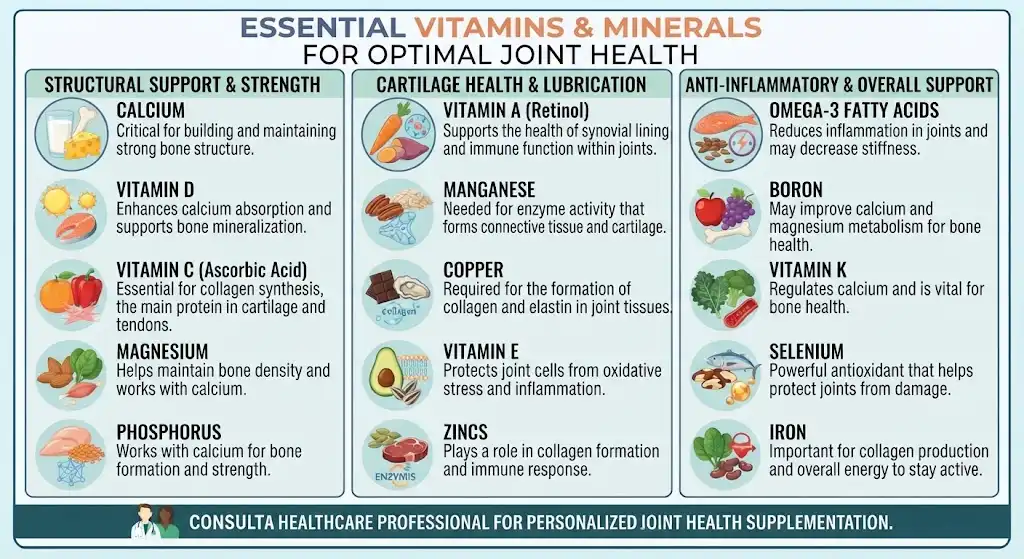
Joint stiffness, aching knees, or discomfort when walking can make everyday activities harder. Nutrition plays a role in maintaining cartilage, bones, muscles, and other tissues that support healthy movement. However, finding the best vitamins and minerals for joint health is not simply about taking more supplements.
Certain nutrients are essential for normal bone and connective-tissue function, but supplements do not reliably prevent arthritis or eliminate joint pain. The benefits depend on your diet, health conditions, medications, and whether you have a nutrient deficiency.
This guide explains which vitamins and minerals support joint health, which foods provide them, when supplements may help, and what to discuss with a healthcare professional before starting them.
Which Vitamins Are Best for Joint Health?
Vitamins support several processes involved in maintaining healthy bones and connective tissues. They work alongside adequate protein, minerals, physical activity, and overall nutrition.
| Nutrient | Role in the body | Food sources |
|---|---|---|
| Vitamin D | Helps the body absorb calcium and maintain bone health | Fatty fish, egg yolks, fortified milk |
| Vitamin C | Supports collagen production and tissue repair | Citrus fruits, bell peppers, strawberries |
| Vitamin K | Helps regulate proteins involved in bone metabolism | Leafy greens, broccoli |
| Vitamin E | Acts as an antioxidant that helps protect cells | Nuts, seeds, vegetable oils |
Vitamin D: Supports Bone Strength
Vitamin D helps the body absorb calcium. Inadequate levels can contribute to weakened bones and, when deficiency is severe, bone pain or muscle weakness.
People with limited sun exposure, certain absorption disorders, or other risk factors may be more likely to have low levels. If you have unexplained bone discomfort, learn about vitamin D deficiency symptoms that can affect bones and muscles.
Vitamin D is not a guaranteed treatment for arthritis. Supplementation is most useful when intake is inadequate or a deficiency needs correction.
Vitamin C: Helps Maintain Connective Tissue
Vitamin C is required to produce collagen, a structural protein found in cartilage, tendons, ligaments, and other tissues. Eating fruits and vegetables regularly is usually an effective way to meet daily needs.
High-dose supplements are not necessarily better. Excessive intake can cause digestive symptoms and may increase kidney-stone risk in susceptible people.
Vitamin K and Vitamin E
Vitamin K contributes to normal bone metabolism, while vitamin E helps protect cells from oxidative damage. Neither should be considered a proven standalone treatment for joint pain.
People taking warfarin or certain other medications should discuss supplements with a clinician before making significant changes to vitamin K intake.
Which Minerals Help Keep Joints and Bones Healthy?
Minerals support the structures surrounding joints, including bones and muscles. Getting enough is important, but taking extra amounts without a need may cause harm.
| Mineral | Why it matters | Food sources |
|---|---|---|
| Calcium | Maintains bone strength | Dairy products, calcium-fortified foods, some leafy greens |
| Magnesium | Supports muscle and nerve function | Nuts, legumes, whole grains, leafy greens |
| Zinc | Supports normal tissue repair and immune function | Meat, seafood, beans, seeds |
| Phosphorus | Works with calcium to maintain bones | Dairy, fish, meat, beans |
Calcium and vitamin D work together to support bone health, but neither can reverse all causes of joint pain. Magnesium and zinc are also essential, yet additional supplementation generally offers limited benefit when your diet already provides enough.
For a broader nutrition overview, see which nutrients support bone and joint health.
Can Vitamins and Minerals Reduce Joint Pain?
Sometimes, but the cause of the pain matters. Correcting a deficiency may improve symptoms related to that deficiency, while supplements are less likely to help pain caused by a significant injury, advanced arthritis, or nerve compression.
Joint discomfort can have several causes. For example, how inflammation contributes to joint pain explains one process that may be involved, but inflammation is not the explanation for every painful joint.
Research on supplements for osteoarthritis has produced mixed results. Evidence does not establish that taking a broad vitamin or mineral supplement reliably prevents joint disease or provides meaningful pain relief for everyone.
If your pain occurs mainly in the knee, understanding common causes of knee pain and when to see a doctor may be more useful than choosing a supplement without an evaluation.
Food First or Supplements? How to Choose
A varied diet is generally the best starting point because foods provide multiple nutrients together. Supplements may be appropriate when a dietary gap, diagnosed deficiency, medical condition, or clinician recommendation makes them necessary.
| Approach | Potential benefit | Important limitation |
|---|---|---|
| Nutrient-rich foods | Provide a range of vitamins, minerals, protein, and other nutrients | Dietary changes may not correct every deficiency |
| Single-nutrient supplement | Can help address a specific shortfall | Unnecessary doses may cause side effects |
| Multivitamin or mineral product | May help some people with limited dietary intake | Does not replace a balanced diet or treat most joint conditions |
Before purchasing supplements, check the dose and ingredients, including overlapping nutrients in products you already use. High doses of vitamin D can cause calcium buildup, while excessive calcium, zinc, or vitamin E may also create health risks or interact with medications.
Avoid starting multiple supplements at once. If you take prescription medication, have kidney disease, are pregnant, or have a condition affecting nutrient absorption, seek individualized advice first.
What Else Supports Joint Health?
Nutrition works best as part of a broader approach to movement and daily habits.
- Stay active within your abilities. Walking, swimming, or cycling may help maintain mobility and muscle strength. Start gradually and adjust activity if pain worsens.
- Choose joint-friendly exercise. Explore low-impact exercises for people with joint pain if high-impact activity is uncomfortable.
- Eat a balanced diet. Include vegetables, fruits, whole grains, protein sources, and healthy fats. These diet changes that may help manage pain can support overall health without promising a cure.
- Drink enough fluids. Learn more about whether drinking enough water supports joint health. Staying hydrated supports normal body function, although drinking extra water is not a proven treatment for arthritis.
- Consider the wider health picture. How metabolic health can affect joint and muscle pain explores factors beyond individual nutrients.
Everyday choices can also influence movement and comfort; see everyday habits that support joint health.
When Should You Seek Medical Advice?
Arrange a medical evaluation if joint pain persists, repeatedly returns, interferes with sleep, or limits walking and other daily activities. A clinician can assess the likely cause and determine whether examination, blood tests, or imaging are appropriate.
Seek urgent medical care for a joint that becomes suddenly hot, red, and swollen, especially with fever; this can indicate an infection or another condition requiring prompt treatment. After an injury, urgent assessment is also important if you cannot bear weight, have a visible deformity, or develop severe swelling.
Do not assume persistent pain means you need more vitamins. Supplements cannot replace an assessment for an injury, inflammatory disease, or other underlying condition.
Frequently Asked Questions
1. What is the most important vitamin for joint health?
There is no single best vitamin for everyone. Vitamin D supports bone health, while vitamin C is necessary for collagen production; the most relevant nutrient depends on your needs.
2. Can vitamin D deficiency cause joint pain?
Low vitamin D can contribute to bone discomfort and muscle weakness, particularly when deficiency is significant. Joint pain has many possible causes, so symptoms alone cannot confirm a deficiency.
3. Does vitamin C help repair cartilage?
Vitamin C is necessary for collagen production, which supports connective tissues. However, taking extra vitamin C has not been established as a way to rebuild damaged cartilage.
4. Is calcium good for joint pain?
Calcium helps maintain strong bones but is not a general pain reliever. Taking extra calcium will not necessarily improve joint symptoms if your intake is already adequate.
5. Should I take magnesium for stiff joints?
Magnesium supports muscle and nerve function, but evidence that magnesium supplements directly relieve joint stiffness is limited. Food sources are a sensible starting point unless a clinician identifies a need for supplementation.
6. Are joint-health supplements safe to take daily?
Safety depends on the ingredients, dose, medications, and medical history. Excessive intake of certain vitamins and minerals can cause harm, so check with a healthcare professional before regular use.
7. Can food alone provide enough nutrients for healthy joints?
Many people can meet their nutritional needs through a varied diet. Some people, including those with restricted diets or absorption problems, may need individualized supplementation.
8. Do vitamins prevent arthritis?
No vitamin or mineral supplement has been proven to prevent all forms of arthritis. Maintaining overall health, staying active, and addressing joint symptoms early are more practical steps.
9. How long does it take for supplements to work?
It depends on the nutrient, whether a deficiency exists, and the symptoms being treated. Some deficiency-related symptoms may improve over time, but supplements may not help pain caused by another condition.
10. Should I get blood tests before taking vitamins for joint pain?
Testing is not necessary for every supplement, but it may be appropriate when symptoms or risk factors suggest a deficiency. A clinician can decide which tests, if any, are relevant rather than recommending a broad panel without a clear reason.
Conclusion
The best vitamins and minerals for joint health are the nutrients your body needs in adequate amounts, not necessarily the highest-dose supplements available. Prioritize a balanced diet, suitable activity, and safe supplementation when a genuine need exists. If pain persists or comes with warning signs, seek medical advice to identify its cause and choose appropriate care.
Disclaimer: This article is provided for educational and informational purposes only.
This article is for education purpose only and is not a diagnosis or a substitute for medical advice.