
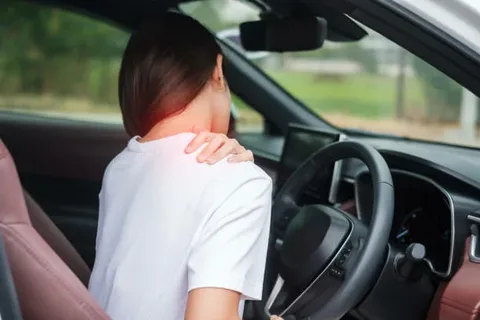
Driving with a shoulder labral tear can be uncomfortable or unsafe when turning the steering wheel, checking blind spots, shifting gears, or making sudden movements. Even a short trip may become difficult if shoulder pain, weakness, catching, or instability limits how quickly you can react.
A shoulder labral tear does not automatically mean you must stop driving permanently. The more important question is whether you can control the vehicle safely without significant pain, restricted movement, weakness, or medication-related impairment.
This guide explains when you may be able to drive with a shoulder labral tear, what movements can make driving difficult, when you should avoid driving, and how recovery or surgery can change the timeline.
Can you drive with a shoulder labral tear?
You may be able to drive with a shoulder labral tear if you can comfortably control the steering wheel, turn the wheel quickly, use the gear selector if applicable, check traffic around you, and perform an emergency maneuver without significant pain or hesitation.
Your symptoms matter more than the tear’s name alone. A person with mild symptoms may tolerate driving, while someone with substantial instability or restricted movement may need to stop temporarily.
If you’re still trying to understand what a labral tear is and its symptoms, the specific location and severity of the injury can help explain why certain driving movements hurt.
Movements that may make driving difficult
| Driving task | Why it may be difficult |
|---|---|
| Turning the wheel | Requires repeated shoulder rotation |
| Checking blind spots | Requires neck and shoulder movement |
| Reaching for controls | Can provoke painful reaching |
| Sudden steering | Requires rapid strength and control |
| Manual shifting | Repeated shoulder and arm movement may aggravate symptoms |
A labral tear can involve different parts of the shoulder, so symptoms can vary. Understanding the different types of shoulder labral tears may help explain why one person’s driving tolerance differs from another’s.
When should you avoid driving with a labral tear?
Avoid driving if shoulder pain prevents you from making rapid steering movements or if the shoulder feels unstable, catches, or gives way. You should also avoid driving when prescribed medication makes you drowsy, dizzy, or otherwise impairs your ability to operate a vehicle.
Pay particular attention to early signs of a shoulder labral tear such as painful clicking, catching, weakness, or a feeling that the shoulder may slip.
| Situation | Driving consideration |
|---|---|
| Mild pain with normal control | Driving may be possible |
| Pain during rapid steering | Consider avoiding driving |
| Significant weakness | Avoid until evaluated |
| Shoulder instability or giving way | Avoid driving |
| Sedating medication | Do not drive if impaired |
| Recent shoulder surgery | Follow the surgeon’s restrictions |
How can you tell if your shoulder is ready for driving?
Before returning to driving, consider whether you can comfortably perform the movements required in an emergency. You should be able to grip and turn the wheel, move the affected arm through the necessary range, and react quickly without severe pain.
Your clinician may also consider your strength, range of motion, stability, and treatment stage. If imaging is part of your evaluation, MRI for a shoulder labral tear or an MRI arthrogram for a shoulder labral tear may provide additional information, although imaging alone does not determine driving readiness.
What if you’re recovering without surgery?
Driving may gradually become easier as pain and movement limitations improve. Rehabilitation commonly focuses on restoring shoulder motion, strength, coordination, and stability rather than simply waiting for pain to disappear.
A structured SLAP tear physical therapy and recovery program may be used when appropriate. Your clinician or physical therapist can also determine which exercises for labral tear recovery are appropriate for your stage.
Do not assume that more exercise means faster recovery. Some movements may increase symptoms, particularly early in rehabilitation, so knowing the exercises to avoid with a shoulder labral tear can be important.
How recovery stage can affect driving
| Recovery stage | Typical driving concern |
|---|---|
| Early painful phase | Pain and limited movement may make driving difficult |
| Improving mobility | Short, controlled driving may become easier |
| Strengthening phase | Better control may support gradual return |
| Near-normal function | Driving is generally easier if symptoms are controlled |
Recovery is not identical for everyone. If you’re wondering about the SLAP tear healing timeline, the timeline depends on the injury, treatment, symptoms, activity demands, and whether surgery was performed.
What if you had shoulder labral surgery?
After surgery, driving usually requires more caution because the shoulder may be protected in a sling and normal reaction ability can be temporarily limited. Your surgeon’s restrictions should take priority over a general timeline.
For people recovering after surgery, shoulder labral tear surgery recovery time can vary considerably. Do not drive simply because pain has improved if your movement or strength remains restricted.
If you’re deciding between treatment approaches, understanding shoulder labral tear treatment and physical therapy versus surgery can provide useful context.
What can make driving symptoms worse?
Long drives, repeated steering, poor positioning, sudden movements, or attempting to drive before adequate shoulder control returns may increase symptoms. Continuing activities that repeatedly provoke pain can also interfere with rehabilitation.
Avoid common mistakes that can make a labral tear worse and learn the signs that a labral tear may be getting worse.
For day-to-day strategies, how to live with a labral tear and manage daily activities may also help you modify activities while recovering.
Warning signs that need medical attention
Seek medical evaluation if pain or instability is progressively worsening, your shoulder repeatedly gives way, you develop substantial weakness, or you cannot use the arm normally.
Urgent evaluation is appropriate after a major injury with obvious deformity, sudden inability to move the arm, severe uncontrolled pain, or symptoms suggesting a new dislocation. Information about what shoulder instability feels like and what causes it may help you recognize concerning symptoms.
Frequently Asked Questions
1. Can you drive with a labral tear?
Possibly, if you have sufficient movement, strength, and control to operate the vehicle safely. Pain or instability that interferes with emergency steering is a reason to avoid driving.
2. Can driving make a shoulder labral tear worse?
Repeated painful movements may aggravate symptoms, although driving does not automatically cause a tear to worsen. If symptoms consistently increase while driving, reduce the activity and discuss it with a clinician.
3. How long after a labral tear can you drive?
There is no single timeline. Return depends on pain, range of motion, strength, shoulder stability, treatment, and whether surgery was performed.
4. Can you drive after SLAP tear surgery?
Driving generally should wait until you can safely control the vehicle and your surgeon has cleared the activity. A sling, restricted motion, weakness, or pain can make driving unsafe.
5. Can you drive with a shoulder brace?
A brace may restrict movement or interfere with comfortable steering. Whether driving is appropriate depends on the specific brace, your symptoms, and your clinician’s instructions.
6. Is it safe to drive with shoulder pain?
Mild pain does not automatically make driving unsafe, but pain that limits rapid steering or causes hesitation can. Safety should take priority over maintaining a normal driving routine.
7. Can you drive with a manual transmission and a labral tear?
Manual driving may require additional arm and shoulder movements depending on the vehicle. If shifting or steering causes significant pain or weakness, avoid driving until function improves.
8. Should you drive if your shoulder feels unstable?
Driving with significant instability can be risky because unexpected shoulder movement may interfere with steering. Recurrent slipping, giving way, or apprehension should be medically evaluated.
9. Can pain medication affect driving after a labral tear?
Yes. Some prescription pain medicines can cause drowsiness, dizziness, slowed reaction time, or impaired judgment. Do not drive if medication affects your ability to operate a vehicle safely.
10. What if I cannot drive because of my shoulder?
Temporary alternatives may include rides from family or friends, public transportation, or other transportation options. If driving remains difficult despite recovery, discuss the limitation with your healthcare professional.
Conclusion
You may be able to drive with a shoulder labral tear when you can safely control the vehicle without significant pain, weakness, instability, or medication-related impairment. After surgery, follow your surgeon’s restrictions and wait until adequate movement and control return. If steering or emergency movements are difficult, avoiding driving until you are medically cleared is the safer approach.
Disclaimer: This article is provided for educational and informational purposes only.
This article is for education purpose only and is not a diagnosis or a substitute for medical advice.