
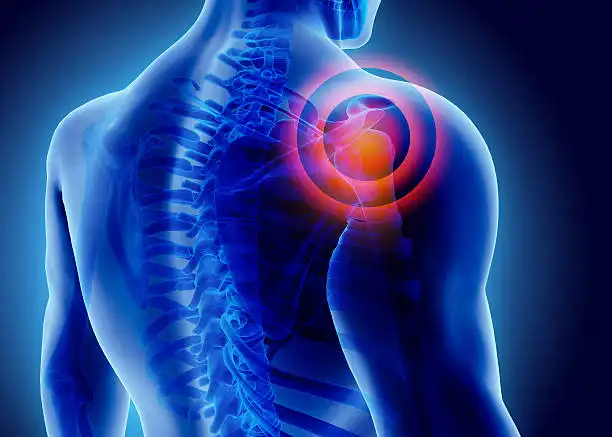
You know your shoulder better than anyone, which is exactly why it’s so unsettling when something feels off in a way you can’t quite explain. Maybe it’s a click when you reach for a seatbelt, a dull ache that lingers after workouts, or a strange sense that your arm isn’t quite as steady as it used to be. Those small, easy-to-dismiss signals are often the first clues of a labral tear.
The tricky part is that these symptoms rarely show up all at once, and none of them alone is a clear diagnosis. It’s completely normal to wonder whether you’re overreacting to normal wear and tear or ignoring something that needs attention. You’re not being dramatic — labral tear symptoms genuinely are subtle, inconsistent, and easy to confuse with ordinary shoulder fatigue.
This guide lays out 20 specific early signs to watch for, grouped by how they typically show up in daily life, plus clear guidance on when those signs cross the line from “keep an eye on it” to “get this checked.”
Why Labral Tear Symptoms Are Easy to Miss
The labrum sits deep inside the shoulder joint, so unlike a surface bruise or strain, its damage doesn’t come with obvious swelling or visible signs. Instead, symptoms tend to show up functionally — in specific movements, specific positions, or specific activities — rather than as constant, obvious pain. That’s part of why we cover the full condition overview separately; understanding the anatomy makes the symptom list below click into place much faster.
Early Signs of a Labral Tear
Pain-Related Signs
- Deep, aching pain inside the joint that’s hard to pinpoint to one exact spot.
- Pain that worsens with overhead reaching, like putting dishes away or reaching into a high shelf.
- Night pain, especially when lying directly on the affected shoulder.
- Pain during throwing motions, common in baseball, softball, and racquet sports.
- A dull ache after workouts that lingers longer than typical muscle soreness.
Mechanical Signs (Catching, Clicking, Grinding)
- A clicking or popping sound during certain arm movements.
- A grinding sensation, sometimes felt more than heard, when rotating the shoulder.
- A catching feeling, as if the joint briefly snags mid-movement.
- Locking, where the shoulder momentarily feels stuck in one position.
- Sensations that seem to shift location depending on arm angle.
Stability and Strength Signs
- A feeling that the shoulder could “give way” during activity.
- Reduced strength, particularly with overhead lifting or throwing.
- Difficulty maintaining a strong grip while the arm is raised.
- A sense of looseness compared to the unaffected shoulder.
- Apprehension during specific movements, like reaching back for a seatbelt.
Functional and Everyday Signs
- Trouble sleeping on the affected side without discomfort.
- Reduced range of motion compared to the other shoulder.
- Pain or hesitation putting on a jacket or bra.
- Discomfort reaching across the body, such as buckling a seatbelt.
- A gradual decline in performance for overhead sports or lifting.
Persistent Shoulder Fatigue
The shoulder tires much faster than usual during everyday activities or workouts, even without heavy lifting.
Pain When Lowering the Arm
While raising the arm may be tolerable, lowering it from an overhead position can trigger pain or a catching sensation.
Difficulty Carrying Objects
Holding or carrying grocery bags, backpacks, or other moderately heavy items may increase shoulder discomfort or weakness.
Decreased Throwing or Lifting Accuracy
Athletes may notice reduced control, velocity, or precision when throwing, serving, or performing overhead lifts before severe pain develops.
Symptoms That Come and Go
Early labral tears often cause intermittent symptoms. Pain, clicking, or instability may appear during certain activities and disappear with rest, making the injury easy to overlook.
If you’re noticing several of these together — especially catching combined with a sense of instability — it’s worth reading about how these symptoms are commonly confused with rotator cuff tears or shoulder impingement, since the overlap is exactly why self-diagnosis is unreliable.
How Labral Tear Symptoms Differ From Normal Shoulder Fatigue
Ordinary shoulder soreness from a hard workout or an awkward night’s sleep tends to resolve within a few days and doesn’t usually involve catching, grinding, or a sense of instability. Labral tear symptoms, by contrast, tend to be activity-specific — showing up reliably with the same motions — and they persist or worsen over weeks rather than fading with rest.
Another useful distinction: general fatigue soreness is usually symmetric in feel, affecting the muscle broadly, while labral symptoms are often described as coming from “deep inside the joint” in a specific spot, rather than the surrounding muscle.
When to See a Doctor
Some signs matter more than others when it comes to deciding whether to book an appointment.
- See a doctor within a few days if you experience sudden, sharp pain after a fall, blow, or throwing injury combined with any sense of instability.
- Schedule a routine appointment if catching, clicking, or deep aching persists for more than two to three weeks despite rest.
- Don’t wait if strength loss is progressing or if the shoulder feels like it’s repeatedly “giving way,” since ongoing instability can lead to secondary damage over time.
A physical exam combined with imaging, typically an MRI or MR arthrogram, is the only reliable way to confirm a labral tear rather than one of the several conditions that mimic it.
Conclusion
Labral tear symptoms rarely announce themselves loudly — they build gradually through small catching sensations, activity-specific pain, and a creeping sense that the shoulder isn’t quite as reliable as before. Paying attention to the pattern, rather than any single symptom in isolation, is the fastest way to know when it’s time to get evaluated. If symptoms are confirmed, our guide on physical therapy vs. surgery walks through what happens next.
Frequently Asked Questions
What is the first sign of a labral tear? Often it’s a subtle catching or clicking sensation during overhead movement, sometimes paired with a deep ache that doesn’t match typical muscle soreness.
Can a labral tear cause numbness or tingling? It’s uncommon but possible if nearby nerves are irritated by inflammation or instability. Numbness alone is more often linked to nerve compression elsewhere in the shoulder or neck.
Does a labral tear hurt all the time? Not usually. Pain tends to be activity-specific, flaring with overhead motion, throwing, or lying on the affected side, rather than constant.
Can you have a labral tear with no pain at all? Yes. Some labral tears are found incidentally on imaging done for another reason, with the person reporting minimal or no noticeable symptoms.
How long do labral tear symptoms last if untreated? This varies widely. Small tears may plateau and become manageable, while larger tears often persist or worsen without physical therapy or surgical treatment.
Is clicking in the shoulder always a labral tear? No. Clicking can come from tendons moving over bone, minor cartilage irregularities, or scar tissue, so it isn’t diagnostic on its own.
Can stress or poor posture worsen labral tear symptoms? Poor posture can change how forces move through the shoulder, potentially aggravating symptoms, though it isn’t a direct cause of the tear itself.
Are labral tear symptoms worse in athletes? Often yes, particularly in throwing and overhead sports, where repetitive stress on the labrum can amplify catching, instability, and performance decline.
Should I stop working out if I notice these symptoms? It’s reasonable to modify overhead and high-load movements while getting evaluated, rather than stopping all activity entirely.
Can symptoms improve on their own without treatment? Mild symptoms sometimes plateau, but meaningful improvement typically requires physical therapy or, in more significant cases, surgical repair.
Medical Disclaimer
This article is for informational purposes only and is not a substitute for professional medical advice, diagnosis, or treatment.
This article is for education purpose only and is not a diagnosis or a substitute for medical advice.