
There’s a specific kind of shoulder pain that doesn’t quite feel like a pulled muscle or simple soreness. It sits deep inside the joint, catches when you reach overhead, and sometimes comes with a faint grinding or clicking you can almost feel more than hear. Reaching into a cabinet, throwing a ball, or even rolling onto that shoulder at night can trigger it, and over time it starts to shape how you move without you even noticing.
If a doctor has mentioned the word “labrum” or told you that you might have a labral tear, it’s completely normal to feel a little lost. Shoulder anatomy isn’t something most people think about until it stops working properly, and the terminology can sound more alarming than it needs to be. The good news is that a labral tear is a well-understood, well-studied injury, and most people recover meaningful function whether or not surgery ends up being part of the picture.
This guide breaks down exactly what the labrum is, why it tears, how doctors diagnose it, and what your realistic treatment options look like — so you can walk into your next appointment with a clearer picture instead of just a worrying label.
What Is the Labrum and Why Does It Matter?
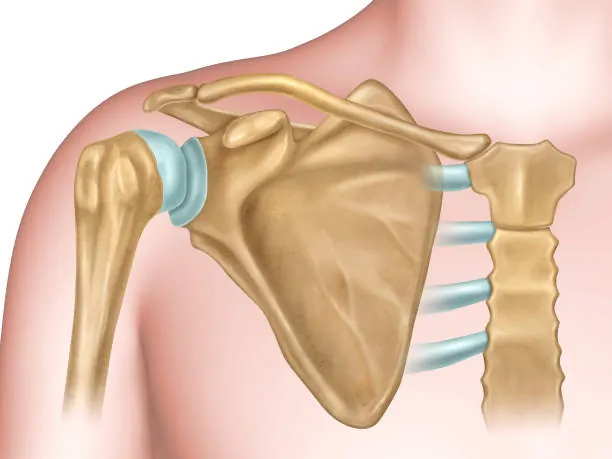
The shoulder is a ball-and-socket joint, but unlike the hip, its socket (the glenoid) is shallow — almost flat. That shallow socket is exactly what gives the shoulder its enormous range of motion, letting you reach behind your back, overhead, and across your body in ways the hip simply can’t. The tradeoff is stability.
The labrum is a ring of tough, fibrous cartilage that lines the rim of the glenoid socket, deepening it by roughly 50%. Think of it as a rubber gasket that helps the ball of the humerus (upper arm bone) sit securely in place. The labrum also anchors several important shoulder ligaments and serves as the attachment point for the biceps tendon at the top of the joint.
When the labrum tears, the shoulder loses some of that grip and structural support. That’s why labral tears so often produce a sense of catching, popping, or looseness — the joint isn’t held in place quite as securely as it should be.
SLAP Tears vs. Other Labral Tears
Not all labral tears are the same. A SLAP tear (Superior Labrum, Anterior to Posterior) occurs at the top of the labrum, right where the biceps tendon attaches, and is especially common in athletes who throw or do repetitive overhead work. Tears can also occur at the front, back, or bottom of the labrum — often linked to shoulder dislocation events, in a pattern called a Bankart lesion.
What Causes a Labral Tear?
Labral tears generally develop in one of three ways, and knowing which applies to you often shapes the treatment conversation.
- Acute trauma — falling onto an outstretched arm, a direct blow to the shoulder, or a sudden pulling force can tear the labrum in an instant.
- Repetitive overhead motion — pitchers, swimmers, tennis players, and manual laborers place repeated stress on the same part of the labrum over years.
- Degenerative wear — like other soft tissues, the labrum can fray gradually with age even without a specific injury moment.
Shoulder instability and prior dislocations are also major risk factors, since the labrum absorbs much of the force when the joint slips out of place.
Recognizing the Symptoms
Labral tear symptoms overlap with several other shoulder conditions, which is part of why it’s often misdiagnosed at first. People commonly report a deep, aching pain that worsens with overhead movement, along with catching or grinding sensations, a subjective feeling of instability, reduced strength, and pain when lying on the affected side at night. We’ve broken down the full list of 20 early warning signs in a separate guide if you want the complete picture.
It’s also worth knowing that a labral tear can look a lot like a rotator cuff tear, shoulder impingement, or frozen shoulder on symptoms alone. That overlap is exactly why imaging matters.
How Doctors Diagnose a Labral Tear
Diagnosis typically starts with a physical exam. A doctor will move your arm through specific positions — tests like O’Brien’s test or the crank test — designed to reproduce the catching or pain associated with labral tears. Physical exam findings alone aren’t always conclusive, though, since several shoulder conditions can mimic each other closely.
The gold standard for confirmation is an MRI, often performed with contrast dye injected into the joint (an MR arthrogram), which highlights the labrum clearly and makes even small tears visible.
Treatment Options: Conservative Care First
Most labral tears are treated conservatively before surgery is ever discussed. We go into much more depth on this decision in our physical therapy vs. surgery comparison, but the short version looks like this:
- Rest and activity modification to avoid aggravating overhead movements while the joint calms down.
- Anti-inflammatory medication (NSAIDs) to manage pain and swelling in the early stages.
- Physical therapy to strengthen the rotator cuff and scapular muscles, compensating for the labrum’s reduced stability.
- Activity-specific rehab for athletes, gradually reintroducing throwing or overhead motion.
Many people improve meaningfully within 2–3 months of dedicated physical therapy, particularly with smaller tears and no significant instability.
When Surgery Becomes the Better Option
Surgery is typically considered when conservative treatment hasn’t improved symptoms after several months, when instability is significant, or when a high-level throwing athlete needs full function restored. The most common approach is arthroscopic labral repair, a minimally invasive procedure using small anchors to reattach the torn tissue to bone.
Recovery and Getting Back to Normal Life
Recovery timelines vary by treatment path, but general milestones include early sling immobilization, a gradual return of motion around 6–12 weeks, progressive strengthening by 3–6 months, and a return to sport or overhead work by 6–9+ months for surgical cases. If you’re actively rehabbing, our guide to the best exercises for labral tear recovery walks through a phase-by-phase plan.
Conclusion
A labral tear can sound intimidating the first time you hear the term, but it’s a well-mapped injury with clear, evidence-based treatment paths. Whether your case responds to physical therapy alone or eventually needs surgical repair, understanding what the labrum does and why it tears puts you in a far stronger position to make decisions about your own recovery — and to avoid the common mistakes that make labral tears worse along the way.
Frequently Asked Questions
Can a labral tear heal without surgery? Yes, in many cases. Small tears without significant instability often improve with physical therapy, rest, and activity modification, even though the labrum itself doesn’t fully regrow.
How do you know if you have a labral tear? The most reliable confirmation is an MRI, ideally an MR arthrogram. Symptoms like catching and deep joint pain can suggest it, but imaging is needed to be certain.
What does a torn labrum feel like? Most people describe a deep ache inside the joint, along with catching, grinding, or a sense the shoulder could give way during certain movements.
Is a SLAP tear the same as a labral tear? A SLAP tear is one specific type of labral tear, occurring at the top of the labrum near the biceps attachment. All SLAP tears are labral tears, but not all labral tears are SLAP tears.
How long does labral tear recovery take? Non-surgical recovery often takes 2–3 months. Surgical recovery typically takes 6–9 months, longer for competitive throwing athletes.
Can you work out with a labral tear? Often yes, with modifications. Low-impact strength training is usually fine, but overhead and high-load movements should be adjusted under professional guidance.
What happens if a labral tear goes untreated? Small tears may cause no long-term problems. Larger, untreated tears can lead to ongoing instability and secondary damage to nearby structures like the rotator cuff.
Is surgery always necessary for a labral tear? No. Surgery is generally reserved for cases where conservative treatment fails, instability is significant, or full overhead performance needs to be restored.
What’s the difference between a labral tear and a rotator cuff tear? The labrum is cartilage that stabilizes the socket, while the rotator cuff is a group of muscles and tendons that move and stabilize the joint. The two often overlap in symptoms and can occur together.
Does a labral tear always cause instability? Not always, but because the labrum anchors key stabilizing ligaments, many people do notice some degree of looseness or apprehension, especially with overhead or reaching movements.
Medical Disclaimer
This article is for informational purposes only and is not a substitute for professional medical advice, diagnosis, or treatment.
This article is for education purpose only and is not a diagnosis or a substitute for medical advice.