
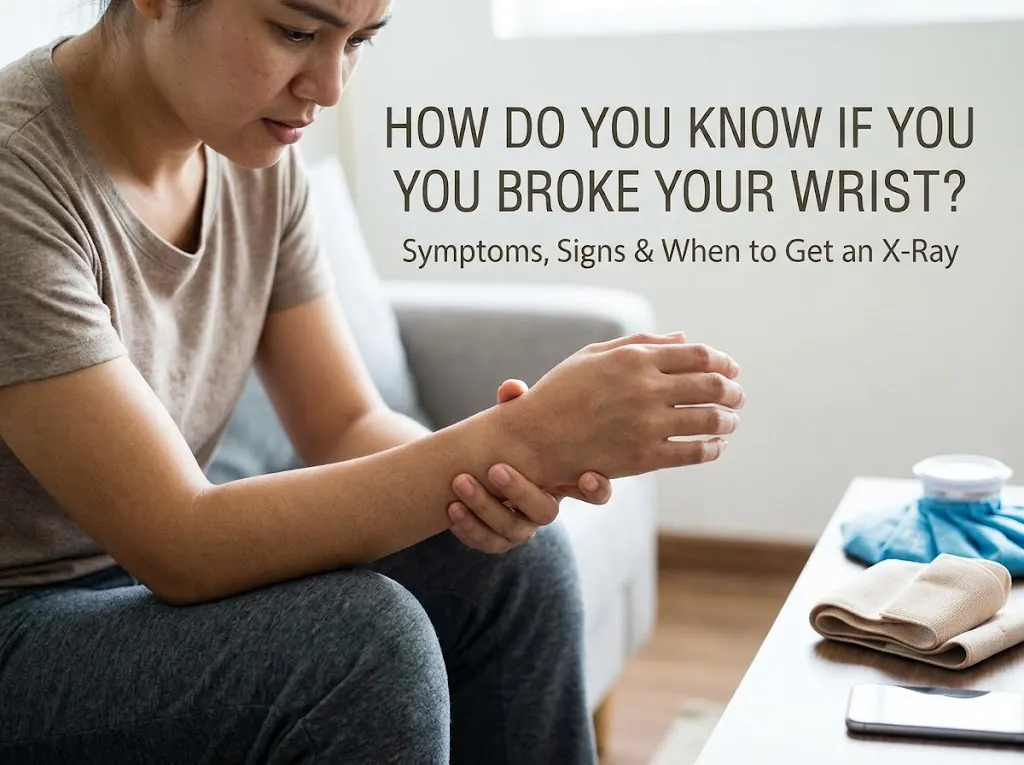
Wrist pain after a fall, sports injury, or sudden impact can make everyday tasks difficult. You might notice swelling, bruising, tenderness, or pain when gripping a phone, turning a doorknob, or moving your hand. If you are wondering, “How do you know if you broke your wrist?”, the symptoms can offer clues, but they cannot confirm a fracture.
A broken wrist does not always look crooked, and being able to move your fingers does not rule out a fracture. Some wrist fractures cause moderate pain initially, while others lead to severe swelling and difficulty using the hand. Knowing the difference between a possible fracture and a less serious injury can help you decide when to seek medical care.
This guide explains the common signs of a broken wrist, how fractures differ from sprains, when an X-ray may be necessary, and what you can safely do while waiting for medical evaluation. It also covers warning signs that require urgent attention.
What Are the Signs of a Broken Wrist?
A wrist fracture occurs when one or more bones near the wrist joint break. If you want to understand whether a fracture is the same as a break, the terms generally mean the same thing.
Common symptoms include:
- Pain and tenderness: Pain may increase when touching the injured area, gripping objects, or moving the wrist.
- Swelling and bruising: These may develop within minutes or over several hours.
- Limited movement: Bending or rotating the wrist may be difficult or painful.
- Visible deformity: The wrist may look bent or unusually shaped, although many fractures have no obvious deformity.
- Weak grip: Holding objects or using the hand may become difficult.
- Numbness or tingling: These symptoms can indicate nerve involvement and should not be ignored.
Broken Wrist vs. Wrist Sprain
A sprain affects the ligaments that support the wrist, while a fracture involves a bone. The symptoms can overlap, so appearance and pain severity alone cannot reliably distinguish the two.
| Sign | Possible wrist fracture | Possible wrist sprain |
|---|---|---|
| Pain | Often localized over a bone | Often around a ligament or joint |
| Swelling | Common | Common |
| Bruising | May occur | May occur |
| Movement | May be painful or restricted | May be painful or restricted |
| Deformity | Possible | Uncommon |
| Confirmation | Usually requires imaging | Clinical assessment; imaging may be needed |
These are general patterns, not a diagnostic test. A sprain can be very painful, and a small fracture may cause relatively mild symptoms.
When Should You Get an X-Ray?
You should seek prompt medical evaluation after a wrist injury if you have persistent pain, swelling, bone tenderness, or difficulty using your hand. An X-ray is commonly the first test used to check for a fracture and determine whether the bones are aligned.
Some fractures, particularly those involving the scaphoid bone near the base of the thumb, may not appear on the first X-ray. If the clinician still suspects a fracture, they may recommend immobilization, repeat imaging, or another scan.
| Situation | Recommended next step |
|---|---|
| Mild discomfort that steadily improves, with no concerning signs | Monitor symptoms and avoid painful activities |
| Persistent pain, swelling, or tenderness after an injury | Arrange prompt medical assessment |
| Severe deformity, an open wound over a suspected fracture, or worsening numbness | Seek emergency care |
| Fingers becoming blue, pale, or cold | Seek emergency care immediately |
What Should You Do If You Suspect a Broken Wrist?
Until you receive medical advice, protect the injured wrist and avoid movements that increase pain.
- Remove rings and watches before swelling makes them difficult to remove.
- Keep the wrist still in the position you find it. Use a loose, supportive splint if available and comfortable.
- Apply wrapped ice for 15–20 minutes at a time. Never place ice directly on your skin.
- Elevate the hand above heart level when practical to help limit swelling.
- Avoid lifting, twisting, or testing the wrist repeatedly. Do not attempt to straighten a visibly deformed wrist or push a bone back into place.
Do not wrap a support so tightly that your fingers become numb, cold, or discolored. If the injury involves an open wound, cover it with a clean dressing without pressing on protruding bone.
What Affects Wrist Fracture Recovery?
Recovery depends on the bone involved, fracture severity, bone alignment, age, and overall health. Some fractures can be treated with a cast or splint, while displaced or unstable fractures may require surgery.
Bone health also matters over time. Factors such as aging and reduced bone strength can influence fracture risk; see how aging affects muscle, bone, and joint health. Adequate nutrition supports normal bone health, and information about vitamin D deficiency and bone pain symptoms may help you understand one aspect of bone health, although supplements cannot treat an acute fracture.
Follow your clinician’s instructions about immobilization and when to begin movement. Starting wrist exercises too early can interfere with healing, while prolonged immobilization may contribute to stiffness. Persistent pain after an injury deserves reassessment rather than assuming it is normal; why pain can persist after an injury heals explains the broader issue.
Frequently Asked Questions
1. Can you break your wrist without knowing it?
Yes. Some fractures cause relatively mild pain and no obvious deformity. Persistent tenderness or swelling after an injury warrants assessment.
2. Can you still move your wrist if it is broken?
Yes. Movement may remain possible despite a fracture, so mobility does not rule one out.
3. How can you tell a broken wrist from a sprain?
You cannot reliably distinguish them from symptoms alone. A clinical examination and, when indicated, imaging help determine the cause.
4. Does a broken wrist always swell?
No. Swelling is common but varies by injury, and its absence does not exclude a fracture.
5. How long does wrist fracture pain last?
Pain often improves as healing progresses, but the timeline varies with the fracture and treatment. Increasing pain or pain that does not improve should be discussed with a clinician.
6. Should you go to the ER for a suspected broken wrist?
Go to an emergency department for severe deformity, an open fracture, uncontrolled bleeding, worsening numbness, or fingers that become cold or blue.
7. Can a wrist fracture heal without a cast?
Some stable fractures may be treated with a splint or other support, but treatment depends on the fracture type. A clinician should determine the appropriate approach.
8. Can an X-ray miss a broken wrist?
Yes. Certain fractures may not be visible initially. Further imaging or follow-up may be needed when symptoms and examination findings remain concerning.
9. Should you sleep with a suspected wrist fracture?
Keep the wrist supported and avoid placing pressure on it. Seek medical assessment rather than relying on overnight rest to determine whether it is broken.
10. When can you return to normal activities?
Return gradually when your clinician confirms it is safe. Healing time varies, and heavy lifting or sports too soon can worsen the injury.
Conclusion
Wrist pain, swelling, bruising, tenderness, and difficulty gripping objects can indicate a fracture, but symptoms alone cannot confirm one. Protect the wrist, use wrapped ice, and seek prompt evaluation when a fracture is possible. Emergency warning signs include severe deformity, an open wound, worsening numbness, or cold or discolored fingers.
Disclaimer: This article is provided for educational and informational purposes only. It is not a substitute for professional medical advice, diagnosis, or treatment.
This article is for education purpose only and is not a diagnosis or a substitute for medical advice.