
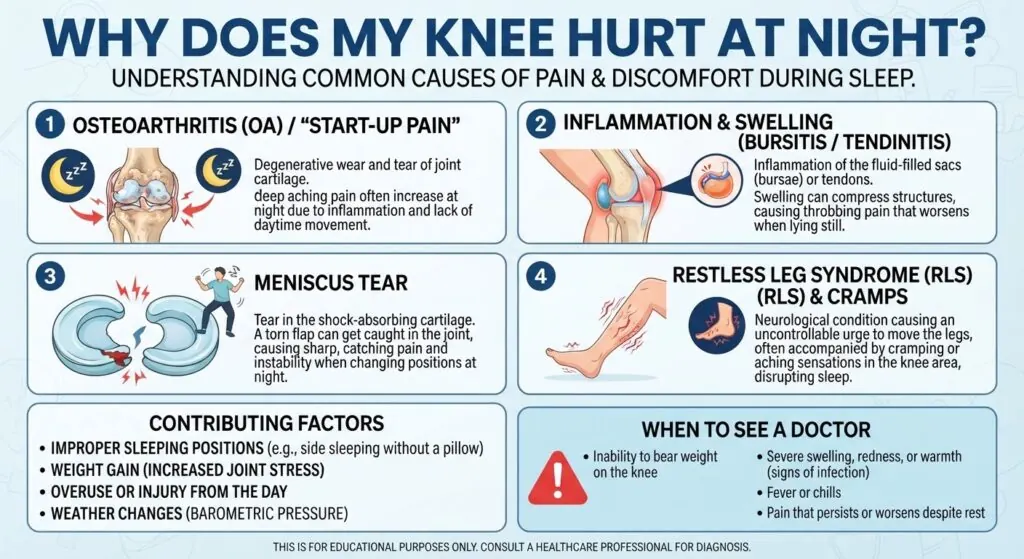
Nighttime knee pain does not automatically mean you have a serious injury. Joint irritation, arthritis, overuse, and certain tendon or cartilage problems can become more noticeable at rest, but persistent pain, significant swelling, or other new symptoms deserve attention.
Understanding why your knee hurts at night can help you decide what to try at home, which symptoms to monitor, and when to seek medical care. The likely cause depends on where the pain occurs, what activities make it worse, and whether you also have swelling, warmth, stiffness, or difficulty moving your knee.
What Causes Knee Pain at Night?
Nighttime knee pain can come from several conditions. The timing alone cannot identify the cause, so consider your symptoms alongside your activity level, medical history, and any recent injury.
| Possible cause | Common clues | What may help |
|---|---|---|
| Knee osteoarthritis | Aching, stiffness after rest, discomfort with activity | Gentle movement and an individualized treatment plan |
| Overuse or tendon irritation | Pain after exercise, repetitive bending, or prolonged activity | Temporary activity adjustments and gradual return to exercise |
| Patellofemoral pain | Pain around or behind the kneecap, often with stairs or squats | Reducing aggravating movements and targeted strengthening |
| Meniscus injury | Pain with twisting, catching, or sometimes locking | Clinical assessment, especially if movement is restricted |
| Bursitis or joint inflammation | Localized swelling, tenderness, or warmth | Avoiding pressure and getting assessed when symptoms persist |
1. Knee Arthritis
Osteoarthritis can cause pain, stiffness, and reduced movement. Symptoms may become more noticeable after an active day or after sitting still for a while. Some people also experience discomfort at night, although nighttime pain alone does not establish that arthritis is present.
For more detail, see knee arthritis symptoms and treatment options.
2. Overuse and Tendon Irritation
Walking farther than usual, running, climbing stairs, kneeling, or increasing workout intensity can irritate tissues around the knee. The discomfort may linger after activity and become more obvious when you settle down to rest.
Pain near the tendon below the kneecap, especially after jumping or running, may involve the patellar tendon. Learn about the symptoms and causes of patellar tendonitis.
3. Meniscus or Other Knee Injuries
The meniscus is cartilage that helps cushion the knee. A tear may cause pain with twisting, swelling, catching, or restricted movement, although symptoms vary. Ligament injuries can also cause pain and instability, particularly after a sudden turn, fall, or sports injury.
Explore meniscus tear symptoms and recovery or how to recognize a knee ligament injury.
4. Bursitis or Knee Swelling
Bursae are small, fluid-filled sacs that reduce friction around joints. Repeated pressure, including frequent kneeling, can irritate a bursa near the front of the knee. Swelling within the joint can also make bending uncomfortable and increase pressure at rest.
If swelling is present, review when fluid on the knee needs medical attention and when a swollen knee may be serious.
5. Inflammatory Arthritis or Gout
Inflammatory conditions can cause pain even when you are not moving. Gout may produce sudden, intense pain with warmth, redness, and swelling, while rheumatoid arthritis can cause persistent stiffness and inflammation. A newly hot, swollen knee should not automatically be attributed to an existing arthritis diagnosis.
Why Does Knee Pain Get Worse When You Lie Down?
Pain can feel stronger at bedtime for several reasons. Your knee may be reacting to activity earlier in the day, stiffness may develop after a period of inactivity, or the pressure from a particular sleeping position may aggravate sensitive tissues. With fewer distractions, discomfort that was less noticeable during the day can also become more apparent.
The location and pattern of pain can offer useful clues.
| Nighttime symptom | Possible explanation | Useful next step |
|---|---|---|
| Ache after walking or standing all day | Overuse or osteoarthritis | Reduce aggravating activity and monitor symptoms |
| Pain when bending the knee in bed | Joint irritation or pressure-sensitive tissues | Try a more comfortable position |
| Pain behind the knee | Several causes, including a Baker’s cyst | Seek assessment if persistent or swollen |
| Pain with catching or locking | Possible meniscus or other mechanical problem | Arrange medical evaluation |
| Sudden severe pain with redness and warmth | Possible acute inflammation or infection | Seek urgent medical care |
For more specific patterns, explore why your knee hurts when bending, pain behind the knee and its possible causes, and pain behind the kneecap.
What Does Research Say About Nighttime Knee Pain?
A study of 1,214 volunteers examined nighttime pain across different levels of knee osteoarthritis on X-rays. The proportion reporting nighttime knee pain increased from 3.6% among participants without radiographic osteoarthritis to 75% among those in the most severe category.
These figures describe one study population, not the likelihood that any individual’s knee pain is caused by arthritis. They do, however, show that nighttime discomfort can become more common as knee osteoarthritis becomes more severe. Night pain still needs to be interpreted alongside symptoms and clinical findings.
How Can You Relieve Knee Pain at Night?
If the pain is mild and there are no warning signs, a few adjustments may make sleeping more comfortable.
Adjust Your Sleeping Position
-
If you sleep on your side: Place a pillow between your knees to reduce direct pressure and help keep your legs aligned.
-
If you sleep on your back: Try a small pillow under your knees if gentle bending feels more comfortable.
-
If a position increases pain: Change positions rather than forcing your knee to stay bent or straight.
There is no single best position for everyone. Choose one that reduces discomfort without causing numbness, tingling, or increased pain.
Use Cold or Heat Carefully
A cold pack wrapped in a towel for 15–20 minutes may help after activity, particularly if the knee is swollen. Never apply ice directly to your skin or fall asleep with a cold pack in place. Gentle warmth may help stiffness when there is no unusual heat or significant swelling, but avoid heating a knee that is already hot, red, or acutely inflamed.
Modify Activity and Consider Gentle Movement
Temporarily reduce activities that aggravate your knee, such as deep squats, repeated stair climbing, running, or kneeling. Complete inactivity may increase stiffness, so gentle movement within a comfortable range can be useful when it does not worsen symptoms.
You can explore low-impact exercises for painful joints and how to warm up before exercise. If a meniscus injury is possible, understand whether walking on a torn meniscus can make it worse.
Be Cautious With Pain Medication
Over-the-counter medicines may help some people, but they are not suitable for everyone. Anti-inflammatory medicines such as ibuprofen or naproxen can cause stomach bleeding, kidney problems, and medication interactions. Ask a clinician or pharmacist before using them if you take blood thinners, have kidney disease, have a history of ulcers, or are pregnant. Follow package directions and do not combine similar anti-inflammatory medicines.
When Should You Seek Medical Care?
Nighttime knee pain that repeatedly disrupts sleep, worsens, or limits normal activity deserves medical evaluation. A clinician may ask about recent exercise or injuries, examine your knee’s movement and stability, and decide whether imaging or blood tests are needed.
Symptoms You Can Usually Monitor
Mild discomfort after unusual activity may improve with reduced strain and simple self-care, provided you can walk and move the knee normally and have no significant swelling, fever, or redness. Monitor whether symptoms improve over the next few days.
Symptoms That Need a Medical Appointment
Arrange an assessment if:
-
Pain keeps returning or repeatedly wakes you.
-
Swelling persists or the knee feels unstable.
-
You have difficulty fully bending or straightening your knee.
-
Pain continues despite reducing aggravating activities.
-
You have unexplained pain that is progressively worsening.
These patterns may warrant evaluation for common causes of knee pain and when to see a doctor or knee pain without an obvious injury.
Symptoms That Need Urgent Care
Seek urgent medical care if your knee becomes suddenly hot, red, and swollen, particularly with fever or chills, because a joint infection needs prompt treatment. Get emergency assessment after a major injury if you cannot bear weight, the knee looks deformed, or you cannot move it. Sudden calf swelling or pain with shortness of breath or chest pain also requires urgent evaluation.
If your knee catches or locks, read about why a knee may lock when bending and painful knee popping during bending. A knee that truly cannot straighten should be assessed promptly rather than forced through the movement.
Frequently Asked Questions
1. Why does my knee hurt at night but not during the day?
Activity-related irritation may become more noticeable once you stop moving, and bedtime offers fewer distractions. The pattern can occur with overuse or arthritis, but persistent symptoms still deserve evaluation.
2. Can knee arthritis cause pain while sleeping?
Yes. Osteoarthritis and inflammatory arthritis can cause nighttime discomfort, stiffness, or aching at rest. Night pain alone cannot confirm arthritis.
3. What is the best sleeping position for knee pain?
Try sleeping on your side with a pillow between your knees or on your back with a pillow under your knees. Choose the position that feels most comfortable and does not worsen symptoms.
4. Should I use ice or heat for knee pain at night?
Cold may help after activity or when mild swelling is present. Gentle heat may ease stiffness, but avoid heat on a hot, red, or acutely swollen knee.
5. Can overuse cause knee pain at night?
Yes. Increased walking, running, workouts, or repetitive bending can irritate the knee and cause discomfort later in the day. Reducing the activity that triggers pain may help.
6. Does nighttime knee pain always mean arthritis?
No. Tendon irritation, bursitis, injuries, and other inflammatory conditions can also cause nighttime pain. A clinician can assess persistent or unexplained symptoms.
7. When should I worry about knee pain at night?
Seek urgent care for a hot, red, swollen knee with fever, major injury, inability to bear weight, or inability to move the joint. Pain that repeatedly disrupts sleep or progressively worsens also needs medical assessment.
8. Can walking help nighttime knee pain?
Gentle walking may reduce stiffness for some people, but it can aggravate an injury or irritated joint in others. Keep movement comfortable and stop if pain increases.
9. How long does nighttime knee pain last?
Mild pain after unusual activity may improve over several days as the knee settles. Pain that persists, worsens, or repeatedly interrupts sleep should be evaluated rather than managed indefinitely at home.
10. What will a doctor do for nighttime knee pain?
A clinician will review your symptoms and medical history and examine your knee. Depending on the findings, they may recommend imaging, laboratory tests, physical therapy, medication, or other treatment.
Conclusion
Knee pain at night can result from overuse, arthritis, tendon irritation, bursitis, or an injury. Adjusting your sleeping position, temporarily reducing aggravating activities, and using cold or gentle warmth appropriately may help mild symptoms. If pain persists, disrupts sleep, or comes with swelling or reduced movement, arrange a medical assessment; seek urgent care for severe or potentially infectious symptoms.
Disclaimer: This article is provided for educational and informational purposes only.
This article is for education purpose only and is not a diagnosis or a substitute for medical advice.