
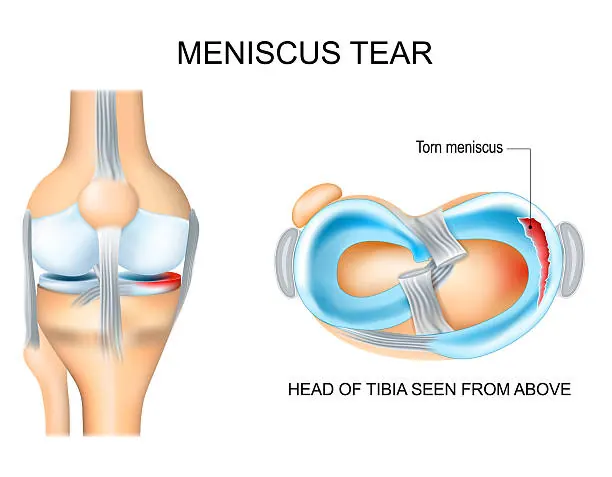
A meniscus tear is one of the most common and immediately disruptive knee injuries a person can experience, and the sensation when it happens is often unforgettable. Many people describe hearing or feeling a distinct pop inside the knee during a sudden twist, pivot, or deep squat — followed almost immediately by pain, swelling, and a alarming sense that something has gone seriously wrong inside the joint. Within hours the knee may swell significantly, feel unstable during walking, and produce a locking or catching sensation that makes straightening the leg difficult and frightening. For active individuals, athletes, and working adults alike, a meniscus tear can bring normal life to an abrupt halt and raise deeply unsettling questions about whether the knee will ever function normally again.
If you have been told you have a meniscus tear or suspect your knee symptoms match this pattern, the most important thing to understand is that meniscus tears are among the most successfully treated knee injuries in orthopedic medicine. Not every tear requires surgery — in fact, a significant proportion of meniscus tears heal effectively with conservative treatment including physical therapy and activity modification. Even those that do require surgical intervention have excellent outcomes with modern arthroscopic techniques. The path from injury to full recovery is well-established, and with the right treatment approach and rehabilitation commitment, most people return to their previous level of activity and function.
The meniscus is a pair of C-shaped fibrocartilage structures — the medial meniscus on the inner side and the lateral meniscus on the outer side of the knee — that sit between the femur and tibia within the knee joint. They serve as shock absorbers distributing load across the knee, stabilizers resisting rotational and translational forces, and joint congruity enhancers that improve the fit between the rounded femoral condyles and the flatter tibial plateau. When a meniscus tears — whether from a sudden traumatic event or gradual degenerative wearing — these critical functions are compromised, producing the pain, swelling, and mechanical symptoms characteristic of this injury. Understanding the type, location, and severity of your tear is essential to selecting the most appropriate treatment and achieving the best possible recovery.
Anatomy of the Meniscus
Each knee contains two menisci — crescent-shaped wedges of fibrocartilage approximately 3–5mm thick at their outer rim, tapering to a thin inner edge. The medial meniscus is more tightly attached to the joint capsule and tibial plateau, making it less mobile and more vulnerable to tearing than the lateral meniscus. The outer one-third of each meniscus — the red zone — has a direct blood supply capable of supporting healing. The inner two-thirds — the white zone — is avascular, receiving nutrition only through diffusion from synovial fluid, which significantly limits its healing capacity and influences treatment decisions based on tear location.
Types of Meniscus Tears
Traumatic Tears
Traumatic meniscus tears occur in younger, active individuals from sudden force applied to a loaded, twisting knee. They most commonly happen during sports involving cutting, pivoting, and deceleration — football, basketball, soccer, tennis, and skiing are among the highest-risk activities. Traumatic tears frequently occur alongside other knee ligament injuries, particularly ACL tears, as explored in our guide on sharp knee pain after injury is it ACL or meniscus tear.
Degenerative Tears
Degenerative meniscus tears are the most common type overall and occur in adults over 40 as a consequence of accumulated wear and age-related changes in meniscal tissue. The fibrocartilage becomes increasingly brittle and less resilient with age, tearing under loads that would not damage a young, healthy meniscus. Degenerative tears can occur from low-energy mechanisms such as standing from a deep squat, stepping off a curb awkwardly, or even without any identifiable precipitating event. They are closely associated with knee osteoarthritis as discussed comprehensively in our knee arthritis causes symptoms treatments and recovery tips guide.
Tear Patterns
- Longitudinal tear: Runs parallel to the length of the meniscus along its circumference. When a longitudinal tear extends completely around the meniscus, the inner fragment can displace into the joint — a bucket handle tear — causing the knee to lock in a flexed position, preventing full extension.
- Radial tear: Extends from the inner free edge outward toward the outer rim, disrupting the hoop stress mechanism that makes the meniscus effective as a shock absorber. Radial tears significantly impair meniscal load distribution function.
- Horizontal tear: Splits the meniscus into upper and lower layers, most commonly occurring in older adults as a degenerative change. These tears frequently develop meniscal cysts at their outer edge.
- Complex tear: Involves multiple tear patterns simultaneously, typically occurring in degenerative menisci where tissue quality is significantly compromised throughout.
Causes and Risk Factors
Mechanism of Injury
The classic mechanism of traumatic meniscus tearing involves a combination of knee flexion, axial load, and rotational force applied simultaneously. When a planted foot combined with a pivoting body weight creates a shearing force across the loaded knee, the meniscus can be caught between the femur and tibia and torn. Contact sports collisions, awkward landings from jumps, and sudden direction changes are the most common precipitating events for traumatic tears in younger athletes.
Contributing Factors
- Age: Meniscal tissue progressively loses collagen organization, water content, and mechanical strength with aging, making degenerative tears increasingly common from the fourth decade onward without requiring significant trauma.
- Previous knee injury: A history of ACL tear, significant knee sprain, or previous meniscal injury alters joint mechanics and increases vulnerability to subsequent meniscal damage over time.
- Obesity: Excess body weight significantly increases the compressive and shear forces across the knee joint during daily activities, accelerating meniscal degeneration and increasing tear risk. The relationship between body weight and joint health is explored in our guide on how everyday choices influence your body joint health.
- Occupational kneeling and squatting: Jobs requiring prolonged kneeling, deep squatting, or frequent stair climbing place repetitive high loads on the menisci, increasing cumulative wear and degenerative tear risk over working lifetime.
Symptoms of a Meniscus Tear
Pain
Pain from a meniscus tear is typically felt along the joint line — the space between the femur and tibia on the inner or outer side of the knee depending on which meniscus is torn. Medial meniscus tears produce pain on the inner knee, while lateral tears produce outer knee pain. The pain is often sharp during specific movements — particularly twisting, squatting, or pivoting — and produces a deep aching discomfort at rest in more significant tears. Weight-bearing pain that worsens with stair climbing, rising from seated positions, and prolonged walking is characteristic.
Swelling
Joint effusion — fluid accumulation within the knee — develops within hours to days of a meniscus tear as the synovial lining responds to the injury with inflammatory fluid production. The swelling is typically moderate — less dramatic than the rapid hemarthrosis from an ACL tear — and produces a sensation of tightness, heaviness, and reduced range of motion in the knee. Understanding the broader spectrum of knee pain presentations covered in our knee pain causes symptoms and when to see a doctor complete guide helps contextualize meniscal tear symptoms within the full range of knee conditions.
Mechanical Symptoms
- Locking: True knee locking — where the knee becomes mechanically blocked from full extension by a displaced meniscal fragment — is a hallmark of bucket handle tears and requires urgent orthopedic assessment as it indicates a torn fragment blocking the joint.
- Catching and clicking: A catching or clicking sensation during knee movement reflects torn meniscal tissue moving irregularly within the joint space during loading and is one of the most diagnostically suggestive mechanical symptoms of a significant meniscal tear.
Giving Way and Instability
Many patients with meniscus tears report an unpredictable sensation of the knee giving way during weight-bearing activities, particularly on uneven surfaces or during direction changes. This instability reflects both pain inhibition of the quadriceps and the loss of the meniscus’s stabilizing contribution to joint mechanics.
Diagnosis
Clinical Examination
An orthopedic specialist performs joint line palpation — direct pressure along the medial or lateral joint line reproducing the patient’s pain is one of the most reliable clinical signs of a meniscus tear. McMurray’s test combines knee flexion with tibial rotation to compress and stress the meniscus, producing a painful click or catching sensation with a positive result. Thessaly’s test — performed with the patient standing on the affected leg and rotating the body — stresses the meniscus under physiological load and is highly sensitive for significant tears in experienced hands.
MRI Imaging
MRI is the gold standard imaging investigation for meniscus tears, providing precise visualization of tear location, pattern, size, and associated cartilage or ligament pathology. MRI accurately identifies the vascular zone location of the tear — critical information for determining whether surgical repair or resection is most appropriate. It also identifies associated findings including bone contusions, ligament injuries, and early cartilage degeneration that influence overall management decisions.
Treatment Options
Conservative Treatment
A significant proportion of meniscus tears — particularly partial tears in the outer vascular zone, stable longitudinal tears, and degenerative tears in older adults — respond well to conservative management without surgery. The RICE protocol — Rest, Ice, Compression, and Elevation — forms the foundation of initial management, reducing swelling and pain during the acute phase. NSAIDs provide additional anti-inflammatory pain relief to facilitate early rehabilitation engagement.
Physical therapy is the cornerstone of conservative meniscus tear management. The rehabilitation program progresses from initial swelling control and quadriceps activation through progressive strengthening of the quadriceps, hamstrings, hip abductors, and calf muscles — all of which contribute to knee joint stability and reduce meniscal loading during daily activities. Proprioception and balance training restore the neuromuscular control that protects the knee during dynamic activities and is essential before returning to sport. Incorporating the nutritional strategies discussed in our guide on how changing your diet can help reduce pain naturally supports tissue healing and reduces the inflammatory response during recovery.
Surgical Treatment
Surgery is indicated for locked knees requiring urgent intervention, large tears causing significant mechanical symptoms that do not resolve with conservative management, tears in younger active patients where repair is feasible, and cases where conservative treatment has failed after 3 months.
Arthroscopic partial meniscectomy removes the torn, unstable portion of the meniscus while preserving as much healthy tissue as possible. It is the most commonly performed meniscal surgery and produces rapid pain relief and functional recovery, typically allowing return to light activity within 2–4 weeks and sport within 6–8 weeks. However long-term studies show that partial meniscectomy increases the risk of knee osteoarthritis development over subsequent decades, reinforcing the importance of attempting conservative management first and preserving meniscal tissue whenever possible.
Meniscal repair sutures the torn edges back together to restore meniscal integrity, preserving the shock-absorbing and stabilizing functions of the intact meniscus. Repair is most successful for tears in the outer vascular zone where blood supply supports healing, longitudinal tear patterns that are amenable to suturing, and younger patients with good tissue quality. Recovery after repair is significantly longer than after meniscectomy — typically 4–6 months before return to sport — due to the need to protect the repaired tissue while biological healing occurs.
Meniscal transplantation replaces a severely damaged or previously removed meniscus with a donor allograft meniscus, restoring joint protection in carefully selected younger patients who have experienced significant pain and functional limitation following total meniscectomy.
Recovery Timeline
Recovery varies based on tear severity, treatment approach, and individual patient factors including age, fitness level, and rehabilitation commitment.
- Weeks 1–2: Swelling and acute pain management with RICE, NSAIDs, and protected weight-bearing. Gentle range of motion and quadriceps activation exercises begin.
- Weeks 2–6: Progressive weight-bearing restoration, strengthening exercises targeting quadriceps and hamstrings, and walking normalization. Most conservative cases experience significant improvement during this phase.
- Weeks 6–12: Advanced strengthening, proprioception training, and sport-specific movement preparation. Return to running typically begins around 8–12 weeks for conservative cases.
- 3–6 months: Full return to sport and unrestricted activity for most surgical cases. Conservative cases may achieve full recovery within 6–12 weeks for partial tears.
Prevention Strategies
- Strengthen the muscles around the knee consistently: Strong quadriceps, hamstrings, and hip abductors reduce meniscal loading during dynamic activities and significantly lower the injury risk during sport and exercise.
- Warm up thoroughly before sport: A proper dynamic warm-up including leg swings, lunges, and sport-specific movement preparation increases tissue compliance and reduces the injury risk during sudden loading.
- Maintain healthy body weight: Reducing knee joint loading through weight management is one of the most effective strategies for preventing degenerative meniscal tears in middle-aged and older adults.
- Use proper technique during exercise: Avoiding deep squatting with heavy loads, maintaining proper knee alignment over the foot during landing, and learning correct cutting and pivoting mechanics significantly reduces traumatic tear risk during sport.
- Address knee pain early: Persistent knee pain or swelling following activity should be evaluated promptly rather than trained through, as continuing to load a symptomatic knee can convert a minor partial tear into a more significant injury.
Conclusion
A meniscus tear is a serious but highly treatable knee injury that responds well to the right combination of conservative management, surgical intervention when necessary, and structured rehabilitation. Whether your tear is traumatic or degenerative, partial or complete, the principles of recovery remain consistent — control inflammation, restore strength and stability progressively, protect the healing tissue appropriately, and build the movement habits that reduce reinjury risk for the long term. Most people return to full activity and sport following a meniscus tear with appropriate treatment and rehabilitation commitment. Early diagnosis, accurate imaging, and individualized treatment planning give you the best possible foundation for a complete and lasting recovery.
Frequently Asked Questions
1. Can a meniscus tear heal without surgery? Yes — many meniscus tears, particularly partial tears in the outer vascular zone and stable degenerative tears in older adults, heal successfully with physical therapy and activity modification. Surgery is reserved for tears causing significant mechanical symptoms or those failing conservative management.
2. How long does a meniscus tear take to heal? Conservative recovery typically takes 6–12 weeks for partial tears. Surgical meniscectomy recovery takes 4–8 weeks, while meniscal repair recovery requires 4–6 months to allow biological healing of the sutured tissue.
3. What does a meniscus tear feel like? A meniscus tear typically produces joint line pain on the inner or outer knee, swelling within hours of injury, a catching or clicking sensation during movement, and sometimes a locking sensation preventing full knee extension.
4. Is walking OK with a meniscus tear? Gentle walking on flat surfaces is generally acceptable and beneficial for mild to moderate tears. Avoid prolonged walking, stairs, squatting, and twisting movements that reproduce significant pain until evaluated by a healthcare professional.
5. What is a bucket handle meniscus tear? A bucket handle tear is a large longitudinal tear where the inner portion of the meniscus displaces into the joint, causing the knee to lock in a flexed position. It typically requires urgent surgical repair or removal of the displaced fragment.
6. Can I exercise with a meniscus tear? Gentle, pain-free exercises including straight leg raises, quad sets, and swimming are appropriate during recovery. Avoid deep squatting, pivoting, twisting, and high-impact activities until cleared by your orthopedic specialist.
7. Does a meniscus tear always show on MRI? MRI detects the majority of significant meniscus tears with high accuracy. Small or very early partial tears may occasionally be missed, and clinical examination findings combined with MRI results together guide management decisions most reliably.
8. What happens if a meniscus tear is left untreated? Untreated significant tears can lead to progressive cartilage damage, knee instability, chronic pain, and accelerated development of knee osteoarthritis. Mechanical symptoms like locking that are ignored can cause additional joint damage over time.
9. At what age do meniscus tears most commonly occur? Traumatic tears most commonly occur in athletes aged 15–45 during sport. Degenerative tears become increasingly common from age 40 onward and are extremely prevalent in adults over 60, often coexisting with knee osteoarthritis.
10. How soon can I return to sport after a meniscus tear? Return to sport after conservative management typically takes 6–12 weeks. After arthroscopic meniscectomy, return to sport is usually possible at 6–8 weeks. After meniscal repair, return to sport requires 4–6 months to ensure adequate tissue healing.
Disclaimer
The information provided in this article is for educational and informational purposes only and does not constitute professional medical advice, diagnosis, or treatment.
This article is for education purpose only and is not a diagnosis or a substitute for medical advice.