
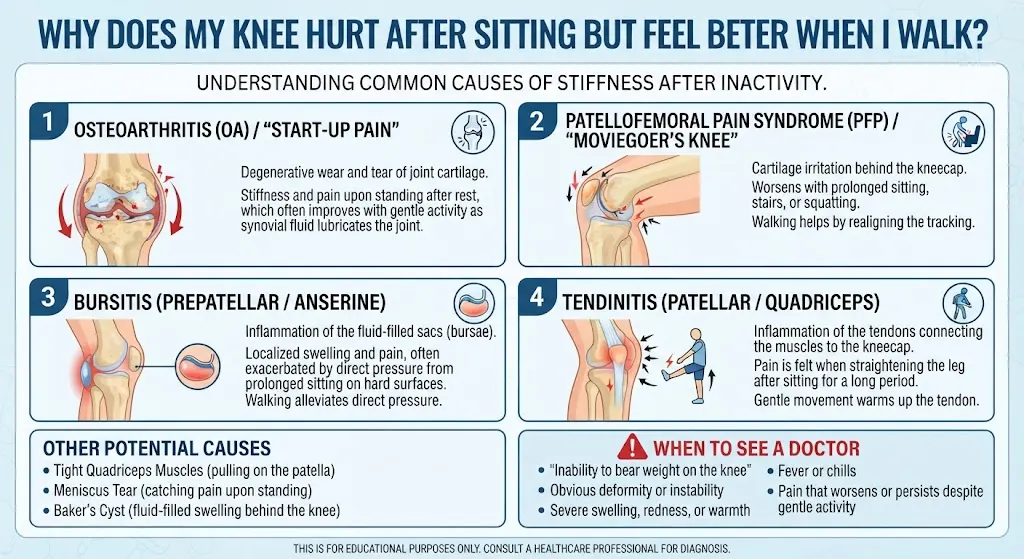
This pattern is often related to joint stiffness or pain around the kneecap, but it does not automatically mean you have arthritis. The length of time you sit, the location of the pain, and whether you have swelling or difficulty moving your knee all help determine what might be happening.
If your knee hurts after sitting but feels better when you walk, understanding the possible causes can help you choose safe ways to stay active and recognize when symptoms need medical attention. Movement-related improvement is useful information, but it cannot confirm a diagnosis on its own.
Why Does Knee Pain Improve When You Start Walking?
Pain that is worse after rest and eases with gentle movement is sometimes called stiffness after inactivity or start-up pain. Keeping your knee bent for a long time can make stiffness more noticeable, particularly if the joint or tissues around it are already irritated.
As you begin moving, the knee gradually moves through its range of motion. This may make the joint feel less stiff and improve comfort. However, pain that improves temporarily can still have an underlying cause that needs attention.
Common possibilities include:
-
Knee osteoarthritis: May cause aching and stiffness after sitting, especially in older adults or people with previous knee injuries.
-
Patellofemoral pain: Pain around or behind the kneecap that may worsen after sitting with bent knees, climbing stairs, or squatting.
-
Overuse or muscle weakness: Irritation around the knee can develop when activity levels change or the muscles supporting the joint are not well conditioned.
-
Meniscus irritation or injury: May cause joint-line pain, especially after twisting, sometimes with catching or locking.
-
Other inflammatory joint conditions: Can cause stiffness after rest, sometimes alongside warmth or swelling.
For a wider overview, see common causes of knee pain and when to see a doctor.
What Does the Pattern of Pain Tell You?
Where you feel pain and how long it lasts may help a clinician narrow down the possibilities.
| Symptom pattern | Possible explanation | What to watch for |
|---|---|---|
| Stiffness after sitting that eases within a few minutes | Temporary stiffness or an underlying joint condition | Whether it happens repeatedly |
| Pain around or behind the kneecap | Patellofemoral pain or arthritis | Discomfort on stairs or when squatting |
| Pain along the inner or outer joint line | Meniscus or other soft-tissue problems | Pain with twisting or catching |
| Swelling, warmth, or prolonged stiffness | Inflammation or fluid in the joint | Whether symptoms are new or worsening |
| Pain that continues during walking or at rest | Several possible causes | Increasing pain or reduced mobility |
These patterns are clues, not a way to diagnose yourself. For example, knee arthritis symptoms and treatment may be relevant when stiffness is recurrent, while meniscus tear symptoms and recovery may be worth discussing if pain began after a twisting injury.
What Can You Do at Home?
If the pain is mild and you can walk safely, try changing how long you remain in one position. The goal is to reduce stiffness without repeatedly provoking the knee.
-
Move regularly: Stand up and walk briefly every 30–60 minutes, adjusting the frequency to your comfort.
-
Straighten your knee gently: While seated, slowly extend your leg, then lower it without forcing the movement.
-
Choose comfortable activity: Walking on level ground or swimming may be easier than deep squats or repeated stair climbing.
-
Use ice for swelling: Apply a wrapped cold pack for 15–20 minutes if the knee feels swollen or irritated.
-
Adjust your chair: Choose a seat that allows you to stand without pushing forcefully through the painful knee.
You can explore low-impact exercises for joint pain and how to warm up before exercise. Start gently, and stop any movement that causes sharp pain, increased swelling, or instability.
If your discomfort also occurs during bending or stair use, these guides may help you understand those patterns: knee pain when bending, knee pain when climbing stairs, and knee pain when walking downstairs.
How Long Should the Stiffness Last?
Mild stiffness may settle after a few steps or several minutes of movement. There is no single recovery timeline because the duration depends on the cause and whether symptoms are recurring.
| Pattern | What to consider |
|---|---|
| Brief stiffness that consistently improves | Monitor symptoms and take movement breaks |
| Repeated pain over several days or weeks | Arrange a routine medical assessment if it persists or limits activity |
| Swelling or progressively worsening symptoms | Seek medical advice promptly |
| Sudden severe pain or inability to bear weight | Seek urgent medical care |
If symptoms begin without a clear injury, knee pain without an obvious injury may help you understand possible explanations. Pain behind the kneecap may also be associated with kneecap pain causes.
When Should You Seek Medical Care?
Arrange a medical appointment if knee pain keeps returning, lasts despite activity changes, affects sleep, or makes walking and daily tasks difficult. Get evaluated if you notice ongoing swelling, painful locking, or a feeling that the knee may give way.
Additional symptoms can offer important clues. Learn about fluid buildup in the knee, when knee swelling may be serious, and why a knee may lock when bending.
Seek urgent care if you cannot bear weight, have a major injury or sudden substantial swelling, or develop a hot, red knee with fever or chills. A clinician may examine your knee and decide whether imaging or other tests are needed.
Frequently Asked Questions
1. Why does my knee hurt after sitting but improve with movement?
The knee may become stiff after staying bent, or an underlying joint condition may cause pain after rest. Improvement with movement does not establish the cause.
2. Is this pattern always a sign of arthritis?
No. Arthritis is one possibility, but kneecap-related pain and soft-tissue irritation can cause similar symptoms.
3. Why does my knee hurt when I first stand up in the morning?
Stiffness can occur after a period of inactivity during sleep. Persistent morning stiffness, swelling, or pain in several joints should be discussed with a clinician.
4. Should I keep walking if the pain gets better?
Gentle walking may be reasonable if you can walk normally and the pain eases. Reduce activity if pain increases, your gait changes, or swelling develops.
5. Can a meniscus tear cause pain after sitting?
Yes, although pain after sitting alone does not indicate a tear. Twisting-related pain, catching, or locking may make a meniscus problem worth evaluating.
6. Can sitting with bent knees make the pain worse?
It can aggravate pain around the kneecap in some people. Changing positions regularly may help reduce discomfort.
7. Should I use ice or heat?
Ice may help when swelling or irritation is present, while gentle heat may feel soothing for stiffness. Avoid applying either directly to the skin.
8. What if my knee hurts at night, too?
Nighttime pain can have several causes, including arthritis and inflammation. Persistent pain that disrupts sleep should be assessed; a guide to knee pain at night explains other possible patterns.
9. Could an old injury be responsible?
Yes. Previous injuries can contribute to ongoing knee symptoms. Pain following a new twist or injury deserves attention, especially if swelling or instability develops.
10. When should I stop home treatment?
Seek medical advice if symptoms worsen, keep returning, or interfere with daily activities. Get urgent care for severe pain, inability to bear weight, or a hot, red knee with fever.
Conclusion
Knee pain that improves with walking often reflects stiffness after inactivity, but recurring symptoms can have several causes. Take regular movement breaks, stay gently active as tolerated, and seek medical assessment if pain persists or warning signs develop.
Disclaimer: This article is provided for educational and informational purposes only.
This article is for education purpose only and is not a diagnosis or a substitute for medical advice.