
Knee popping accompanied by pain when bending can make everyday movements uncomfortable. You might notice a click when standing up from a chair, a painful pop while squatting, or a catching sensation when climbing stairs. Sometimes the noise is brief, but the discomfort may continue or make you hesitant to move your knee normally.
Knee popping with pain is not always a sign of serious damage, but persistent or painful clicking deserves attention. Joint sounds can occur for several reasons, including kneecap movement, irritation of cartilage, or a meniscus injury. The sound alone cannot identify the cause; associated symptoms and how the problem started are important clues.
Understanding why your knee pops and hurts when you bend it can help you choose appropriate initial care and recognize when medical evaluation is necessary. This guide covers common causes, safe activity modifications, recovery considerations, and warning signs that should not be ignored.
What Causes Knee Popping and Pain When Bending?
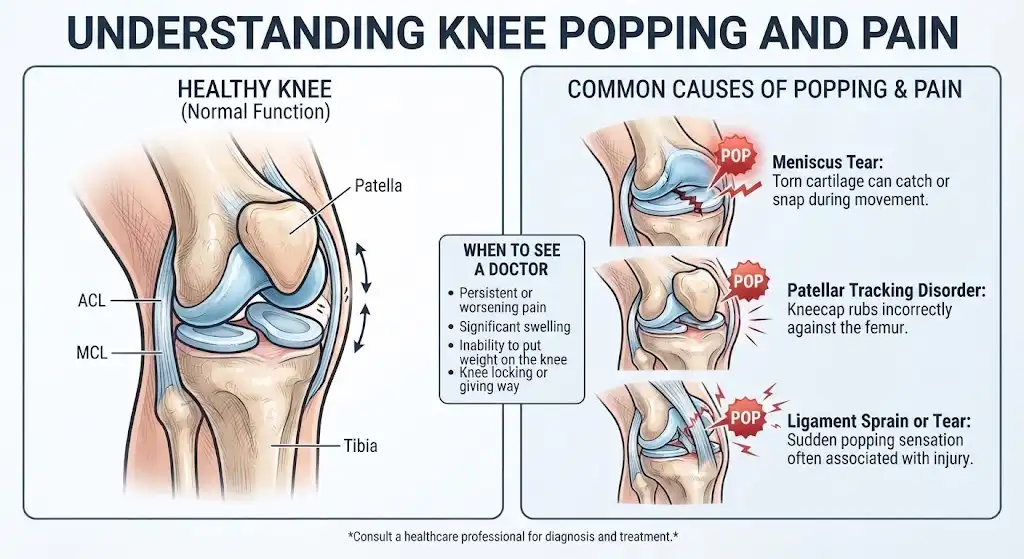
Painful knee popping may result from irritation around the kneecap, a meniscus injury, arthritis, or a tendon or ligament problem. The location of the pain, whether the knee catches or locks, and whether symptoms began after an injury can help narrow down the possibilities.
| Possible cause | Common symptoms | Helpful clue |
|---|---|---|
| Patellofemoral pain | Aching around or behind the kneecap with clicking | Often worse with stairs, squats, or prolonged sitting |
| Meniscus injury | Joint-line pain, catching, or painful clicking | May begin after twisting the knee |
| Knee osteoarthritis | Stiffness, aching, grinding, or reduced movement | Often develops gradually |
| Tendon irritation | Localized pain during bending or loading | May follow repetitive exercise |
| Ligament injury | Pain, instability, or a pop during an injury | May follow a sudden pivot or awkward landing |
1. Kneecap movement and irritation
The kneecap moves through a groove as you bend and straighten your leg. Irritation around this area can cause pain, clicking, or grinding, particularly during squats, stairs, and getting up from a chair. Learn about pain behind the kneecap and its possible causes.
2. Meniscus tear
The menisci are cartilage structures that help distribute pressure inside the knee. A tear may cause pain along the inner or outer joint line, catching, clicking, or difficulty bending fully. However, these symptoms do not confirm a tear. Read about meniscus tear symptoms, treatment, and recovery.
3. Knee osteoarthritis
Osteoarthritis can affect the joint’s cartilage and surrounding structures, leading to pain, stiffness, and grinding or crackling sensations. Symptoms may become more noticeable after activity or following prolonged sitting. See knee arthritis causes, symptoms, and treatment options.
4. Tendon or ligament injury
Tendon irritation may cause localized pain when the knee bends under load. A ligament injury is more concerning when popping occurs during a sudden twist or landing and is followed by instability or difficulty bearing weight. Learn about symptoms of knee ligament injuries.
Is Knee Popping Normal if It Hurts?
Popping without pain, swelling, or movement problems is often less concerning. When popping is painful, recurrent, or associated with catching, swelling, or instability, it is more important to identify the underlying cause.
| Symptom pattern | What to do |
|---|---|
| Occasional painless clicking | Usually monitor for changes |
| Mild pain that improves with reduced activity | Modify aggravating movements and monitor symptoms |
| Repeated painful popping or catching | Arrange a medical assessment |
| Knee locked, major injury, or inability to bear weight | Seek urgent medical care |
A knee that becomes physically stuck and cannot move normally needs prompt assessment. Do not force it straight or repeatedly bend it to release the catch. You can also review why a knee may lock when bending.
What Can You Do at Home?
For mild symptoms without a significant injury or warning signs, temporarily reduce movements that reproduce pain. Avoid deep squats, sudden pivots, running, and repeated bending under heavy loads until your symptoms improve.
- Reduce aggravating activity: Choose comfortable movements rather than pushing through sharp pain.
- Apply a cold pack: Wrap it in a towel and use it for 15–20 minutes at a time if the knee is sore.
- Keep the knee moving gently: Bend and straighten it within a comfortable range, without forcing the movement.
- Return gradually: Increase activity as pain and mobility improve.
Gentle, low-impact exercise may be appropriate when symptoms settle. Consider these low-impact exercises for people with joint pain, but stop any activity that increases pain, swelling, or catching. A physical therapist can help select exercises when symptoms persist.
Pain medication may help some people, but suitability depends on your medical history and other medicines. Ask a clinician or pharmacist before using anti-inflammatory medication if you have kidney disease, stomach ulcers, cardiovascular disease, take blood thinners, or are pregnant.
When Should You See a Doctor?
Arrange an appointment if painful popping continues, repeatedly returns, limits normal activities, or occurs with persistent stiffness or swelling. A clinician may examine knee movement, tenderness, stability, and the location of the pain. Imaging is not always necessary; X-rays or MRI scans may be considered when the history and examination suggest a particular injury.
Seek urgent medical care if you cannot bear weight after an injury, the knee is visibly deformed or locked, or severe pain develops suddenly. A hot, red knee with fever also requires urgent assessment.
Frequently Asked Questions
1. Why does my knee pop and hurt when I squat?
Squatting loads the kneecap, cartilage, tendons, and other joint structures. Painful popping may relate to irritation or an injury, so persistent symptoms should be assessed rather than repeatedly tested with deep squats.
2. Can a meniscus tear cause painful knee popping?
Yes. A meniscus injury can cause clicking, catching, or pain during bending and twisting. Similar symptoms occur with other knee conditions, so an examination may be needed.
3. Why does my knee click when I bend it but not hurt every time?
Joint sounds can occur during normal movement or because of changes in how structures move against one another. If clicking becomes painful, frequent, or associated with locking or swelling, seek medical advice.
4. Is knee popping a sign of arthritis?
It can occur with osteoarthritis, particularly when accompanied by stiffness, aching, or grinding. Popping alone does not establish that arthritis is present.
5. Should I stop exercising if my knee pops and hurts?
Temporarily avoid exercises that trigger pain, especially deep squats, pivoting, and high-impact activity. Choose comfortable movement and seek guidance if symptoms persist or worsen.
6. Can knee popping after an injury mean a ligament tear?
It can, particularly if a sudden pop is followed by instability, swelling, or difficulty walking. Prompt evaluation can help determine whether a ligament or another structure was injured.
7. Why does my knee pop when I stand up from a chair?
Standing requires the knee to bend and straighten while supporting your body weight. Kneecap-related pain, stiffness, and other joint problems can contribute, especially if the movement is repeatedly painful.
8. Can a meniscus tear heal without surgery?
Some meniscus tears improve with nonsurgical treatment, depending on their location, type, and symptoms. Treatment decisions should consider knee function and whether the joint locks or remains unstable.
9. How long does painful knee popping take to go away?
Recovery depends on the underlying cause. Mild irritation may improve with activity modification, while significant cartilage or ligament injuries can take longer and may need supervised treatment.
10. When is knee popping an emergency?
Seek urgent care for a locked knee, a visible deformity, inability to bear weight after an injury, or severe sudden pain. A hot, red knee with fever also needs urgent evaluation.
Conclusion
Knee popping with pain during bending can stem from kneecap irritation, arthritis, a meniscus injury, or other joint problems. Reduce painful activities, keep movement gentle, and seek medical assessment if symptoms persist or the knee catches, swells, or feels unstable. Severe symptoms or a locked knee require urgent care.
Disclaimer: This article is provided for educational and informational purposes only. It is not a substitute for professional medical advice, diagnosis, or treatment.
This article is for education purpose only and is not a diagnosis or a substitute for medical advice.