
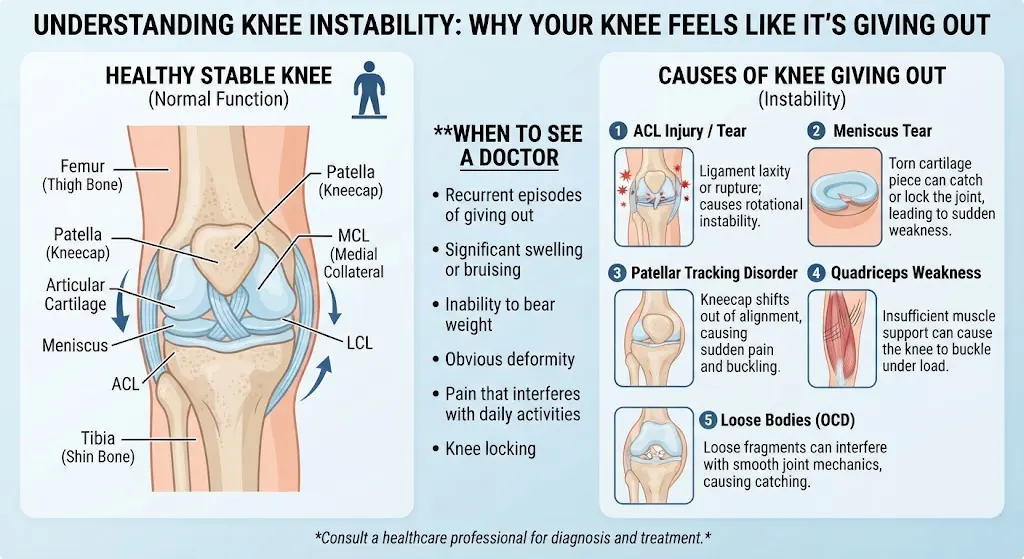
Knee instability can make ordinary movements feel unpredictable. You might be walking, climbing stairs, standing up from a chair, or turning quickly when your knee suddenly feels weak, buckles, or seems unable to support your weight. This sensation can be frightening, especially if you are worried about falling or damaging your knee further.
A knee that feels like it is giving out does not always mean a ligament is torn. Muscle weakness, kneecap tracking problems, meniscus injuries, ligament damage, and arthritis can all contribute to instability. However, repeated buckling, new swelling, or difficulty bearing weight deserves attention rather than being dismissed as simple weakness.
Understanding why your knee feels unstable can help you decide what to do next. This guide explains common causes, associated symptoms, safe steps you can take at home, how clinicians evaluate knee instability, and when to seek medical care.
What Does It Mean When Your Knee Feels Like It Is Giving Out?
Knee giving way, sometimes called knee buckling, is the sensation that the knee suddenly bends, shifts, or loses support during movement. It may happen once or repeatedly, with or without pain.
There are two important possibilities:
-
Mechanical instability: A ligament injury or another structural problem may prevent the knee from remaining stable during movement.
-
Functional instability: Pain, muscle weakness, swelling, or impaired coordination may temporarily interfere with your ability to control the knee.
These problems can feel similar, so the sensation alone cannot identify the cause. Some people experience buckling with significant pain, while others notice instability without much discomfort.
What Causes a Knee to Give Out?
Several conditions can make the knee feel unstable. The circumstances surrounding the buckling, along with pain, swelling, and other symptoms, can help a clinician narrow down the possibilities.
| Possible cause | Clues you may notice | Common contributing factor |
|---|---|---|
| ACL or other ligament injury | Knee shifts during turning or sudden stops | Twisting, landing, or direct impact |
| Meniscus tear | Catching, pain with twisting, or locking | Rotational stress or age-related changes |
| Knee arthritis | Stiffness, aching, and difficulty standing | Joint degeneration |
| Kneecap instability | Kneecap feels like it slides sideways | Previous dislocation or tracking problems |
| Muscle weakness | Knee buckles when standing or climbing stairs | Reduced strength or pain-related muscle inhibition |
Learn more about knee ligament injury symptoms and common causes of knee pain.
1. Ligament injuries
The anterior cruciate ligament (ACL) and other knee ligaments help control movement and prevent excessive shifting between the bones. When a ligament is injured, the knee may feel unreliable during pivoting, running, or changing direction.
An ACL injury may involve a popping sensation, swelling, and difficulty continuing an activity. However, not everyone experiences every symptom. This guide to ACL injury versus meniscus tear explains some important differences.
2. Meniscus tears
The menisci are cartilage structures that distribute pressure inside the knee. A tear may cause pain during twisting, catching, swelling, or difficulty fully straightening the leg.
Explore meniscus tear symptoms and treatment if your knee feels as though something is caught inside the joint. Repeated buckling after an injury should be assessed because some tears can interfere with normal movement.
3. Arthritis and kneecap problems
Knee osteoarthritis can cause pain, stiffness, and reduced muscle function. Pain may temporarily inhibit the quadriceps, the muscles at the front of the thigh, making the knee feel as though it will collapse.
Read about knee arthritis symptoms and treatment options for more information. Kneecap instability can also produce a slipping sensation, particularly when bending the knee or changing direction.
4. Muscle weakness or nerve problems
Weak quadriceps and hip muscles can make it harder to control the knee during everyday activities. Less commonly, nerve compression or another neurological condition can interfere with muscle strength and coordination.
If buckling occurs with numbness, new foot weakness, or symptoms traveling from your back into your leg, seek medical evaluation rather than assuming the problem originates in the knee.
Why Does My Knee Give Out When Walking or Using Stairs?
Knee buckling during walking or stair climbing may reflect muscle weakness, pain, arthritis, or a structural injury. The specific movement can offer useful clues, but it cannot confirm a diagnosis.
-
Walking: Repeated buckling on level ground warrants assessment, especially if it creates a fall risk.
-
Going downstairs: The quadriceps must control the body’s descent, so weakness or pain can become noticeable.
-
Squatting or bending: Pain, joint irritation, or a meniscus problem may make the knee feel unreliable. See why your knee hurts when you bend it.
-
Twisting: Rotational movements may aggravate ligament or meniscus injuries. Learn about knee pain when twisting.
Research involving adults with or at risk of knee osteoarthritis has linked reported knee buckling with poorer physical function and more frequent falls. These findings show why recurrent instability matters, although they do not establish the cause of buckling in any individual.
What Should You Do When Your Knee Feels Unstable?
If your knee gives way, prioritize safety and avoid movements that could cause another fall.
-
Reduce aggravating activities. Temporarily avoid running, jumping, pivoting, and deep squats.
-
Manage swelling. Apply a wrapped cold pack for 15–20 minutes at a time if the knee is sore or swollen.
-
Keep movement comfortable. Gentle bending and straightening may be appropriate if they do not worsen pain or instability.
-
Arrange an assessment. Recurrent buckling, instability after an injury, or difficulty walking should be evaluated by a healthcare professional.
Avoid forcing the knee through pain or repeatedly testing whether it will buckle. If you suspect a meniscus injury, review whether walking on a torn meniscus can make it worse.
Once serious injury has been excluded, a clinician or physical therapist may recommend safe exercises for a torn meniscus or a personalized strengthening program.
How Is Knee Instability Diagnosed?
A clinician will ask when the buckling started, whether an injury occurred, and whether you experience swelling, locking, pain, or weakness. They may examine your walking pattern, range of motion, muscle strength, and ligament stability.
| Assessment | What it helps identify |
|---|---|
| Physical examination | Weakness, tenderness, movement restrictions, or instability |
| X-ray | Fractures and signs of arthritis |
| MRI | Ligament, meniscus, and other soft-tissue injuries when indicated |
Imaging is not necessary for every episode of knee buckling. The decision depends on your symptoms, examination findings, and injury history.
When Is Knee Buckling an Emergency?
Seek urgent or emergency medical care if your knee gives way alongside any of these warning signs:
-
Inability to bear weight after an injury, severe pain, or major swelling.
-
A visibly deformed knee or a knee that becomes stuck and cannot straighten.
-
A hot, red, swollen knee accompanied by fever or chills.
-
A cold, pale, or numb foot, or sudden severe weakness.
-
Sudden leg weakness accompanied by facial drooping, difficulty speaking, or other possible stroke symptoms.
Arrange a prompt medical appointment for repeated buckling, persistent pain, or episodes that interfere with everyday activities, even if the knee is not swollen.
Frequently Asked Questions
1. Can your knee give out without pain?
Yes. Muscle weakness, ligament instability, and neurological problems can cause buckling without substantial pain. Repeated episodes still deserve assessment.
2. Does a knee that gives out always mean an ACL tear?
No. Meniscus injuries, arthritis, kneecap instability, and muscle weakness can produce similar symptoms. An examination helps distinguish these possibilities.
3. Can knee buckling go away on its own?
Occasional buckling related to temporary fatigue may settle with rest, but persistent or recurrent episodes need evaluation. Recovery depends on the underlying cause.
4. Should I wear a knee brace?
A brace may help certain injuries or instability patterns, but the appropriate type depends on the cause. It should not replace an examination when buckling repeatedly occurs.
5. Is walking safe if my knee feels unstable?
Walking may be reasonable if you can bear weight safely and symptoms are mild, but avoid walking unassisted if the knee may collapse. Seek assessment if instability continues.
6. Can physical therapy help a knee that gives out?
Yes. Targeted exercises can improve strength, balance, and movement control when these factors contribute to instability. The program should be adjusted to any underlying injury.
7. Why does my knee buckle when I stand up?
Quadriceps weakness, stiffness, pain, and arthritis may make rising from a chair difficult. Repeated buckling should be evaluated rather than attributed automatically to aging.
8. Can a meniscus tear cause the knee to give out?
Yes. A meniscus tear may cause catching, pain, or mechanical symptoms that make the knee feel unstable. However, buckling alone does not confirm a tear.
9. When might knee instability require surgery?
Surgery may be considered for certain significant ligament injuries, displaced meniscus tears, or persistent structural instability. Many cases can initially be managed with rehabilitation and activity modification.
10. What happens if I ignore repeated knee buckling?
Repeated episodes increase the risk of falls and may expose the knee to additional injury. Early evaluation can identify the cause and help guide appropriate treatment.
Conclusion
A knee that feels like it is giving out can result from muscle weakness, arthritis, kneecap instability, or damage to a ligament or meniscus. Avoid risky movements, protect yourself from falls, and arrange an assessment if buckling recurs. Severe pain, major swelling, deformity, or sudden neurological symptoms require urgent attention.
Disclaimer: This article is provided for educational and informational purposes only.
This article is for education purpose only and is not a diagnosis or a substitute for medical advice.