
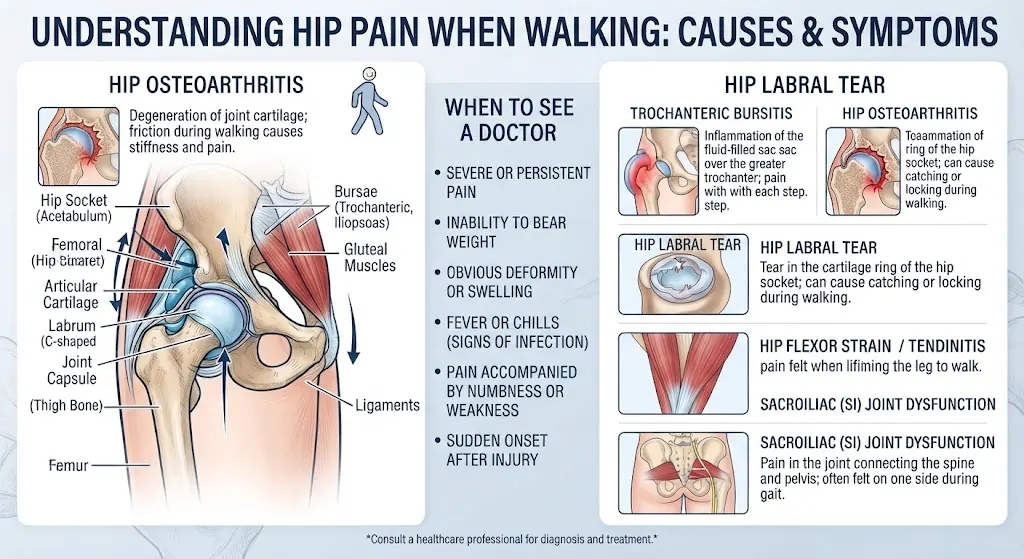
Hip pain when walking does not automatically mean you have arthritis or a serious injury. Muscle and tendon problems, joint irritation, bursitis-related conditions, and lower back problems can produce similar symptoms. However, sudden severe pain or difficulty putting weight on your leg should not be ignored.
Understanding where the pain occurs, when it starts, and what makes it worse can help you identify the next steps. This guide covers common causes of walking-related hip pain, practical ways to manage it, recovery considerations, and warning signs that require medical attention.
What Causes Hip Pain When Walking?
Hip pain during walking can originate in the hip joint, surrounding muscles and tendons, or nerves in the lower back. The location of the pain provides useful clues, but it cannot establish a diagnosis on its own.
| Pain location | Possible causes | Common clues |
|---|---|---|
| Front of the hip or groin | Hip osteoarthritis, hip labral tear, hip flexor strain | Deep pain with bending, longer walks, or getting into a car |
| Outside of the hip | Greater trochanteric pain syndrome, gluteal tendinopathy | Tenderness when lying on that side or walking uphill |
| Buttock or back of the hip | Referred spinal pain, muscle problems, nerve irritation | Pain that may extend down the leg |
| Deep hip pain after increased activity | Stress injury or joint-related conditions | Pain that persists or progressively worsens with weight-bearing |
For a broader overview, see these common causes of hip pain while walking.
1. Hip osteoarthritis
Hip osteoarthritis develops when the joint undergoes changes involving its cartilage and surrounding structures. It can cause groin pain, stiffness after sitting, and discomfort during walking, especially after prolonged activity.
People may notice difficulty putting on socks, getting out of a low chair, or rotating the hip. Symptoms often develop gradually, although their severity varies. Learn about hip replacement surgery and when it may be considered if persistent joint damage substantially affects daily life.
2. Tendon problems and outer hip pain
The gluteal tendons help stabilize the pelvis as you walk. Irritation or degeneration of these tendons can cause pain on the outside of the hip, sometimes grouped under greater trochanteric pain syndrome.
Discomfort may increase with longer walks, stair climbing, standing on one leg, or lying on the affected side. A sudden increase in walking distance or exercise intensity may contribute.
3. Hip labral tears
The labrum is a ring of cartilage that helps deepen and stabilize the hip socket. A tear may cause groin pain, clicking, catching, or discomfort during hip rotation and weight-bearing activities.
Symptoms overlap with other hip conditions, and some labral tears found on imaging do not cause symptoms. Read about hip labral tear symptoms, causes, and treatment to understand how these injuries are assessed.
4. Hip flexor strain
Hip flexor muscles lift the thigh and help move the leg forward. A strain may develop after sprinting, kicking, sudden acceleration, or another activity that places excessive demand on these muscles.
Pain is often felt at the front of the hip and may worsen when lifting the knee, taking a long stride, or climbing stairs. If the symptoms began after strenuous activity, review hip flexor strain symptoms and recovery.
5. Pain referred from the lower back
Not all pain felt around the hip begins in the hip joint. Spinal conditions or irritated nerves can produce pain in the buttock, outer hip, or leg, sometimes with tingling, numbness, or weakness.
Pain traveling below the knee or changing with spinal position may suggest a nerve-related component. Learn about sciatica symptoms and treatment options.
Why Does My Hip Hurt More the Longer I Walk?
Pain that gradually increases during a walk may indicate that the joint, tendons, or muscles are struggling with the activity’s demands. Pain that starts immediately with weight-bearing or worsens with each step deserves particular attention, because stress injuries and other significant conditions can also cause these symptoms.
Pay attention to whether your pain improves after stopping, returns after resting, or is accompanied by limping. If pain consistently limits your walking, arrange a medical assessment rather than repeatedly pushing through it.
For additional guidance, see hip pain after running and hip pain when climbing stairs.
How Can You Relieve Hip Pain When Walking?
For mild pain without warning signs, temporarily reducing aggravating activities may help. The goal is to maintain comfortable movement without placing excessive stress on the painful area.
-
Adjust your walking routine. Try shorter, slower walks on level ground instead of long walks, hills, or uneven surfaces.
-
Use cold or heat appropriately. A wrapped cold pack may help after activity, while gentle heat may ease stiffness. Protect your skin and stop if either worsens discomfort.
-
Wear supportive footwear. Comfortable shoes may improve walking comfort, although they will not correct every underlying cause.
-
Avoid painful movements. Temporarily reduce deep squats, long strides, and activities that noticeably increase symptoms.
-
Consider suitable pain relief. Ask a clinician or pharmacist whether an over-the-counter medicine is appropriate, particularly if you have kidney disease, ulcers, heart conditions, take blood thinners, or are pregnant.
Gentle, individualized movement may help preserve mobility. Explore low-impact exercises for people with joint pain and hip pain when standing up for related movement concerns.
Avoid vigorous stretching or strengthening until a serious injury has been excluded if your pain is severe, sudden, or associated with difficulty bearing weight.
When Should You See a Doctor for Hip Pain?
Seek emergency care if hip pain follows a major fall or accident, the hip appears deformed, or you cannot stand or bear weight after an injury. A hot, swollen hip with fever or feeling seriously unwell also requires urgent evaluation.
Arrange prompt medical care for worsening pain, persistent limping, unexplained night pain, or discomfort that repeatedly interrupts normal walking. Pain with weight-bearing that progresses over time may require evaluation for a stress fracture, even without a major injury.
For ongoing symptoms, a clinician may assess your gait, hip movement, strength, and tenderness. X-rays can help identify fractures and osteoarthritis, while MRI may be appropriate when a stress injury or soft-tissue problem is suspected despite normal X-ray findings.
If the pain is mainly in the groin, compare your symptoms with hip pain in the groin. If it is concentrated on the outer hip, review hip pain when sleeping on your side.
Frequently Asked Questions
1. Why does my hip hurt when I walk but not when I sit?
Walking places repeated loads on the hip joint and surrounding tissues. Arthritis, tendon problems, and stress injuries may cause pain during weight-bearing but little discomfort at rest.
2. Can walking make hip pain worse?
Yes. Longer walks, hills, and sudden increases in activity can aggravate some hip conditions. However, persistent or progressively worsening pain should be assessed rather than managed solely by reducing activity.
3. Should I keep walking if my hip hurts?
Reduce the distance and intensity if discomfort is mild and improves with rest. Stop if you develop sharp pain, a limp, or increasing symptoms, and seek medical advice if weight-bearing is difficult.
4. Can hip bursitis cause pain when walking?
Greater trochanteric pain syndrome, which can involve nearby bursae and gluteal tendons, commonly causes outer hip pain during walking. Pain when lying on the affected side may also occur.
5. Does hip pain when walking mean arthritis?
No. Arthritis is one possible cause, but tendon problems, muscle strains, labral injuries, and referred back pain can produce similar symptoms. An examination helps distinguish them.
6. Why does my hip hurt after walking a short distance?
Possible explanations include joint irritation, tendon problems, or a stress injury. New pain that repeatedly limits walking warrants medical evaluation, particularly if it is worsening.
7. Can a hip labral tear heal without surgery?
Treatment depends on the tear, symptoms, and underlying hip anatomy. Activity modification and physical therapy may improve symptoms, although they do not necessarily repair the torn tissue.
8. What exercises should I avoid with hip pain?
Avoid exercises that increase pain, including deep squats, forceful hip rotation, or high-impact activity when these aggravate symptoms. Seek guidance before exercising if you suspect a fracture or significant injury.
9. How long does hip pain from walking take to improve?
Mild muscle irritation may improve over days to a few weeks, while tendon disorders and arthritis can require longer-term management. Recovery depends on the cause and the amount of ongoing stress on the hip.
10. Can lower back problems cause hip pain when walking?
Yes. Spinal nerve irritation can cause pain in the buttock or hip region and sometimes extend down the leg. Numbness, tingling, or weakness makes medical assessment especially important.
Conclusion
Hip pain when walking can arise from arthritis, tendon irritation, muscle strains, labral injuries, or problems originating in the lower back. Adjust activity to your symptoms, avoid pushing through worsening pain, and seek medical evaluation when discomfort persists or limits walking. Sudden severe pain, inability to bear weight, or signs of infection require urgent care.
Disclaimer: This article is provided for educational and informational purposes only. It is not a substitute for professional medical advice, diagnosis, or treatment.
This article is for education purpose only and is not a diagnosis or a substitute for medical advice.