
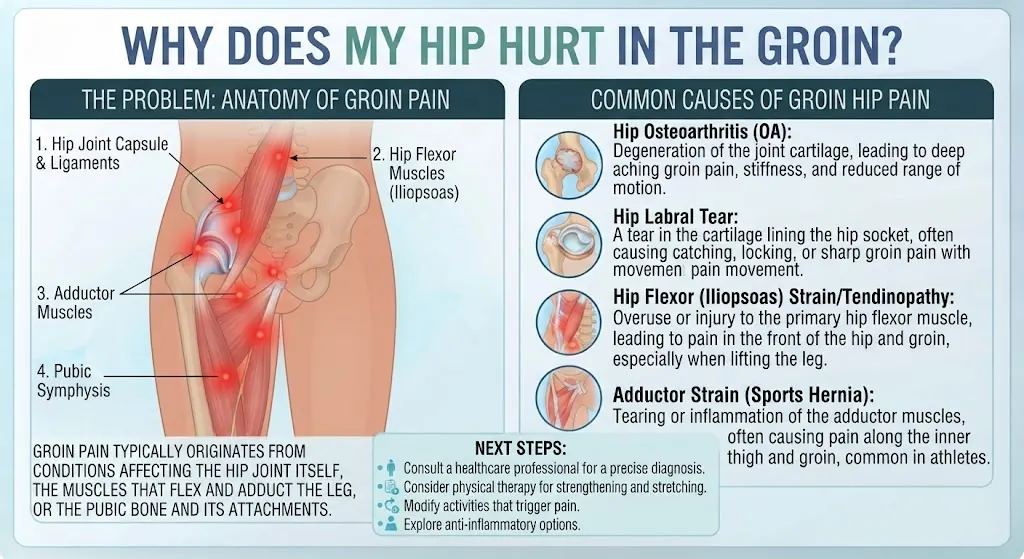
Hip and groin pain can have several causes, so the location of the pain alone cannot tell you exactly what is wrong. Although muscle strain and joint irritation are common possibilities, sudden severe pain, difficulty bearing weight, fever, or pain after a significant injury should not be ignored.
Understanding why your hip hurts in the groin can help you recognize common patterns, choose reasonable self-care measures, and decide when to seek medical attention. The right next step depends on how the pain began, what makes it worse, and whether other symptoms are present.
What Causes Hip Pain in the Groin?
The hip joint sits deep in the groin area, which is why problems inside the joint can cause pain at the front of the hip. Muscles, tendons, bones, and nearby nerves can also produce discomfort in this region.
| Possible cause | What the pain may feel like | Common clues |
|---|---|---|
| Hip osteoarthritis | Deep ache, stiffness, or pain with movement | Stiffness after rest; difficulty with stairs |
| Hip flexor strain | Pain at the front of the hip or groin | Symptoms after exercise, lifting, or sudden movement |
| Hip labral tear | Deep groin pain, sometimes with clicking or catching | Pain with pivoting, squatting, or deep hip bending |
| Adductor muscle strain | Tenderness along the inner thigh or groin | Pain when squeezing the legs together |
| Referred pain from the back | Hip or groin discomfort that may spread | Back pain, tingling, numbness, or radiating symptoms |
These patterns can overlap, and more than one issue may contribute to pain.
Hip joint problems
Osteoarthritis can gradually damage the cartilage that helps the hip joint move smoothly. Symptoms may include stiffness after sitting, reduced range of motion, and discomfort during weight-bearing activities. For a closer look at hip pain when standing up, consider whether the pain is strongest during the first few steps.
A hip labral tear involves damage to the ring of cartilage around the hip socket. It may cause deep groin pain, clicking, or catching, although these symptoms are not specific to a tear. Read about hip labral tear symptoms and treatment options to understand how clinicians evaluate this possibility.
Muscle and tendon injuries
Hip flexor strains can develop after sprinting, kicking, lifting the knee repeatedly, or making a sudden movement. Adductor strains affect muscles along the inner thigh and may hurt during side-to-side movements or when squeezing the legs together. Symptoms that begin after exercise may also warrant reviewing hip pain after running or hip pain during squats.
Other possible causes
Pain that extends into the groin can sometimes be referred from the lower back. A hernia or a urinary, reproductive, or other abdominal or pelvic condition may also cause groin discomfort. A painful bulge, abdominal symptoms, urinary changes, or testicular pain needs assessment rather than assuming the hip joint is responsible.
Why Does Groin Pain Get Worse With Certain Movements?
The movements that trigger pain can offer useful clues, but they cannot confirm a diagnosis.
-
Bending or squatting: Deep hip flexion may aggravate joint irritation or some labral problems.
-
Walking or climbing stairs: Weight-bearing can increase discomfort from arthritis, muscle injuries, or other hip conditions. See common causes of hip pain while walking.
-
Turning or pivoting: Rotational movements can aggravate some joint and muscle injuries.
-
Lying on one side: Pain on the outside of the hip may be more typical of lateral hip tendon problems than pain centered deep in the groin. Learn about hip pain when sleeping on your side.
If pain is accompanied by stiffness after prolonged sitting, hip pain when sitting may help you compare that symptom pattern.
How Can You Relieve Hip and Groin Pain at Home?
For mild pain that follows activity and has no warning signs, temporary activity changes may help.
-
Reduce aggravating movements. Pause running, deep squats, heavy lifting, or forceful stretching if these activities worsen symptoms.
-
Keep moving gently. Short walks and comfortable, pain-free movements may help prevent stiffness. Avoid pushing through sharp or increasing pain.
-
Try a cold pack. Apply a wrapped cold pack for 15–20 minutes at a time, particularly after a recent strain. Do not place ice directly on the skin.
-
Adjust your sitting position. Change positions regularly and avoid staying in a position that consistently triggers pain.
-
Use medication cautiously. Some people can use over-the-counter pain relievers, but suitability depends on medical conditions, pregnancy, other medicines, and kidney, liver, or stomach risks. Ask a pharmacist or clinician if you are unsure.
Once symptoms settle, low-impact exercises for joint pain may offer gentle activity options. Stop any movement that causes sharp pain or worsening symptoms.
When Should You Seek Medical Care?
| Symptom pattern | Recommended response |
|---|---|
| Mild discomfort after activity that is improving | Monitor symptoms and modify aggravating activities |
| Persistent, recurring, or worsening pain; stiffness limiting daily tasks | Arrange a medical evaluation |
| Sudden severe pain, inability to bear weight, or significant pain after an injury | Seek urgent medical care |
| Hip or groin pain with fever, a hot or swollen joint, or feeling seriously unwell | Seek urgent assessment |
| Groin pain with severe testicular pain, fainting, or severe abdominal pain | Seek emergency care |
A clinician may ask when the pain began, examine hip movement and strength, and assess the back or groin when appropriate. X-rays can help identify certain bone and joint changes; MRI or other tests may be considered when the examination suggests a problem that X-rays cannot adequately show.
A normal X-ray does not exclude every cause of pain. See why hip pain can persist despite a normal X-ray for more context.
Frequently Asked Questions
1. Can hip arthritis cause groin pain?
Yes. Hip osteoarthritis commonly causes deep groin discomfort, stiffness, and pain during walking or other weight-bearing activities. A clinical assessment is needed to distinguish it from other causes.
2. Can a pulled muscle cause pain deep in the groin?
Yes. Hip flexor and adductor injuries can cause groin pain, especially after exercise or sudden movement. Pain severity and location alone cannot reliably distinguish a strain from a joint problem.
3. Why does my groin hurt when I lift my knee?
Lifting the knee activates the hip flexor muscles and moves the hip joint. Pain may reflect muscle irritation or a joint-related problem, particularly if the movement is repeated or performed against resistance.
4. Does a hip labral tear always cause clicking?
No. Some people experience clicking, catching, or restricted movement, while others mainly notice deep groin pain. Clicking alone does not establish that a tear is present.
5. Can sitting too long cause groin pain?
Prolonged sitting may aggravate existing hip stiffness or discomfort, especially when the hip remains deeply bent. Repositioning regularly may help, but recurring pain deserves evaluation.
6. Should I stretch when my hip hurts in the groin?
Gentle movement may help some causes, but aggressive stretching can aggravate an acute muscle injury or irritated hip joint. Stop if stretching causes sharp pain, catching, or worsening symptoms.
7. How long does hip and groin pain take to improve?
Mild muscle strains may improve over days to several weeks, while arthritis and some joint conditions can cause recurring symptoms. Recovery depends on the underlying cause, severity, and activity demands.
8. Can back problems cause groin pain?
Some lower-back and nerve conditions can refer pain toward the hip or groin, although the pattern varies. Back pain, tingling, numbness, or symptoms extending down the leg may help guide an evaluation.
9. Can I keep exercising with groin pain?
Avoid activities that increase pain, particularly sprinting, pivoting, and deep squats. Choose gentle, comfortable movement if tolerated, and seek advice if symptoms persist or interfere with normal activity.
10. When is groin pain an emergency?
Seek emergency care for severe sudden pain with inability to bear weight, major injury, fainting, severe abdominal pain, or sudden severe testicular pain. Fever with severe hip pain or a hot, swollen joint also requires urgent assessment.
Conclusion
Hip pain in the groin can come from the joint, muscles, tendons, back, or nearby structures. Modify painful activities, keep movement gentle, and seek medical evaluation if symptoms persist, worsen, or limit daily life. Sudden severe pain or other warning signs require prompt care.
Disclaimer: This article is provided for educational and informational purposes only.
This article is for education purpose only and is not a diagnosis or a substitute for medical advice.