
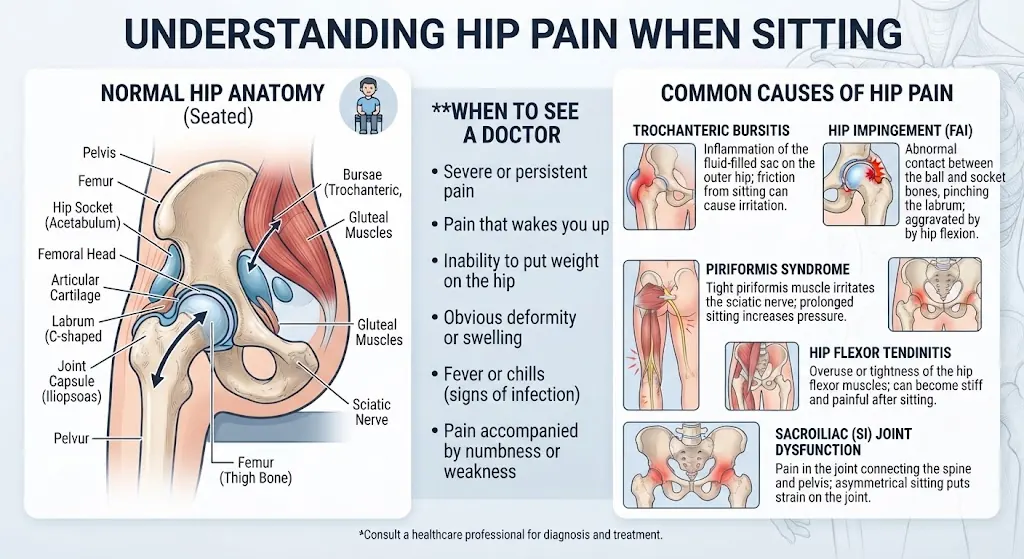
Pain that develops while sitting does not automatically mean you have damaged your hip joint. Muscle tightness, tendon irritation, arthritis, and problems involving the lower back can cause similar symptoms. However, persistent pain, worsening discomfort, or difficulty bearing weight deserves medical attention.
Understanding why your hip hurts when you sit starts with identifying where the pain occurs, how long you have been sitting, and whether movement makes it better or worse. This guide explains common causes, practical ways to reduce discomfort, expected recovery, and warning signs that should not be ignored.
Why Does My Hip Hurt When I Sit?
Hip pain during sitting often occurs because prolonged hip flexion—the position in which your thigh moves toward your torso—places pressure on certain tissues or aggravates an existing condition. The cause depends partly on where you feel the pain and whether it spreads into your back or leg.
Common possibilities include:
-
Hip flexor irritation: Tight or strained muscles at the front of the hip may become uncomfortable when the hip stays bent.
-
Hip arthritis: Cartilage changes can cause deep groin pain, stiffness, and difficulty standing after sitting.
-
Hip labral tear: Damage to the cartilage rim around the hip socket may cause groin pain, clicking, catching, or discomfort with deep bending.
-
Outer hip tendon irritation: Pain on the side of the hip may worsen when sitting with pressure on that area or lying on the affected side.
-
Referred pain from the back: Nerve irritation or spinal conditions can cause pain around the hip, buttock, or leg without the hip joint itself being the source.
For more detail about common causes of hip pain and their symptoms, consider how the discomfort changes with movement and daily activities.
What Does the Location of Hip Pain Mean?
Pain location can help guide an evaluation, but it cannot confirm a diagnosis by itself.
| Where you feel pain | Possible explanations | Clues to notice |
|---|---|---|
| Front of the hip or groin | Hip arthritis, hip flexor irritation, labral injury | Pain with bending, putting on shoes, or getting out of a chair |
| Outside of the hip | Tendon irritation around the hip, greater trochanteric pain syndrome | Tenderness when pressing the area or lying on that side |
| Buttock or back of the hip | Lower-back problems, muscle irritation, referred nerve pain | Pain that travels down the leg, tingling, or back stiffness |
| Deep hip pain with stiffness | Arthritis or another joint-related problem | Reduced movement or difficulty standing after sitting |
If you experience groin discomfort, review the signs of a hip labral tear and its possible causes. If pain is mainly on the outside, hip pain when sleeping on your side may offer additional context about pressure-related symptoms.
Why Is Hip Pain Worse After Sitting for a Long Time?
Prolonged sitting keeps the hips bent and reduces movement. Muscles may feel stiff when you stand, while an irritated tendon or arthritic joint may become more uncomfortable after remaining in one position.
A low chair, deep sofa, or seat that forces your knees above your hips can increase hip flexion. Slouching may also change pelvic and lower-back positioning, potentially aggravating symptoms in some people.
What can help while sitting?
-
Stand up and move gently every 30–60 minutes, adjusting the interval to your comfort.
-
Choose a firm, supportive chair that allows your feet to rest flat on the floor.
-
Keep your hips level with or slightly higher than your knees if that position feels more comfortable.
-
Avoid forcing a deep hip stretch or repeatedly testing movements that trigger sharp pain.
-
During long drives, take safe breaks to stand and walk when possible.
If stiffness is particularly noticeable after getting up, read about why hip pain occurs after sitting for a long time and why hip pain develops when standing up.
How Can You Relieve Hip Pain When Sitting?
Treatment depends on the underlying cause, but changing positions and reducing aggravating activities are reasonable first steps for mild discomfort without warning signs.
| Approach | How it may help | Important limitation |
|---|---|---|
| Frequent movement breaks | Reduces time spent in one position and may ease stiffness | Do not push through sharp or worsening pain |
| Adjusting chair height | May reduce excessive hip bending | The ideal position varies by person |
| Gentle walking | Maintains comfortable movement and general mobility | Reduce activity if pain increases or you limp |
| Heat or cold packs | May temporarily ease stiffness or soreness | Wrap packs in a towel; avoid direct skin contact |
| Physical therapy | Can improve strength, mobility, and movement control | Exercises should match the cause of the pain |
Gentle, regular activity can be helpful when tolerated. These low-impact exercises for people with joint pain may offer ideas, but stop any movement that produces sharp pain, catching, or increasing symptoms. For broader daily habits, see how everyday choices influence joint health.
Avoid starting aggressive stretches or strengthening exercises before you understand persistent or significant hip pain. If an injury triggered the symptoms, or you have difficulty walking, get assessed before exercising.
How Long Does Hip Pain From Sitting Last?
Recovery time depends on the cause, severity, and whether the aggravating activity continues. Mild muscular irritation may improve over several days, while tendon problems can take weeks or longer. Arthritis and some structural conditions may require ongoing management rather than a short recovery period.
Arrange a medical evaluation if pain persists for more than a few days without improvement, repeatedly returns, disrupts sleep, or interferes with walking and everyday tasks. Seek assessment sooner if symptoms are worsening or began after a significant injury.
When Should You Worry About Hip Pain?
Not every episode of hip discomfort is urgent, but certain symptoms need prompt attention.
| Level of concern | Signs | What to do |
|---|---|---|
| Usually reasonable to monitor briefly | Mild stiffness that improves with movement and has no injury or other warning signs | Adjust sitting habits and monitor for improvement |
| Arrange medical evaluation | Persistent pain, recurring groin pain, reduced hip movement, limping, or pain that disrupts sleep | Contact a healthcare professional |
| Seek urgent or emergency care | Severe pain after a fall, inability to bear weight, a hot or swollen hip with fever, or sudden severe pain | Seek urgent medical care; use emergency services for severe symptoms or signs of serious illness |
Pain accompanied by new leg weakness, numbness around the groin or saddle area, or loss of bladder or bowel control can indicate a serious spinal nerve problem and requires emergency evaluation.
A clinician may examine your hip and back, assess your walking and range of motion, and recommend imaging when appropriate. An X-ray may help evaluate arthritis or bone injury; MRI may be considered when symptoms suggest certain soft-tissue injuries or when the diagnosis remains unclear.
Frequently Asked Questions
1. Why does my hip hurt only when I sit?
Sitting bends the hip and maintains pressure on surrounding muscles, tendons, and joint structures. The cause may be muscular, joint-related, or referred from the lower back.
2. Why does my hip hurt when I sit but feel better when I walk?
Movement may ease stiffness caused by staying in one position. However, improvement with walking does not identify the cause, particularly if the pain keeps returning.
3. Can sitting too much cause hip pain?
Prolonged sitting can contribute to stiffness and aggravate existing hip or back problems. It may not be the sole cause, so persistent pain should not automatically be blamed on posture.
4. Can hip arthritis cause pain while sitting?
Yes. Hip arthritis can cause groin discomfort, stiffness after rest, and pain when bending or standing. A clinical assessment is needed to determine whether arthritis is responsible.
5. Why does my hip hurt when I stand up after sitting?
The hip may feel stiff after remaining bent for a long time, particularly with arthritis or muscle and tendon irritation. Severe pain, repeated limping, or worsening symptoms warrants evaluation.
6. Can a hip labral tear cause pain when sitting?
It can. A labral tear may cause deep groin pain, clicking, or catching during hip movement, but these symptoms also occur with other conditions.
7. Should I stretch a painful hip while sitting?
Only use gentle movements that do not increase symptoms. Avoid forceful stretching or deep hip flexion until the cause is clearer, especially if pain is sharp or follows an injury.
8. Is hip pain when sitting a sign of a back problem?
Sometimes. Lower-back conditions can refer pain into the buttock or hip and may also cause tingling, numbness, or pain traveling down the leg.
9. When should I see a doctor for hip pain?
Seek an appointment if pain persists, recurs, worsens, limits movement, or affects sleep. Severe pain after an injury, inability to bear weight, or fever with a hot or swollen joint requires urgent care.
10. What is the best sitting position for hip pain?
Try a supportive chair, feet flat on the floor, and hips level with or slightly higher than the knees. Change positions regularly because no single posture is ideal for everyone.
Conclusion
Hip pain when sitting can result from prolonged hip bending, muscle or tendon irritation, arthritis, a labral problem, or pain referred from the lower back. Adjust your sitting position, take regular movement breaks, and avoid activities that worsen symptoms. If pain persists, limits walking, or comes with warning signs, seek medical evaluation rather than assuming it is caused by sitting alone.
Disclaimer: This article is provided for educational and informational purposes only.
This article is for education purpose only and is not a diagnosis or a substitute for medical advice.