
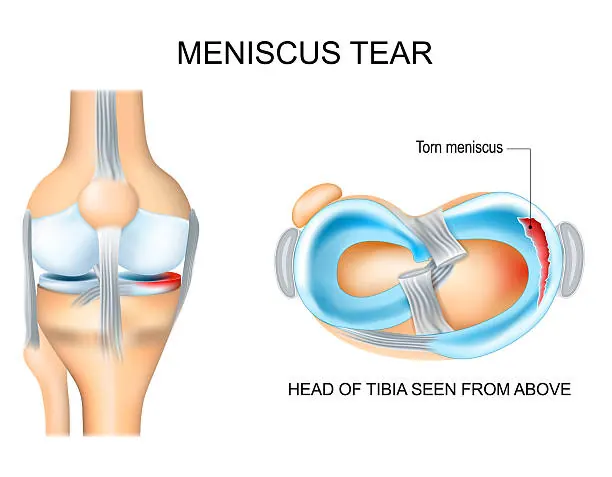
A lateral meniscus tear affects the crescent-shaped piece of cartilage on the outer side of your knee. You may notice pain along the outside joint line, swelling, stiffness, or discomfort when you twist, squat, kneel, or change direction. Some people feel a click or catch inside the joint, while others mainly experience an ache that becomes more noticeable after walking or physical activity.
These symptoms can interfere with ordinary routines. Getting out of a car, climbing stairs, standing up from a low chair, or turning quickly may suddenly feel uncomfortable. It is understandable to wonder whether the pain means you have torn cartilage, strained a ligament, or developed another cause of outer-knee pain.
A lateral meniscus tear is not diagnosed from symptoms alone. The pattern of pain, how the injury happened, the physical examination, and sometimes imaging all help a clinician determine what is going on. This guide explains the symptoms that may occur, how they can differ from other knee problems, and when to seek medical care.
What Are the Most Common Symptoms of a Lateral Meniscus Tear?
The lateral meniscus sits between the thighbone and shinbone on the outer side of the knee. When it is damaged, symptoms may be felt near the outer knee joint line rather than directly over the kneecap. The exact experience depends on the tear’s size, pattern, location, and whether other structures are injured.
- Pain on the outer side of the knee: Discomfort may be sharp during twisting or deep bending, or it may feel like a persistent ache after activity.
- Swelling: The knee may become puffy or feel full, sometimes developing several hours after the injury rather than immediately.
- Stiffness: Bending or straightening the knee may feel restricted, especially when swelling is present.
- Clicking or catching: You may notice a click, catch, or brief interruption as the knee moves.
- Pain with twisting or pivoting: Turning on a planted foot, changing direction, or rotating the knee under load may reproduce symptoms.
- Discomfort with squatting or kneeling: Deep knee flexion can compress the meniscus and aggravate pain.
- Difficulty fully straightening the knee: Swelling or a displaced fragment may limit extension.
- A feeling that the knee may give way: Pain can temporarily affect muscle control, although repeated instability can also suggest an associated ligament injury.
Not everyone experiences all these symptoms. A small or stable tear may cause mild or intermittent discomfort, while a larger or displaced tear can produce more noticeable mechanical symptoms. For a broader overview of meniscus tear symptoms, treatment, and recovery, see our complete guide.
Where Does a Lateral Meniscus Tear Hurt?
The most characteristic location is the outer joint line: the narrow space between the thighbone and shinbone on the outside of the knee. A person may be able to point to a tender area along this line. Pain can become more noticeable when the knee is bent and rotated, during a squat, or when getting up from a low seat.
However, outer-knee pain does not automatically mean the lateral meniscus is torn. The iliotibial band, lateral collateral ligament, nearby tendons, cartilage, and other structures can also cause pain in this region. Read more about why the outside of your knee may hurt if the source is not clear.
The location and quality of pain are useful clues, not a self-diagnosis. Pain from a meniscus injury may also spread around the joint, and symptoms can overlap with other conditions.
What Does the Pain Feel Like During Everyday Activities?
When walking
Some people can walk with a lateral meniscus tear, particularly if the injury is small or symptoms are mild. Pain may increase after longer walks, on uneven ground, or when turning. A limp can develop if putting weight through the affected leg is uncomfortable. If you are unsure whether continuing to walk is appropriate, read whether walking on a torn meniscus can make it worse.
When twisting or changing direction
Rotating the body while the foot remains planted can place stress on the meniscus. A sudden turn, pivot, or change of direction may trigger sharp pain along the outer joint line. This pattern is especially relevant when symptoms began during sports or another activity involving quick movements. Our article about knee pain when twisting discusses other possible explanations as well.
When squatting, kneeling, or using stairs
Deep bending can increase pressure across the meniscus. You may feel pain when squatting to pick something up, kneeling, rising from the floor, or climbing stairs. Symptoms may be worse when the knee is deeply bent under body weight. If squatting is a trigger, see our guide to knee pain during squats.
When bending or straightening the knee
A tear may cause discomfort through part of the knee’s movement range. Swelling can make the joint feel tight, while an unstable piece of torn tissue may occasionally catch during movement. Persistent inability to straighten the knee is more concerning than a mild click and should be assessed promptly. Learn about other reasons for knee pain when bending or pain when straightening the knee.
Can a Lateral Meniscus Tear Cause Swelling?
Yes. Swelling can develop when the knee reacts to an injury by producing extra joint fluid. It may appear gradually over several hours or become more noticeable later that day. The knee can feel full, tight, or harder to bend. The amount of swelling varies, and some people with a meniscus tear have little visible swelling.
Swelling is not specific to a meniscus injury. Ligament injuries, cartilage damage, inflammation, and other joint problems can also cause it. If the knee becomes markedly swollen, hot, red, or increasingly painful, arrange medical assessment. You can also read about when a swollen knee may be dangerous.
Does a Lateral Meniscus Tear Cause Clicking, Catching, or Locking?
It can. Clicking is a sound or sensation that may occur as the knee moves; it can also happen in healthy knees and does not prove that a tear is present. Catching describes a brief feeling that movement is interrupted or something shifts inside the joint. These symptoms become more relevant when they occur with joint-line pain and swelling after a twisting injury.
True locking is different. A knee that becomes physically stuck and cannot fully straighten may have a displaced piece of meniscus or another problem inside the joint. Do not force the knee straight or repeatedly test it. Seek prompt medical assessment. For more detail, see why a meniscus tear can cause knee locking.
How Is a Lateral Meniscus Tear Different From Other Knee Injuries?
Several conditions can cause pain around the outer knee. The pattern may help a clinician decide which structures need to be examined, but symptoms alone cannot reliably separate them.
- Lateral collateral ligament (LCL) injury: Pain may be felt along the outer ligament, particularly after a force pushes the knee inward or a direct impact affects the outer knee. The clinician checks for ligament tenderness and side-to-side stability.
- Iliotibial band-related pain: Pain is often felt on the outer side of the knee during repetitive activities such as running or cycling. It may build with activity rather than follow a single twisting event.
- Patellofemoral pain: Discomfort is usually around or behind the kneecap and may worsen with stairs, squats, or prolonged sitting.
- Osteoarthritis: Stiffness and activity-related pain may develop gradually. Some people also have swelling or reduced movement.
- Combined ACL and meniscus injury: A twisting sports injury can damage more than one structure. Giving-way episodes or rapid swelling may raise concern for an associated ligament injury.
Because these injuries can overlap, a clinician may consider both meniscal and ligament problems. Our comparison of ACL injury versus meniscus tear symptoms explains some of the differences.
What Causes a Lateral Meniscus Tear?
A lateral meniscus tear may happen during a sudden movement or develop gradually as the tissue changes with age. In a traumatic injury, the knee is often bent and loaded while the body rotates over a planted foot. This can occur during basketball, soccer, football, skiing, or other activities involving pivoting and quick direction changes. A fall, awkward landing, or deep squat under load may also contribute.
Degenerative tears can occur when meniscal tissue becomes less resilient over time. A relatively ordinary movement may then trigger symptoms, even without a major accident. Previous knee injuries and coexisting cartilage or ligament problems can also influence the overall condition of the joint.
How Do Doctors Diagnose a Lateral Meniscus Tear?
Diagnosis usually starts with questions about when symptoms began, what movement triggered them, where the pain is located, and whether swelling, catching, or locking has occurred. The clinician may examine the knee for joint-line tenderness, swelling, range of motion, and ligament stability.
Specific examination maneuvers may place the knee in different positions and gently rotate or load it to see whether symptoms are reproduced. No single test is perfectly reliable, so findings are interpreted together with the history and the rest of the examination.
X-rays do not show the meniscus itself, but they may help identify bone injury or signs of arthritis. MRI can provide detailed images of the meniscus and other soft tissues when imaging is needed to clarify the diagnosis or guide treatment. An MRI finding should be interpreted in context because a tear seen on a scan is not always the cause of a person’s symptoms.
What Should You Do If You Suspect a Lateral Meniscus Tear?
Until the knee has been assessed, reduce activities that reproduce pain. Avoid pivoting, running, jumping, deep squats, and heavy kneeling if they make symptoms worse. If swelling is present, resting from aggravating activity, elevating the leg, and applying a wrapped cold pack for short periods may help with comfort. Do not apply ice directly to the skin.
Use support or crutches if you cannot walk safely, and arrange an assessment if pain, swelling, or movement restriction persists. Do not attempt to force a locked knee through its range of motion. Treatment depends on the tear pattern, symptoms, age, activity needs, and whether other structures are injured. Some tears are managed with rehabilitation and activity modification; others may need specialist treatment. For more information, read how long a torn meniscus may take to heal.
When Should You Seek Medical Care?
Arrange a medical evaluation if outer-knee pain persists, swelling returns, walking remains difficult, or the knee repeatedly catches or gives way. Assessment is also sensible after a twisting injury that causes substantial pain or limits normal activity.
Seek urgent care if you cannot bear weight after a significant injury, the knee is visibly deformed, the foot becomes cold, pale, numb, or weak, or pain and swelling are severe or rapidly worsening. A hot, red knee with fever also needs urgent assessment because infection is one possible cause. A knee that is truly locked and cannot straighten should be assessed promptly.
Frequently Asked Questions
1. What is the first sign of a lateral meniscus tear?
One common early symptom is pain along the outer knee joint line, especially after twisting or pivoting. Swelling, stiffness, or catching may develop later, but symptoms vary between people.
2. Can you walk with a lateral meniscus tear?
Yes, some people can walk, particularly with a small or stable tear. Walking may still cause pain or a limp, and being able to walk does not rule out a significant injury.
3. Does a lateral meniscus tear always cause swelling?
No. Swelling is common but not universal. A small tear or a less reactive injury may cause pain with little visible swelling.
4. Does a lateral meniscus tear hurt on the outside of the knee?
Often, yes. Pain is commonly located along the outer joint line, although it may spread around the knee and can overlap with pain from ligaments, tendons, or other structures.
5. Can a lateral meniscus tear cause knee locking?
It can, particularly if a piece of torn tissue becomes displaced and blocks normal movement. A knee that cannot fully straighten should be assessed promptly rather than forced to move.
6. Is clicking always a sign of a meniscus tear?
No. Knees can click for several reasons, including normal joint movement. Clicking is more concerning when it occurs with pain, swelling, catching, or a recent twisting injury.
7. Can a lateral meniscus tear heal without surgery?
Some tears can be managed without surgery, depending on their location, pattern, stability, and symptoms. A clinician can help determine whether rehabilitation or another treatment approach is appropriate.
8. How is a lateral meniscus tear confirmed?
A clinician combines the injury history and physical examination. MRI may be used when the diagnosis remains uncertain or when detailed information is needed for treatment planning.
9. Can you have a lateral meniscus tear without pain?
Some meniscal tears seen on imaging cause few or no symptoms. A scan finding does not automatically mean the tear is responsible for knee discomfort.
10. When should I worry about outer-knee pain?
Seek assessment for persistent pain, recurrent swelling, catching, instability, or difficulty walking. Get urgent care for severe injury, inability to bear weight, deformity, a cold or numb foot, fever with a hot red knee, or a truly locked knee.
Conclusion
A lateral meniscus tear may cause pain along the outer knee joint line, swelling, stiffness, clicking, catching, or discomfort with twisting, squatting, and walking. Some people have only mild symptoms, while a displaced tear can restrict movement or cause true locking. These signs can suggest meniscal involvement, but they cannot confirm the diagnosis because several other knee conditions produce similar symptoms.
If symptoms persist, interfere with walking, or include catching, instability, or loss of motion, arrange a clinical assessment. Seek urgent care for severe symptoms or a knee that is physically locked. The right next step depends on the examination and, when appropriate, imaging.
Disclaimer: This article is intended for educational purposes only and should not be considered personalized medical advice.
This article is for education purpose only and is not a diagnosis or a substitute for medical advice.