
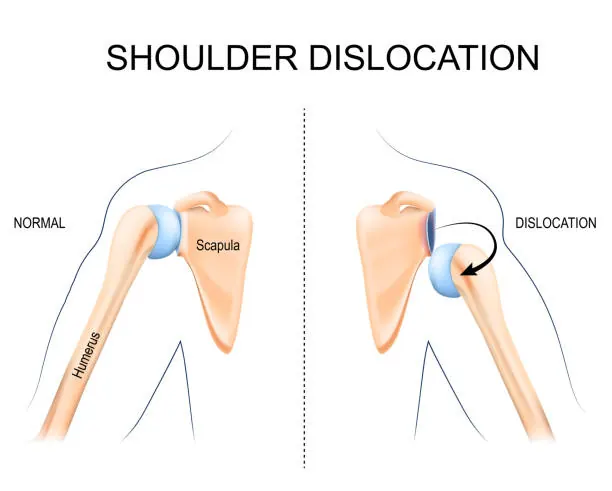
A shoulder dislocation can happen suddenly, often causing intense pain, swelling, and an immediate feeling that something is wrong with the joint. Simple movements such as lifting your arm, changing clothes, or reaching overhead can become extremely difficult. The shoulder may also look visibly different after the injury.
Many people worry about whether a dislocated shoulder will heal completely, whether surgery is necessary, and how long it will take to return to sports or everyday activities. The good news is that many shoulder dislocations can be successfully treated, especially when the injury is diagnosed and managed promptly.
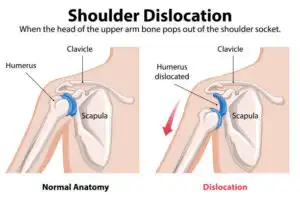
A shoulder dislocation occurs when the upper end of the arm bone, called the humeral head, moves completely out of the shoulder socket. Understanding the symptoms, causes, treatment options, recovery process, and prevention strategies can help you recognize the injury and make informed decisions about your care.
Disclaimer: This article is intended for educational purposes only and should not be considered personalized medical advice.
What Is a Shoulder Dislocation?
A shoulder dislocation occurs when the ball-shaped head of the humerus is forced out of its normal position in the shoulder socket, called the glenoid.
The shoulder is designed to provide a very large range of motion. This allows you to reach, lift, rotate, and move your arm in many directions. However, that mobility also makes the shoulder more vulnerable to instability and dislocation.
A complete displacement is called adislocation, while a partial displacement is known as asubluxation.
A shoulder dislocation may also damage surrounding structures, including ligaments, tendons, cartilage, and the labrum. For example, a traumatic dislocation can occur alongside a shoulder labral tear, which may contribute to ongoing instability.
What Causes a Shoulder Dislocation?
Most shoulder dislocations occur because a strong force pushes the arm beyond its normal position.
Common causes include:
- Falling onto an outstretched hand.
- Falling directly onto the shoulder.
- Contact sports and athletic collisions.
- Motor vehicle accidents.
- Sudden twisting or pulling of the arm.
- Previous shoulder dislocation.
- Shoulder instability or naturally loose ligaments.
The direction of the force can determine which part of the shoulder becomes displaced. An anterior dislocation, where the humeral head moves toward the front of the body, is the most common type.
Shoulder Dislocation Symptoms
Shoulder dislocation symptoms usually appear immediately after the injury.
The most common signs include:
- Sudden and severe shoulder pain.
- Inability or difficulty moving the arm.
- Visible change in shoulder shape.
- Swelling around the joint.
- Bruising or tenderness.
- Muscle spasms.
- A feeling that the shoulder has slipped out of place.
- Numbness or tingling in the arm or hand.
Some people describe the shoulder as feeling unstable or as though it may come out of place again.
Numbness or weakness can be particularly important because nerves around the shoulder may sometimes be affected during a dislocation.
What Does a Dislocated Shoulder Look Like?
A dislocated shoulder can have a noticeably different appearance compared with the unaffected side.
The normal rounded contour of the shoulder may appear flattened or deformed. The arm may also be held in an unusual position because of severe pain.
However, you should not attempt to diagnose or treat the injury based only on its appearance.
If you believe your shoulder is dislocated, avoid repeatedly moving it or trying to force the joint back into place.
What Should You Do Immediately After a Shoulder Dislocation?
A suspected shoulder dislocation requires prompt medical assessment.
Until you receive professional care:
- Keep the injured arm as still as possible.
- Support the arm in a comfortable position.
- Avoid trying to relocate the shoulder yourself.
- Use a wrapped cold pack to help reduce swelling.
- Seek urgent medical attention.
Trying to put a dislocated shoulder back into place without proper training can potentially damage nerves, blood vessels, bones, or surrounding tissues.
If the injury occurred after a serious fall, collision, or accident, additional fractures or soft-tissue injuries may also be present.
How Is a Shoulder Dislocation Diagnosed?
Diagnosis generally begins with a physical examination and discussion of how the injury occurred.
A healthcare professional may examine the shoulder’s appearance, movement, sensation, circulation, and nerve function.
Imaging is often used to confirm the position of the joint and check for associated fractures.
An X-ray may be taken before and after the shoulder is reduced. Additional imaging may sometimes be needed if there is concern about damage to the labrum, rotator cuff, cartilage, or bones.
A complete evaluation is important because treating the dislocation alone may not address additional injuries.
How Is a Dislocated Shoulder Treated?
The initial treatment is usually a procedure calledreduction. This means carefully moving the humeral head back into its normal position in the shoulder socket.
Reduction should be performed by a trained medical professional. Pain medication or other forms of pain control may be used when appropriate.
After the shoulder has been repositioned, treatment may involve temporary immobilization followed by rehabilitation.
Common treatment components include:
- Shoulder reduction.
- Pain and swelling management.
- Temporary use of a sling.
- Gentle range-of-motion exercises.
- Physical therapy.
- Progressive strengthening.
- Gradual return to normal activities.
For a broader overview of conservative and surgical approaches, see our guide to shoulder pain treatment options.
Does a Shoulder Dislocation Need Surgery?
Not every shoulder dislocation requires surgery.
Many first-time dislocations can be treated with reduction, temporary protection, and rehabilitation. However, surgery may become an option when there is significant structural damage or repeated instability.
Surgery may be considered when:
- The shoulder repeatedly dislocates.
- Significant labral or ligament damage is present.
- A fracture occurs with the dislocation.
- The shoulder remains unstable after rehabilitation.
- The person participates in activities with a high risk of recurrence.
If surgery is required because of associated labral damage, understanding shoulder labral tear surgery recovery can help explain why rehabilitation is usually gradual.
The decision about surgery depends on factors such as the person’s age, activity level, injury severity, recurrence risk, and structural damage.
Shoulder Dislocation Recovery Time
Shoulder dislocation recovery time varies from person to person.
Pain often begins improving after the joint has been successfully reduced, but the shoulder may remain weak, stiff, or unstable during the early stages of recovery.
Rehabilitation is important because simply getting the joint back into position does not automatically restore strength and stability.
Recovery commonly progresses through stages:
- Protection: The shoulder is protected while acute pain and swelling settle.
- Mobility: Gentle movement is gradually restored.
- Strengthening: The muscles supporting the shoulder become stronger.
- Functional recovery: More demanding movements are gradually introduced.
- Return to activity: Sports and heavy activities resume when appropriate.
People recovering from additional injuries may require a longer rehabilitation period.
Exercises After a Shoulder Dislocation
Exercise is an important part of recovery, but exercises should be introduced gradually.
Early rehabilitation may focus on gentle movement and restoring safe range of motion. Later, strengthening exercises can target the rotator cuff and shoulder blade muscles that help stabilize the joint.
Exercises may eventually include:
- Gentle range-of-motion exercises.
- Shoulder blade control exercises.
- Rotator cuff strengthening.
- Resistance-band exercises.
- Progressive weight training.
- Sport-specific exercises.
Our guide to shoulder strengthening exercises for athletes provides additional information about building shoulder strength and control.
Exercises should not be progressed simply because the pain has improved. The shoulder also needs adequate stability and strength before returning to demanding activities.
What Exercises Should You Avoid After a Shoulder Dislocation?
Certain positions can place significant stress on a recovering shoulder, particularly during the early stages.
Depending on your injury and rehabilitation plan, you may need to temporarily avoid:
- Heavy overhead pressing.
- Deep pressing exercises.
- Sudden throwing movements.
- Contact sports.
- Aggressive stretching.
- Positions that force the arm far backward.
- Movements that cause instability or sharp pain.
People with an associated labral injury may have additional restrictions. Our guide to exercises to avoid with a shoulder labral tear explains why certain movements may need to be modified.
It is also important to avoid common rehabilitation mistakes. Learn more about mistakes that can make a labral tear worse when recovering from an associated shoulder injury.
Can a Dislocated Shoulder Happen Again?
Yes. A previous shoulder dislocation can increase the risk of another dislocation.
Repeated episodes are often described asrecurrent shoulder instability.
The risk can depend on:
- Age at the time of the first dislocation.
- Severity of the original injury.
- Damage to the labrum or ligaments.
- Bone damage.
- Type of physical activity.
- Shoulder strength and stability.
- Previous dislocations.
A rehabilitation program designed to improve strength, movement control, and shoulder stability may help reduce future problems.
How Can You Prevent Another Shoulder Dislocation?
You cannot always completely prevent another dislocation, but several strategies may reduce the risk.
Important measures include:
- Complete your prescribed rehabilitation program.
- Strengthen the rotator cuff and shoulder stabilizers.
- Improve shoulder movement and control.
- Use proper technique during exercise.
- Increase training intensity gradually.
- Avoid returning to contact sports too early.
- Follow medical recommendations after surgery or significant injury.
If you experience ongoing instability, your healthcare professional may recommend further evaluation rather than simply continuing exercises.
For people with persistent shoulder problems, understanding best exercises for labral tear recovery may also be useful when a labral injury is involved.
Shoulder Dislocation vs. Shoulder Impingement
Shoulder dislocation and shoulder impingement are different problems.
A dislocation involves the joint coming out of its normal alignment, usually after significant trauma. Impingement-related pain generally occurs during certain shoulder movements and does not mean the joint has completely dislocated.
You can learn more about shoulder impingement syndrome and how its symptoms differ from other causes of shoulder pain.
Understanding the difference matters because treatment and activity restrictions can be very different.
Can You Treat Shoulder Pain at Home After a Dislocation?
Home care can sometimes support recovery after the shoulder has been professionally evaluated and treated.
Following medical instructions, protecting the shoulder, using appropriate cold therapy, and completing prescribed exercises may help during recovery.
However, a suspected dislocation should not be managed by trying to relocate the joint at home.
For general information about safe approaches to managing shoulder discomfort, see our guide to shoulder pain relief and home remedies.
Home remedies should complement—not replace—appropriate evaluation and rehabilitation after a significant shoulder injury.
When Should You See a Doctor?
A suspected shoulder dislocation should be assessed promptly.
Seek urgent medical attention if:
- The shoulder looks deformed.
- You cannot move the arm normally.
- Severe pain follows an accident or fall.
- The arm or hand becomes numb.
- The arm becomes unusually weak.
- The hand becomes pale, blue, or cold.
- You experience repeated shoulder instability.
- Severe pain or swelling continues.
Immediate assessment is particularly important after a high-impact injury because fractures, nerve injuries, and blood-vessel problems can occur along with a shoulder dislocation.
Frequently Asked Questions
1. What does a shoulder dislocation feel like?
A dislocated shoulder usually causes sudden, severe pain and significant difficulty moving the arm. The joint may also feel unstable or visibly out of position.
2. Can you pop a dislocated shoulder back in yourself?
No. Attempting to relocate the shoulder yourself can cause additional damage to bones, nerves, blood vessels, or surrounding tissues. Reduction should be performed by a trained professional.
3. How long does a dislocated shoulder take to heal?
Recovery varies depending on the injury and whether surgery is needed. Basic pain and movement may improve relatively quickly, but strength and stability can take considerably longer to restore.
4. Does every shoulder dislocation require surgery?
No. Many first-time dislocations are treated without surgery. Surgery may be considered when there is significant structural damage or repeated instability.
5. Can you exercise after a shoulder dislocation?
Yes, exercise is generally an important part of rehabilitation, but it should be introduced gradually. The type and timing of exercises depend on the injury and recovery stage.
6. Can a shoulder dislocation cause a labral tear?
Yes. A traumatic dislocation can damage the labrum and other stabilizing structures around the shoulder.
7. Can a dislocated shoulder happen again?
Yes. Previous dislocation can increase the risk of recurrent instability, particularly when significant structural damage is present.
8. How can I prevent another shoulder dislocation?
Following rehabilitation, strengthening the shoulder stabilizers, improving movement control, and returning gradually to sports can help reduce recurrence risk.
9. Should I wear a sling after a shoulder dislocation?
A healthcare professional may recommend a sling for temporary protection. The appropriate duration depends on the injury and individual treatment plan.
10. When should a shoulder dislocation be treated?
A suspected dislocation should be evaluated promptly. Delaying treatment can increase the risk of complications and additional damage.
Conclusion
A shoulder dislocation occurs when the upper arm bone is forced out of its normal position within the shoulder socket. It can cause severe pain, visible deformity, restricted movement, and sometimes nerve or circulation problems.
Prompt medical assessment is important because treatment may require reduction of the joint and evaluation for fractures or soft-tissue injuries. After the shoulder is repositioned, rehabilitation helps restore mobility, strength, and stability.
Many first-time shoulder dislocations can be treated without surgery, but recurrent instability or significant structural damage may require additional treatment. Following a gradual rehabilitation program and avoiding an early return to demanding activities can help support a safer recovery.
Disclaimer: This article is intended for educational purposes only and should not be considered personalized medical advice.
This article is for education purpose only and is not a diagnosis or a substitute for medical advice.