
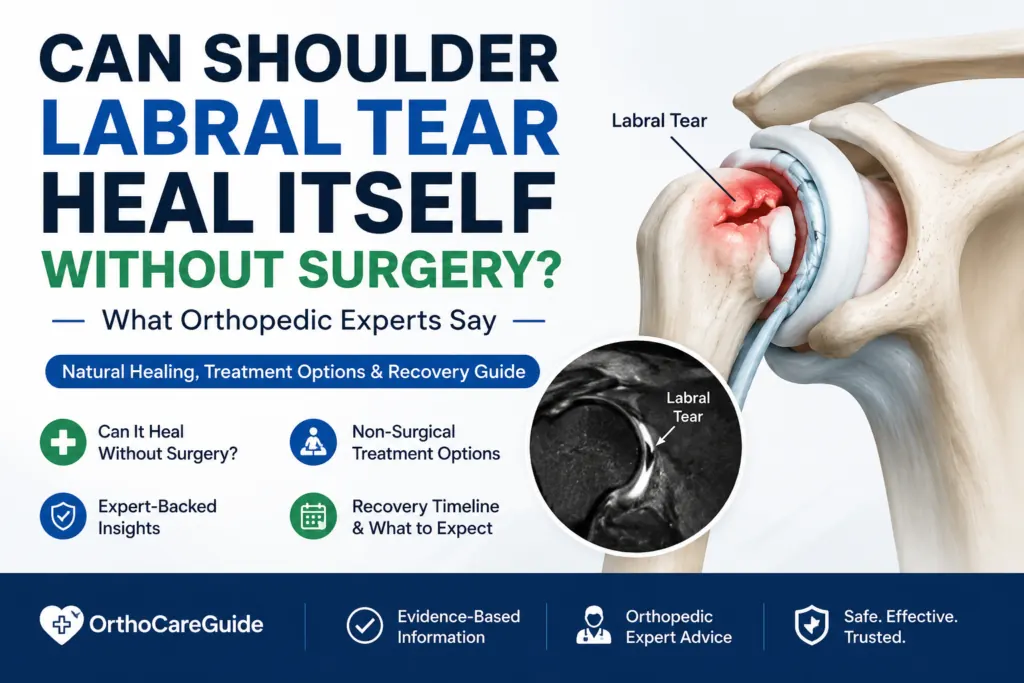
A shoulder labral tear can make even the simplest daily activities feel frustrating. Reaching overhead, lifting groceries, throwing a ball, or even sleeping on the affected side may trigger pain, clicking, or a feeling that the shoulder is unstable. These symptoms often interfere with work, exercise, and everyday routines, leaving many people wondering whether their shoulder will ever feel normal again.
One of the most common questions patients ask is, “Can a shoulder labral tear heal itself without surgery?” It’s understandable to worry that a tear automatically means an operation, but that isn’t always the case. Depending on the type, severity, and location of the tear, along with your age and activity level, many people successfully manage their symptoms through non-surgical treatment and rehabilitation.
A shoulder labral tear is an injury to the ring of cartilage (the labrum) that surrounds the shoulder socket, helping stabilize the joint and keep the upper arm bone in place. It can result from sports injuries, falls, repetitive overhead movements, or age-related wear and tear. Understanding how these injuries heal—and when surgery is or isn’t necessary—can help you make informed decisions about the best treatment and recovery plan.
Can a Shoulder Labral Tear Heal Itself Without Surgery?
Whether you call it a labral tear or a torn labrum, the underlying question is the same — can a torn labrum heal on its own, and can a shoulder labral tear heal itself without surgery? If you haven’t yet read our full breakdown of what is a shoulder labral tear, it’s worth reviewing first, since the type and location of your tear largely determines the answer. Cartilage doesn’t regenerate the way skin or muscle does, so a torn labrum rarely heals back to its original, intact structure on its own. But “healing” and “getting better” aren’t always the same thing. Many people with smaller tears, degenerative fraying, or tears that don’t cause instability find that pain settles and function returns to near-normal with focused, non-surgical care, even if the tear is technically still visible on a follow-up scan.
Why the Labrum Has Limited Healing Capacity
Much of the labrum, especially its upper and back portions, gets relatively little direct blood supply compared to more vascular tissue elsewhere in the body. Blood flow carries the nutrients and repair cells tissue needs to regenerate, so poorly-supplied areas are slower, and sometimes unable, to knit back together on their own. This is a key reason doctors are cautious about promising a labral tear will heal on its own the way a sprained ankle ligament might.
Which Tears Are Most Likely to Improve Without Surgery
Not every labral tear behaves the same way. Orthopedic specialists generally weigh a few key factors before recommending a treatment path:
- Tear size and depth: Small, partial-thickness tears or degenerative fraying respond better to conservative treatment than large, full-thickness tears.
- Joint stability: Tears that don’t cause the shoulder to feel loose, catch, or slip out of place tend to settle better with non-surgical care.
- Primary symptom type: Pain-dominant tears often improve with therapy, while true mechanical locking usually needs a surgeon’s evaluation.
- Activity demands: Recreational activity levels tolerate a conservative approach better than competitive overhead sports or heavy manual labor.
What Causes a Shoulder Labral Tear?
Labral tears generally develop one of two ways: a sudden traumatic event or gradual wear over time. Knowing which category fits your situation helps explain why your shoulder behaves the way it does. It’s also worth comparing your experience with other types of shoulder pain, since several shoulder conditions share overlapping causes.
- Trauma: A fall onto an outstretched arm, a shoulder dislocation, or a sudden pulling force can tear the labrum instantly.
- Repetitive overhead motion: Swimming, throwing sports, and repeated overhead lifting gradually stress and fray the tissue.
- Age-related degeneration: Cartilage naturally thins and weakens with age, making tears more likely even without a specific injury.
- Joint instability: A naturally loose or hypermobile shoulder places extra strain on the labrum during everyday movement.
Recognizing the Symptoms of a Labral Tear
A labral tear often announces itself through a specific cluster of sensations rather than constant, uniform pain. Reviewing the full list of shoulder labral tear symptoms can help you compare notes, but the most common signs include:
- A catching or popping sensation deep in the joint during overhead or rotational movement.
- Pain with specific positions, especially reaching behind your back or sleeping on the affected side.
- A feeling of looseness or instability, as though the shoulder might slip out of place.
- Reduced strength or endurance when lifting, throwing, or carrying objects overhead.
These symptoms overlap with several other conditions, so it’s worth ruling out look-alikes before assuming a labral tear is the cause. A rotator cuff tear, shoulder impingement syndrome, frozen shoulder, and even burning shoulder pain can all mimic parts of a labral tear.
How Is a Labral Tear Diagnosed?
Diagnosis usually starts with a physical exam, where a doctor moves your shoulder through specific positions designed to reproduce the catching or instability you’ve felt. Because plain X-rays don’t show cartilage well, an MRI, often paired with contrast dye for a clearer view, is typically needed to confirm a labral tear and rule out other injuries. An orthopedic shoulder specialist is best positioned to run these tests and explain exactly which category your tear falls into.
It’s also worth flagging that shoulder pain isn’t always mechanical. Especially with cardiovascular risk factors, it’s worth understanding whether shoulder pain and heart problems can be connected, so a serious cause isn’t overlooked. On a related note, the labrum isn’t unique to the shoulder — if you’re curious how a shoulder labral tear vs hip labral tear compares, that guide breaks down the differences between the two joints.
Non-Surgical Treatment Options That Support Healing
For many people, the first step is a structured conservative plan rather than an immediate referral to surgery. A full comparison of shoulder pain treatment options covers this in more depth, but the core approach typically includes:
- Physical therapy to strengthen the rotator cuff and shoulder blade muscles supporting the joint.
- Activity modification to avoid the specific positions that trigger catching or pain.
- Anti-inflammatory strategies, including short-term medication, to calm irritation and swelling.
- Corticosteroid injections, used selectively, for temporary relief while therapy takes effect.
Most specialists recommend a genuine trial of this approach before considering surgery, unless clear signs of instability are present. For a deeper comparison of when each path makes sense, shoulder labral tear treatment walks through physical therapy versus surgery in detail.
How to Fix a Labral Tear Shoulder at Home
You should still involve a professional in your care, but there’s a lot you can do between appointments to support recovery. Learning how to fix a labral tear shoulder at home starts with calming irritation and protecting the joint from further strain:
- Ice the area for 15–20 minutes at a time during flare-ups to reduce swelling and pain.
- Adjust your sleep position to avoid lying directly on the affected shoulder.
- Modify daily movements, like reaching overhead or carrying bags, to avoid provoking a catch.
- Support recovery through diet, since anti-inflammatory foods for shoulder pain can help calm background inflammation.
For more home-focused strategies you can start today, shoulder pain relief at home offers additional tips that pair well with a professional treatment plan.
Exercises That Support Natural Recovery
Exercise can feel counterintuitive when a joint already hurts, but targeted strengthening is one of the most effective ways to reduce strain on the labrum itself.
- Rotator cuff strengthening reduces the load placed directly on the torn tissue; see best exercises for a labral tear for a full routine.
- SLAP-specific rehab matters if your tear involves the biceps tendon attachment, and SLAP tear physical therapy exercises outlines a safe progression.
- Scapular stabilization drills improve shoulder blade control, especially for athletes returning to sport through shoulder strengthening exercises.
- A broader daily routine, like the one in top shoulder pain exercises, can round out a balanced recovery plan.
Progress should always be guided by pain response. Mild soreness is normal, but sharp catching or locking is a signal to scale back and check in with your therapist.
Mistakes That Can Slow Down Healing
Even a well-designed recovery plan can stall if a few common habits go unaddressed. Reviewing mistakes that make a labral tear worse in full can help you avoid the most frequent setbacks:
- Returning to overhead sports too soon, before strength and stability have genuinely returned.
- Ignoring persistent catching or instability instead of having it re-evaluated by a specialist.
- Prolonged, complete immobilization, which often causes stiffness and weakness rather than protection.
- Skipping therapy exercises once pain temporarily improves, letting the underlying weakness persist.
When Does a Labral Tear Need Surgery?
Surgery becomes the more likely recommendation when certain red flags appear, rather than being a default first step. These typically include repeated shoulder dislocations, a true mechanical locking sensation, significant weakness that doesn’t respond to therapy, or a large tear confirmed on imaging in someone who needs full stability for sport or heavy labor. If three to six months of consistent, well-guided conservative treatment hasn’t meaningfully reduced symptoms, that’s usually the point where a surgical consultation makes sense.
Recovery Timeline and Living With a Labral Tear
Torn labrum shoulder recovery without surgery generally follows a gradual curve rather than a fixed schedule. Many people notice early improvement within the first few weeks of activity modification and therapy, with continued gains in strength and confidence over three to six months. Shoulder labral tear recovery without surgery doesn’t always mean the tear disappears; it means your shoulder regains reliable, pain-free function for the activities that matter to you.
For some, especially with degenerative tears, a labral tear becomes something to manage long-term rather than cure outright. Practical guidance on living with a labral tear covers pacing activity and everyday adjustments that keep symptoms from creeping back.
Conclusion
So, can a shoulder labral tear heal itself without surgery? For many tears, particularly smaller, stable, degenerative ones, meaningful and lasting improvement is genuinely achievable without an operation, even if the cartilage itself doesn’t fully regenerate. For larger or unstable tears, surgery may ultimately offer the most reliable path back to full function. The most useful next step isn’t guessing which category you fall into; it’s getting an accurate diagnosis from an orthopedic professional who can assess your tear, your goals, and your activity level before recommending a path forward.
Frequently Asked Questions
1. Can a shoulder labral tear heal itself without surgery?
In many cases, yes. Smaller or degenerative tears without instability often respond well to physical therapy and activity changes, with pain settling and function returning even though the tear may still show on imaging.
2. Can a labral tear heal on its own with rest alone?
Rest can calm acute pain, but by itself it rarely builds the strength needed to protect the joint long-term. Most lasting improvement comes from combining rest with guided physical therapy.
3. Will a torn labrum heal on its own over time?
Cartilage has limited ability to regenerate, so a torn labrum usually doesn’t fully repair itself structurally. Symptoms and function can still improve significantly with the right conservative treatment plan.
4. Do labral tears heal on their own, or do most need treatment?
Most benefit from at least some structured treatment, even when surgery isn’t ultimately needed. Physical therapy and activity modification give the shoulder its best chance of settling without intervention.
5. How do I fix a labral tear shoulder at home?
Start with ice for swelling, activity modification to avoid painful positions, and gentle range-of-motion work. Home care works best alongside, not instead of, guidance from a physical therapist or physician.
6. How long does recovery take without surgery?
Many people notice initial improvement within a few weeks, with continued progress over three to six months of consistent therapy. Full recovery time varies based on tear size and activity demands.
7. What exercises help a labral tear heal faster?
Rotator cuff strengthening and scapular stabilization exercises are typically the foundation, since they reduce strain on the labrum itself. A physical therapist can tailor progression to your specific tear.
8. What signs mean my labral tear needs surgery, not rest?
Repeated dislocations, a true locking sensation, significant ongoing weakness, or no improvement after several months of consistent therapy are the main signals it’s time to discuss surgery with a specialist.
9. Can a labral tear get worse if I ignore it?
Yes, especially if you continue activities that provoke catching or instability. Ignoring symptoms can lead to a larger tear, increased instability, or secondary damage to nearby tissue.
10. Is it safe to exercise or lift weights with a labral tear?
Light, guided exercise is usually encouraged rather than avoided, since it builds supportive strength. Heavy lifting should generally wait until a therapist confirms your shoulder can tolerate the load.
Disclaimer
This article is intended for informational purposes only and does not constitute medical advice.
This article is for education purpose only and is not a diagnosis or a substitute for medical advice.