
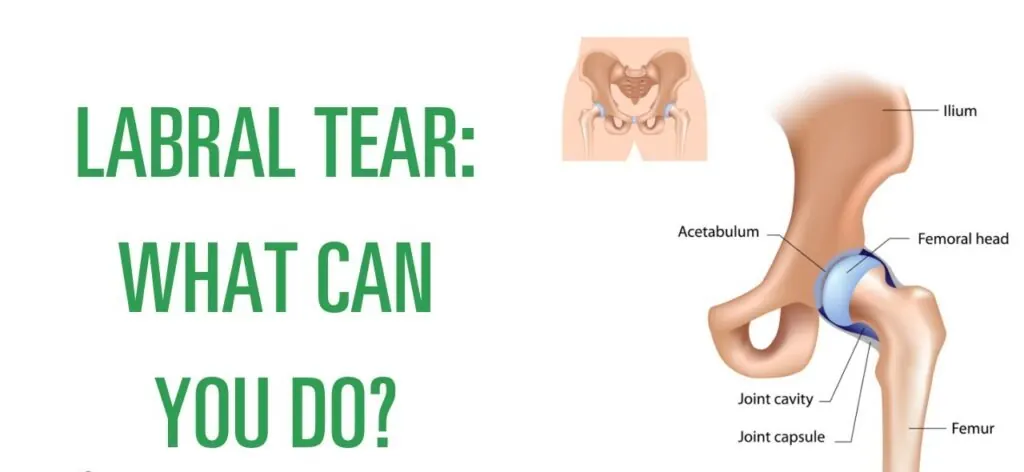
A labral tear can affect either the shoulder or the hip, but the two injuries do not behave in the same way. The shoulder labrum helps stabilize a highly mobile joint, while the hip labrum helps deepen and seal a weight-bearing joint. That difference affects where pain is felt, which movements trigger symptoms, how clinicians investigate the problem, and which treatments may be considered.
If you have heard the term “labral tear” and are trying to understand whether a shoulder injury is like a hip injury, the shared name can be confusing. The symptoms can overlap in general terms—pain, clicking, catching, or restricted movement—but the location and pattern usually provide important clues. Neither a symptom nor an MRI finding alone can confirm that a labral tear is the source of pain.
This guide compares shoulder and hip labral tears in practical terms: who may develop them, what the labrum does, where symptoms occur, why tears happen, when symptoms tend to appear, how diagnosis and treatment differ, and which questions to discuss with an orthopedic professional.
What Is a Labrum, and What Happens When It Tears?
The labrum is a rim of tough fibrocartilage around the socket of a ball-and-socket joint. In the shoulder, it surrounds the shallow glenoid socket of the shoulder blade. In the hip, it surrounds the rim of the acetabulum, the deeper socket that holds the top of the thigh bone. A tear means some of this tissue has been damaged; the exact pattern and significance vary.
The shoulder and hip share this basic anatomy, but their labrums have different jobs. The shoulder labrum helps deepen the socket and contributes to stability while the arm moves through a wide range. The hip labrum helps deepen the socket, maintain a fluid seal, and distribute contact within a joint that carries body weight during standing and walking.
Shoulder vs. Hip Labral Tear: Key Differences at a Glance
| Feature | Shoulder labral tear | Hip labral tear |
|---|---|---|
| Joint | Shoulder (glenohumeral joint) | Hip (acetabulofemoral joint) |
| Labrum’s role | Helps deepen the shallow socket and support shoulder stability | Helps deepen and seal the socket and support joint mechanics |
| Common symptom area | Deep shoulder pain, sometimes felt at the back or top of the shoulder | Often groin or front-of-hip pain; sometimes outer hip or buttock discomfort |
| Movements that may provoke symptoms | Throwing, overhead reaching, lifting, or certain arm positions | Deep hip flexion, pivoting, squatting, prolonged sitting, or getting in and out of a car |
| Contributing factors | Repetitive overhead loading, traction, falls, or shoulder dislocation | Femoroacetabular impingement (FAI), hip dysplasia, repetitive loading, or trauma |
| Assessment | History, shoulder examination, and imaging when appropriate | History, hip examination, and imaging when appropriate |
| Treatment approach | Often starts with activity changes and shoulder-specific rehabilitation; selected cases may need surgery | Often starts with activity changes and hip-specific rehabilitation; selected cases may need hip arthroscopy |
These are general patterns, not a self-diagnosis checklist. A person may have a labral tear without the classic symptoms, and similar pain can come from tendons, cartilage, arthritis, the spine, or other nearby structures.
Who Can Develop a Shoulder or Hip Labral Tear?
A shoulder labral tear can occur in people who repeatedly use their arms overhead, including some throwing athletes, swimmers, and people whose work or training involves repeated lifting. It can also follow a fall, a sudden pull on the arm, or a shoulder dislocation. Tears can occur outside sports as well.
Hip labral tears are diagnosed in active adults and athletes, but they are not limited to athletes. Some are associated with the shape of the hip joint, including femoroacetabular impingement (FAI) or hip dysplasia. Repetitive deep hip flexion, pivoting, and impact activity may aggravate symptoms in some people. An abnormal-looking scan does not automatically mean a person needs treatment; symptoms and examination findings matter.
Where Does the Pain Occur?
Where shoulder labral tears may hurt
Shoulder labral symptoms are often felt deep inside the joint. Some people describe an ache at the back or top of the shoulder, pain with overhead movement, catching, clicking, or a feeling that the shoulder may slip. The exact pattern depends partly on the tear location and whether other structures are involved. Read more about early signs of a shoulder labral tear.
Where hip labral tears may hurt
Hip labral symptoms are commonly felt in the groin or front of the hip. Pain may also be noticed around the side of the hip or buttock. Some people report clicking, catching, stiffness, or discomfort after sitting for a long time. Pain in the groin is not proof of a labral tear; hip flexor problems, arthritis, back-related pain, and other conditions can cause similar symptoms. See our guide to hip labral tear symptoms, causes, and treatment.
Why Do Shoulder and Hip Labral Tears Happen?
Why a shoulder labrum may tear
Shoulder labral injuries may follow a sudden injury, such as a fall onto the arm or a dislocation. Repeated overhead motion can also place stress on the labrum and the structures attached to it. Some tears involve the top of the labrum near the biceps tendon attachment, including a SLAP tear. The likely cause and treatment depend on the tear pattern, age, activity demands, and associated shoulder problems.
Why a hip labrum may tear
In the hip, a labral tear may be associated with repeated contact between the thigh bone and socket in a person with FAI, or with altered joint coverage in hip dysplasia. A twisting injury or other trauma can also contribute. Sometimes no single event is identified. A clinician considers the shape and movement of the hip, symptoms, and imaging together rather than assuming every tear has the same cause.
When Do Symptoms Usually Appear?
Shoulder symptoms may begin suddenly after a fall, dislocation, or forceful arm movement. In other cases, discomfort develops gradually after repeated throwing, swimming, or overhead work. Symptoms may become noticeable during a particular movement rather than at rest.
Hip symptoms can also start after an injury or build gradually with activities involving deep bending, pivoting, running, or prolonged sitting. Some people notice pain when rising from a chair, getting out of a car, or bringing the knee toward the chest. The timing alone cannot identify the damaged structure.
Seek prompt medical assessment after a significant injury if the shoulder looks deformed, the arm cannot be used, the hip cannot bear weight, or pain is severe. A hot, red joint with fever, or new numbness or weakness, also needs urgent assessment. Persistent pain, repeated catching, instability, or reduced movement should be evaluated even when symptoms are not an emergency.
How Are Shoulder and Hip Labral Tears Diagnosed?
Diagnosis usually begins with questions about when symptoms started, where they are felt, which movements make them worse, previous injuries, and sports or work demands. The clinician then examines the relevant joint, checks movement and strength, and considers other possible sources of pain.
For a suspected shoulder labral injury, the examination may include shoulder range-of-motion and strength checks and specific maneuvers such as O’Brien’s test. For a suspected hip labral injury, the clinician may assess hip movement and use tests such as FADIR (flexion, adduction, and internal rotation). No single physical test reliably proves a tear on its own.
X-rays may help assess bone shape, arthritis, or other structural issues. MRI or MR arthrography may be considered when the clinical assessment suggests a labral injury and imaging would help guide decisions. The best study depends on the joint and the clinical question. Labral changes can sometimes appear on scans in people who have no symptoms, so results must be interpreted alongside the history and examination.
Which Treatment Is Used for Each Type of Labral Tear?
How shoulder labral tears are treated
Many people begin with non-surgical care. This may include temporarily reducing painful overhead activity, adjusting training or work tasks, and following a rehabilitation plan to improve shoulder strength, control, and movement. The program should match the tear pattern and the person’s symptoms. Our guide to exercises used during labral tear recovery provides related information, but an individualized plan is important.
Surgery may be discussed when symptoms remain limiting despite appropriate non-surgical treatment, or when the injury and instability pattern make an operation more suitable. Depending on the type of tear and the person’s circumstances, procedures may include labral repair, treatment of an associated biceps tendon problem, or another shoulder-stabilizing procedure. Not every shoulder labral tear needs surgery.
How hip labral tears are treated
Initial care may include modifying activities that repeatedly provoke pain, improving hip and trunk strength, and working on movement control with a physiotherapist. Treatment may also address related conditions such as FAI or hip dysplasia. A clinician can help determine which exercises and activity changes are appropriate.
Hip arthroscopy may be considered for selected people whose symptoms continue and whose examination and imaging findings fit together. Surgery may involve repairing or trimming damaged labral tissue and, when appropriate, addressing an associated bony shape problem. The exact procedure is individualized; a labral tear on a scan alone is not a reason to proceed with surgery.
Which Takes Longer to Recover: Shoulder or Hip Labral Tear?
There is no reliable single recovery timeline that applies to every shoulder or hip labral tear. Recovery depends on the type and extent of injury, whether treatment is non-surgical or surgical, other joint conditions, general health, and the demands of work or sport.
After surgery, shoulder rehabilitation may involve a period of protection followed by gradual restoration of motion and strength. Hip rehabilitation may include temporary limits on weight-bearing or range of motion, depending on the procedure. Return to work, driving, lifting, running, or sport should follow the treating surgeon’s and rehabilitation team’s instructions rather than a generic calendar estimate.
Which Is More Painful or More Serious?
Neither joint is automatically more painful or more serious. Pain varies with the individual, the injury pattern, associated conditions, and how the joint is used. A small tear can be painful in one person and cause few symptoms in another. The significance of a scan finding is judged by how well it matches the person’s symptoms and examination.
Can You Have Both a Shoulder and Hip Labral Tear?
Yes. A person can have labral injuries in both joints, but one does not usually cause the other. Each joint needs to be assessed on its own. If shoulder and hip symptoms occur together, a clinician can consider whether they are separate joint problems or whether another factor, such as an activity pattern or a condition affecting multiple joints, needs attention.
Frequently Asked Questions
Are shoulder and hip labral tears the same injury?
No. Both involve fibrocartilage around a joint socket, but the shoulder and hip have different anatomy, functions, causes, symptom patterns, and treatment decisions.
Where do you feel a hip labral tear?
Hip labral pain is often felt in the groin or front of the hip, but it may also be noticed at the side or buttock. Other hip and back conditions can cause similar pain.
Where do you feel a shoulder labral tear?
Pain is often felt deep in the shoulder and may be accompanied by catching, clicking, or a sense of instability. The location and symptoms vary with the tear and other shoulder conditions.
Which is more common, a shoulder or hip labral tear?
There is no simple comparison that applies across all age groups and activities. Diagnosis rates depend on the population being studied, imaging use, and the underlying joint problems.
Can a hip labral tear cause shoulder pain?
A hip labral tear does not usually cause shoulder pain directly. If both areas hurt, each should be assessed rather than assuming one injury explains the other.
Can you walk with a hip labral tear?
Some people can walk, although longer distances, stairs, pivoting, or deep hip flexion may aggravate symptoms. Difficulty bearing weight after an injury needs prompt medical assessment.
Can you lift weights with a shoulder labral tear?
It depends on the tear, symptoms, and the type of lift. Reduce or avoid movements that provoke pain or instability and ask a clinician or physiotherapist for safe modifications.
Does every labral tear need surgery?
No. Many people start with activity changes and rehabilitation. Surgery is considered selectively when symptoms, examination findings, imaging, and response to non-surgical care support it.
Does an MRI always show whether a labral tear is causing pain?
No. MRI can help identify structural changes, but some people have labral findings without symptoms. A clinician interprets imaging alongside the history and physical examination.
When should I see a doctor for possible labral tear symptoms?
Arrange an assessment for persistent pain, catching, instability, or reduced movement. Seek urgent care after major injury, inability to use or bear weight through the joint, severe pain, fever with a hot or red joint, or new weakness or numbness.
Disclaimer: This article is intended for educational purposes only and should not be considered personalized medical advice.
This article is for education purpose only and is not a diagnosis or a substitute for medical advice.