
ACL Graft Failure: Signs, Causes & Treatment
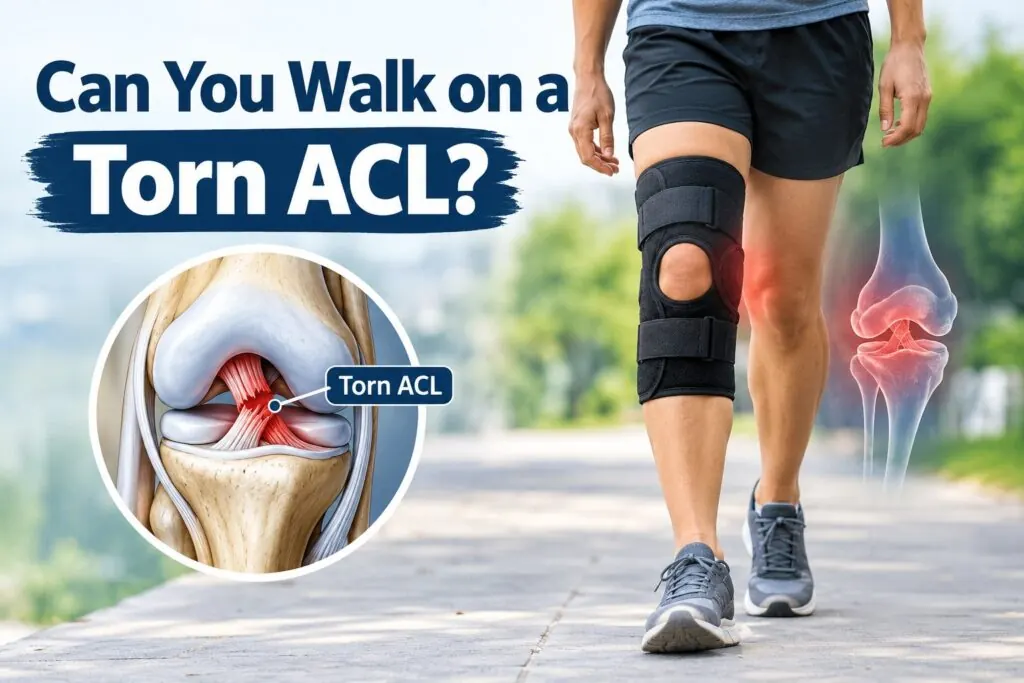
ACL graft failure occurs when the reconstructed anterior cruciate ligament (ACL) does not provide the stability needed to support the knee. It can happen when the graft stretches, tears, fails to heal properly, or becomes damaged during another injury. Some people notice a sudden pop and knee instability, while others develop gradually increasing looseness during walking, exercise, or sports.
Experiencing pain or swelling after ACL reconstruction does not automatically mean the graft has failed. Recovery can involve temporary stiffness, weakness, and discomfort, particularly when activity levels increase. However, repeated knee giving way, new swelling after a twisting injury, or a return of instability deserves medical evaluation.
Understanding ACL graft failure can help you recognize possible warning signs, identify factors that contribute to reconstruction problems, and understand available treatment options. This guide explains how doctors evaluate a failed ACL graft, when revision surgery may be considered, and what recovery can involve.
What Is ACL Graft Failure?
ACL graft failure means the tissue used to reconstruct the anterior cruciate ligament has become insufficient to stabilize the knee. The graft may rupture completely, stretch excessively, fail to incorporate into the bone tunnels, or lose its ability to control abnormal knee movement.
An ACL reconstruction uses tissue from the patient’s own body (autograft) or a donor (allograft). Although reconstruction can restore stability, the graft is not guaranteed to remain intact permanently.
Signs and Symptoms of ACL Graft Failure
The most noticeable sign is often recurrent knee instability, especially during turning, pivoting, or changing direction. Symptoms may appear suddenly after another injury or develop gradually.
Common warning signs include:
-
Knee giving way: The knee feels unreliable during walking, running, or sports.
-
A popping sensation: A sudden pop during a twisting injury may indicate graft rupture.
-
Swelling: New swelling can develop within hours after an injury.
-
Pain: Discomfort may occur along the joint line or deep inside the knee.
-
Reduced confidence: Activities that previously felt comfortable become difficult.
-
Loss of motion: Stiffness or difficulty fully straightening the knee may occur.
-
Recurrent instability: The knee repeatedly shifts or buckles during movement.
Not everyone experiences severe pain. Some people with a failed graft mainly notice instability.
| Symptom | What it may indicate |
|---|---|
| Sudden pop and swelling | Possible new graft injury |
| Repeated giving way | Insufficient knee stability |
| Persistent stiffness | Scar tissue or another joint problem |
| Pain during twisting | Possible graft or meniscus injury |
| Reduced range of motion | Stiffness, swelling, or mechanical problems |
These symptoms are not proof of graft failure. Other conditions, including a meniscus tear after a knee injury, can cause similar problems.
What Causes ACL Graft Failure?
ACL graft failure usually involves traumatic, technical, biological, or patient-related factors.
1. Reinjury Before Full Recovery
Returning to sports or demanding activities before adequate strength, coordination, and movement control have returned can increase injury risk. A sudden pivot, awkward landing, or collision may damage the reconstructed ligament.
2. Incorrect Graft Tunnel Placement
During reconstruction, surgeons create tunnels in the thighbone and shinbone to position the graft. Incorrect placement can affect graft tension, movement, and stability.
3. Poor Graft Healing
The graft needs time to incorporate into the surrounding bone and undergo biological remodeling. Problems with healing or fixation can compromise reconstruction.
4. High Activity Levels and Individual Risk Factors
Younger athletes, people participating in pivoting sports, and individuals with certain knee alignment characteristics may have higher reinjury risks.
Other possible contributors include:
-
Returning to sports without adequate functional testing.
-
Persistent muscle weakness.
-
Poor landing mechanics.
-
Untreated meniscus or additional ligament injuries.
-
Excessive posterior tibial slope.
What Does Research Say About ACL Graft Failure?
A systematic review of 39 studies involving 6,578 ACL reconstruction failures found three major failure categories.
| Failure mechanism | Reported proportion |
|---|---|
| Traumatic reinjury | 40% |
| Technical error | 34% |
| Biological failure | 11% |
Femoral tunnel malposition accounted for approximately 29% of technical failures. These figures describe reported failure mechanisms, not the percentage of all ACL reconstruction patients who experience failure.
PubMed+1
A separate 2025 systematic review identified younger age, graft characteristics, posterior tibial slope, and activity level as important risk factors. The researchers also noted that differences in study methods make individual risk difficult to predict.
PubMed+1
How Is ACL Graft Failure Diagnosed?
An orthopedic specialist evaluates symptoms, knee stability, surgical history, and imaging findings.
The assessment may include:
-
Physical examination: Lachman, anterior drawer, and pivot-shift tests help assess ligament stability.
-
MRI: Helps identify graft disruption, meniscus injuries, cartilage damage, and other soft-tissue problems.
-
X-rays: Evaluate bone alignment, hardware position, and tunnel changes.
-
CT scan: Sometimes used to examine bone tunnels before revision surgery.
Previous surgical records can also help the surgeon understand the original graft type, tunnel placement, and fixation method.
A normal X-ray does not rule out graft damage because X-rays do not directly show most ligament injuries. Understanding the difference between ACL and meniscus injuries can also help explain why further examination may be necessary.
ACL Graft Failure Treatment Options
Treatment depends on whether the graft is partially damaged, completely ruptured, or mechanically insufficient. Not everyone needs another operation.
Non-Surgical Treatment
For selected patients with mild symptoms and acceptable knee stability, treatment may include:
-
Physical therapy to rebuild quadriceps and hamstring strength.
-
Balance and neuromuscular training.
-
Temporary activity modification.
-
A knee brace when recommended.
-
Gradual return to low-impact activities.
People with persistent instability may not be suitable for conservative treatment, particularly when they want to return to pivoting sports.
Revision ACL Reconstruction
Revision ACL surgery replaces or reconstructs a failed graft. It may be considered when examination confirms instability that affects daily activities or desired sports.
| Treatment | Main purpose | Important consideration |
|---|---|---|
| Physical therapy | Improve strength and control | May not correct major mechanical instability |
| Activity modification | Reduce repeated stress | Does not repair a ruptured graft |
| Knee bracing | Provide temporary support | Cannot replace ligament function |
| Revision surgery | Restore knee stability | Requires individualized planning |
Some patients need a two-stage procedure if existing bone tunnels are too wide or poorly positioned. Additional procedures may address associated meniscus damage, abnormal alignment, or rotational instability.
Revision surgery is more complex than initial reconstruction. Outcomes and return-to-sport expectations may be less favorable than after primary surgery.
ScienceDirect+1
How Long Does Recovery Take After Revision ACL Surgery?
Recovery varies according to graft choice, associated injuries, surgical technique, and rehabilitation progress. Many patients need approximately 9–12 months or longer before considering a return to demanding pivoting sports.
| Recovery phase | Main rehabilitation goals |
|---|---|
| Early recovery | Control swelling, restore extension, regain safe walking |
| Initial strengthening | Rebuild quadriceps and hamstring strength |
| Intermediate rehabilitation | Improve balance, coordination, and movement control |
| Advanced rehabilitation | Introduce running, jumping, and sport-specific drills |
| Return to sport | Complete functional testing and obtain medical clearance |
Recovery is not determined by time alone. Patients should follow individualized instructions about walking after ACL surgery and avoid rushing activities simply because pain has improved.
Rehabilitation may also need adjustment when an associated knee ligament injury or knee cartilage defect is present.
Warning Signs: When Should You Seek Medical Care?
Symptoms that can usually be monitored: Mild, gradually improving soreness or stiffness during an established rehabilitation program, provided your surgeon has not identified a complication.
Symptoms needing medical evaluation:
-
Repeated knee buckling or giving way.
-
New swelling after exercise.
-
Persistent pain or reduced knee movement.
-
A noticeable decline in walking or exercise ability.
Symptoms requiring urgent care:
-
A newly injured knee with severe pain or inability to bear weight.
-
A visibly deformed knee or suspected fracture.
-
A hot, red knee with fever, which may indicate infection.
-
Calf swelling or pain, particularly with warmth or tenderness.
Seek emergency care for chest pain, sudden shortness of breath, or coughing up blood because these can indicate a potentially serious blood clot.
Frequently Asked Questions
1. Can an ACL graft tear without a popping sound?
Yes. Some graft injuries occur without a noticeable pop. Gradually increasing instability can also indicate a problem.
2. Can you walk with a failed ACL graft?
Yes. Some people can walk relatively normally because other muscles and knee structures provide support. However, walking ability does not establish that the graft is intact.
3. Can ACL graft failure happen years after surgery?
Yes. A reconstructed ligament can fail months or years later, particularly following another twisting injury or high-demand activity.
4. Does ACL graft failure always cause swelling?
No. Acute graft rupture may cause swelling, but gradual stretching or chronic instability may occur without significant swelling.
5. Can a failed ACL graft heal without surgery?
A completely ruptured graft does not generally restore its original structural function naturally. However, selected patients may manage symptoms with rehabilitation and activity modification.
6. Is revision ACL surgery more difficult than the first operation?
Yes. Previous bone tunnels, existing hardware, graft availability, and additional knee injuries can make revision surgery more complex.
7. What is the most common cause of ACL graft failure?
Traumatic reinjury is a leading reported cause. Technical problems, especially incorrect tunnel placement, are another major contributor.
8. Can you return to sports after revision ACL surgery?
Many patients return to recreational or competitive activities, but returning to the same performance level is not guaranteed. Functional testing and surgeon clearance are important.
9. Does a failed ACL graft always require revision surgery?
No. Treatment depends on knee stability, activity requirements, symptoms, and associated injuries. Some people can manage without another operation.
10. How can you reduce the risk of another ACL graft injury?
Follow a structured rehabilitation program, restore strength and balance, improve landing mechanics, and return to sports only after meeting appropriate functional criteria.
Conclusion
ACL graft failure can cause recurrent instability, swelling, pain, and reduced confidence during movement. Reinjury, surgical tunnel placement, biological healing, and individual risk factors can all contribute. Early orthopedic evaluation helps identify the cause and determine whether rehabilitation or revision ACL reconstruction is appropriate.
Other Knee Conditions That May Affect Evaluation
ACL graft failure does not always occur in isolation. A new knee injury may also involve the meniscus, cartilage, kneecap, or other supporting structures. For example, sharp knee pain after an injury may require evaluation for more than one injury.
A clinician may also investigate:
-
Whether walking on a torn ACL is contributing to instability.
-
Whether a swollen knee is dangerous or requires further investigation.
-
Whether fluid inside the knee joint indicates inflammation or injury.
-
Whether knee effusion is affecting movement.
-
Whether symptoms suggest meniscus damage or knee arthritis.
-
Whether a meniscus tear is getting worse.
-
Whether walking with a meniscus injury is aggravating symptoms.
-
How long a torn meniscus takes to heal.
-
Whether a knee bone bruise is contributing to persistent pain.
-
Whether patellar instability is causing the sensation of the knee giving way.
-
Whether a kneecap dislocation occurred during the original injury.
-
Whether pain behind the knee has a separate explanation.
Disclaimer: This article is provided for educational and informational purposes only.
This article is for education purpose only and is not a diagnosis or a substitute for medical advice.