
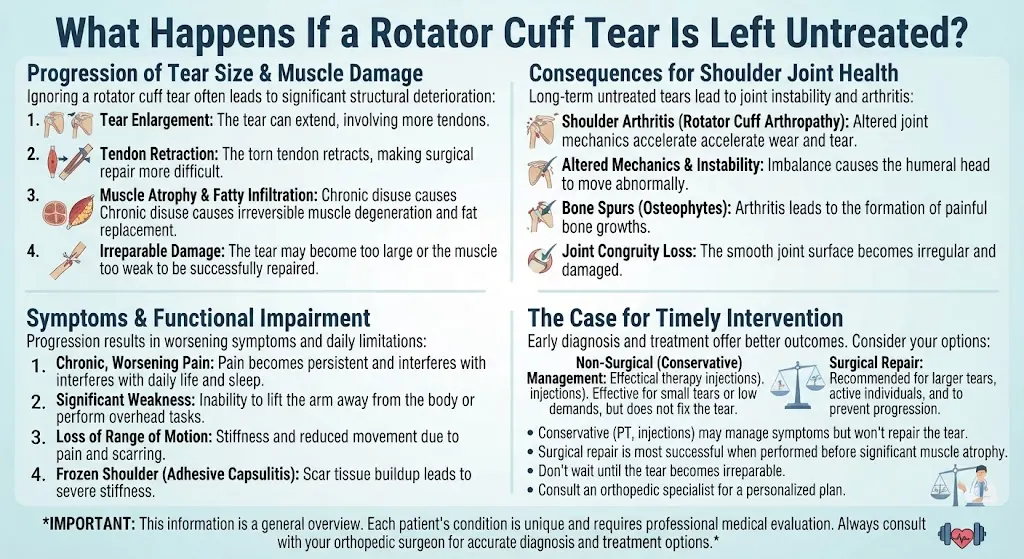
An untreated rotator cuff tear may remain stable, improve symptomatically, or gradually worsen. Some people manage their symptoms without surgery, but others develop increasing weakness, a larger tear, or changes in the shoulder muscles and tendons. The outcome depends on the tear’s size, cause, tendon health, activity level, and other individual factors.
Knowing what may happen if a rotator cuff tear is left untreated can help you recognize changes, understand nonsurgical options, and decide when to seek an evaluation. Not every tear needs surgery, but persistent symptoms or sudden weakness should not be ignored.
What Happens If You Leave a Rotator Cuff Tear Untreated?
The consequences vary. A small degenerative tear may cause manageable symptoms for a long time, while a larger or traumatic tear may lead to more noticeable functional problems.
Potential outcomes include:
-
Persistent pain: Discomfort may continue during lifting, reaching, or sleeping, although pain can fluctuate.
-
Increasing weakness: Damage to the tendons can make it harder to raise or rotate the arm.
-
Tear enlargement: Some tears extend over time, especially when tendon tissue is already weakened.
-
Muscle atrophy and fatty changes: Long-standing tears may be associated with muscle wasting and fatty infiltration, which can reduce shoulder function and complicate later repair.
-
Reduced range of motion: Pain, weakness, or stiffness may make daily activities increasingly difficult.
These changes are possible, not inevitable. A tear can also appear on imaging without causing major symptoms. For an overview of common symptoms and treatment approaches, see rotator cuff tear signs, treatment, and recovery.
Can a Rotator Cuff Tear Get Worse Without Treatment?
Yes. A rotator cuff tear can enlarge without surgery or structured treatment, but some tears remain stable. Research following people with rotator cuff tears has found that structural progression occurs in a portion of cases over time; the likelihood varies with tear characteristics and patient factors.
| Factor | Why it matters |
|---|---|
| Tear size | Larger tears may cause more substantial weakness and can be harder to repair if they progress |
| Injury type | A sudden tear after a fall or heavy lift may need earlier assessment than gradual, mild symptoms |
| Tendon and muscle health | Degeneration, retraction, atrophy, and fatty infiltration can affect function and repair options |
| Activity demands | Repetitive overhead work or heavy lifting may aggravate symptoms |
| Symptom progression | Increasing weakness or loss of function may indicate the need for reassessment |
Pain alone cannot show whether the tear has grown. A person may feel better while a tear remains present, or experience more pain without a structural change. A clinician may recommend imaging when examination findings or changing symptoms make it useful.
What Are the Warning Signs of an Untreated Rotator Cuff Tear?
Arrange a medical assessment if shoulder pain persists, repeatedly interrupts sleep, or interferes with dressing, reaching, or lifting. Increasing weakness—especially difficulty raising the arm—also deserves evaluation.
| Symptom | Recommended response |
|---|---|
| Mild, occasional discomfort that improves with activity modification | Monitor symptoms and avoid movements that reliably aggravate pain |
| Persistent pain, night pain, or difficulty with everyday tasks | Schedule a clinical evaluation |
| New or increasing weakness or reduced ability to lift the arm | Seek prompt assessment, particularly after an injury |
| Sudden severe pain or major weakness after a fall or heavy lift | Obtain urgent medical evaluation |
| Shoulder deformity, a cold or pale hand, or significant new numbness after trauma | Seek emergency care |
Chest pressure, shortness of breath, sweating, or shoulder pain accompanied by these symptoms can indicate a medical emergency rather than a shoulder injury. Call 911 in the United States.
Can a Rotator Cuff Tear Heal Without Surgery?
Some people improve without surgery, but symptom relief does not necessarily mean the torn tendon has fully reattached. Nonsurgical treatment aims to reduce pain, maintain movement, and improve shoulder function.
A treatment plan may include:
-
Activity modification: Temporarily reduce heavy lifting, repeated overhead movements, and activities that trigger sharp pain.
-
Physical therapy: Guided exercises can help improve shoulder movement, control, and strength.
-
Pain management: A clinician can advise whether medication or other pain-relief measures are appropriate for you.
-
Gradual return to activity: Increase demands according to symptoms, strength, and professional guidance.
Avoid prolonged immobilization unless a clinician recommends it, because too little movement can contribute to stiffness. Conversely, exercising through sharp pain or repeatedly testing your maximum strength may aggravate symptoms.
Read more about whether a rotator cuff tear can heal without surgery and nonsurgical versus surgical shoulder pain treatments.
When Should You Consider Surgery?
Surgery may be worth discussing when pain or weakness continues despite appropriate nonsurgical care, when the tear substantially limits daily activities, or when a significant tear occurs suddenly after an injury.
The decision depends on tear size and location, tendon quality, muscle condition, general health, and personal goals. A small degenerative tear with manageable symptoms may respond to conservative care, while a traumatic tear causing substantial weakness may need earlier specialist evaluation.
An orthopedic clinician may assess shoulder strength and movement and consider ultrasound or MRI if the results could change treatment. An X-ray can show bones and arthritis but generally does not directly show the rotator cuff tendons. See how X-rays and MRI differ for shoulder pain.
How Can You Protect Your Shoulder?
You may not need to stop using your arm altogether. Instead, modify activities that cause pain and get guidance on safe movement.
-
Avoid repeatedly lifting heavy objects overhead if that worsens symptoms.
-
Ask a physical therapist which exercises fit your injury and current strength.
-
Increase exercise intensity gradually rather than returning immediately to heavy pressing or throwing.
-
Keep track of changes in pain, strength, sleep, and daily function.
-
Seek reassessment if symptoms worsen or new weakness develops.
For related guidance, read about preventing shoulder injuries during workouts and ways to relieve shoulder pain at home.
Frequently Asked Questions
1. Can you live with a torn rotator cuff without surgery?
Yes. Some people maintain useful shoulder function with activity changes and physical therapy. Whether this is appropriate depends on the tear, symptoms, and daily demands.
2. Will an untreated rotator cuff tear eventually become a complete tear?
Not always. Some partial tears progress, while others remain stable. Symptoms and the initial diagnosis alone cannot predict an individual outcome with certainty.
3. How long can you leave a rotator cuff tear untreated?
There is no universally safe waiting period. Persistent symptoms, new weakness, or an injury that suddenly limits arm movement should prompt assessment rather than prolonged waiting.
4. Can a rotator cuff tear get worse while sleeping?
Sleeping on the affected shoulder may aggravate pain, but discomfort at night does not necessarily mean the tear is enlarging. Try a comfortable position that avoids direct pressure and seek evaluation if sleep remains disrupted.
5. Is it safe to exercise with an untreated rotator cuff tear?
Often, modified exercise is possible, but the safest activities depend on the tear and your symptoms. A physical therapist can help you avoid excessive loading while maintaining movement and strength.
6. Does a rotator cuff tear always cause weakness?
No. Some tears cause pain with relatively preserved strength, while others significantly affect lifting and rotation. Weakness can also come from pain or other shoulder conditions.
7. Can physical therapy stop a rotator cuff tear from getting bigger?
Physical therapy can improve movement and function, but it cannot guarantee that a tear will not progress. Follow-up should reflect your symptoms, examination, and risk factors.
8. What happens if a large rotator cuff tear is ignored?
A large tear may lead to persistent weakness, tendon retraction, and muscle changes that can complicate later repair. Not everyone develops these problems, but a large tear deserves clinical assessment.
9. Do you need an MRI to diagnose a rotator cuff tear?
Not always. A clinician may use your history and physical examination first, then order ultrasound or MRI when imaging would help confirm the diagnosis or guide treatment.
10. When should I see a doctor for a suspected rotator cuff tear?
Arrange an evaluation if pain persists, daily activities become difficult, or weakness develops. Seek prompt care after an injury that causes sudden severe pain or an inability to raise the arm.
Conclusion
Leaving a rotator cuff tear untreated can lead to persistent pain, weakness, or tear progression, but worsening is not inevitable and surgery is not always necessary. The practical next step is to have ongoing symptoms or weakness assessed, modify aggravating activities, and discuss whether rehabilitation or further testing is appropriate.
Disclaimer: This article is provided for educational and informational purposes only.
This article is for education purpose only and is not a diagnosis or a substitute for medical advice.