
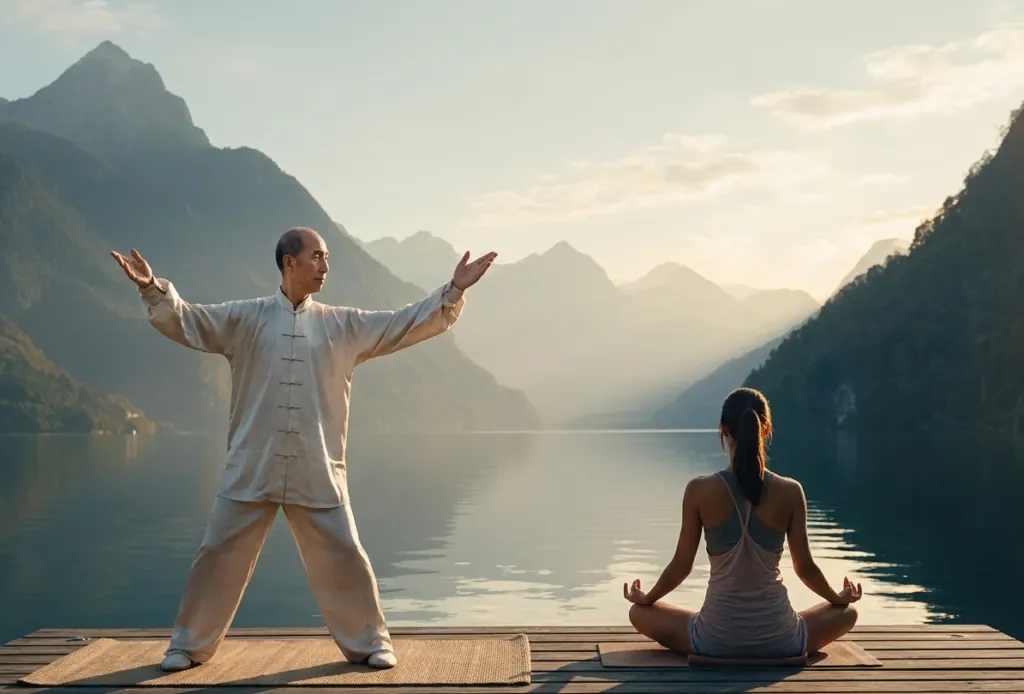
If you live with chronic joint pain, stiffness, or limited flexibility, you have almost certainly encountered both yoga and Baduanjin as recommended movement practices — and found yourself wondering which one is actually worth your time and commitment. Both are ancient mind-body disciplines with devoted global followings, both promise improvements in flexibility, pain relief, and overall wellbeing, and both are backed by a growing body of modern scientific research. Yet they feel fundamentally different in practice, draw on entirely different philosophical traditions, and place different demands on the body. Choosing between them when you are already managing pain and limited mobility is not a trivial decision — the wrong choice can feel discouraging, uncomfortable, or even aggravate existing symptoms.
Many people assume yoga is the superior option simply because it is more familiar and widely available in the West, while others dismiss Baduanjin as obscure or insufficiently challenging to produce real results. Both assumptions miss the point. Yoga encompasses an enormous spectrum of styles ranging from extremely gentle restorative practices to physically demanding sequences that challenge elite athletes. Baduanjin, while consistently gentle, is supported by impressive clinical research demonstrating specific benefits for the musculoskeletal conditions most relevant to people managing joint pain and spinal problems. Understanding what each practice actually involves, what the research shows, and how each fits different bodies and lifestyles makes the comparison genuinely useful rather than theoretical.
This guide provides a thorough, honest, evidence-based comparison of Baduanjin and yoga specifically through the lens of joint pain management and flexibility improvement — the two outcomes most relevant to the orthopedic health audience of Ortho Care. Rather than declaring one practice universally superior, it examines where each excels, where each has limitations, which specific conditions each serves best, and how the two practices can be combined for maximum musculoskeletal benefit. Whether you are managing back pain, knee arthritis, shoulder stiffness, or simply want to move more freely and comfortably, this comparison will help you make an informed, personalized decision.
Understanding Each Practice
What Is Baduanjin?
Baduanjin is a standardized qigong practice from traditional Chinese medicine consisting of eight specific movements performed slowly, deliberately, and in coordination with controlled breathing. Each movement targets specific body regions and organ systems, producing a comprehensive full-body mobilization and strengthening effect within a 15–20 minute practice session. Its defining characteristics are its simplicity, accessibility, and consistency — the eight movements are fixed and repeatable, making it easy to learn, practice independently, and study in clinical research settings. As explored in depth in our complete guide on what is Baduanjin a beginner’s guide to this ancient healing exercise, it requires no equipment, no prior fitness, and no flexibility to begin.
What Is Yoga?
Yoga is an ancient Indian philosophical and physical discipline with thousands of years of documented history, encompassing far more than physical postures — including breathwork, meditation, ethical guidelines, and spiritual practice. In Western health and fitness contexts, yoga typically refers to the physical practice of asanas — postures held statically or moved through dynamically — combined with breath awareness. The diversity of yoga styles is enormous, ranging from the deeply restorative and gentle Yin yoga and Restorative yoga to the physically vigorous Ashtanga, Power yoga, and Bikram yoga. This diversity makes yoga simultaneously its greatest strength and its most significant complication when comparing it to the standardized Baduanjin practice.
Key Differences at a Glance
Physical Demand and Accessibility
Baduanjin maintains a consistently gentle, low-impact profile across all eight movements. The practice is specifically designed to be accessible to people of any age, fitness level, and physical condition — including those with significant joint pain, balance difficulties, or limited mobility. Every movement is performed in an upright standing position with both feet on the ground, eliminating the floor-based transitions and weight-bearing joint positions that many people with knee, hip, or wrist pain find problematic.
Yoga’s physical demands vary enormously by style. Gentle yoga styles including Hatha, Yin, and Restorative yoga are broadly accessible and appropriate for people with joint pain when taught by an experienced instructor who provides appropriate modifications. However many popular yoga classes — including Vinyasa flow, Ashtanga, and Power yoga — involve sustained weight-bearing through the wrists, deep knee flexion positions, challenging balance postures, and rapid transitions that can significantly aggravate existing joint conditions without proper guidance.
Learning Curve and Independence
- Baduanjin learning curve: The eight standardized movements can be learned independently from high-quality video instruction within 2–4 weeks, after which the practice can be performed confidently without ongoing instruction. The fixed, repeatable nature of the sequence makes self-guided practice straightforward and consistent.
- Yoga learning curve: The diversity of yoga postures, breathing techniques, and styles creates a more complex learning journey that benefits significantly from ongoing in-person instruction, particularly for people with joint conditions where incorrect alignment in weight-bearing postures carries meaningful injury risk.
Mind-Body Integration
Both practices integrate physical movement with breath awareness and mental focus, producing measurable stress-reduction and wellbeing benefits alongside their physical effects. Baduanjin’s integration is built into its fixed structure — the movements are inseparable from their breathing patterns. Yoga offers a broader and deeper exploration of breathwork and meditation as independent practices, providing more tools for psychological and nervous system regulation for practitioners who engage with these dimensions of the practice.
Comparing Benefits for Joint Pain
Lower Back Pain
Both practices demonstrate meaningful benefits for chronic lower back pain in clinical research. Baduanjin produces consistent improvements through its spinal mobilization movements — particularly Movement 5 which combines lateral flexion and rotation and Movement 6 which works the posterior chain — alongside the deep spinal stabilizer activation produced by the horse stance positions. The connection between spinal mobility practices and back pain management is explored in our guide on back pain causes symptoms and risk factors.
Yoga — particularly gentle styles including Hatha and Yin — also demonstrates significant lower back pain benefits through posterior chain stretching, hip flexor opening, and core activation. Cat-cow, child’s pose, supine twist, and legs-up-the-wall are among the most consistently beneficial yoga postures for lower back pain. However the risk of aggravating disc conditions through forward folds and twists performed with poor alignment makes instructor guidance particularly important for back pain sufferers in yoga contexts.
Verdict for lower back pain: Both are effective. Baduanjin offers more consistent safety and accessibility for people with disc conditions and acute pain. Yoga offers more variety and deeper stretching for people with stable chronic back pain and adequate mobility.
Knee and Hip Joint Pain
- Baduanjin for knee pain: The horse stance positions in Baduanjin provide progressive quadriceps and gluteal strengthening that directly supports knee joint stability, while the gentle movement patterns avoid the deep flexion and impact loading that aggravates most knee conditions. People with knee arthritis can easily modify the stance depth to remain within comfortable range. Our comprehensive guide on knee arthritis causes symptoms treatments and recovery tips highlights the importance of exactly this type of low-load strengthening.
- Yoga for knee pain: Yoga offers excellent hip opening postures — pigeon pose, warrior sequences, and supine hip stretches — that reduce the hip tightness contributing to knee pain. However deep knee flexion positions including hero pose, child’s pose variations, and low lunges can significantly aggravate inflammatory knee conditions without careful modification.
Verdict for knee and hip pain: Baduanjin is consistently safer and more immediately accessible for knee pain. Gentle yoga with a knowledgeable instructor provides superior hip mobility work for hip-related conditions.
Shoulder and Neck Pain
Baduanjin’s overhead reaching movements and thoracic rotation directly address the postural drivers of shoulder and neck pain — forward head posture, thoracic kyphosis, and pectoral tightness — through its first three movements. Movement 4 specifically targets cervical rotation and is directly relevant to conditions like the cervical spondylosis covered in our cervical spondylosis symptoms causes and treatment guide.
Yoga offers excellent shoulder mobility work through poses including thread-the-needle, eagle arms, cow-face arms, and supported fish pose that comprehensively address the thoracic and shoulder restrictions driving neck and shoulder pain. However weight-bearing through the shoulders in downward dog, plank, and arm balance positions can significantly aggravate rotator cuff conditions including the shoulder impingement and bursitis conditions discussed in our guides on shoulder impingement syndrome and shoulder bursitis symptoms causes and fast relief.
Verdict for shoulder and neck pain: Baduanjin is safer for active shoulder conditions. Yoga offers superior shoulder mobility work for people with stable, non-inflammatory shoulder stiffness.
Comparing Benefits for Flexibility
Spinal Flexibility
Yoga produces more dramatic improvements in spinal flexibility — particularly thoracic extension, lumbar flexion, and rotational range — than Baduanjin, due to the held postures and deeper ranges of motion incorporated in even gentle yoga styles. Backbends, forward folds, and spinal twists systematically work the spine through its full available range in ways that Baduanjin’s more moderate movements do not replicate.
Baduanjin produces meaningful improvements in functional spinal mobility — the range of motion needed for comfortable daily activities — without approaching the end-range positions that yoga explores. For people with significant spinal degeneration including the lumbar stenosis and scoliosis covered in our guides on lumbar spinal stenosis and scoliosis in adults, Baduanjin’s moderate range approach is considerably safer.
Hip and Lower Limb Flexibility
Yoga is significantly superior to Baduanjin for hip and lower limb flexibility development. The range of hip opening postures available in yoga — from supine figure-four stretches through standing warrior sequences to seated forward folds — comprehensively addresses the hip flexor, hamstring, piriformis, and adductor tightness that contributes to lower back and knee pain in ways that Baduanjin’s standing movements do not fully replicate.
Upper Body and Thoracic Flexibility
Both practices address thoracic and upper body flexibility effectively, though through different mechanisms. Yoga’s thread-the-needle and supported fish postures produce deeper thoracic rotation and extension. Baduanjin’s bow-drawing movement and heaven-earth separation produce broader functional thoracic mobility improvements with lower injury risk.
Which Is Better for Specific Populations?
Older Adults and People With Significant Joint Conditions
Baduanjin is the more appropriate starting point for older adults, people with significant arthritis, those recovering from joint surgery including the hip replacement discussed in our what is hip replacement surgery guide, or anyone with balance difficulties. Its consistent safety profile, standing format, and fixed structure eliminate the floor-based transitions and end-range positions that create fall and injury risk in these populations.
Active Adults With Stable Chronic Pain
People with stable chronic pain conditions, adequate baseline mobility, and access to a qualified yoga teacher gain the most from incorporating gentle yoga — particularly Yin or Hatha styles — due to its superior hip opening, deeper spinal flexibility work, and broader breathwork toolkit.
People Wanting a Quick Daily Practice
Baduanjin’s 15–20 minute complete session is significantly more time-efficient than most yoga practices and produces a comprehensive full-body benefit within that timeframe. For people who struggle to maintain longer practice commitments, Baduanjin’s brevity and completeness make daily consistency more achievable.
The Best Approach — Combining Both Practices
The most beneficial approach for most people managing joint pain and seeking flexibility improvements is not choosing one practice over the other but combining them strategically. Baduanjin practiced daily provides the consistent spinal mobilization, balance training, and stress reduction that form a reliable maintenance foundation. Gentle yoga practiced 2–3 times weekly adds the deeper hip opening, thoracic flexibility, and breathwork that complement and enhance the Baduanjin foundation.
This combination addresses the full spectrum of musculoskeletal flexibility and joint health needs — the consistent gentle movement of Baduanjin maintaining daily functional mobility, and the deeper targeted work of yoga progressively expanding range of motion and addressing specific flexibility restrictions. Incorporating the dietary anti-inflammatory support discussed in our guide on how changing your diet can help reduce pain naturally alongside both movement practices creates a comprehensive lifestyle approach to joint pain management.
Conclusion
Both Baduanjin and yoga offer genuine, research-supported benefits for joint pain and flexibility when practiced consistently and appropriately. Baduanjin wins on accessibility, safety, consistency, and suitability for people with significant joint conditions or limited baseline mobility. Yoga wins on depth of flexibility development, hip mobility, variety, and the richness of its breathwork and meditation toolkit. Rather than viewing this as a competition, the most effective approach is recognizing each practice for what it does best and incorporating both into a sustainable movement lifestyle tailored to your specific conditions, goals, and preferences. Start with Baduanjin if you are new to both, add gentle yoga as your mobility and confidence grow, and always consult your physiotherapist or healthcare provider when integrating new movement practices alongside treatment for specific musculoskeletal conditions.
Frequently Asked Questions
1. Is Baduanjin or yoga better for lower back pain? Both are effective for chronic lower back pain. Baduanjin is safer for people with disc conditions and acute pain due to its moderate range movements. Gentle yoga offers deeper stretching for stable chronic back pain with adequate baseline mobility.
2. Which is easier to learn — Baduanjin or yoga? Baduanjin is generally easier to learn independently, with its eight standardized movements masterable from video instruction within 2–4 weeks. Yoga benefits more significantly from ongoing in-person instruction, particularly for people with joint conditions.
3. Can I practice both Baduanjin and yoga together? Yes — combining daily Baduanjin with 2–3 weekly gentle yoga sessions provides complementary benefits that address a broader range of flexibility and joint health needs than either practice alone.
4. Which is better for knee arthritis? Baduanjin is consistently safer and more immediately accessible for knee arthritis due to its adjustable stance depth and absence of deep knee flexion positions. Yoga requires careful modification and instructor guidance for people with significant knee arthritis.
5. Is yoga too intense for people with joint pain? Vigorous yoga styles including Ashtanga and Power yoga are inappropriate for people with significant joint pain. However gentle styles including Yin, Restorative, and gentle Hatha yoga are well suited to joint pain management with appropriate modifications.
6. Which practice is better for older adults? Baduanjin is generally more appropriate for older adults due to its standing format, consistent safety profile, and balance training component. It is widely used in fall prevention programs for older populations.
7. How long before I see results from either practice? Most practitioners notice meaningful improvements in stiffness, pain, and flexibility within 4–8 weeks of consistent practice with either discipline. Research studies typically demonstrate significant outcomes after 8–12 weeks of regular practice.
8. Do I need equipment for either practice? Neither practice requires special equipment. Baduanjin needs only a small floor space. Yoga benefits from a non-slip mat and optionally blocks and a strap to support posture modifications.
9. Which practice is better for stress and anxiety alongside joint pain? Both produce significant stress reduction benefits. Yoga’s broader breathwork and meditation toolkit provides more diverse psychological regulation tools, while Baduanjin’s shorter, simpler structure makes daily stress-reducing practice more consistently achievable.
10. Can I practice Baduanjin or yoga after joint surgery? Both can be incorporated into post-surgical rehabilitation with appropriate modifications and healthcare provider clearance. Gentle movement practices are encouraged during recovery, but timing and specific modifications should always be guided by your surgeon and physiotherapist.
Disclaimer
The information provided in this article is for educational and informational purposes only and does not constitute professional medical advice. Always consult a qualified healthcare provider or physiotherapist before beginning any new exercise practice, particularly if you are managing joint conditions, recovering from surgery, or have other health concerns.
This article is for education purpose only and is not a diagnosis or a substitute for medical advice.