
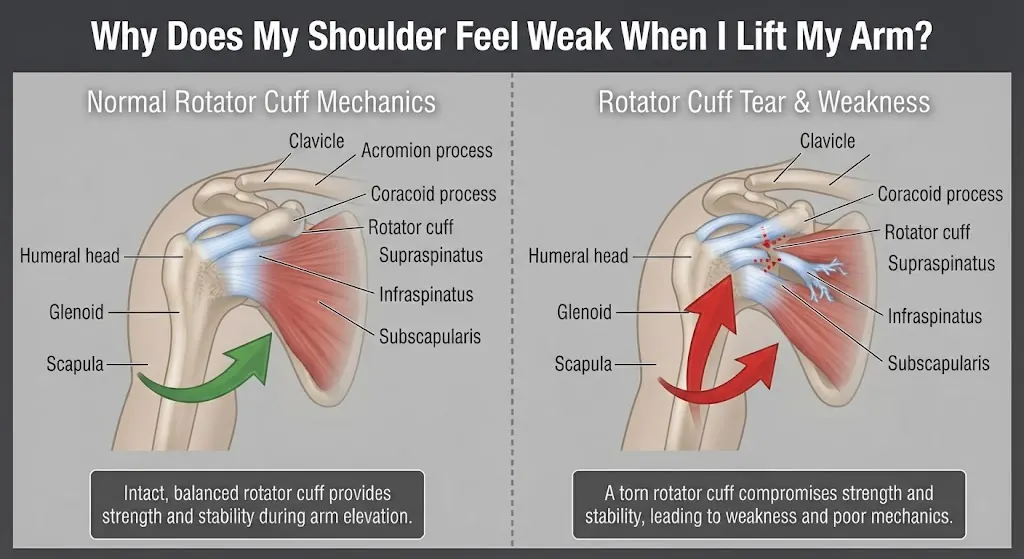
Shoulder weakness does not always mean a muscle is torn. Pain can temporarily limit how strongly you use your arm, while tendon problems, stiffness, or irritation of a nerve can also affect movement. However, new or worsening weakness should not automatically be dismissed, particularly if it begins suddenly or follows an injury.
Understanding why your shoulder feels weak when you lift your arm can help you choose safe next steps. The cause depends on when the weakness occurs, whether pain accompanies it, and whether you have lost strength or range of motion.
What causes shoulder weakness when lifting your arm?
The most common explanations involve the rotator cuff tendons, shoulder irritation, stiffness, or nerves. Symptoms can overlap, so these clues cannot confirm a diagnosis.
| Possible cause | Common clues |
|---|---|
| Rotator cuff irritation or tear | Pain or weakness when lifting, reaching overhead, or lying on that side |
| Shoulder impingement or bursitis | Painful movement, particularly during overhead reaching |
| Frozen shoulder | Increasing stiffness and difficulty moving the arm in several directions |
| Nerve irritation from the neck | Weakness with tingling, numbness, or pain traveling down the arm |
| Shoulder instability or labral problem | A feeling that the joint slips, catches, or feels unreliable |
Rotator cuff problems
The rotator cuff helps keep the shoulder stable and raises and rotates the arm. Tendon irritation can make lifting painful, while a tear may cause more noticeable weakness. Tears can sometimes develop gradually without a memorable injury.
Read about rotator cuff tear symptoms and recovery and shoulder tendonitis symptoms and treatment to understand how these conditions can differ.
Impingement, bursitis, and stiffness
Inflamed or irritated tissues may hurt as the arm moves through certain positions, making you stop or reduce effort. Shoulder impingement symptoms and shoulder bursitis symptoms often include pain during overhead activity.
If the shoulder feels increasingly stiff in nearly every direction, early signs of frozen shoulder may be relevant.
Nerve-related weakness
A nerve problem in the neck can affect the shoulder or arm, sometimes causing tingling, numbness, or pain extending below the shoulder. Learn about symptoms of a pinched nerve in the neck and what cervical radiculopathy can feel like.
How can you tell whether the weakness is serious?
Notice whether pain or a genuine loss of strength is the main problem. Pain-related weakness may improve when you avoid a painful position, but persistent weakness can indicate a tendon or nerve problem that needs assessment.
| What you notice | What it may suggest |
|---|---|
| Pain when raising the arm sideways | Rotator cuff irritation or impingement |
| Difficulty lifting even a light object | Significant tendon or muscle weakness, among other causes |
| Pain traveling down the arm | A shoulder problem or a neck-related nerve issue |
| Catching, slipping, or a feeling of instability | A possible joint or labral problem |
If you are unsure, compare your symptoms with why shoulder pain can appear when raising your arm, but do not repeatedly test your strength through pain. A shoulder labral tear is another possibility when symptoms include catching or instability, although these signs can have other explanations.
What can you safely do at home?
For mild symptoms without warning signs, temporarily reduce movements that trigger pain while keeping the shoulder gently mobile. Avoid heavy lifting, repetitive overhead work, and exercises that make weakness or pain worse.
| Helpful step | How to approach it |
|---|---|
| Modify activity | Keep objects close to your body and avoid painful overhead lifting |
| Use a cold pack | Wrap it in a towel and apply for 15–20 minutes at a time |
| Maintain gentle movement | Move within a comfortable range; do not force stretches |
| Consider pain relief | Follow label directions and check with a pharmacist or clinician if you have medical conditions, take other medicines, or are pregnant |
More suggestions are available in this guide to shoulder pain relief at home. Once pain settles, a clinician or physical therapist may recommend suitable exercises for shoulder pain relief and strength. Avoid starting strengthening exercises if you have sudden or substantial weakness.
When should you seek medical care?
Seek emergency care if shoulder or arm symptoms occur with chest pressure, shortness of breath, sweating, nausea, or jaw or back discomfort. Shoulder discomfort can sometimes accompany a heart emergency; see when shoulder pain may signal a heart problem.
| Level of concern | What to do |
|---|---|
| Mild discomfort that is improving | Modify activity and monitor symptoms |
| Persistent weakness, night pain, restricted movement, or recurring symptoms | Arrange a clinical assessment |
| Sudden major weakness, inability to move the arm, deformity, or new numbness | Seek urgent medical evaluation |
| Shoulder symptoms with possible heart attack signs | Call emergency services immediately |
A clinician may examine your strength, range of motion, neck, and sensation. Imaging depends on the findings: an X-ray can show bones and arthritis, while ultrasound or MRI may help assess soft tissues when indicated. Learn when an X-ray or MRI may help evaluate shoulder pain and why shoulder pain may persist despite a normal X-ray.
Treatment varies by cause and may include activity changes, physical therapy, or other medical care. Nonsurgical and surgical shoulder pain treatment options depend on the diagnosis, severity, and response to initial treatment. To reduce future strain, review how to prevent shoulder injuries during workouts and posture exercises for shoulder and neck discomfort.
For example, comparing labral tear vs. rotator cuff tear may help you understand why symptoms overlap, while shoulder pain that travels down the arm can point toward several possible causes. If weakness mainly appears when carrying an object, see why your shoulder hurts when lifting something.
Frequently asked questions
1. Can shoulder weakness happen without pain?
Yes. Nerve problems or rotator cuff injuries can cause weakness with little pain. New or worsening weakness should be assessed.
2. Does shoulder weakness mean I have a rotator cuff tear?
No. Tendon irritation, pain-related muscle inhibition, stiffness, and nerve problems can also cause weakness. An examination helps distinguish them.
3. Why is it hard to lift my arm above my head?
Overhead movement can aggravate rotator cuff irritation, bursitis, or impingement. Persistent difficulty deserves clinical evaluation.
4. Can a pinched nerve make my shoulder weak?
Yes. Nerve compression in the neck may cause weakness, tingling, numbness, or pain extending into the arm.
5. Should I keep exercising with shoulder weakness?
Avoid heavy or painful exercises until the cause is clearer. Gentle, comfortable movement is generally preferable to forcing the arm.
6. How long does shoulder weakness take to improve?
It depends on the cause and severity. Mild irritation may improve over days or weeks, while tendon or nerve conditions can take longer.
7. Should I use ice or heat?
Ice wrapped in a towel may help after a flare, while heat may ease stiffness. Stop if either worsens your symptoms.
8. When should I see a doctor?
Arrange an assessment if weakness persists, worsens, limits daily tasks, or comes with night pain or restricted movement.
9. Can shoulder weakness come from poor posture?
Posture and sustained positions may contribute to muscle discomfort, but they do not explain every case of weakness. Persistent loss of strength needs assessment.
10. Is sudden shoulder weakness an emergency?
Sudden major weakness, inability to move the arm, or new numbness requires urgent assessment. Call emergency services if symptoms occur with chest discomfort or shortness of breath.
Conclusion
Shoulder weakness when lifting your arm can result from tendon irritation, a rotator cuff problem, stiffness, or nerve involvement. Reduce painful activities, maintain gentle movement, and seek an assessment if weakness persists or worsens. Sudden significant weakness or symptoms of a heart emergency need immediate attention.
Disclaimer: This article is provided for educational and informational purposes only.
This article is for education purpose only and is not a diagnosis or a substitute for medical advice.