
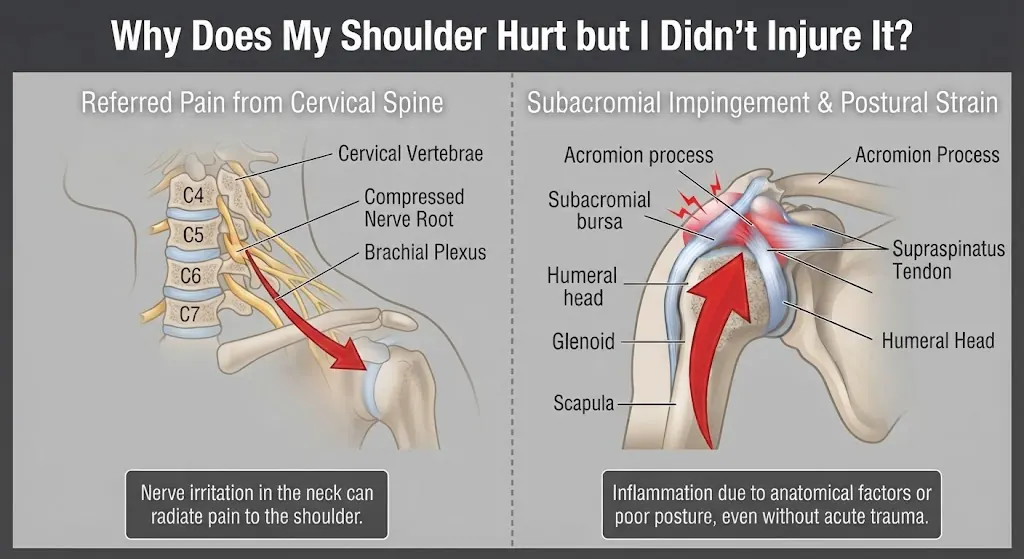
Not having an obvious injury does not automatically mean something serious is wrong. Repetitive movements, tendon irritation, joint changes, and neck-related nerve problems can develop gradually. However, persistent or worsening pain should not be dismissed, particularly if it comes with weakness, numbness, fever, or chest symptoms.
Understanding why your shoulder hurts but you didn’t injure it starts with the location of the pain, which movements trigger it, and whether other symptoms are present. These clues can help you decide what to try at home and when to seek medical care.
What Causes Shoulder Pain Without an Injury?
Shoulder pain without a clear injury often develops because of repetitive stress, inflammation, stiffness, or pain referred from another area. Several conditions can produce similar symptoms, so pain location alone cannot confirm the cause.
| Possible cause | Common symptoms | Clues to notice |
|---|---|---|
| Rotator cuff irritation | Aching or pain when raising the arm | Reaching overhead or lifting feels uncomfortable |
| Shoulder impingement-related pain | Pain during certain arm movements | Discomfort increases when reaching upward |
| Bursitis | Tenderness and pain with movement | Lying on the affected shoulder may hurt |
| Frozen shoulder | Pain with increasing stiffness | Reaching behind the back becomes difficult |
| Neck-related nerve irritation | Shoulder pain with tingling or numbness | Symptoms may extend down the arm |
| Osteoarthritis or age-related changes | Aching, stiffness, reduced movement | Symptoms may gradually develop over time |
1. Rotator cuff irritation or tendonitis
The rotator cuff is a group of muscles and tendons that helps stabilize and move the shoulder. Repeated reaching, lifting, or overhead activity can irritate these tissues without a single identifiable injury. Explore shoulder tendonitis symptoms and treatment for more detail.
2. Shoulder impingement or bursitis
Some shoulder movements can compress or irritate tissues around the joint, causing pain when lifting your arm. Inflammation of the small fluid-filled sac that reduces friction, called the bursa, can also cause discomfort. Learn about shoulder impingement symptoms and treatment and shoulder bursitis symptoms.
3. Frozen shoulder or joint changes
Frozen shoulder can cause gradually increasing pain and stiffness, making it difficult to reach overhead or behind your back. Osteoarthritis may also contribute to stiffness and aching, particularly as the shoulder joint changes with age. Read about the early signs and stages of frozen shoulder.
4. Neck problems or nerve irritation
Pain that begins around the neck and travels into the shoulder or arm may involve a nerve in the cervical spine. Tingling, numbness, burning sensations, or weakness can provide additional clues. See symptoms of a pinched nerve in the neck and cervical radiculopathy symptoms and treatment.
Why Does My Shoulder Hurt When I Raise My Arm or Sleep?
Pain during particular movements can help a clinician narrow down possible causes, although different conditions often overlap.
| When pain occurs | Possible explanation |
|---|---|
| Raising your arm overhead | Rotator cuff irritation, bursitis, or impingement-related pain |
| Reaching behind your back | Shoulder stiffness or tendon-related pain |
| Lying on one side | Pressure on sensitive shoulder tissues |
| Turning your neck | Neck-related muscle or nerve irritation |
| Moving the arm with clicking or catching | Several causes are possible; persistent painful symptoms need assessment |
If your symptoms occur mainly during overhead movement, review why shoulder pain happens when raising your arm. If the discomfort spreads down your arm, possible causes of shoulder pain radiating down the arm may help you understand what to discuss with a clinician.
What Can You Do at Home for Shoulder Pain?
For mild pain without warning signs, try reducing activities that trigger symptoms while maintaining comfortable movement.
-
Modify aggravating activities: Temporarily reduce heavy lifting, repetitive overhead movements, and painful workouts.
-
Apply a cold pack: Wrap it in a towel and use it for 15–20 minutes at a time if it helps relieve discomfort.
-
Keep the shoulder moving gently: Avoid forcing stretches or exercises that increase pain.
-
Review your posture and routine: Frequent breaks from prolonged desk work may help if sustained positions aggravate symptoms.
-
Use medicines cautiously: Over-the-counter pain relievers may help some people, but they are not appropriate for everyone. Ask a pharmacist or clinician if you have medical conditions, take other medicines, or are unsure what is safe.
For additional practical suggestions, see shoulder pain relief methods you can try at home. Once movement becomes more comfortable, a clinician or physical therapist may recommend suitable exercises for shoulder pain relief.
When Should You See a Doctor?
Arrange a medical assessment if pain persists beyond one to two weeks, repeatedly returns, limits daily activities, disrupts sleep, or causes reduced movement or noticeable weakness. Seek assessment sooner if symptoms are worsening or you develop numbness or tingling.
Seek urgent medical care for sudden severe pain, inability to move the arm, major swelling, a visibly deformed shoulder, or a hot, red shoulder accompanied by fever.
Call 911 in the United States if shoulder pain occurs with chest pressure, shortness of breath, sweating, nausea, or pain spreading to the jaw or back. These symptoms can indicate a heart emergency, even without an obvious shoulder injury. Learn when shoulder pain may be a sign of heart problems.
A clinician may examine your shoulder and neck, check strength and movement, and review your medical history. Imaging is not always necessary, but an X-ray, ultrasound, or MRI may be considered depending on the findings. If symptoms continue, nonsurgical and surgical shoulder pain treatment options explains the general approaches that may be discussed.
Frequently Asked Questions
1. Can shoulder pain start without an injury?
Yes. Repetitive activity, tendon irritation, joint stiffness, and neck problems can develop gradually without a single injury.
2. Why does my shoulder hurt more at night?
Pressure on the shoulder while lying down may aggravate sensitive tissues. Persistent night pain, especially with weakness or reduced movement, deserves medical evaluation.
3. Can stress cause shoulder pain?
Stress may contribute to muscle tension around the neck and shoulders, which can worsen discomfort. It should not automatically be assumed to be the cause of persistent pain.
4. Can sleeping in the wrong position cause shoulder pain?
Sleeping with pressure on one shoulder may temporarily aggravate it. Pain that continues during the day or repeatedly disrupts sleep may have another underlying cause.
5. Does shoulder pain without an injury mean a rotator cuff tear?
No. Several conditions can cause similar symptoms, and pain alone cannot confirm a tear. Persistent weakness or difficulty lifting the arm warrants an assessment.
6. Should I exercise with unexplained shoulder pain?
Avoid movements that reproduce or worsen the pain, particularly heavy lifting and overhead exercises. Gentle, comfortable movement is generally preferable to forcing the shoulder.
7. Can neck problems feel like shoulder pain?
Yes. Irritation of nerves in the neck can cause pain that travels into the shoulder or arm, sometimes with tingling, numbness, or weakness.
8. How long does unexplained shoulder pain last?
Duration depends on the cause. Mild irritation may improve over several days, while frozen shoulder, tendon problems, and other conditions can last much longer.
9. Will I need an MRI for shoulder pain?
Not always. A clinician usually begins with your symptoms and a physical examination, then decides whether imaging is likely to help clarify the cause.
10. When is shoulder pain an emergency?
Seek emergency help if shoulder pain occurs with chest pressure, breathing difficulty, sweating, or nausea. Sudden severe pain with major weakness or inability to move the arm also needs urgent assessment.
Conclusion
Shoulder pain without an obvious injury may result from tendon irritation, bursitis, stiffness, joint changes, or a problem involving the neck. Reduce painful activities, keep movement comfortable, and monitor whether symptoms improve. Persistent pain, weakness, or restricted movement deserves professional assessment, while emergency warning signs require immediate care.
Disclaimer: This article is provided for educational and informational purposes only.
This article is for education purpose only and is not a diagnosis or a substitute for medical advice.