
Joint pain can make everyday activities such as walking, climbing stairs, exercising, or getting out of bed uncomfortable. If your joints feel stiff or swollen, you may wonder whether certain foods are making the discomfort worse. Although diet does not explain every case of joint pain, what you eat can influence overall health and may affect inflammatory processes in the body.
It is important to separate evidence from popular nutrition claims. No single food causes joint pain in everyone, and avoiding a long list of foods will not necessarily reduce symptoms. However, frequently eating foods high in added sugar, excess sodium, or certain types of saturated fat may make a balanced, health-supporting diet harder to maintain.
Understanding which foods may worsen inflammation and joint pain can help you make practical choices without unnecessary restrictions. This guide explains which foods to limit, what the research can and cannot tell us, and how to build an eating pattern that supports joint health.
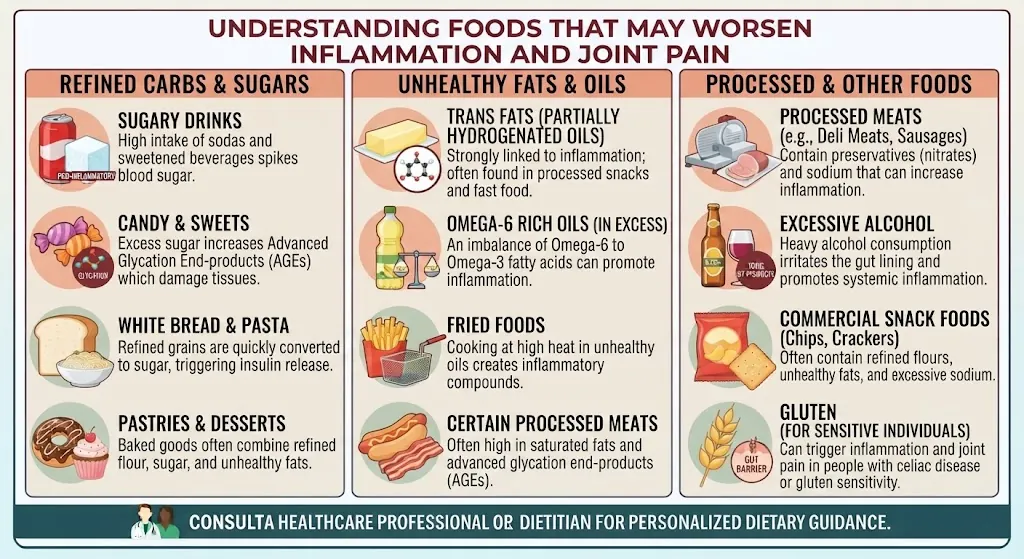
Which Foods May Worsen Inflammation and Joint Pain?
Some foods are worth limiting when they make up a large part of your diet. The overall eating pattern matters more than any single meal, and individual responses can vary.
| Food or category | Why moderation may help | Practical alternative |
|---|---|---|
| Sugary drinks, sweets, and desserts | Frequent excess added sugar can contribute to weight gain and poorer metabolic health. | Water, unsweetened tea, or fruit |
| Processed meats, such as bacon and hot dogs | Often contain substantial sodium and saturated fat, depending on the product. | Beans, lentils, fish, or unprocessed poultry |
| Foods high in saturated fat | Excess intake may make it harder to follow a balanced dietary pattern. | Nuts, seeds, olive oil, and other unsaturated fats |
| Highly processed snack foods | Often combine refined starches, added sugar, sodium, and low fiber. | Fruit, plain yogurt, or unsalted nuts |
| Excessively salty packaged foods | High sodium intake can be particularly relevant for people managing blood pressure or fluid-related health concerns. | Lower-sodium options and home-prepared meals |
These foods do not automatically trigger joint pain. The goal is to reduce frequent excesses while preserving a varied diet that provides enough protein, fiber, vitamins, and minerals.
How Does Diet Affect Joint Inflammation?
Inflammation is part of the body’s normal response to injury and infection. However, persistent inflammation can contribute to certain joint conditions. Learn more about how inflammation contributes to joint pain.
Diet may influence inflammation indirectly through metabolic health, body weight, and the nutrients available for normal tissue function. Research on dietary patterns generally supports eating more minimally processed plant foods, fiber-rich foods, and unsaturated fats. It does not establish that one specific food reliably causes or cures joint inflammation in everyone.
What Does Research Say About Sugar and Processed Foods?
Diets high in added sugars and heavily processed foods can contribute to excess calorie intake and metabolic problems. These factors may affect joint health, particularly when excess body weight places additional mechanical stress on weight-bearing joints.
However, evidence linking an individual food directly to pain is less certain than evidence supporting an overall balanced eating pattern. If you notice that a particular food consistently coincides with worse symptoms, consider tracking the pattern rather than immediately eliminating entire food groups.
For broader guidance, explore diet changes that may help manage pain naturally.
Are There Foods You Should Avoid Completely?
Most people do not need to eliminate all sugar, dairy, gluten, nightshade vegetables, or other commonly blamed foods to protect their joints. Restrictions are more appropriate when there is a confirmed allergy, intolerance, medical reason, or a clear and repeatable individual response.
| Common concern | What is known | A sensible approach |
|---|---|---|
| Sugar causes joint pain | Excess added sugar can undermine overall health, but a sugary food does not necessarily trigger pain immediately. | Reduce frequent sugary drinks and desserts. |
| Dairy worsens inflammation | Dairy affects people differently, and it can provide protein and calcium. | Avoid it only if you have a relevant intolerance, allergy, or clinician-directed reason. |
| Gluten causes joint pain | Gluten avoidance is necessary for certain conditions, including celiac disease, but is not routinely required for everyone with joint pain. | Seek medical advice if symptoms suggest a gluten-related disorder. |
| Tomatoes, peppers, or potatoes worsen arthritis | Strong evidence does not support universal avoidance of these foods for arthritis. | Track your own response before considering restrictions. |
| All processed foods are inflammatory | Processing varies widely; frozen vegetables and fortified foods can be nutritious. | Focus on the product’s ingredients and overall nutritional value. |
If you are exploring foods that may worsen joint inflammation, remember that food responses are individual. Avoid restrictive diets that leave you short of essential nutrients.
What Should You Eat Instead to Support Joint Health?
A balanced eating pattern is generally more useful than focusing only on foods to avoid. Include vegetables, fruit, whole grains, beans, nuts, seeds, and suitable protein sources. Fish can provide protein and, depending on the type, omega-3 fatty acids.
Adequate nutrition supports normal bone, muscle, and connective-tissue function, but no food guarantees pain relief. Find out which vitamins and minerals support healthy joints and how to maintain everyday habits that support joint health.
Hydration also matters for general health, although drinking extra water has not been shown to cure arthritis. See whether drinking enough water supports joint health.
| Supportive habit | Why it may help | How to start |
|---|---|---|
| Eat varied, minimally processed foods | Helps provide fiber and essential nutrients. | Add vegetables or fruit to regular meals. |
| Include protein throughout the day | Supports muscle maintenance and tissue repair. | Choose beans, eggs, fish, poultry, or suitable alternatives. |
| Stay physically active | Movement can support strength, mobility, and function. | Try low-impact exercises for people with joint pain. |
| Consider weight management when appropriate | Reducing excess load may help some weight-bearing joints. | Seek a sustainable plan rather than a crash diet. |
Can Changing Your Diet Relieve Joint Pain?
Dietary changes may support joint health, but they cannot replace evaluation or treatment for an underlying condition. Osteoarthritis, autoimmune disease, injuries, and other problems can cause similar symptoms and may require different care.
If your knee hurts repeatedly, review common causes of knee pain and when to see a doctor. For persistent hip discomfort, why hip pain can develop while walking may help you understand possible causes. Pain elsewhere in the body, including common causes and risk factors for back pain, may also need a separate assessment.
How Can You Identify Personal Food Triggers?
Keep a simple food and symptom diary for a few weeks. Record meals, approximate portions, activity, sleep, and when pain or stiffness changes. Look for repeated patterns rather than assuming that one difficult day proves a food is responsible.
If you suspect a trigger, discuss a safe, time-limited dietary adjustment with a qualified healthcare professional or registered dietitian, particularly if you have a chronic condition or are already restricting foods. Lifestyle measures may complement care, as explained in lifestyle changes that can support orthopedic pain management.
When Should Joint Pain Be Medically Evaluated?
Do not assume that joint pain is caused by food. Arrange a medical evaluation if symptoms persist, recur, interfere with sleep or daily activities, or come with prolonged morning stiffness, unexplained fatigue, or ongoing swelling.
Seek urgent medical care if a joint suddenly becomes hot, red, and markedly swollen, especially with fever, or if severe pain follows an injury or you cannot bear weight. Prompt assessment is important because some causes require treatment that dietary changes cannot provide.
Pain that continues over time can have several explanations. Understanding what chronic pain means may help you prepare questions for a clinician, but persistent symptoms should not be self-diagnosed.
Frequently Asked Questions
1. What foods are worst for joint inflammation?
Frequently consuming sugary drinks, sweets, and highly processed foods may make a balanced diet harder to maintain. No single food is universally the worst trigger for everyone.
2. Can sugar make my joints hurt?
Excess added sugar can contribute to poor metabolic health, but eating sugar does not automatically cause joint pain. Track symptoms before attributing a flare to a particular food.
3. Do tomatoes and potatoes cause arthritis inflammation?
There is not strong evidence that these foods worsen arthritis in everyone. Unless you have a specific reaction or medical reason to avoid them, they can generally remain part of a balanced diet.
4. Should I stop eating dairy if my joints hurt?
Not routinely. Dairy can provide protein and calcium, so consider alternatives that supply these nutrients if you must avoid it because of an allergy or intolerance.
5. Can an anti-inflammatory diet cure arthritis?
No diet is proven to cure arthritis. A balanced eating pattern may support overall health and symptom management, but it does not replace appropriate medical care.
6. How long does it take for dietary changes to affect joint pain?
There is no reliable universal timeline. If a dietary change helps, the effect may vary with the person, the condition, and other factors affecting symptoms.
7. Is red meat bad for joint pain?
Red meat does not automatically worsen joint pain, although processed meats and high saturated-fat intake are worth limiting as part of a balanced diet. Your overall dietary pattern matters more than one food in isolation.
8. Does drinking more water reduce joint pain?
Staying hydrated supports normal body function, but extra water is not a proven treatment for arthritis. Drink regularly and follow any fluid guidance provided for an existing medical condition.
9. Can losing weight help painful knees?
For people carrying excess weight, gradual weight loss may reduce mechanical stress on the knees and improve mobility. A clinician or dietitian can help determine whether weight management is appropriate for you.
10. When should I see a doctor about joint pain?
Seek an evaluation if pain persists, keeps returning, limits normal activities, or occurs with ongoing swelling or stiffness. A suddenly hot, red, swollen joint with fever or severe pain after an injury needs urgent assessment.
Conclusion
Foods may influence overall health and, indirectly, joint symptoms, but there is no universal list of foods that everyone with joint pain must avoid. Focus on a balanced eating pattern, limit frequent excesses of added sugar and highly processed foods, and track suspected triggers without unnecessary restrictions. If pain persists or warning signs appear, seek medical advice rather than relying on diet alone.
Disclaimer: This article is provided for educational and informational purposes only.
This article is for education purpose only and is not a diagnosis or a substitute for medical advice.