
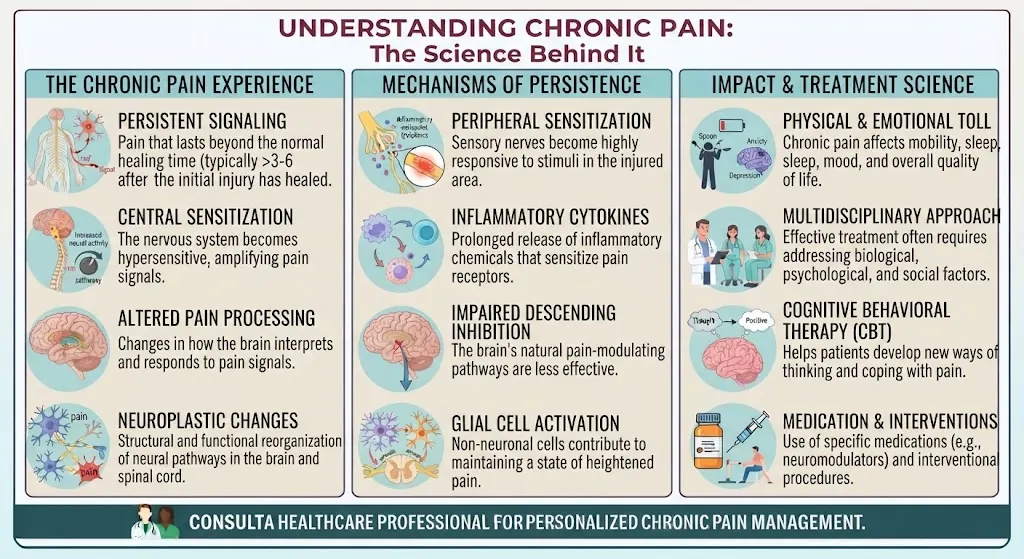
Chronic pain can make ordinary activities such as walking, sleeping, working, or sitting for long periods unexpectedly difficult. Unlike pain that fades as an injury heals, persistent pain may continue for months, sometimes without an obvious ongoing injury. It can affect energy, concentration, mood, and quality of life.
Living with ongoing pain does not necessarily mean that the body is still being damaged. At the same time, persistent pain should not be dismissed as imaginary or simply a normal part of aging. Understanding how the nervous system processes pain can help explain why symptoms continue and why different people respond differently to similar injuries.
Chronic pain is generally defined as pain that lasts or recurs for longer than three months. This guide explains how chronic pain develops, common causes, the role of the nervous system, treatment approaches, and signs that warrant medical evaluation.
What Is Chronic Pain?
Chronic pain is pain that persists or repeatedly returns beyond the usual period of healing. It may begin after an injury, surgery, or illness, or develop gradually without a clearly identifiable starting point.
Unlike acute pain, which often serves as a short-term warning signal, chronic pain can become a condition in its own right. The distinction matters because acute pain versus chronic pain may require different approaches to assessment and treatment.
| Feature | Acute pain | Chronic pain |
|---|---|---|
| Typical duration | Short-term, often related to injury or illness | Longer than three months or recurring |
| Main pattern | Often improves as the cause heals | May persist after expected healing |
| Nervous system | Usually responds to an immediate threat | Pain-processing pathways may become more sensitive |
| Treatment focus | Address the cause and support healing | Address contributing causes, function, sleep, and pain regulation |
Duration alone does not identify the cause. A clinician considers the pain’s location, quality, history, associated symptoms, and effect on daily life.
What Causes Chronic Pain?
Chronic pain has several possible causes. Sometimes a medical condition continues to stimulate pain-sensitive structures; in other cases, changes in how the nervous system processes signals contribute to ongoing symptoms.
Common causes and contributing factors include:
- Musculoskeletal conditions: Arthritis, back problems, tendon disorders, and previous injuries can cause persistent discomfort. For example, degenerative disc disease symptoms and treatment options can vary depending on the structures involved and a person’s symptoms.
- Nerve-related conditions: Nerve injury or compression can cause burning, tingling, electric-shock sensations, or shooting pain.
- Inflammatory conditions: Some illnesses produce ongoing inflammation, swelling, stiffness, and pain.
- Pain that continues after healing: Symptoms may persist even when the original tissue injury has improved. Understanding why pain continues after an injury heals can help explain this pattern.
- Conditions involving widespread pain: Fibromyalgia is one example in which pain may occur across multiple body regions alongside fatigue or sleep difficulties.
Sometimes more than one factor contributes to the same person’s pain. For instance, a joint condition may coexist with muscle tension, disrupted sleep, and increased nervous system sensitivity.
How Does the Brain and Nervous System Process Chronic Pain?
Pain is not simply a direct measurement of tissue damage. It is an experience produced by the nervous system using signals from the body alongside information about context, previous experiences, and potential threats.
When tissue is injured, nerves send signals toward the spinal cord and brain. The brain processes these signals and generates the experience of pain, helping the person respond to possible harm.
With persistent pain, the system may become more responsive. Central sensitization describes increased responsiveness within the central nervous system, which can contribute to pain that feels stronger, spreads beyond the original area, or occurs with normally nonpainful stimulation. It is one possible mechanism, not an explanation for every chronic pain condition. Learn more about how the nervous system can amplify pain.
Stress can also affect pain processing, muscle tension, and sleep. This does not mean the pain is psychological or unreal; it means physical and emotional processes interact. The relationship between stress and muscle and joint pain may be relevant for some people.
What Does Chronic Pain Feel Like?
Chronic pain differs from person to person. It may be constant, intermittent, localized, or widespread.
Common descriptions include:
- Aching, soreness, or deep pressure
- Burning, tingling, or shooting sensations
- Stiffness or discomfort during movement
- Increased sensitivity to touch or pressure
- Pain that worsens with activity, poor sleep, or stress
- Fatigue, reduced concentration, or difficulty sleeping
Pain intensity can fluctuate from day to day. A more painful day does not automatically mean that a condition is worsening, but new or substantially changing symptoms deserve attention.
How Is Chronic Pain Diagnosed?
There is no single test that identifies every type of chronic pain. Evaluation usually begins with a medical history and physical examination.
A clinician may ask when the pain started, what makes it better or worse, whether it travels to another area, and how it affects sleep and daily activities. Depending on the findings, blood tests, X-rays, MRI scans, or nerve tests may be appropriate. Imaging is not always necessary, and an abnormal scan does not automatically explain the pain.
Keep a brief record of pain patterns, activity levels, sleep, medications, and associated symptoms. This can help identify useful patterns without requiring constant monitoring.
What Treatments Can Help Chronic Pain?
Treatment depends on the underlying condition, symptoms, health history, and personal goals. The aim is often to reduce pain while improving mobility, sleep, independence, and participation in daily activities.
| Treatment approach | Potential role | Important consideration |
|---|---|---|
| Physical therapy and graded movement | Improve strength, mobility, and confidence with activity | Exercise should be adapted to symptoms and the underlying condition |
| Medication | Reduce certain types of pain or treat a contributing condition | Benefits and risks vary; some medicines can cause serious side effects |
| Psychological approaches, such as cognitive behavioral therapy | Develop coping skills and reduce pain-related distress | Does not mean the pain is imaginary |
| Sleep and stress management | Support recovery, mood, and pain regulation | Usually works best as part of a broader plan |
| Condition-specific treatment | Address inflammation, nerve compression, or another identifiable cause | Depends on accurate clinical assessment |
For many people, a combination of approaches is more useful than relying on one treatment alone. Low-impact exercises for people with joint pain may offer movement options when high-impact activity is uncomfortable, but the right activity depends on the person’s condition.
Medication should be reviewed with a healthcare professional, especially when pain treatment involves opioids, sedating medicines, anti-inflammatory drugs, or multiple prescriptions. Do not abruptly stop a prescribed medication without appropriate guidance.
Daily Habits That May Support Pain Management
Lifestyle changes cannot cure every cause of chronic pain, but they may support function and make symptoms easier to manage.
- Pace activities: Break demanding tasks into manageable periods and alternate activity with rest. Avoid cycles of doing too much on a good day and becoming inactive afterward.
- Maintain regular movement: Start at a tolerable level and increase gradually when appropriate. Prolonged inactivity can contribute to weakness and reduced mobility.
- Protect sleep: Keep a consistent sleep schedule and discuss persistent insomnia with a clinician.
- Eat regularly and stay hydrated: Balanced nutrition and adequate fluids support general health, although neither is a stand-alone treatment for chronic pain.
- Track meaningful changes: Note changes in function, sleep, medication effects, and new symptoms rather than judging progress only by pain intensity.
For additional context, explore everyday habits that influence joint health and dietary changes that may help with pain management.
When Should You Seek Medical Care?
Pain lasting longer than three months deserves assessment, particularly when it interferes with work, sleep, movement, or everyday activities. Seek care sooner if pain is unexplained, worsening, or accompanied by other symptoms.
| Level of concern | Examples | What to do |
|---|---|---|
| Routine appointment | Persistent pain, recurring stiffness, sleep disruption, or reduced function | Arrange a medical evaluation |
| Prompt medical assessment | New or worsening pain, unexplained weight loss, persistent fever, or a hot, swollen joint | Contact a healthcare professional promptly |
| Emergency care | Severe back pain with new loss of bladder or bowel control, numbness around the groin, rapidly progressing weakness, or chest pain with shortness of breath | Seek emergency care immediately |
Warning signs depend on the location and pattern of pain. Do not assume a new symptom is part of an existing chronic condition without considering whether it needs separate evaluation.
Frequently Asked Questions
1. How long does pain have to last to be considered chronic?
Chronic pain is generally pain that persists or recurs for more than three months. The duration helps classify the pain but does not establish its cause.
2. Can chronic pain occur without an injury?
Yes. Chronic pain can develop without a clear injury or identifiable starting point. A clinical assessment can help determine whether an underlying condition or changes in pain processing may be contributing.
3. Does chronic pain mean my body is still being damaged?
Not necessarily. Pain can continue after tissues have healed, although ongoing inflammation, nerve problems, or other conditions may also cause persistent symptoms.
4. Can stress make chronic pain worse?
Stress may increase muscle tension, interfere with sleep, and influence how the nervous system processes pain. Managing stress can support treatment, but it does not replace evaluation of possible physical causes.
5. Is chronic pain the same as nerve pain?
No. Nerve pain is one type of pain that can become chronic, but chronic pain can also arise from musculoskeletal, inflammatory, or other conditions. Symptoms and examination findings help guide the assessment.
6. Can exercise help chronic pain?
Appropriately selected movement may improve strength, mobility, and daily function. Start gradually and seek professional guidance if exercise causes substantial worsening or if you have an injury or medical condition requiring specific restrictions.
7. Can chronic pain affect sleep and mood?
Yes. Persistent pain can disrupt sleep and contribute to frustration, anxiety, or low mood. Poor sleep and emotional distress can, in turn, make pain harder to manage.
8. Will an MRI identify the cause of chronic pain?
Not always. Imaging can help identify certain structural problems, but some pain conditions do not produce clear imaging findings. Results must be interpreted alongside symptoms and the physical examination.
9. Can chronic pain go away?
Some people improve substantially, while others experience recurring symptoms that require long-term management. Outcomes depend on the cause, contributing factors, and response to treatment; no single recovery timeline applies to everyone.
10. What should I tell my doctor about chronic pain?
Describe when it began, where you feel it, how it feels, what affects it, and how it changes your daily activities or sleep. Mention associated symptoms, previous injuries, current medicines, and treatments you have tried.
The Bottom Line
Chronic pain is a complex experience involving the body and nervous system, and it does not always indicate ongoing tissue damage. Identifying possible causes, staying appropriately active, supporting sleep, and developing an individualized treatment plan can help improve daily function. If pain persists, worsens, or comes with warning signs, seek medical guidance rather than trying to manage it alone.
Disclaimer: This article is provided for educational and informational purposes only
This article is for education purpose only and is not a diagnosis or a substitute for medical advice.