
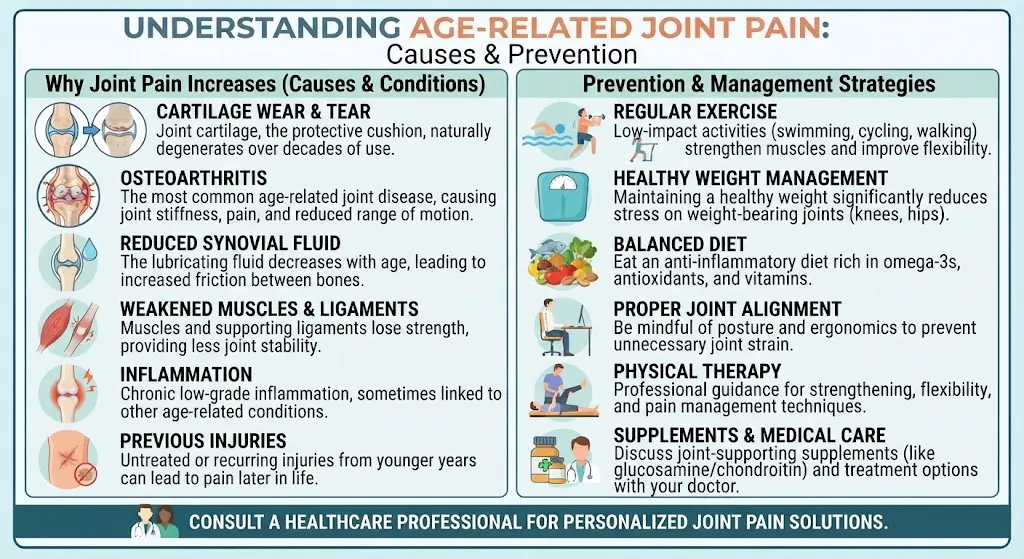
Joint pain can become more noticeable as you get older, especially when climbing stairs, walking for long periods, getting out of bed, or standing after sitting. Morning stiffness and reduced flexibility may also make everyday activities feel harder than they used to.
However, joint pain is not an inevitable part of aging. Some changes develop gradually as cartilage, muscles, tendons, and other tissues change, while persistent pain can also signal arthritis or another treatable condition. Understanding how aging affects muscles, bones, and joints helps explain why discomfort develops and what may help protect mobility.
This guide explains the common causes of age-related joint pain, how normal aging differs from possible medical problems, and which practical steps may help you stay active. It also covers warning signs that deserve medical attention.
Why Does Joint Pain Increase With Age?
Joint pain may become more common with age because joint tissues change, muscle strength can decline, and years of repeated movement place cumulative demands on the body. These factors can occur together, but age alone does not identify the cause of pain.
Common causes of age-related joint pain
- Osteoarthritis: The protective tissues within a joint change over time, sometimes causing pain, stiffness, swelling, and reduced movement.
- Muscle weakness: Less strength around a joint can increase the effort needed for walking, lifting, and climbing stairs.
- Tendon and ligament changes: Tendons may become less tolerant of sudden increases in activity, while soft-tissue injuries can take longer to recover.
- Inflammatory conditions: Rheumatoid arthritis and other inflammatory disorders can cause joint pain and swelling at different ages.
- Previous injuries: Earlier injuries may contribute to joint symptoms years later.
- Changes in body weight and activity: Excess weight can increase the mechanical load on weight-bearing joints, while prolonged inactivity can worsen stiffness.
The relationship between age and discomfort is not the same for everyone. Genetics, previous injuries, health conditions, physical activity, and occupational demands all influence joint health.
Normal Aging vs. Joint Problems That Need Evaluation
| Feature | Possible age-related change | Reason to seek medical evaluation |
|---|---|---|
| Stiffness | Brief stiffness after resting | Persistent or worsening stiffness |
| Pain | Mild discomfort after unusual activity | Frequent pain that limits daily tasks |
| Swelling | No significant swelling | Recurrent warmth, redness, or swelling |
| Movement | Gradual reduction in flexibility | Sudden loss of movement or joint instability |
These patterns are clues, not a diagnosis. For example, knee arthritis symptoms and treatment options may differ from symptoms caused by a meniscus injury or another joint condition.
How Can You Help Prevent or Reduce Joint Pain as You Age?
You cannot prevent every joint condition, but consistent habits can support strength, flexibility, balance, and everyday function.
1. Choose regular, joint-friendly movement
Walking, swimming, cycling, and other comfortable low-impact activities can help maintain mobility. Start at a manageable level and increase duration gradually rather than suddenly adding long walks or intense workouts. Explore low-impact exercises for people with joint pain.
Gentle strength training can also support the muscles surrounding painful joints. A physical therapist can adapt movements to your abilities and medical history. A physical therapy versus chiropractic care comparison may help you understand different approaches to musculoskeletal care.
2. Maintain a comfortable, sustainable weight
For people carrying excess weight, gradual weight loss may reduce stress on the knees and hips. Avoid extreme diets; a sustainable eating pattern that includes vegetables, fruits, whole grains, protein sources, and healthy fats better supports overall health. Learn how excess weight affects the joints and spine.
3. Support recovery with everyday habits
Take movement breaks during prolonged sitting, wear comfortable footwear, and increase exercise intensity gradually. A brief warm-up before activity can prepare your body for movement; understand the difference between a warm-up and stretching.
Adequate sleep and hydration support general health, although neither is a stand-alone treatment for arthritis. A balanced diet can provide nutrients needed for normal bone and muscle function. Read about vitamins and minerals that support joint health and everyday choices that influence joint health.
4. Respond to pain rather than pushing through it
If an activity increases pain, reduce its intensity or duration and see whether symptoms settle. Temporary modification is usually more useful than stopping all movement indefinitely. Persistent symptoms may need a clinician’s assessment and an individualized treatment plan.
What Types of Joint Pain Are More Common as You Get Older?
| Joint or symptom pattern | Possible explanation | Helpful next step |
|---|---|---|
| Knee pain during walking or stairs | Osteoarthritis or other knee conditions | Modify activity and seek assessment if persistent |
| Hip pain with walking | Joint or surrounding soft-tissue problems | Discuss ongoing pain with a clinician |
| Hand stiffness or aching | Osteoarthritis or inflammatory arthritis | Note which joints are affected and when |
| Multiple swollen joints | Possible inflammatory or systemic condition | Arrange prompt medical evaluation |
Pain location alone cannot establish the cause. For example, hip pain when walking may arise from several structures, while sharp pain behind the knee may require a different evaluation.
When Should You Seek Medical Care?
Arrange a medical appointment if joint pain persists, repeatedly returns, disrupts sleep, limits normal activities, or comes with ongoing stiffness or swelling. A clinician may review your symptoms, examine the joint, and decide whether imaging or blood tests are appropriate.
Seek urgent medical care for a suddenly hot, red, swollen joint, particularly with fever or feeling unwell. Get prompt assessment after a significant injury if you cannot bear weight, the joint looks deformed, or you experience sudden severe pain.
Do not assume new or worsening symptoms are simply due to age. Early evaluation can help identify the cause and guide appropriate care.
Frequently Asked Questions
1. Is joint pain a normal part of aging?
Joint stiffness and changes in mobility can become more common with age, but persistent pain is not something you must accept. New, worsening, or limiting symptoms deserve evaluation.
2. At what age does joint pain usually start?
There is no single age when joint pain begins. It depends on genetics, activity, previous injuries, medical conditions, and the joints involved.
3. Does everyone develop osteoarthritis as they get older?
No. Osteoarthritis becomes more common with age, but not everyone develops painful osteoarthritis. Joint symptoms and imaging findings do not always match.
4. Why do my joints hurt more in the morning?
Stiffness can follow periods of inactivity and may occur with osteoarthritis or inflammatory conditions. Prolonged morning stiffness, especially with swelling, should be discussed with a clinician.
5. Can exercise make age-related joint pain worse?
Sudden increases in exercise intensity or repetitive high-impact activity may aggravate symptoms. Appropriate, gradually progressed movement often helps maintain function, but exercises should be adjusted if pain worsens.
6. Does cold weather cause joint pain?
Some people report more discomfort or stiffness during cold weather, but responses vary. Weather-related changes do not identify the underlying cause of joint pain.
7. Can losing weight help painful knees and hips?
If you have excess weight, gradual weight loss may reduce the load on weight-bearing joints and improve mobility. Benefits vary, and weight management is only one part of joint care.
8. Which foods help protect joints as you age?
A balanced diet with varied vegetables, fruits, whole grains, protein, and unsaturated fats supports overall health. No single food or supplement has been shown to prevent every age-related joint condition.
9. When should I worry about joint swelling?
Persistent or recurring swelling needs medical assessment, particularly when several joints are affected. A hot, red, swollen joint with fever or feeling unwell needs urgent evaluation.
10. Can age-related joint pain be reversed?
The answer depends on the cause. Some symptoms improve with appropriate exercise, treatment, and lifestyle changes, while structural changes such as osteoarthritis may need ongoing management.
Conclusion
Joint pain becomes more common with age, but it is not inevitable, and it should not automatically be dismissed as normal. Regular low-impact exercise, strength training, sustainable weight management, and timely medical evaluation can help protect mobility. If pain persists, worsens, or comes with swelling or sudden movement difficulties, seek professional guidance.
Disclaimer: This article is provided for educational and informational purposes only.
This article is for education purpose only and is not a diagnosis or a substitute for medical advice.