
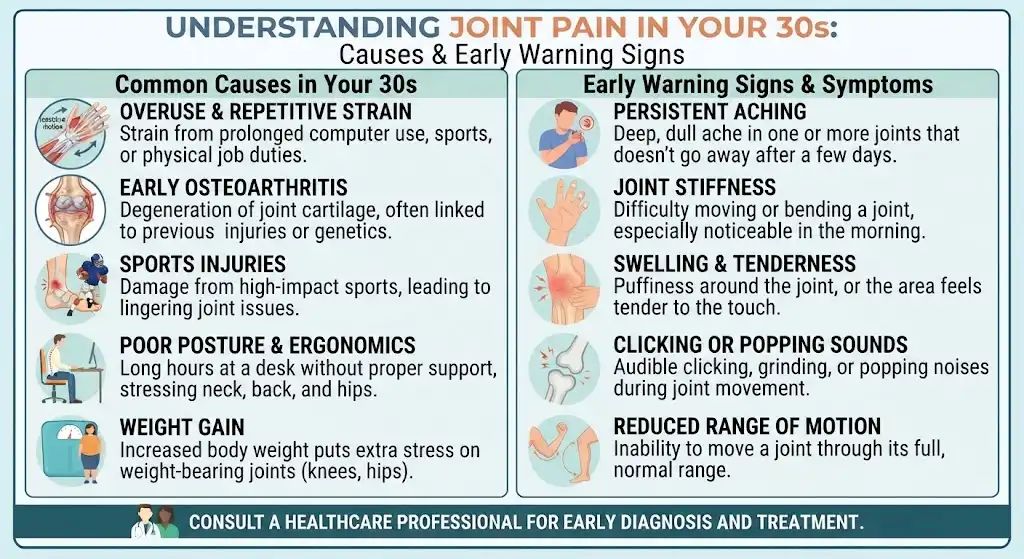
Joint pain in your 30s can be frustrating, especially when your knees ache after a workout, your fingers feel stiff in the morning, or your hips hurt after sitting at a desk all day. You may wonder whether these symptoms are normal, whether you are developing arthritis, or whether something in your daily routine is contributing to the discomfort.
Although some joint pain comes from exercise, repetitive movements, or prolonged sitting, recurring pain should not automatically be dismissed as a sign of getting older. Inflammatory conditions, previous injuries, and other medical issues can also cause symptoms in younger adults.
This guide explains the common causes of joint pain in your 30s, early warning signs worth recognizing, and practical steps that may help protect your joint health. It also explains when self-care may be reasonable and when to seek medical evaluation.
Why Do Your Joints Hurt in Your 30s?
Joint pain in your 30s can develop from several causes, including overuse, muscle weakness, previous injuries, inflammatory conditions, and osteoarthritis. Your age alone cannot determine the cause, and pain does not necessarily mean that your joints are permanently damaged.
1. Exercise and repetitive strain
Increasing workout intensity too quickly, running more miles than usual, lifting heavy weights, or repeating the same movement at work can overload joints and nearby tendons. Symptoms may include aching during activity, tenderness, or discomfort that persists after exercise.
For example, knee pain after running can be associated with several conditions, including irritation around the kneecap or overuse injuries. A sudden increase in training volume is worth reviewing if symptoms repeatedly return.
2. Long periods of sitting and limited movement
Desk work and long commutes can leave the hips, knees, and back feeling stiff. Staying in one position for extended periods may contribute to discomfort, particularly when combined with low activity levels or reduced muscle strength.
Taking regular movement breaks and gradually building activity may help. However, persistent pain should not automatically be attributed to posture or sitting.
3. Previous injuries and early joint changes
Old sports injuries, ligament damage, or cartilage injuries can contribute to symptoms years later. Osteoarthritis can also develop before age 40, especially after certain joint injuries, although it is not inevitable.
Learn about how aging affects muscle, bone, and joint health to understand how tissue changes and physical demands influence mobility over time.
4. Inflammatory and other medical conditions
Rheumatoid arthritis and other inflammatory disorders can begin in your 30s. These conditions may cause persistent swelling, warmth, pain in multiple joints, or stiffness that lasts longer than expected after waking.
Other possible contributors include gout, certain infections, thyroid disorders, and—in some cases—nutritional deficiencies. Symptoms alone cannot confirm any of these conditions.
Early Warning Signs of Joint Problems
Occasional soreness after unfamiliar activity often improves with appropriate rest and recovery. Symptoms that persist, recur, or interfere with everyday activities deserve closer attention.
| Symptom | Possible explanation | What to do |
|---|---|---|
| Mild soreness after exercise | Overuse or increased training load | Reduce intensity and monitor recovery |
| Stiffness after sitting | Temporary stiffness or an underlying joint problem | Move regularly and assess whether symptoms persist |
| Repeated swelling or warmth | Inflammation, injury, or another medical condition | Arrange medical evaluation |
| Morning stiffness with several painful joints | Possible inflammatory condition | Seek timely assessment |
| Sudden severe pain or inability to bear weight | Significant injury or urgent joint problem | Seek urgent medical care |
These patterns are not diagnostic. For example, knee arthritis symptoms and treatment options differ from those of a meniscus injury, and a clinician may need to examine the joint to distinguish between them.
How Can You Protect Your Joints in Your 30s?
You cannot prevent every joint condition, but a few consistent habits can support strength, mobility, and recovery.
Stay active without overloading your joints
Choose activities you can tolerate, such as walking, swimming, cycling, or appropriately modified strength training. Increase exercise duration and resistance gradually, and avoid repeatedly pushing through sharp or worsening pain. These low-impact exercises for people with joint pain may provide useful options.
Before workouts, use a gradual warm-up and adjust movements to your current ability. Understanding the difference between a warm-up and stretching can help you prepare for activity without relying on stretching alone.
Support your overall health
Maintain a balanced diet, get adequate sleep, and take movement breaks during long periods of sitting. If you carry excess weight, gradual weight management may reduce mechanical stress on weight-bearing joints. Avoid restrictive diets or supplements marketed as guaranteed solutions for joint pain.
You can also review everyday habits that influence joint health and nutrients that support joint health. Supplements are not a substitute for a varied diet or appropriate medical care.
When Should You See a Doctor?
Book an appointment if joint pain lasts more than a couple of weeks, repeatedly returns, worsens, disrupts sleep, or limits walking, work, exercise, or other daily activities. Seek evaluation sooner if you have persistent morning stiffness, multiple swollen joints, unexplained fatigue, or symptoms that are progressively worsening.
A clinician may ask when the pain began, which joints are affected, whether symptoms follow activity, and whether swelling or stiffness occurs. Depending on the findings, examination, blood tests, or imaging may be appropriate.
Seek urgent medical care for a suddenly hot, red, swollen joint, especially with fever or feeling unwell. Sudden severe pain after an injury, visible deformity, or inability to put weight on a leg also warrants urgent assessment.
Frequently Asked Questions
1. Is joint pain normal in your 30s?
Joint pain can occur in your 30s, but persistent or unexplained symptoms should not simply be considered normal. The cause may range from overuse to an injury or medical condition.
2. Can you develop arthritis in your 30s?
Yes. Osteoarthritis can occur in younger adults, particularly after joint injuries, and inflammatory arthritis can begin at many ages. A clinical assessment helps determine what may be causing symptoms.
3. Why do my joints hurt when I wake up?
Stiffness may follow periods of inactivity, but prolonged morning stiffness or swelling in several joints can indicate an inflammatory condition. Note how long symptoms last and discuss persistent changes with a clinician.
4. Can working at a desk cause joint pain?
Long periods of sitting can contribute to stiffness and discomfort, especially around the hips and back. Regular movement breaks may help, but ongoing pain may have other causes.
5. Can exercise cause joint pain in your 30s?
Yes. Sudden increases in training volume, repetitive movements, or poor recovery can aggravate joints and surrounding tissues. Reduce the provoking activity and seek advice if pain persists or worsens.
6. Does joint pain mean I have early arthritis?
No. Joint pain alone cannot establish that you have arthritis. Tendon irritation, muscle problems, injuries, and other conditions can produce similar symptoms.
7. Can stress contribute to joint pain?
Stress can increase muscle tension and influence how the nervous system processes pain, potentially making discomfort harder to manage. It should not be assumed to be the sole cause of persistent swelling or joint pain.
8. Which foods are best for joint health?
A varied diet with vegetables, fruit, whole grains, protein sources, and unsaturated fats supports general health. No single food reliably prevents or cures all joint conditions.
9. When is joint pain an emergency?
A hot, red, swollen joint with fever or feeling unwell requires urgent medical evaluation because infection is one possible cause. Sudden severe pain, deformity, or inability to bear weight after an injury also needs urgent assessment.
10. How can I prevent joint pain from getting worse?
Build strength gradually, stay active at a comfortable level, avoid sudden training increases, and allow time for recovery. If pain keeps returning, seek an assessment rather than repeatedly treating the symptoms without identifying the cause.
Conclusion
Joint pain in your 30s can result from overuse, prolonged inactivity, previous injuries, or medical conditions that deserve attention. Regular movement, gradual strength training, balanced nutrition, and timely evaluation can help you protect your mobility. If symptoms persist, worsen, or occur with swelling or prolonged stiffness, consult a healthcare professional instead of assuming age or lifestyle is the only explanation.
Disclaimer: This article is provided for educational and informational purposes only.
This article is for education purpose only and is not a diagnosis or a substitute for medical advice.