
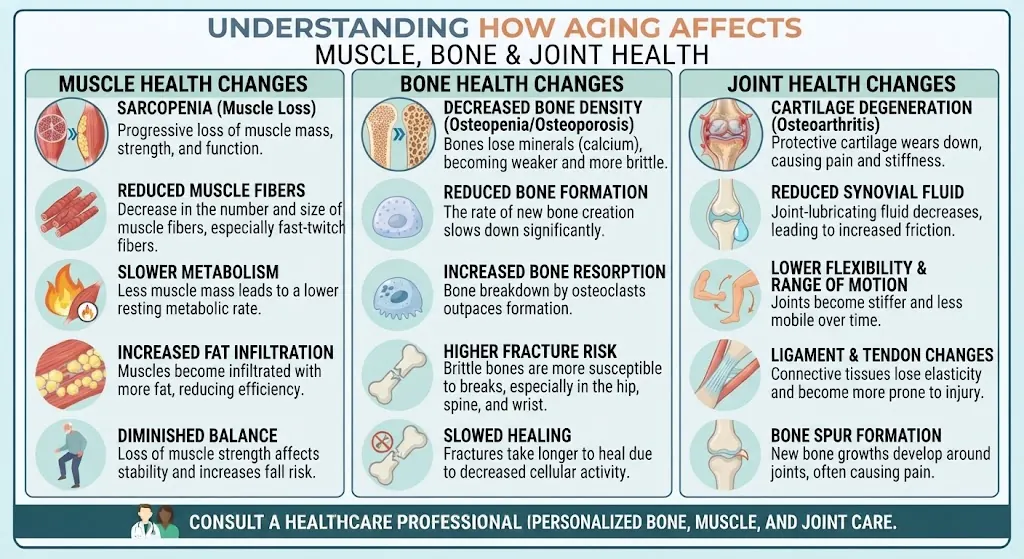
Aging gradually changes how your muscles, bones, and joints function. You may notice that you feel stiffer after sitting, need more time to recover after exercise, or find it harder to maintain the strength you once had. These changes can develop slowly, but they do not affect everyone at the same rate.
Although some physical changes are a normal part of aging, persistent pain, significant weakness, or reduced mobility should not automatically be dismissed as getting older. Activity levels, nutrition, previous injuries, medical conditions, and genetics can all influence musculoskeletal health.
Understanding how aging affects muscle, bone, and joint health can help you recognize expected changes, identify symptoms that need medical attention, and make practical choices to protect strength, mobility, and independence throughout life.
How Does Aging Affect Muscles, Bones, and Joints?
Aging affects different parts of the musculoskeletal system in different ways. Muscles may lose size and strength, bones may gradually lose density, and joints can experience changes in cartilage, connective tissue, and surrounding muscles. These processes are influenced by age, lifestyle, hormones, health conditions, and physical activity.
| Body structure | Common age-related changes | Possible effects |
|---|---|---|
| Muscles | Gradual loss of muscle mass and strength | Reduced endurance, weakness, and difficulty lifting or climbing stairs |
| Bones | Changes in bone density and structure | Greater vulnerability to fractures when bones become fragile |
| Joints | Changes in cartilage and other joint tissues | Stiffness, discomfort, and reduced range of motion |
| Tendons and ligaments | Changes in tissue properties and recovery | Reduced flexibility or greater susceptibility to some injuries |
| Balance system | Changes in strength, coordination, vision, or sensation | Increased risk of falls |
These changes are not inevitable to the same degree for everyone. Regular exercise, adequate nutrition, and appropriate management of health conditions can help preserve function.
Why Does Muscle Strength Decline With Age?
Muscle strength can decrease with age because of changes in muscle tissue, the nervous system, hormones, and physical activity. The gradual loss of muscle mass and function associated with aging is known as sarcopenia. It can make everyday activities, including carrying groceries, rising from a chair, or walking uphill, more challenging.
Periods of inactivity can accelerate weakness. Recovery after illness or injury may also take longer, particularly when someone loses strength during bed rest or reduced activity.
To help maintain muscle function:
- Perform strength-training exercises suited to your abilities at least twice weekly, when medically appropriate.
- Include regular walking or other aerobic activity.
- Eat enough calories and protein to support muscle maintenance.
- Increase exercise intensity gradually rather than suddenly starting demanding workouts.
If weakness develops rapidly, affects one side of the body, or interferes significantly with daily activities, seek medical evaluation rather than assuming it is age-related.
How Does Aging Affect Bone Density?
Bones continuously break down and rebuild. With age, this balance can shift toward bone loss, especially after menopause because declining estrogen can accelerate bone-density reduction. Other factors, including low calcium intake, vitamin D deficiency, certain medications, smoking, and some medical conditions, can also affect bone health.
When bone density becomes low, a person may develop osteopenia or osteoporosis. These conditions often cause no symptoms until a fracture occurs. A fracture after a minor fall or an unexpectedly low-impact event deserves medical assessment.
Depending on your age and risk factors, a clinician may recommend a bone-density scan. Adequate calcium and vitamin D, weight-bearing activity, resistance exercise, and fall prevention can support bone health. If you have risk factors for vitamin D deficiency and bone pain, discuss whether testing is appropriate rather than starting high-dose supplements on your own.
Why Do Joints Become Stiffer or More Painful With Age?
Joint stiffness can occur after inactivity because tissues need movement to regain comfortable range of motion. Cartilage and other joint structures also change over time, while previous injuries and repetitive loading may contribute to symptoms.
Osteoarthritis is one possible cause of joint pain. It involves changes throughout the joint, including cartilage and underlying bone, and may cause aching, stiffness, swelling, or difficulty moving. However, joint pain is not always arthritis. Tendon problems, bursitis, inflammatory conditions, and injuries can cause similar symptoms.
| Symptom | Possible explanation | Sensible next step |
|---|---|---|
| Brief stiffness after sitting | Inactivity or age-related tissue changes | Move gently and take regular activity breaks |
| Pain during or after exercise | Increased workload, tendon irritation, or joint conditions | Reduce aggravating activity and adjust gradually |
| Persistent pain with swelling | Arthritis, inflammation, or injury | Arrange a medical assessment |
| Sudden severe pain with a hot, red joint | Infection or another urgent condition is possible | Seek urgent medical care |
For additional context, see how joint pain can increase with age and how inflammation contributes to joint pain.
What Helps Protect Muscle, Bone, and Joint Health?
You cannot stop every age-related change, but you can support your musculoskeletal system through consistent habits.
1. Combine strength, balance, and aerobic exercise
Strength training helps maintain muscle, while walking and other weight-bearing activities support bone health. Balance exercises can improve stability and help reduce fall risk. Choose activities that fit your current ability, and ask a healthcare professional or physical therapist for guidance if pain, osteoporosis, or a chronic condition affects your movement.
Explore low-impact exercises for people with joint pain if high-impact activity is uncomfortable.
2. Eat for muscle and bone health
A balanced diet should provide adequate protein, calcium, vitamin D, and other essential nutrients. Protein supports muscle maintenance, while calcium and vitamin D play important roles in bone health. Food sources, individual needs, and medical conditions all matter.
Learn about vitamins and minerals that support joint health and dietary changes that may help manage pain. Supplements are not a guaranteed solution for joint pain, and excessive intake can be harmful.
3. Maintain a healthy activity level and body weight
Excess body weight can increase the mechanical load on weight-bearing joints, while inactivity can weaken the muscles that help stabilize them. Focus on sustainable habits rather than extreme diets or exercise routines. Read about how excess weight can affect joints and the spine.
4. Prioritize sleep, hydration, and recovery
Adequate sleep supports recovery, and drinking enough fluid helps normal body function. Hydration alone will not reverse cartilage changes or cure arthritis, but it remains part of general health. See how hydration relates to joint health.
Stress can also influence muscle tension and how pain is experienced. If discomfort seems to worsen during stressful periods, consider how stress may contribute to muscle and joint pain.
When Should You Be Concerned About Age-Related Changes?
Not every ache requires urgent care, but symptoms should be judged by their severity, duration, and associated signs.
| Level of concern | Signs | What to do |
|---|---|---|
| Usually monitorable | Mild stiffness after inactivity that improves with gentle movement | Stay active within comfort and monitor changes |
| Medical evaluation needed | Persistent pain, recurring swelling, worsening mobility, or unexplained weakness | Schedule an appointment with a healthcare professional |
| Urgent or emergency care | A suddenly hot, red, swollen joint with fever; severe pain after injury; inability to bear weight; or sudden weakness with trouble speaking | Seek urgent or emergency care, depending on symptoms |
A clinician may review your symptoms, activity, medications, and medical history, then examine your joints, muscle strength, and movement. Blood tests or imaging may be appropriate when the findings suggest a specific condition; they are not necessary for every ache.
For example, persistent knee symptoms may warrant an assessment of common causes of knee pain and when to see a doctor. Hip discomfort during movement may need a different evaluation, particularly if it limits walking; see possible causes of hip pain when walking.
Frequently Asked Questions
1. At what age do muscles start losing strength?
Muscle changes can begin in adulthood, but the pace varies considerably. Inactivity, illness, nutrition, and existing health conditions can influence how quickly strength declines.
2. Is joint pain a normal part of aging?
Joint discomfort becomes more common with age, but it is not something everyone must accept. Persistent, worsening, or swollen joints deserve assessment to identify treatable causes.
3. Can exercise slow age-related muscle loss?
Yes. Appropriate resistance exercise can help preserve or improve strength at many ages. Start at a manageable level and increase the workload gradually.
4. Does aging always cause osteoporosis?
No. Aging can increase the risk of bone loss, but osteoporosis does not develop in everyone. Personal risk factors and bone-density assessment help guide prevention and treatment.
5. Why am I stiff after sitting for a long time?
Joints and surrounding tissues may feel stiff after inactivity. Gentle movement often helps, but prolonged or severe stiffness, especially with swelling, should be discussed with a clinician.
6. Can diet improve bone and joint health?
A balanced diet with adequate protein, calcium, vitamin D, and other nutrients supports normal musculoskeletal function. Diet cannot reliably reverse established joint damage or replace treatment for an underlying condition.
7. Does everyone develop arthritis as they age?
No. The risk of osteoarthritis generally rises with age, but not everyone develops symptoms. Previous injuries, genetics, joint loading, and other factors influence individual risk.
8. How can I tell whether weakness is age-related?
Gradual changes may be associated with aging or reduced activity, but weakness has many possible causes. Sudden, progressive, or function-limiting weakness needs medical evaluation.
9. Can older adults build muscle?
Yes. Many older adults can improve strength with suitable resistance training, sufficient nutrition, and consistent practice. Exercise should be adapted to medical conditions and physical ability.
10. When should I see a doctor for joint stiffness?
Arrange an appointment if stiffness persists, repeatedly returns, worsens, or interferes with daily activities. Seek urgent care for a hot, swollen joint accompanied by fever or severe sudden symptoms.
Conclusion
Aging can gradually affect muscle strength, bone density, and joint flexibility, but the extent varies from person to person. Regular strength and balance exercises, adequate nutrition, appropriate recovery, and timely medical assessment can help protect mobility and independence. Do not dismiss persistent pain, swelling, or significant weakness as an unavoidable part of getting older.
Disclaimer: This article is provided for educational and informational purposes only.
This article is for education purpose only and is not a diagnosis or a substitute for medical advice.